The Story
Plant Bio
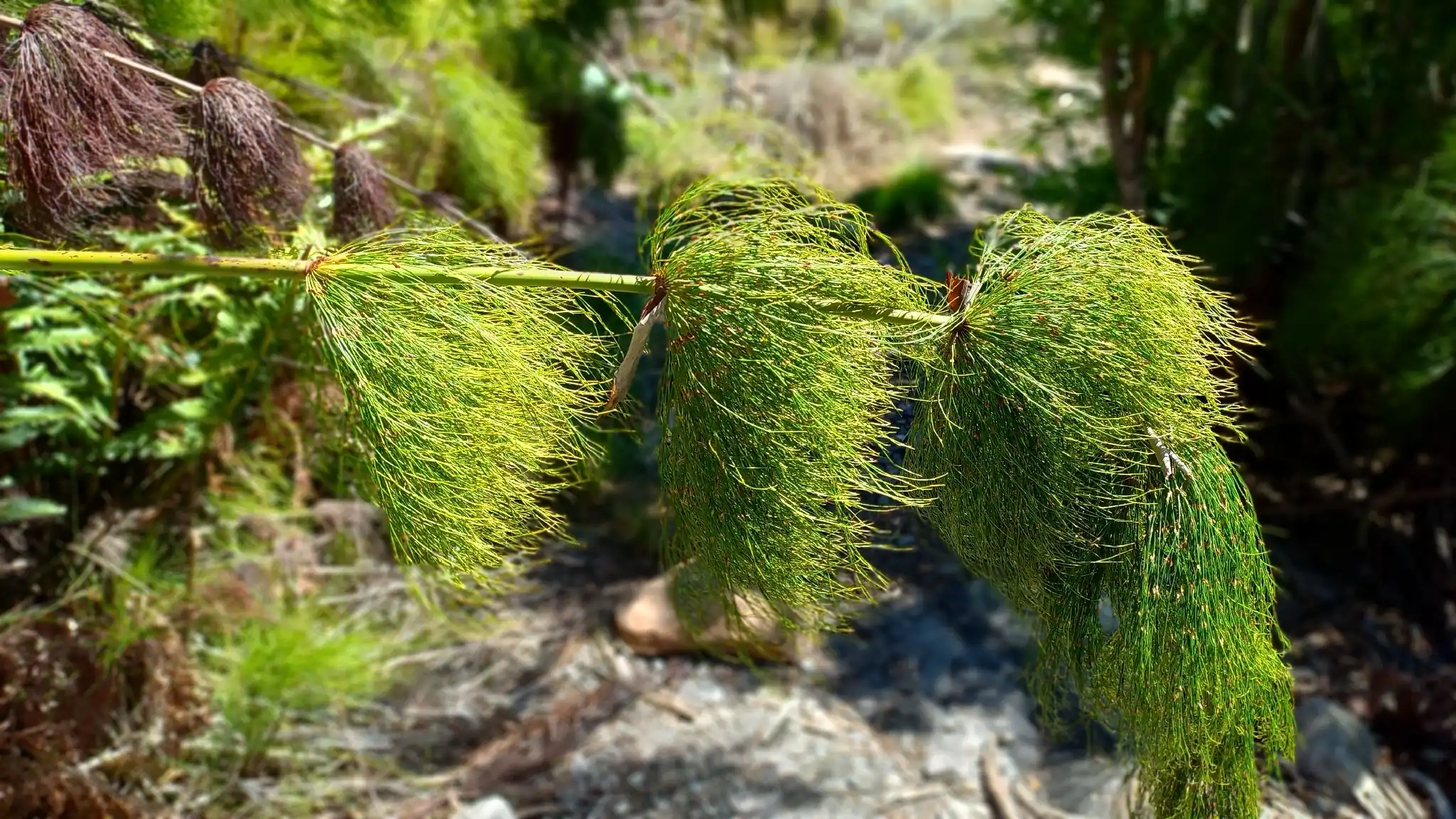
Elegia capensis is an evergreen rhizomatous perennial from Cape fynbos that forms a dense clump of erect bamboo-like culms to eight feet tall. The culms carry whorls of about twenty-five fine needle-like branchlets that read as horsetail foliage, with papery brown sheaths clasping chocolate-green stems.
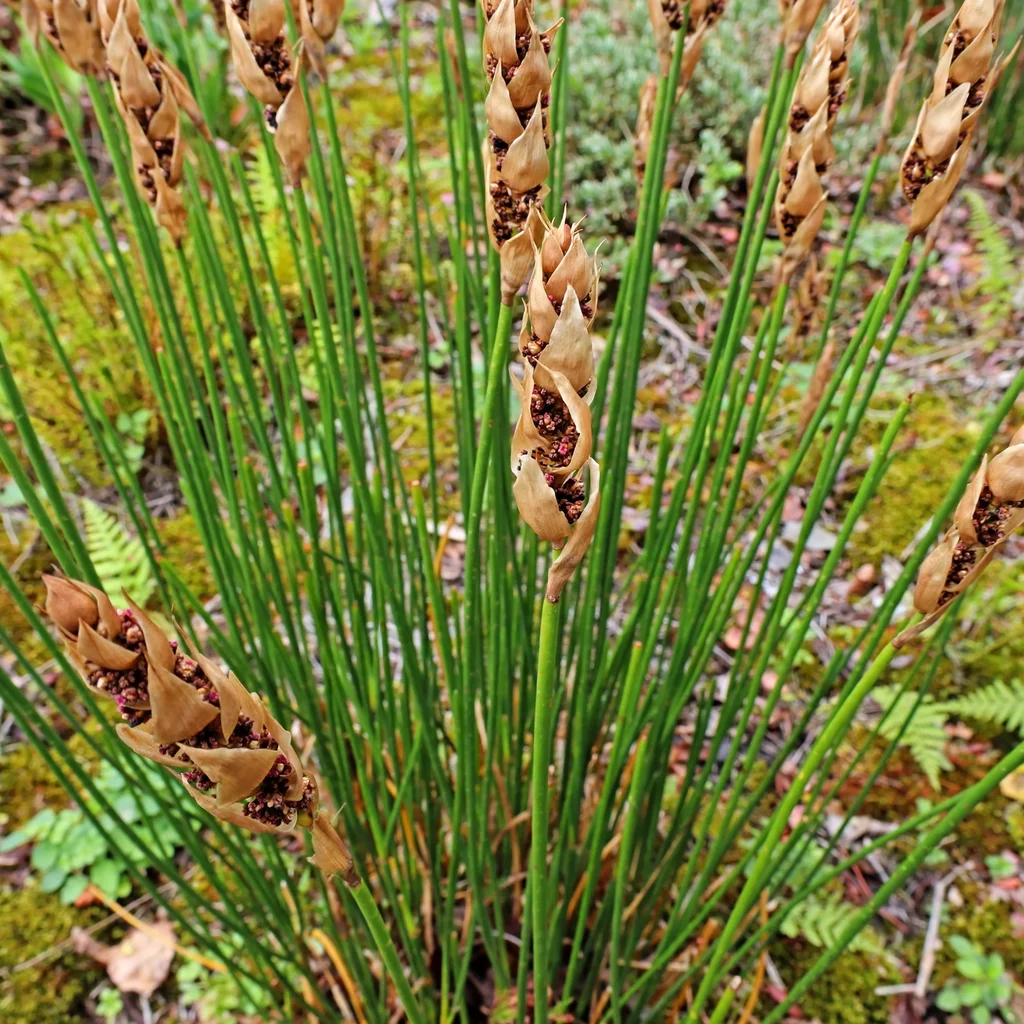
Plants are dioecious, with male and female flowers on separate plants in elongated brown spikelets clustered into fourteen-inch wind-pollinated plumes. Flowering runs spring to summer and the cream to golden-brown heads persist for up to six months, while new growth emerges bright green before hardening.
Uses & Benefits:
Essentials
At a Glance
Plant Type
Perennial
Height
98"
Width
59"
Light
Full Sun, Partial Sun
Zones
9, 10
Water
High
Humidity
Moderate
Lifespan
Long-lived perennial
Native To
South Africa - Cape Provinces
Toxicity
Non-toxic
Bloom period
Spring – Summer
In flower about 6 months of the year
Planting
How to Grow
- Set plants 10 to 16 feet apart in full sun to partial shade with shelter from hard wind.
- Plant in moist but well-drained sandy or loamy soil with acid to neutral pH, working in bark for drainage and avoiding clay.
- Water deeply and consistently to keep the root zone evenly moist, especially the first three years while establishment is slow.
- Apply a light slow-release fertilizer in spring and hold a coarse mulch to conserve moisture.
- Tie culms loosely in heavy snow and grow oversized plants in 15-gallon or larger containers where space is limited.
Pro Tip
Thin stems older than three years out at the base in late winter and never shear the clump halfway down the culm.
Keep It Thriving
Care Guide
Do
- Keep the root zone evenly moist with regular irrigation near water or in a rain garden.
- Mulch coarsely to conserve moisture without burying the crown.
- Remove dead culms and thin stems older than three years each spring.
Don't
- Do not shear the clump halfway down the culms.
- Do not bare-root, tease apart, or divide into small pieces; roots are sensitive.
- Do not plant in heavy clay or let containers dry out.
Seasonal Care Calendar
| Task | Jan | Feb | Mar | Apr | May | Jun | Jul | Aug | Sep | Oct | Nov | Dec |
|---|---|---|---|---|---|---|---|---|---|---|---|---|
| Mulch | ||||||||||||
| Pest Check | ||||||||||||
| Plant | ||||||||||||
| Prune | ||||||||||||
| Winter Prep |
Watch Out For
Pests & Diseases
Common Pests
Common Diseases
In the Garden
Landscape Uses & Companions
Landscape Uses
Multiply
Propagation Methods
Good to Know
Common Questions
Horsetail Restio questions
What zones can Horsetail Restio grow in?
Horsetail Restio is hardy in USDA Zones 9–10: in that range it survives winter in the ground. Colder than Zone 9, grow it in a container you can move to shelter for the winter, or as an annual.
When does Horsetail Restio bloom?
Horsetail Restio typically blooms from spring to summer. Exact timing shifts a week or two with your zone — Sow's bloom calendar maps it to your garden.
Does Horsetail Restio need full sun?
Horsetail Restio does best in full sun to part shade. In hot climates, afternoon shade keeps blooms fresher longer.
More Elegia to compare
Keep exploring
Explore the genus
Hardy in your zone?
Grow Horsetail Restio with confidence
See it in a design of your actual yard, get zone-matched care reminders, and track it season by season in your garden journal.