The Story
Plant Bio
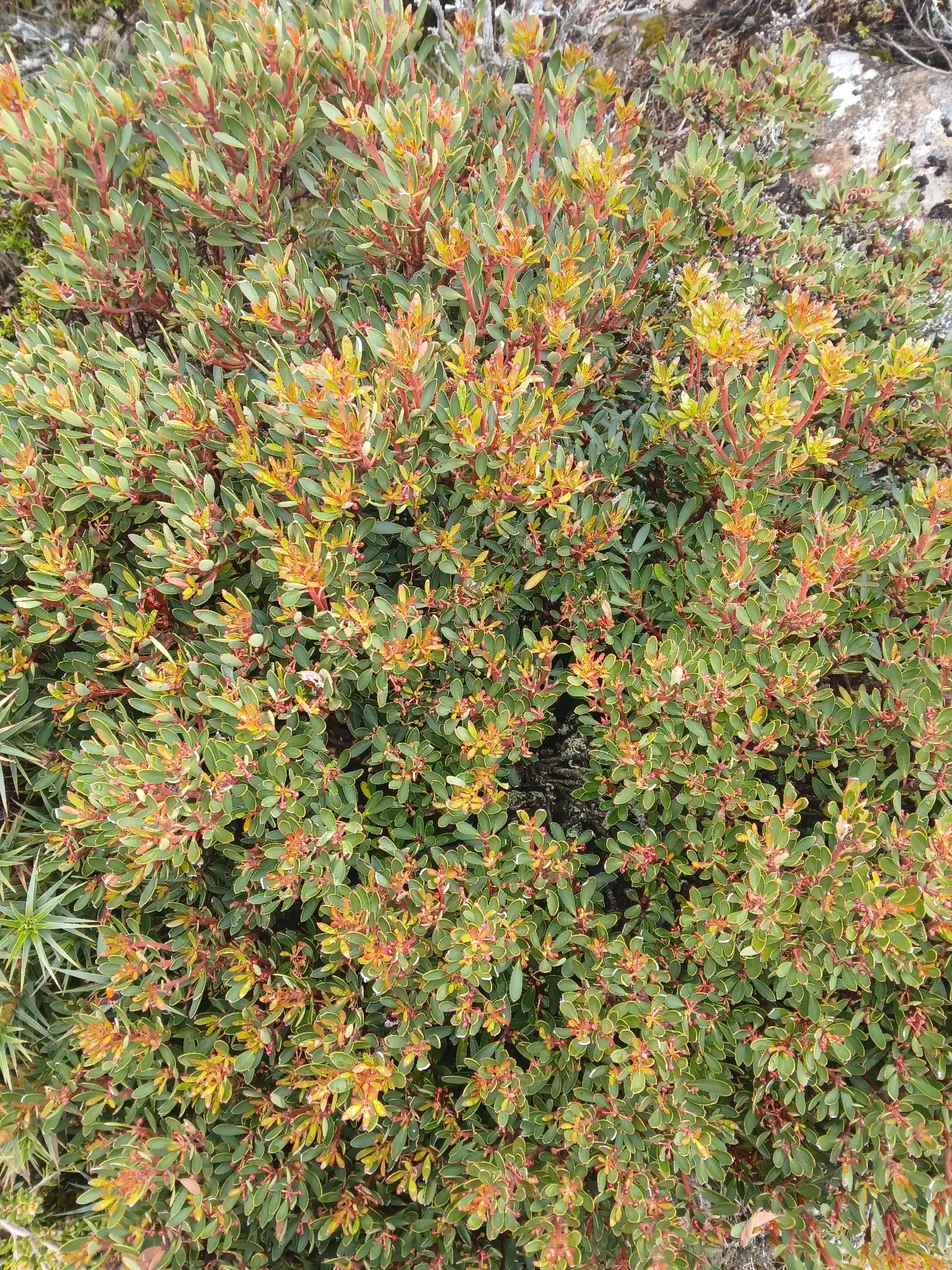
Tasmannia lanceolata is an upright evergreen shrub native to cool rainforest understories in southeastern Australia, growing six to ten feet tall in gardens. Its deep green, lance-shaped leaves are set against vivid crimson stems, joined by small cream to pale yellow flowers from late winter into early summer.
The species is strictly dioecious, requiring both male and female plants to produce its dark, peppery berries. Young foliage emerges with coppery-red tones before hardening to glossy green with pale undersides.
Uses & Benefits:
Essentials
At a Glance
Plant Type
Shrub
Height
120"
Width
96"
Light
Full Sun, Partial Sun
Zones
7, 8, 9
Water
Moderate to high
Humidity
Moderate to high
Lifespan
Perennial
Native To
Australia
Toxicity
Non-toxic
Bloom period
Late winter – Early summer
In flower about 5 months of the year
Planting
How to Grow
- Select a planting site receiving morning sun and afternoon shade, protected from hot dry winds.
- Amend the planting area with abundant compost to ensure an organic-rich, acidic to neutral soil profile.
- Plant in a well-drained spot, ensuring the root crown sits level with the surrounding soil surface.
- Water regularly to keep the root zone evenly moist without allowing standing water to pool.
- Apply a two-inch layer of organic mulch around the base to keep soil cool and retain moisture.
Pro Tip
Prune lightly only after flowering; cutting back into old, leafless woody stems will kill the stem because bare wood fails to reshoot.
Keep It Thriving
Care Guide
Do
- Plant in rich, highly well-drained soil with an acidic to neutral pH.
- Keep soil consistently moist throughout hot weather.
- Provide partial shade in warmer climates to prevent leaf scorch.
- Grow both male and female specimens if fruit production is desired.
Don't
- Do not plant in alkaline or heavy clay soils prone to waterlogging.
- Do not allow the root zone to dry out completely.
- Do not prune hard into leafless woody branches.
- Do not apply heavy doses of high-phosphorus synthetic fertilizers.
Seasonal Care Calendar
| Task | Jan | Feb | Mar | Apr | May | Jun | Jul | Aug | Sep | Oct | Nov | Dec |
|---|---|---|---|---|---|---|---|---|---|---|---|---|
| Fertilize | ||||||||||||
| Mulch | ||||||||||||
| Pest Check | ||||||||||||
| Prune |
Watch Out For
Pests & Diseases
Common Pests
Common Diseases
In the Garden
Landscape Uses & Companions
Landscape Uses
Companion Plants
Multiply
Propagation Methods
Good to Know
Common Questions
Mountain Pepper questions
What zones can Mountain Pepper grow in?
Mountain Pepper is hardy in USDA Zones 7–9: in that range it survives winter in the ground. Colder than Zone 7, grow it in a container you can move to shelter for the winter. Warmer than Zone 9, winter isn't the problem: it prefers colder winters, and summer heat can shorten its life.
Is Mountain Pepper deer resistant?
Yes — Mountain Pepper is rated deer-resistant. Deer typically pass it over, though extreme hunger can override any plant's defenses.
When does Mountain Pepper bloom?
Mountain Pepper typically blooms from late winter to early summer. Exact timing shifts a week or two with your zone — Sow's bloom calendar maps it to your garden.
Does Mountain Pepper need full sun?
Mountain Pepper does best in full sun to part shade. In hot climates, afternoon shade keeps blooms fresher longer.
Keep exploring
Explore the genus
Hardy in your zone?
Grow Mountain Pepper with confidence
See it in a design of your actual yard, get zone-matched care reminders, and track it season by season in your garden journal.