The Story
Plant Bio
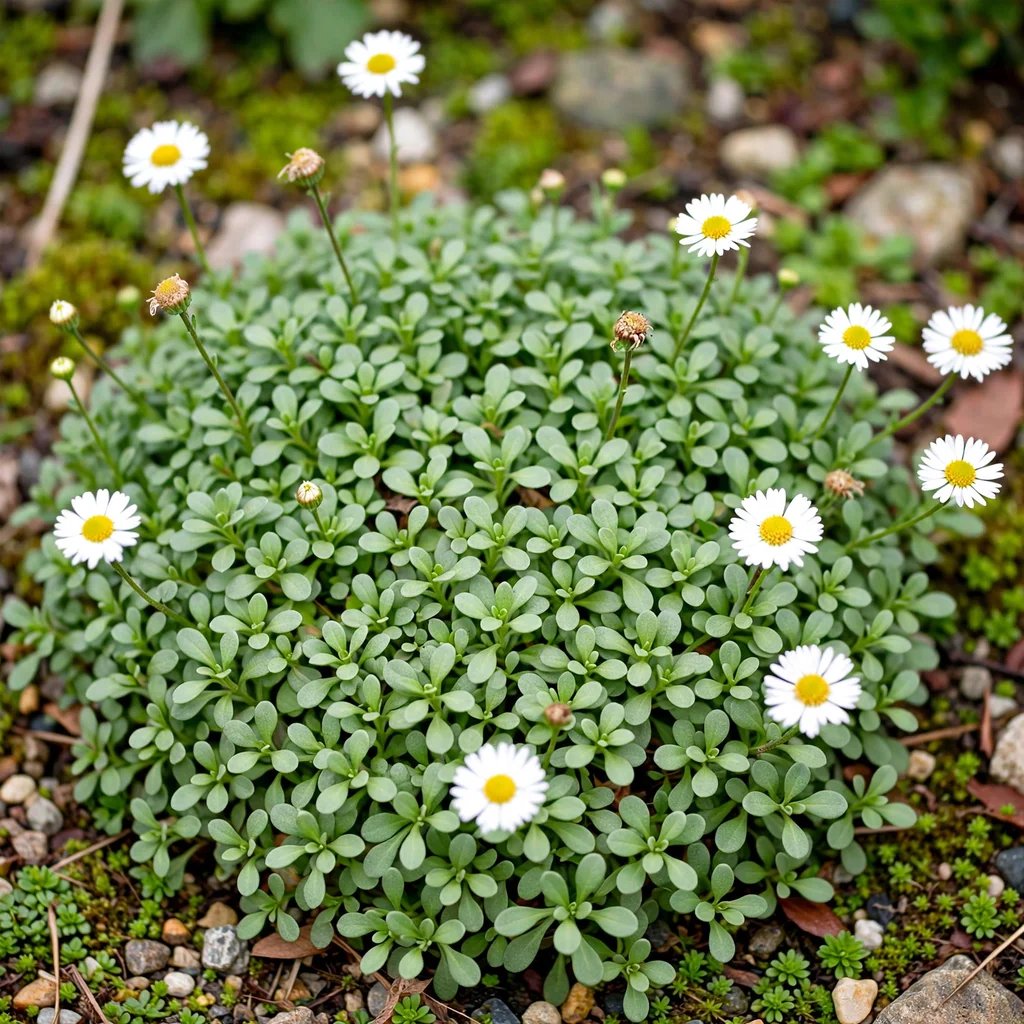
Erigeron scopulinus, the rock fleabane, is a mat-forming perennial from cliff crevices of the southwestern United States, forming a tight mat one to two inches high with flowering stems to six inches. The foliage is persistent basal spatulate leaves in deep green, and each stem carries a solitary miniature daisy with white rays around a yellow disk.
Unlike taller bedding fleabanes, it grows from slender woody rhizomes into a dense crevice-hugging mat with scapiform flowering stems under two inches below the head. The heads are small, with an involucre under a quarter inch wide and ten to twenty reflexing white rays under half an inch long opening in late spring.
Uses & Benefits:
Essentials
At a Glance
Plant Type
Perennial
Height
6"
Width
12"
Light
Full Sun, Partial Sun
Zones
4, 5, 6, 7, 8, 9
Water
Low
Humidity
Low
Lifespan
Perennial
Native To
Arizona, New Mexico
Toxicity
Unknown
Bloom period
Late spring – Early summer
In flower about 2 months of the year
Planting
How to Grow
- Plant in spring in a rock crevice, scree bed, or trough filled with gritty, fast-draining sandy mix.
- Tuck roots into a narrow pocket with stone on two sides so water runs off the crown.
- Water to establish, then water sparingly; keep the mat dry in winter.
- Remove spent heads individually without cutting into the mat.
Pro Tip
Set it into a vertical crevice or gritty trough with sharp drainage and leave the mat alone; wet winter soil and a hard annual cutback kill it faster than cold.
Keep It Thriving
Care Guide
Do
- Give full sun to part sun with air movement around the mat.
- Keep soil lean, sandy, and sharply drained.
- Top-dress with grit to keep the crown dry.
Don't
- Do not plant in rich moisture-holding soil or flat mulch.
- Do not shear the mat back hard each year.
- Do not leave water standing around the crown in winter.
Seasonal Care Calendar
| Task | Jan | Feb | Mar | Apr | May | Jun | Jul | Aug | Sep | Oct | Nov | Dec |
|---|---|---|---|---|---|---|---|---|---|---|---|---|
| Deadhead | ||||||||||||
| Divide | ||||||||||||
| Plant | ||||||||||||
| Winter Prep |
Watch Out For
Pests & Diseases
Common Pests
Common Diseases
In the Garden
Landscape Uses & Companions
Landscape Uses
Companion Plants
Multiply
Propagation Methods
Good to Know
Common Questions
Rock Fleabane questions
What zones can Rock Fleabane grow in?
Rock Fleabane is hardy in USDA Zones 4–9: in that range it survives winter in the ground. Warmer than Zone 9, winter isn't the problem: it prefers colder winters, and summer heat can shorten its life.
When does Rock Fleabane bloom?
Rock Fleabane typically blooms from late spring to early summer. Exact timing shifts a week or two with your zone — Sow's bloom calendar maps it to your garden.
Does Rock Fleabane need full sun?
Rock Fleabane does best in full sun to part shade. In hot climates, afternoon shade keeps blooms fresher longer.
Is Rock Fleabane drought tolerant?
Yes — once established (usually after the first full season), Rock Fleabane handles dry spells with minimal watering. Water deeply its first year to build the root system that makes that possible.
More Erigeron to compare
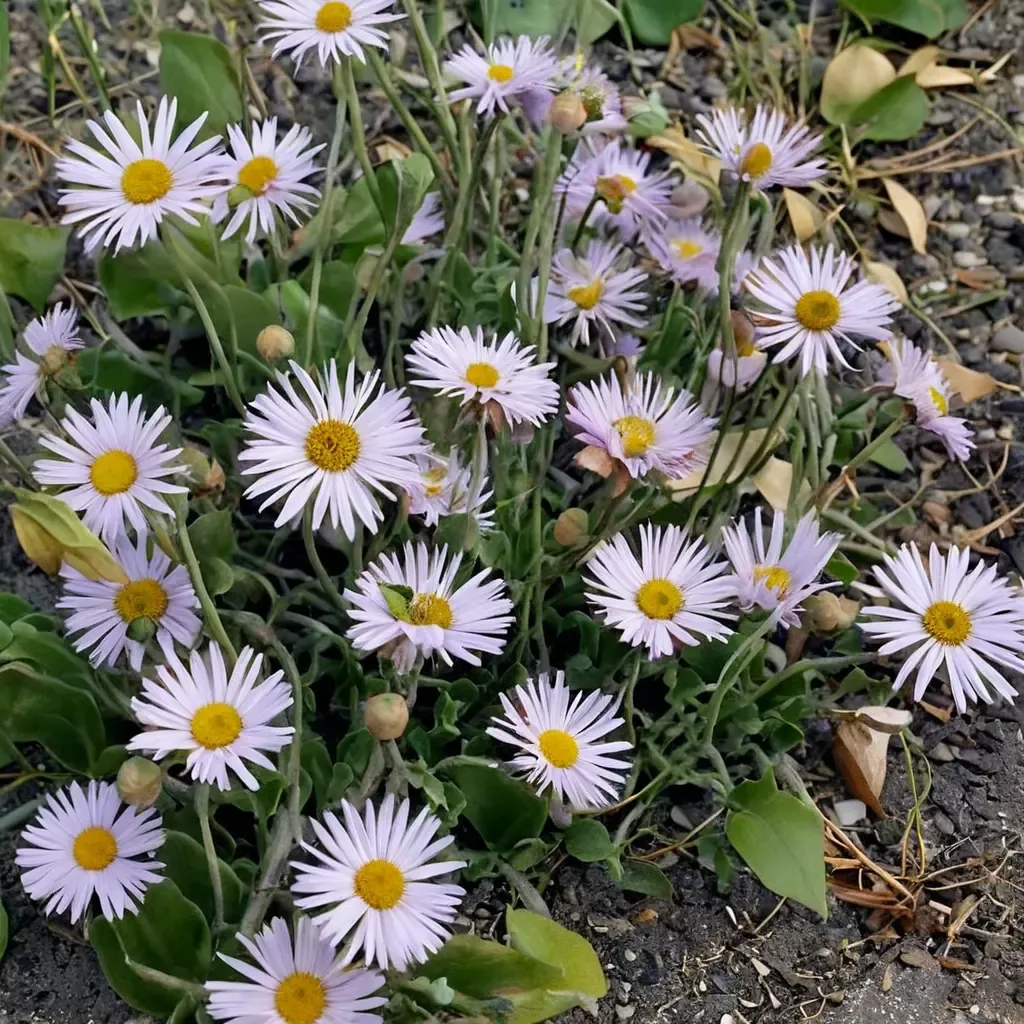
Robin's Plantain 'Meadow Muffin'
Erigeron pulchellus 'Meadow Muffin'
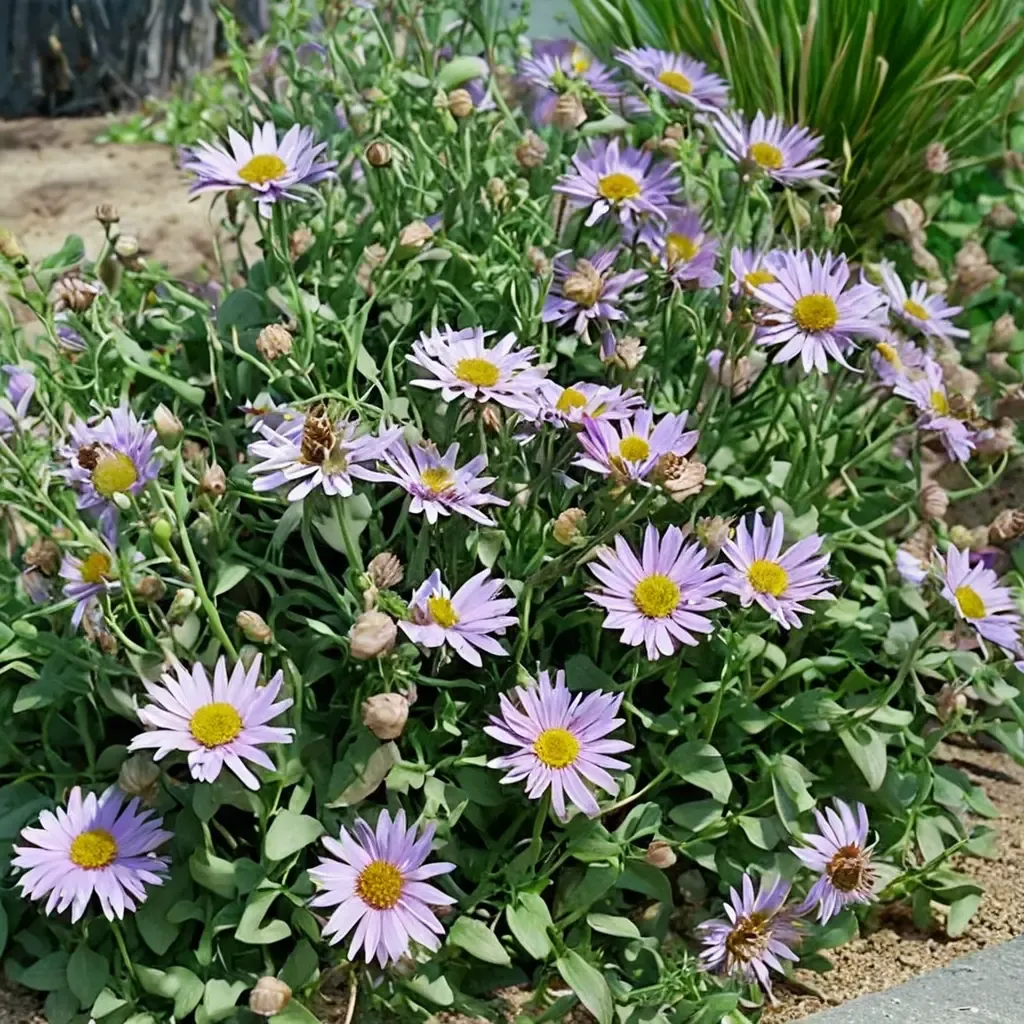
Wayne Roderick fleabane
Erigeron glaucus 'Wayne Roderick'
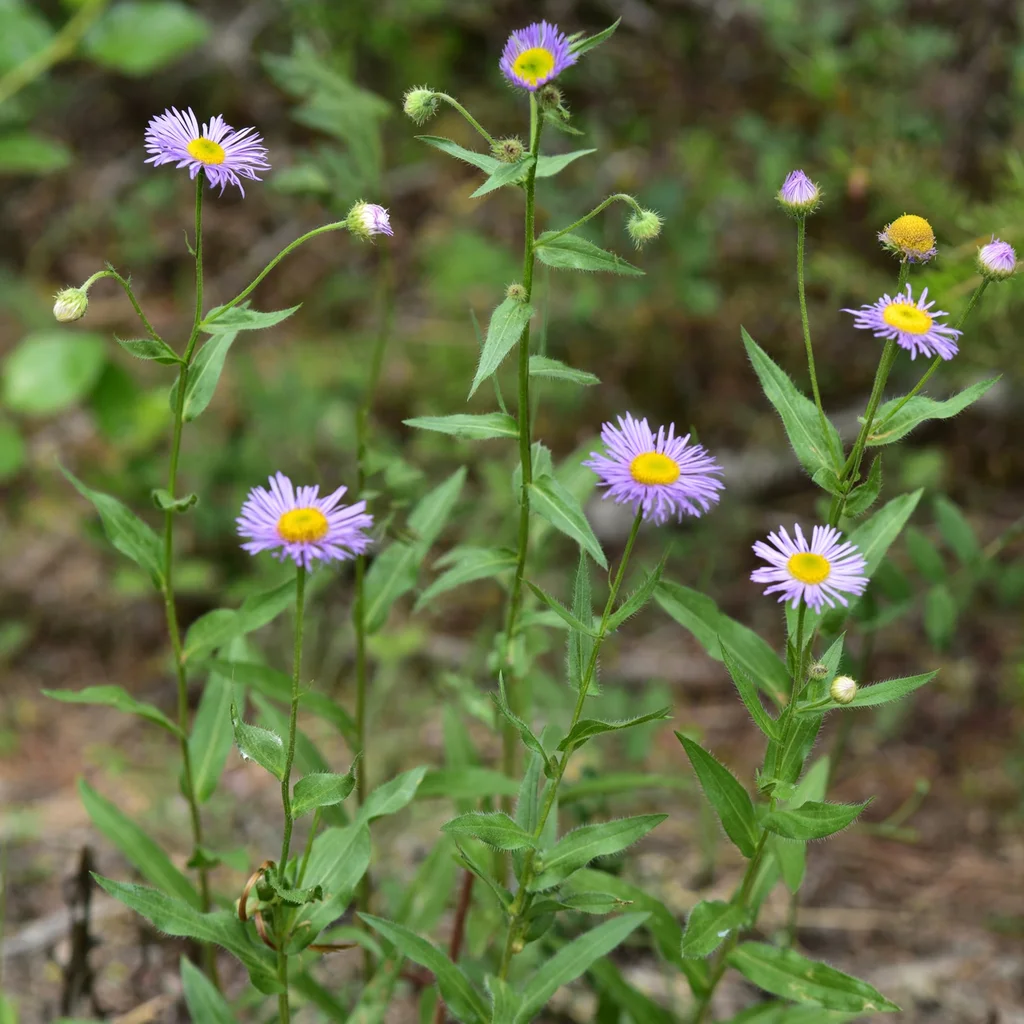
Aspen Fleabane
Erigeron speciosus
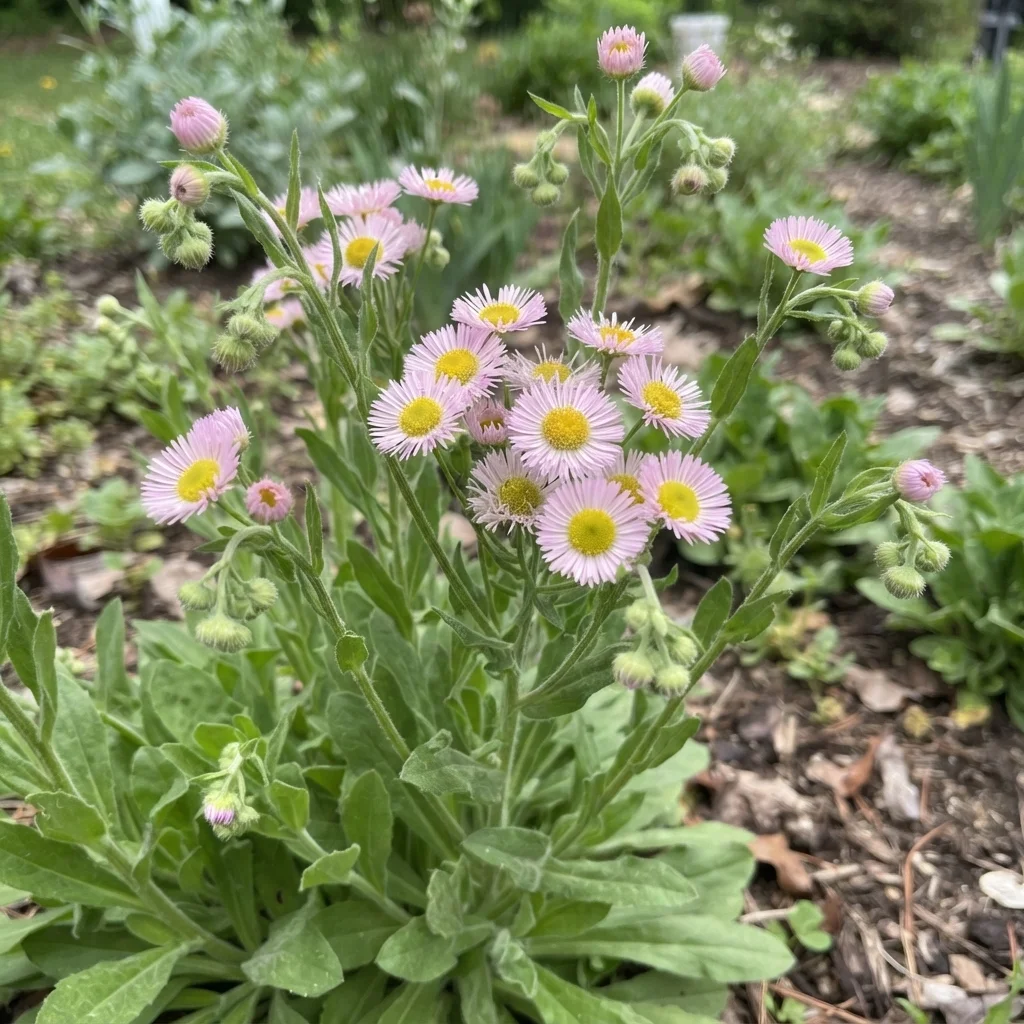
Philadelphia Fleabane
Erigeron philadelphicus
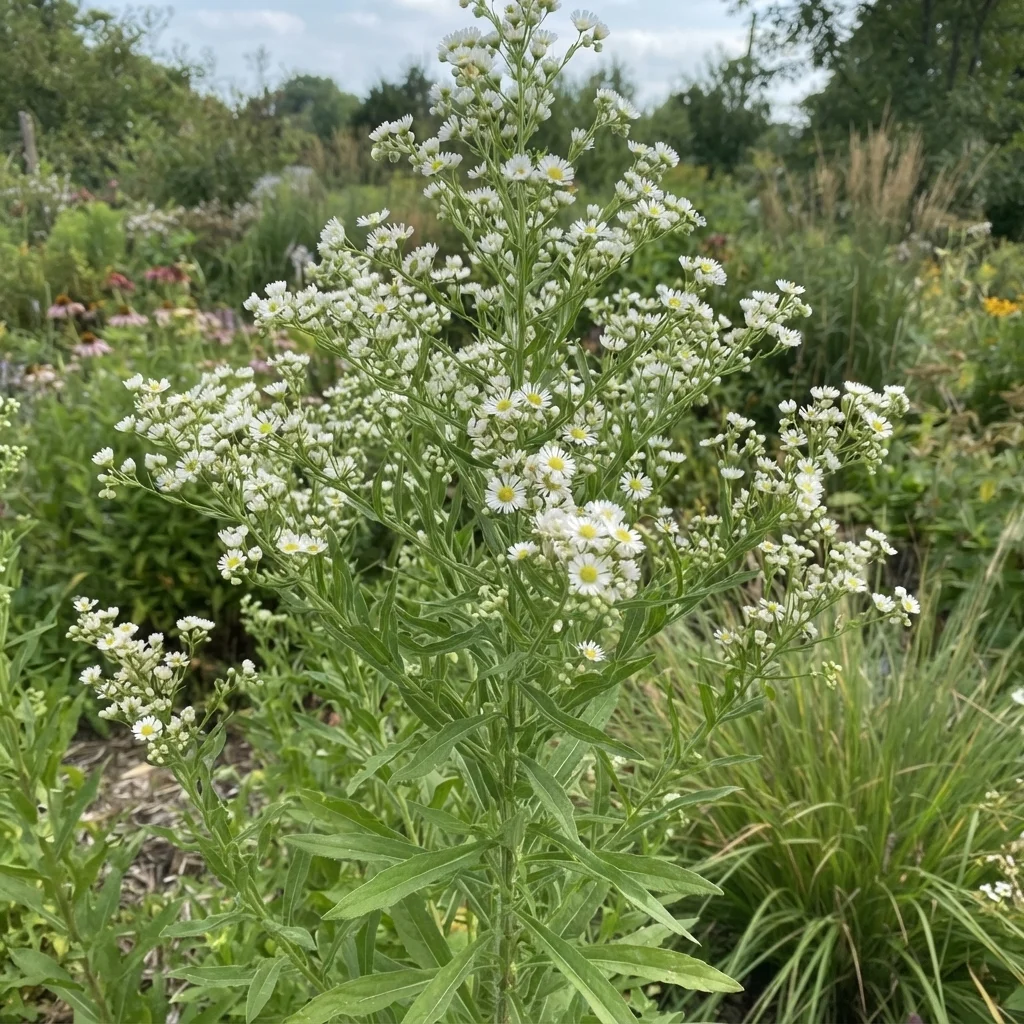
Horseweed
Erigeron canadensis
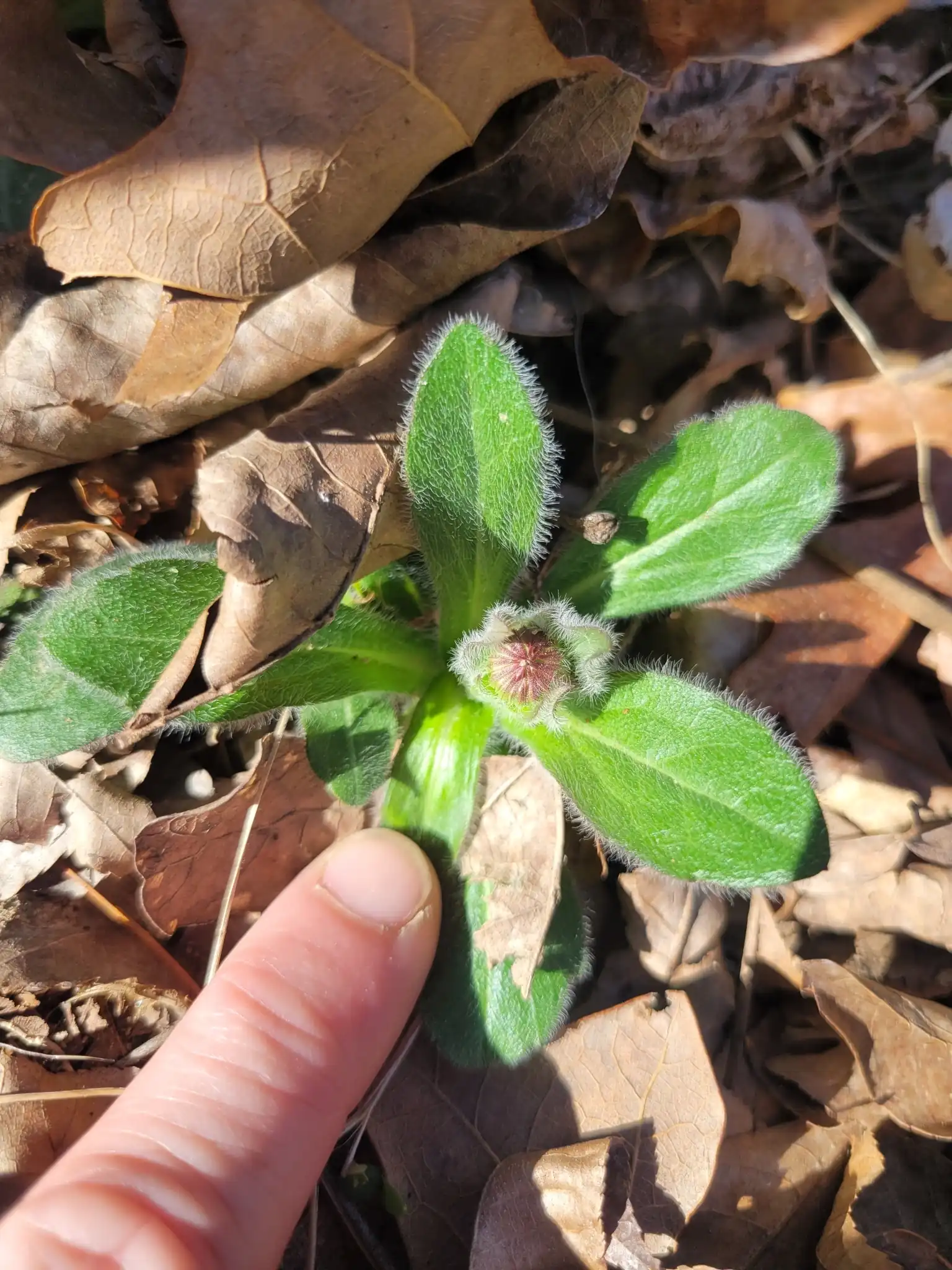
Robin's Plantain
Erigeron pulchellus
Keep exploring
Explore the genus
Grow Rock Fleabane with confidence
See it in a design of your actual yard, get zone-matched care reminders, and track it season by season in your garden journal.