The Story
Plant Bio
Callistemon are evergreen Australian shrubs and small trees with aromatic linear to lance-shaped leaves that release oil when crushed. Flower heads are dense cylindrical brushes at the branch tips, where masses of long stamens carry the color and nectar while the petals are inconspicuous.
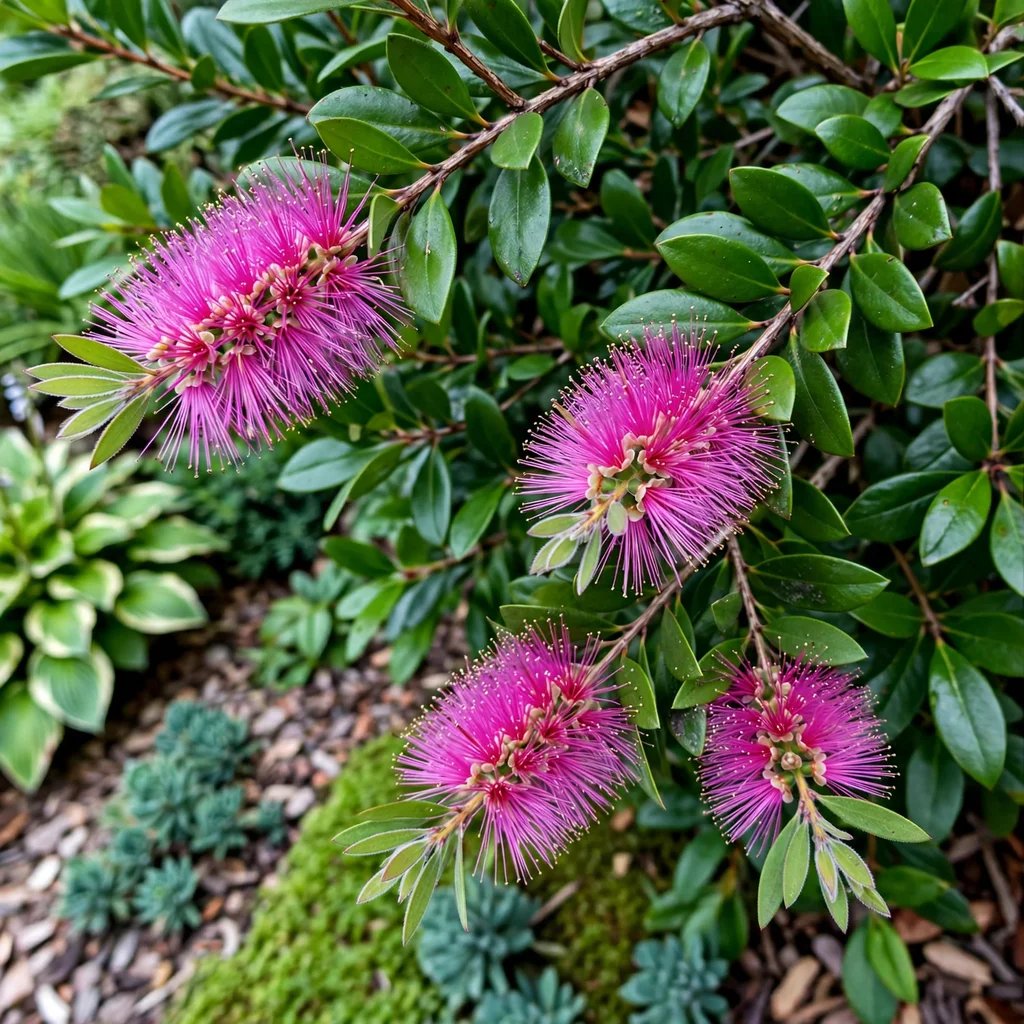
'Violaceus' is a dense bushy selection that reaches 6 to 10 feet tall and about 8 feet wide, with broad shiny evergreen leaves that give heavier texture than most bottlebrushes. Its thick 5-inch branch-tip brushes are rosy-purple to vivid fuchsia-pink with yellow-tipped stamens, opening from winter through summer in mild climates with repeat flushes.
Uses & Benefits:
Essentials
At a Glance
Plant Type
Shrub
Height
120"
Width
96"
Light
Full Sun, Partial Sun
Zones
8, 9, 10
Water
Low
Humidity
Tolerant
Lifespan
Woody perennial
Native To
Australia (garden-origin cultivar)
Toxicity
Unknown
Bloom period
Winter – Summer
In flower about 9 months of the year
Planting
How to Grow
- Plant in full sun in well-drained soil after frost danger has passed.
- Dig twice as wide as the container, set at the same depth, backfill and water deeply.
- Water regularly through the first summer, then taper to deep infrequent soakings once established.
- Feed once a year after flowering with a low-phosphorus fertilizer; established plants need little.
- Tip-prune young shoots and trim lightly behind spent brushes after each flush to keep the canopy dense.
Pro Tip
Prune just behind each spent brush after flowering; cutting hard back into old leafless wood in one cut regrows slowly, so renovate mature plants over two to three summers back to young outward shoots.
Keep It Thriving
Care Guide
Do
- Give full sun for heaviest bloom and densest growth.
- Water deeply during establishment, then keep on the dry side.
- Prune lightly behind spent brushes after spring flowering.
Don't
- Don't grow from seed if you want 'Violaceus' - seedlings will not come true.
- Don't confuse this cultivar with Melaleuca violacea, a different Western Australian species.
- Don't cut the whole plant hard into old bare wood in one season.
Seasonal Care Calendar
| Task | Jan | Feb | Mar | Apr | May | Jun | Jul | Aug | Sep | Oct | Nov | Dec |
|---|---|---|---|---|---|---|---|---|---|---|---|---|
| Fertilize | ||||||||||||
| Mulch | ||||||||||||
| Pest Check | ||||||||||||
| Plant | ||||||||||||
| Prune |
Watch Out For
Pests & Diseases
Common Pests
Common Diseases
In the Garden
Landscape Uses & Companions
Landscape Uses
Multiply
Propagation Methods
Good to Know
Common Questions
Purple Bottlebrush questions
What zones can Purple Bottlebrush grow in?
Purple Bottlebrush is hardy in USDA Zones 8–10: in that range it survives winter in the ground. Colder than Zone 8, grow it in a container you can move to shelter for the winter.
Is Purple Bottlebrush deer resistant?
Yes — Purple Bottlebrush is rated deer-resistant. Deer typically pass it over, though extreme hunger can override any plant's defenses.
When does Purple Bottlebrush bloom?
Purple Bottlebrush typically blooms from winter to summer. Exact timing shifts a week or two with your zone — Sow's bloom calendar maps it to your garden.
Does Purple Bottlebrush need full sun?
Purple Bottlebrush does best in full sun to part shade. In hot climates, afternoon shade keeps blooms fresher longer.
Is Purple Bottlebrush drought tolerant?
Yes — once established (usually after the first full season), Purple Bottlebrush handles dry spells with minimal watering. Water deeply its first year to build the root system that makes that possible.
More Callistemon to compare
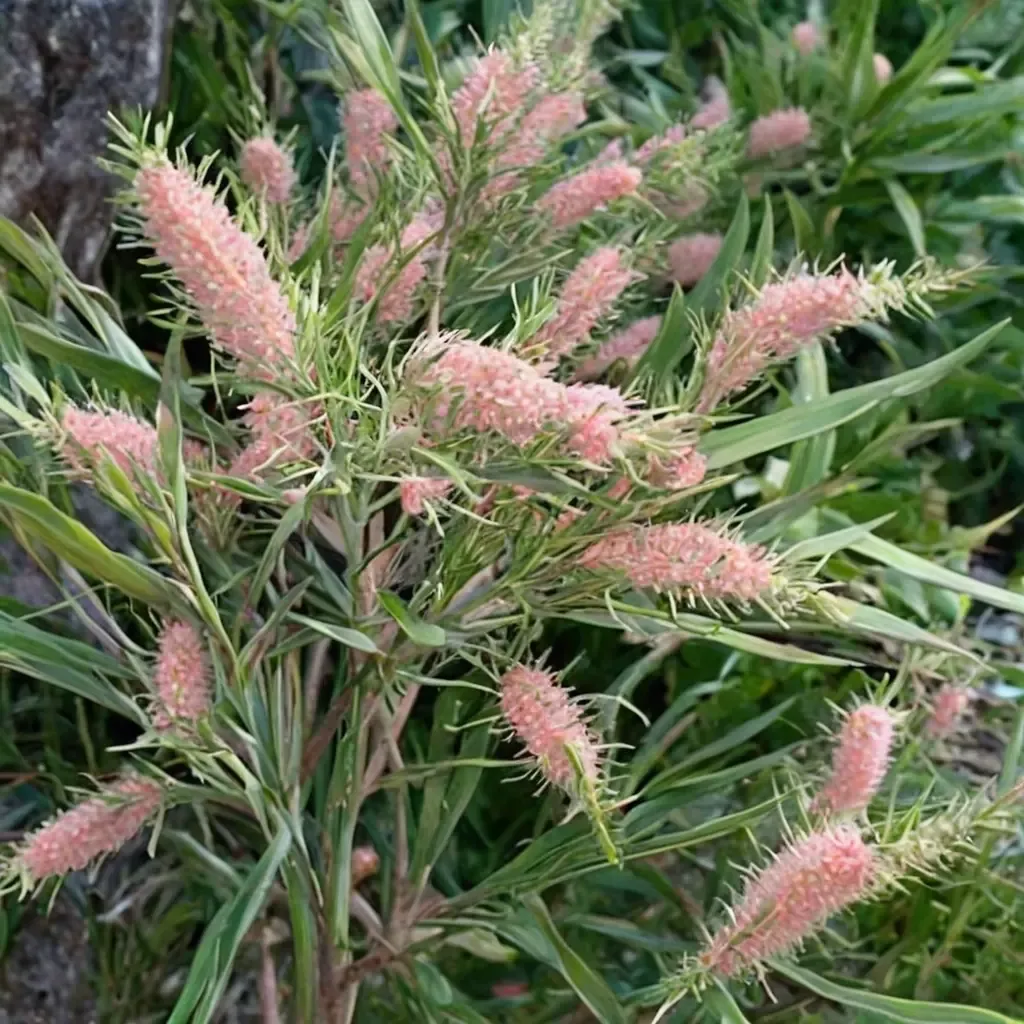
Cane's Hybrid Bottlebrush
Callistemon citrinus 'Cane's Hybrid'
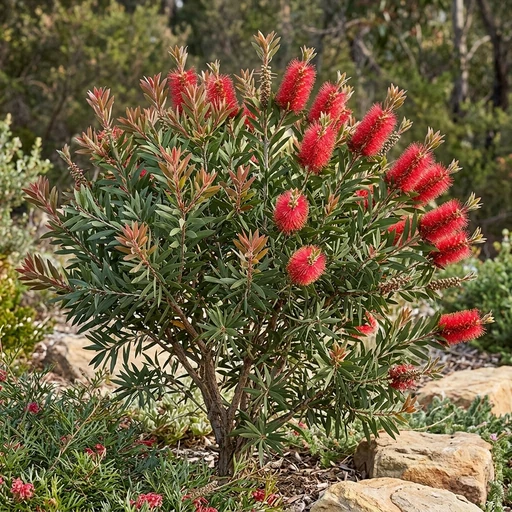
Little John Dwarf Bottlebrush
Callistemon citrinus 'Little John'
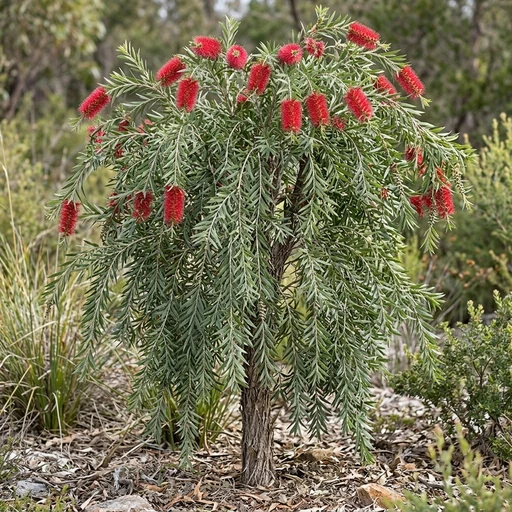
Weeping Bottlebrush
Callistemon viminalis
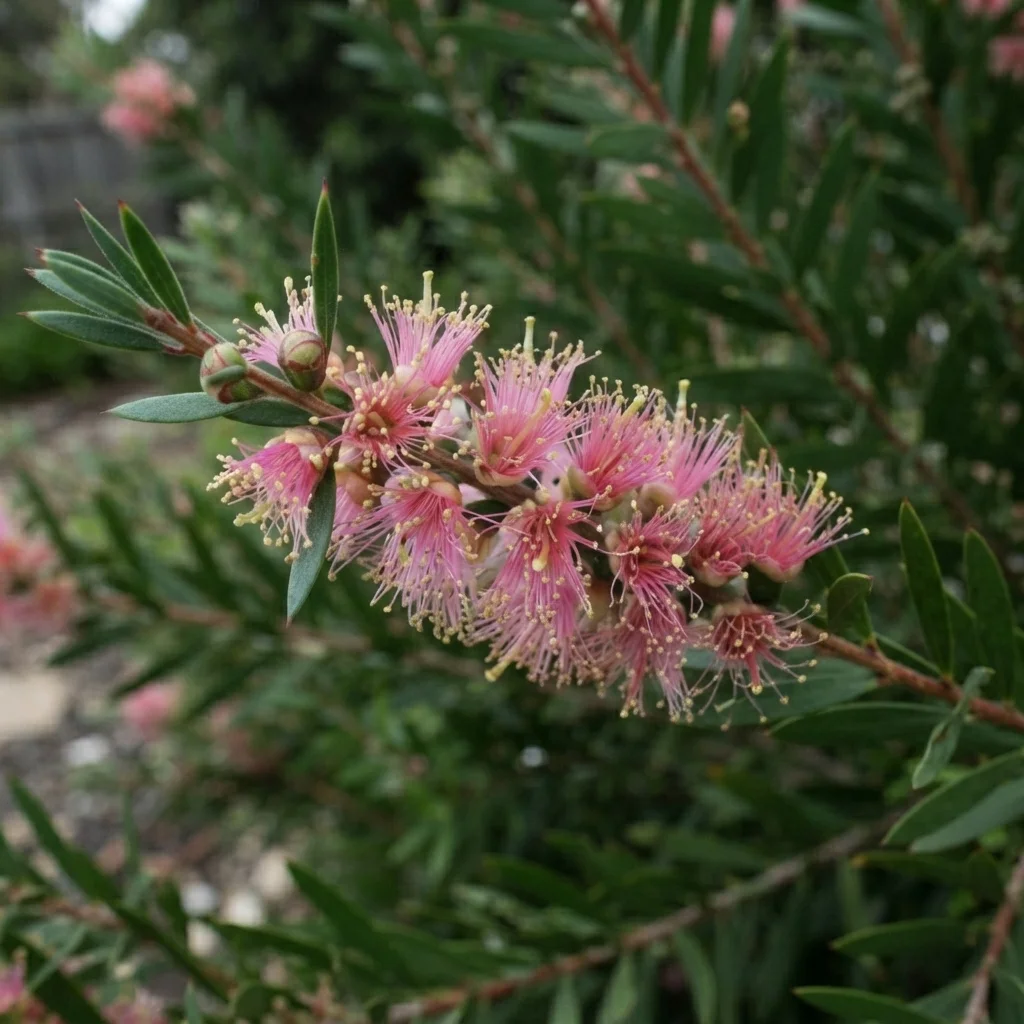
River Bottlebrush
Callistemon sieberi
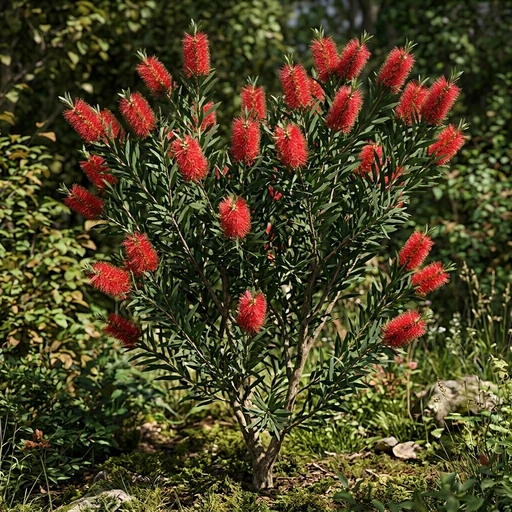
Woodlander's Hardy Bottlebrush
Callistemon x hybrida 'Woodlander'S Hardy'
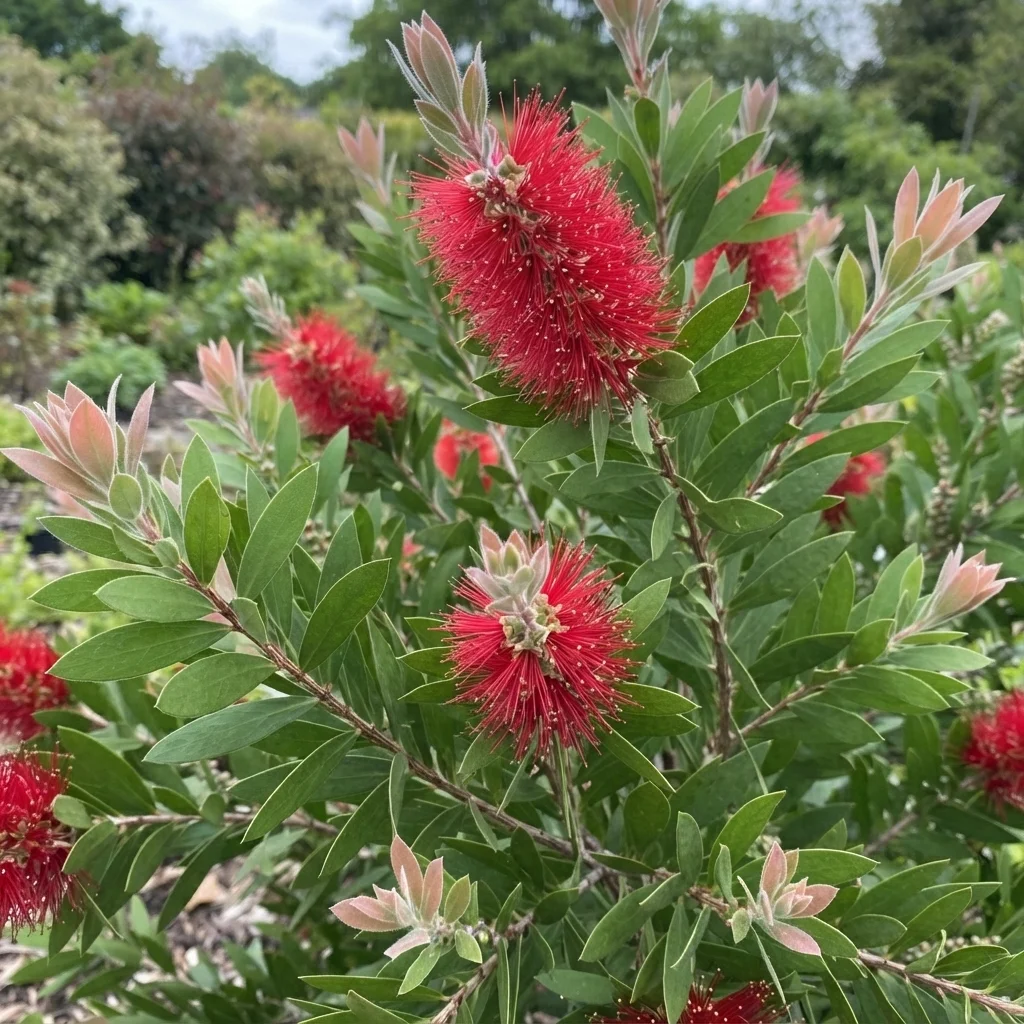
Crimson Bottlebrush 'Splendens'
Callistemon citrinus 'Splendens'
Keep exploring
Explore the genus
Hardy in your zone?
Grow Purple Bottlebrush with confidence
See it in a design of your actual yard, get zone-matched care reminders, and track it season by season in your garden journal.