The Story
Plant Bio
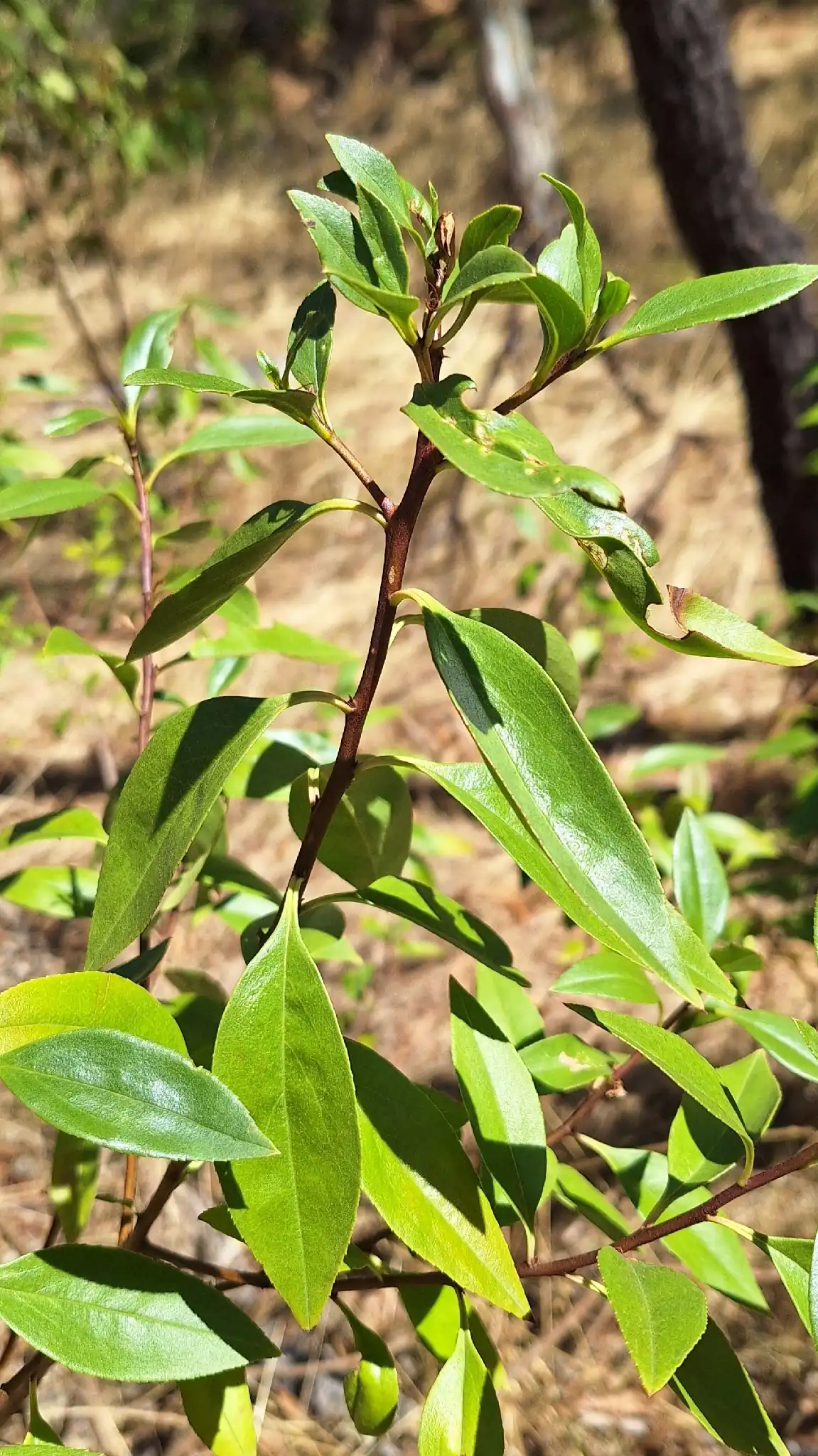
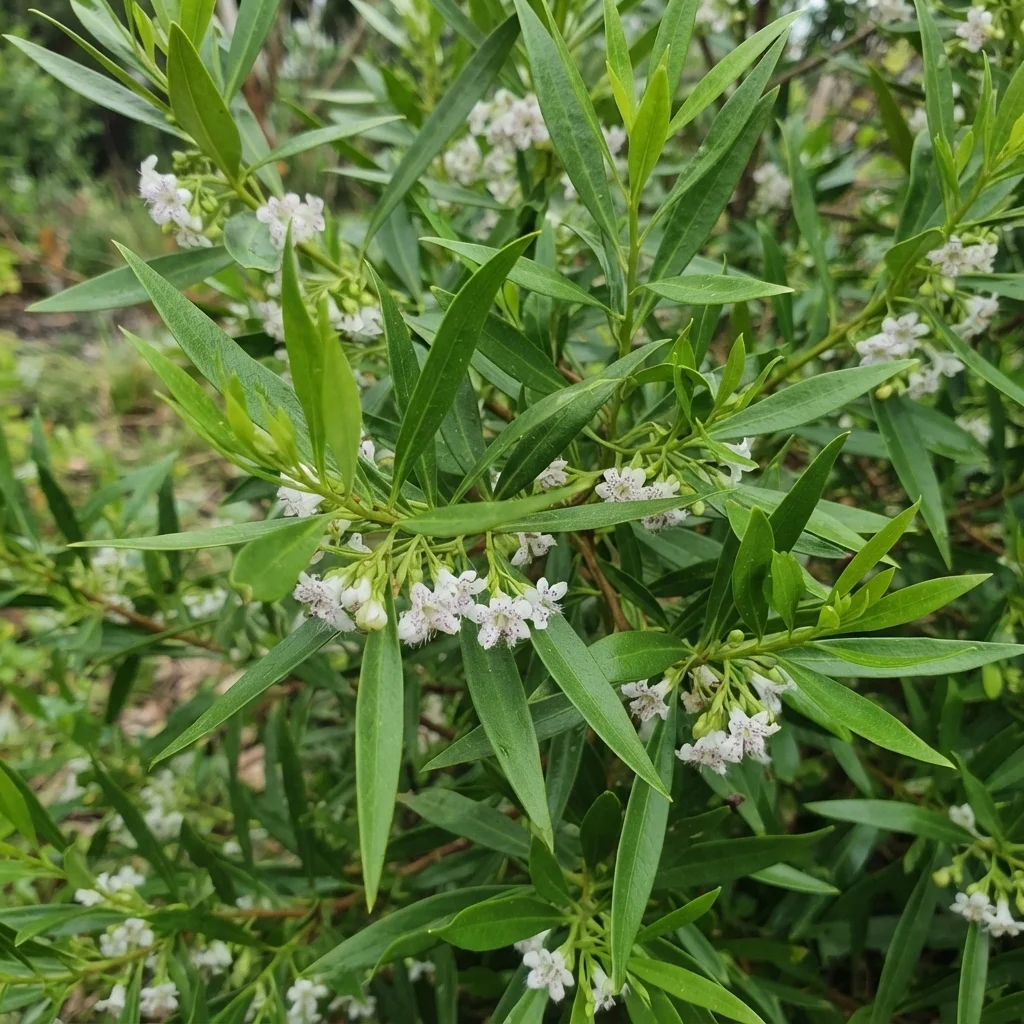
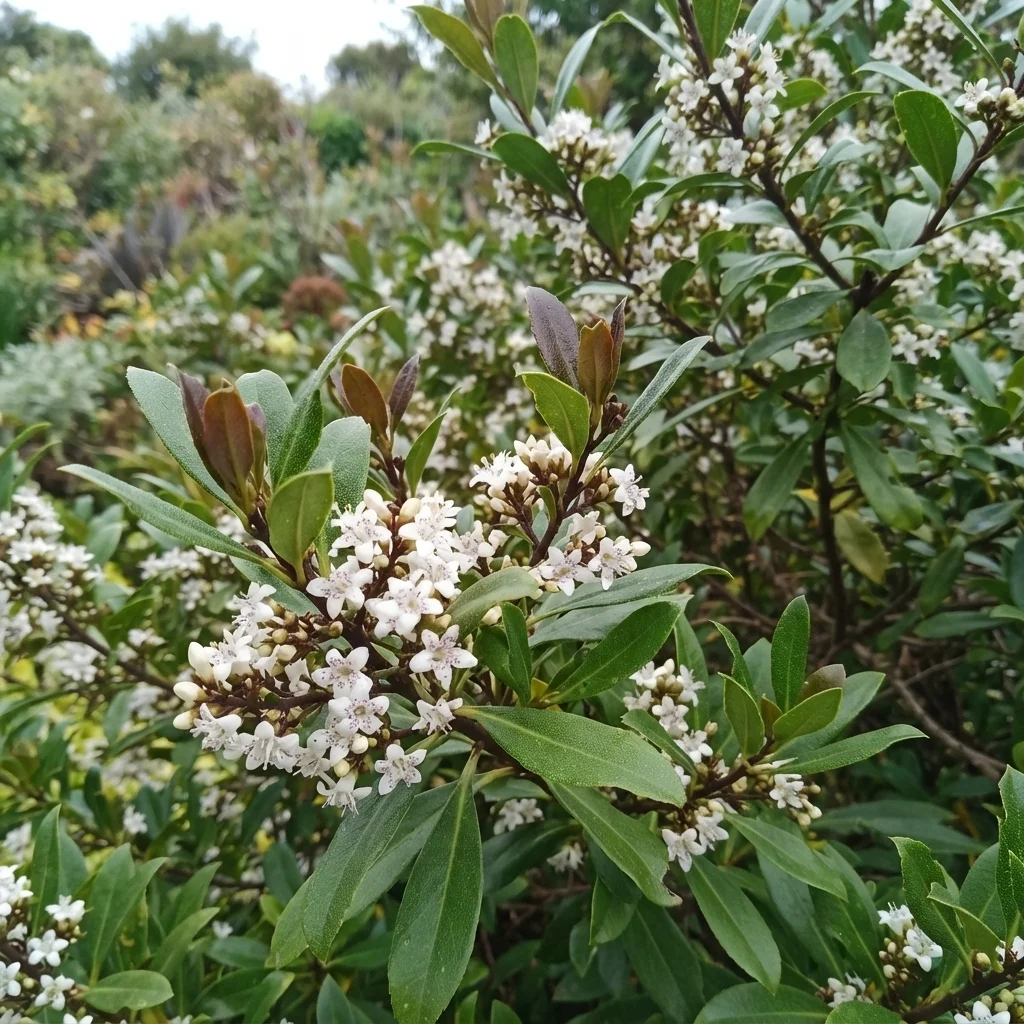
Myoporum petiolatum is an evergreen Australian shrub that grows two to six feet tall with dense, rounded branching and sticky stems. Its shiny, dark green elliptic leaves feature tiny serrated margins and distinct leaf stalks that separate it from related species.
Small clusters of white, tubular flowers flushed with lilac and dotted with purple spots appear in the leaf axils from winter through summer. Unlike Myoporum viscosum, which it resembles, this species lacks a strong, unpleasant odor and bears thinner leaves on pronounced petioles.
Uses & Benefits:
Essentials
At a Glance
Plant Type
Shrub
Height
79"
Width
118"
Light
Full Sun, Partial Sun
Zones
9, 10
Water
Low
Humidity
Low to moderate
Lifespan
Perennial
Toxicity
Non-toxic
Bloom period
Winter – Summer
In flower about 9 months of the year
Planting
How to Grow
- Select a site in full sun to partial shade with light, highly permeable soil.
- Dig a planting hole as deep as the root ball and twice as wide, avoiding organic amendments in heavy clays.
- Set the plant at its original nursery depth and firm the soil gently around the roots.
- Water thoroughly after planting, then allow the top several inches of soil to dry out between irrigations.
Pro Tip
Prune lightly behind spent flower clusters to maintain density, avoiding heavy cuts into old leafless wood that cannot regenerate.
Keep It Thriving
Care Guide
Do
- Plant in light, gritty, or sharply drained soil to prevent root rot.
- Tip-prune leafy stem ends after the main flowering window to promote dense structure.
- Provide full sunlight for maximum flower production and foliage shine.
Don't
- Do not overwater or allow soil to remain waterlogged.
- Avoid severe hard pruning back into thick, bare stems.
- Do not heavy-feed with rich fertilizers.
Seasonal Care Calendar
| Task | Jan | Feb | Mar | Apr | May | Jun | Jul | Aug | Sep | Oct | Nov | Dec |
|---|---|---|---|---|---|---|---|---|---|---|---|---|
| Fertilize | ||||||||||||
| Mulch | ||||||||||||
| Pest Check | ||||||||||||
| Prune |
Watch Out For
Pests & Diseases
Common Pests
Common Diseases
In the Garden
Landscape Uses & Companions
Landscape Uses
Companion Plants
Multiply
Propagation Methods
Good to Know
Common Questions
Sticky Boobialla questions
What zones can Sticky Boobialla grow in?
Sticky Boobialla is hardy in USDA Zones 9–10: in that range it survives winter in the ground. Colder than Zone 9, grow it in a container you can move to shelter for the winter.
When does Sticky Boobialla bloom?
Sticky Boobialla typically blooms from winter to summer. Exact timing shifts a week or two with your zone — Sow's bloom calendar maps it to your garden.
Does Sticky Boobialla need full sun?
Sticky Boobialla does best in full sun to part shade. In hot climates, afternoon shade keeps blooms fresher longer.
Is Sticky Boobialla drought tolerant?
Yes — once established (usually after the first full season), Sticky Boobialla handles dry spells with minimal watering. Water deeply its first year to build the root system that makes that possible.
More Myoporum to compare
Keep exploring
Explore the genus
Hardy in your zone?
Grow Sticky Boobialla with confidence
See it in a design of your actual yard, get zone-matched care reminders, and track it season by season in your garden journal.