The Story
Plant Bio
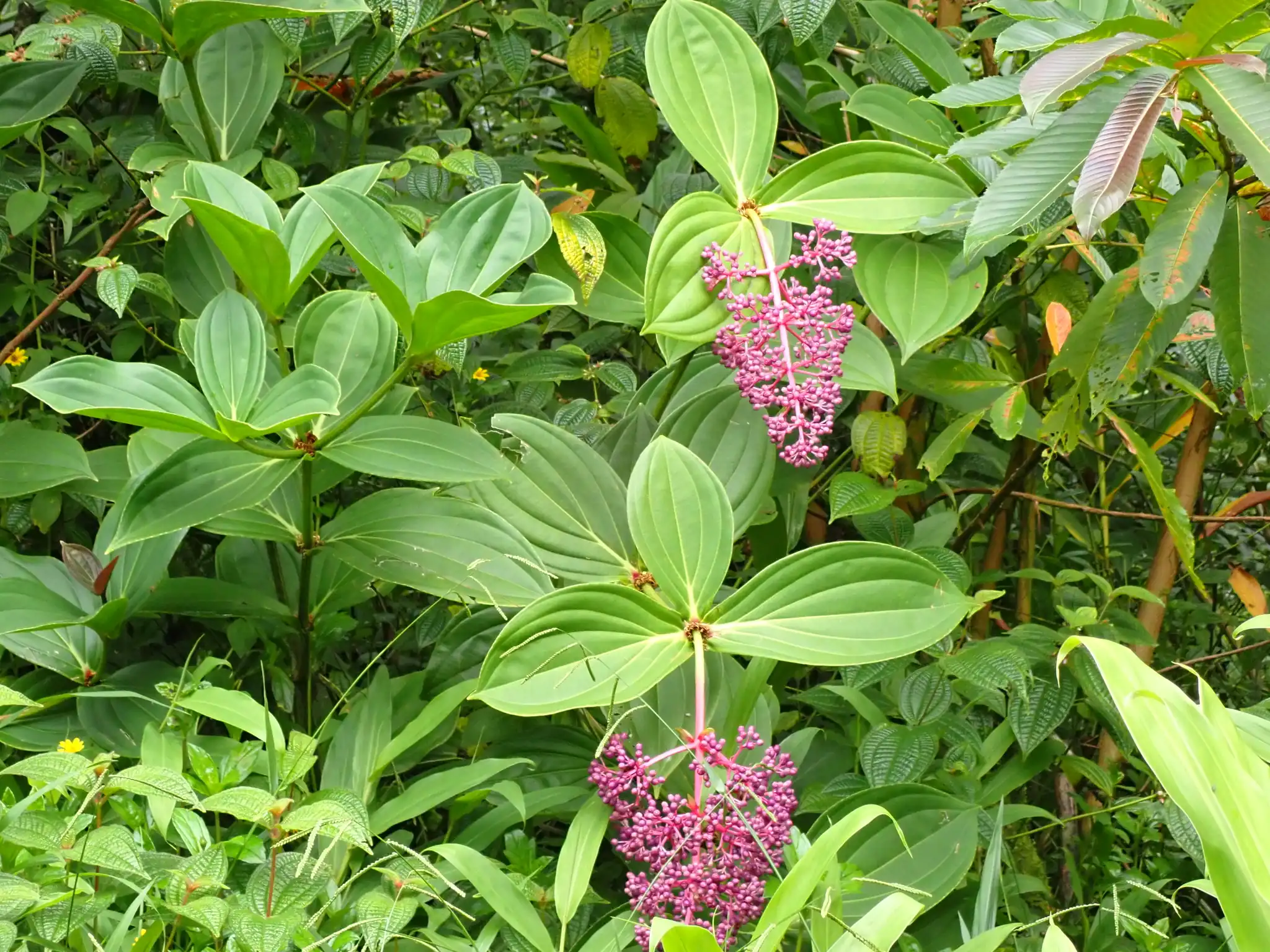
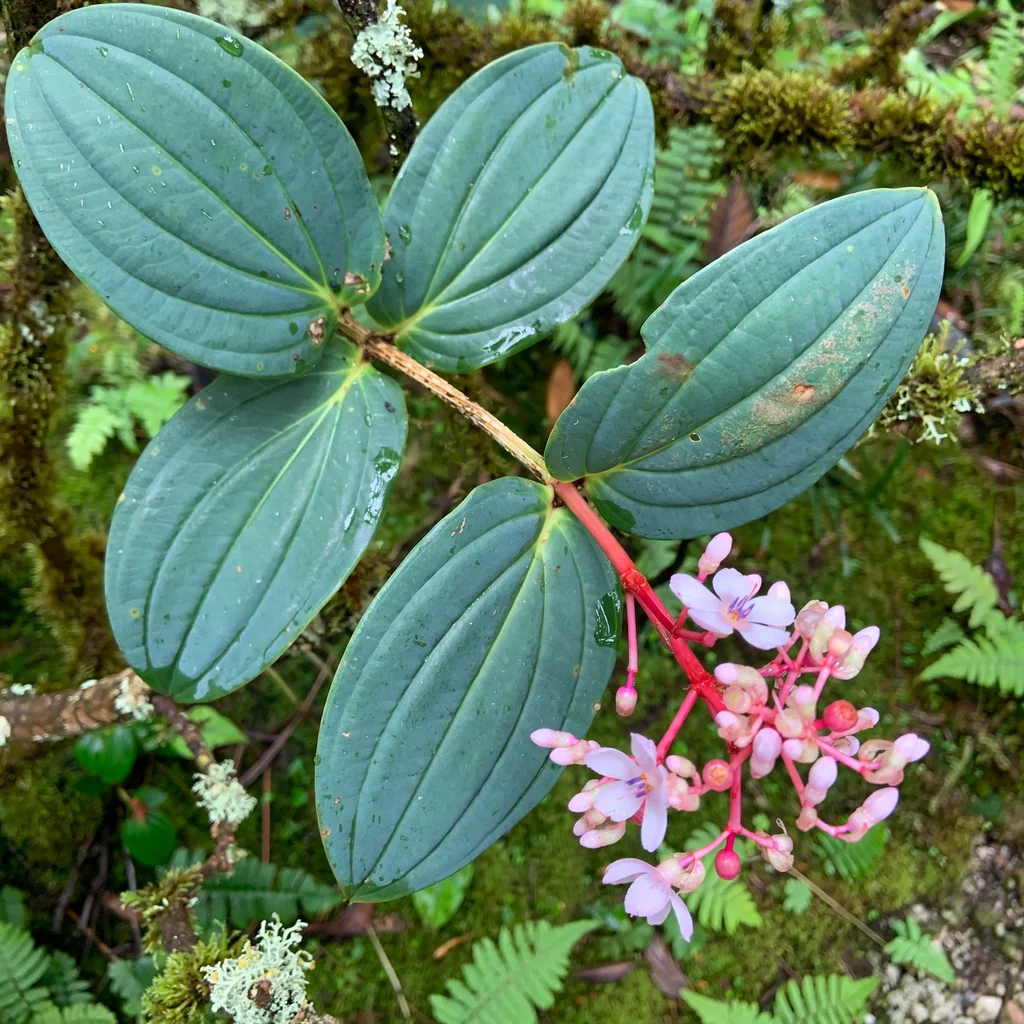
Medinilla cumingii is a small evergreen epiphytic shrub with distinctly square stems, reaching four to six feet in warm gardens. The leaves are large, glossy and leathery, held opposite or in whorls of three to four and reaching twelve inches long with a pale midrib.
It is distinguished by many-flowered pendant panicles to ten inches long, each carrying up to one hundred pink flowers from whitish-pink buds with contrasting purple stamens. The flowers are followed by quarter-inch rounded berries that ripen through pink and purple to black.
Uses & Benefits:
Essentials
At a Glance
Plant Type
Shrub
Height
60"
Width
48"
Light
Partial Sun, Shade
Zones
10
Water
Medium
Humidity
High
Lifespan
Long-lived evergreen shrub
Native To
Philippines (Luzon)
Toxicity
Non-toxic; sap may irritate skin
Bloom period
Winter – Spring
In flower about 6 months of the year
Planting
How to Grow
- Pot in a coarse epiphytic mix of bark, perlite and peat that drains freely.
- Place in bright indirect light with only gentle morning sun and complete protection from frost.
- Water regularly to keep the mix evenly moist, letting the surface dry before watering again.
- Maintain high humidity with grouping or a pebble tray plus good air movement.
- Tip-prune lightly after flowering to keep a compact shape.
Pro Tip
Grow it as an epiphyte in an airy orchid-like bark mix in bright shade, keeping the mix evenly moist but never waterlogged and never overpotting.
Keep It Thriving
Care Guide
Do
- Provide bright indirect light and high humidity with good air circulation.
- Use a coarse orchid-like mix with excellent drainage.
- Water regularly and feed lightly through the growing season.
Don't
- Do not overpot into a large container or dense potting soil.
- Do not overwater or leave the pot standing in water.
- Do not expose to frost or harsh midday sun.
Seasonal Care Calendar
| Task | Jan | Feb | Mar | Apr | May | Jun | Jul | Aug | Sep | Oct | Nov | Dec |
|---|---|---|---|---|---|---|---|---|---|---|---|---|
| Fertilize | ||||||||||||
| Pest Check | ||||||||||||
| Propagate | ||||||||||||
| Prune | ||||||||||||
| Winter Prep |
Watch Out For
Pests & Diseases
Common Pests
Common Diseases
In the Garden
Landscape Uses & Companions
Landscape Uses
Companion Plants
Multiply
Propagation Methods
Good to Know
Common Questions
Chandelier Tree questions
What zones can Chandelier Tree grow in?
Chandelier Tree is hardy in USDA Zone 10: in that range it survives winter in the ground. Colder than Zone 10, grow it in a container you can move to shelter for the winter.
When does Chandelier Tree bloom?
Chandelier Tree typically blooms from winter to spring. Exact timing shifts a week or two with your zone — Sow's bloom calendar maps it to your garden.
Does Chandelier Tree need full sun?
Chandelier Tree does best in part shade.
More Medinilla to compare
Keep exploring
Explore the genus
Hardy in your zone?
Grow Chandelier Tree with confidence
See it in a design of your actual yard, get zone-matched care reminders, and track it season by season in your garden journal.