The Story
Plant Bio
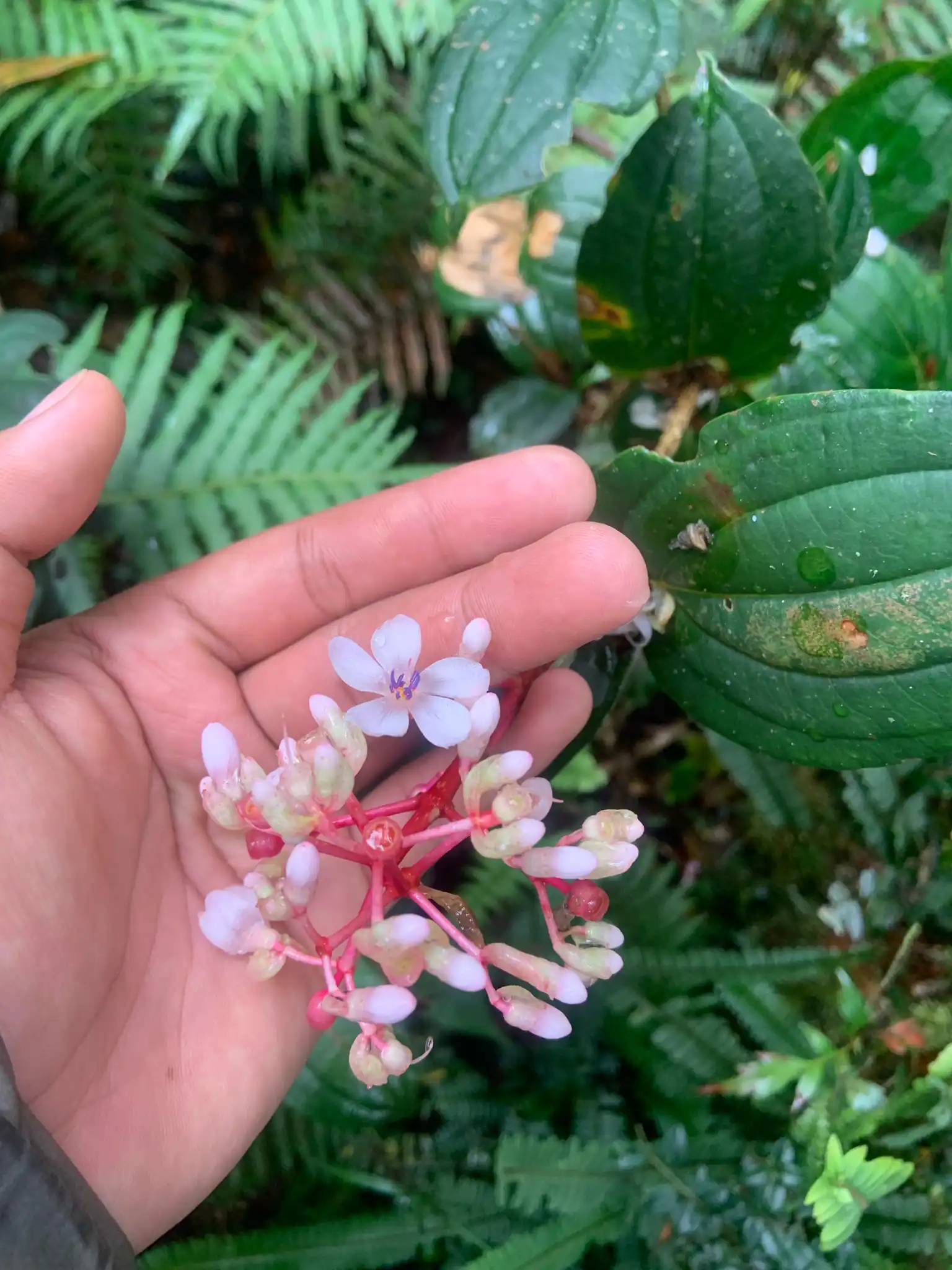
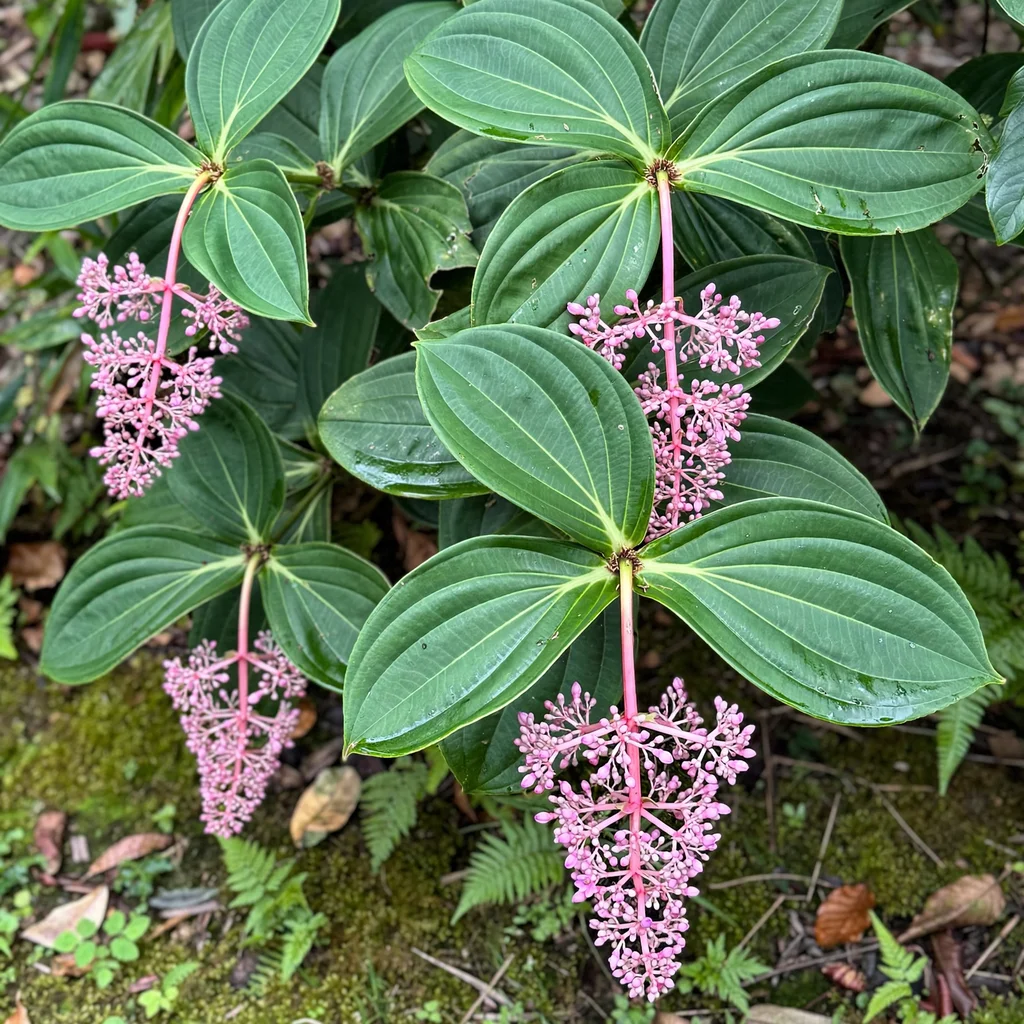
Medinilla apoensis is an evergreen epiphytic shrub from Mindanao in the Philippines, reaching two to five feet in cultivation with spreading, nearly hairless stems. The leaves are thick and leathery, elliptic-oblong ten to twenty centimeters long, bluish-green above with seven prominent longitudinal veins.
This species bears loose pendant clusters of pink to red five-parted flowers without large showy bracts, each flower with pink hypanthia and petals about seven millimeters long. Stem nodes are bristly, and plants from mossy forest at 1500 to 1800 meters form small round berries about seven millimeters across.
Uses & Benefits:
Essentials
At a Glance
Plant Type
Tropical
Height
60"
Width
36"
Light
Partial Sun, Shade
Zones
10
Water
Moderate
Humidity
High
Lifespan
Perennial
Native To
Philippines (Mindanao)
Toxicity
Non-toxic
Bloom period
Spring
In flower about 3 months of the year
Planting
How to Grow
- Site in bright filtered light with morning sun only and no hot afternoon sun.
- Plant in a fast-draining epiphytic mix of bark, perlite, and peat with pH moderately acid to neutral.
- Water regularly to keep the mix lightly moist, letting the top dry slightly and never waterlogged.
- Maintain warmth above 40-50F with high humidity and daily misting indoors.
- Overwinter indoors except in frost-free Zone 10-11; protect all growth from freezing.
Pro Tip
Grow mounted or in a very open bark mix in bright filtered light with high humidity; hot afternoon sun, freezing cold, and soggy mix cause rapid failure.
Keep It Thriving
Care Guide
Do
- Provide bright filtered light and high humidity
- Use a fast-draining bark-based epiphytic mix
- Let the top of the mix dry slightly between waterings
Don't
- Do not place in hot afternoon sun
- Do not overwater or leave pots standing in water
- Do not expose to frost or freezing temperatures
Seasonal Care Calendar
| Task | Jan | Feb | Mar | Apr | May | Jun | Jul | Aug | Sep | Oct | Nov | Dec |
|---|---|---|---|---|---|---|---|---|---|---|---|---|
| Fertilize | ||||||||||||
| Pest Check | ||||||||||||
| Propagate | ||||||||||||
| Prune | ||||||||||||
| Winter Prep |
Watch Out For
Pests & Diseases
Common Pests
Common Diseases
In the Garden
Landscape Uses & Companions
Landscape Uses
Multiply
Propagation Methods
Good to Know
Common Questions
Philippine Pink Medinilla questions
What zones can Philippine Pink Medinilla grow in?
Philippine Pink Medinilla is hardy in USDA Zone 10: in that range it survives winter in the ground. Colder than Zone 10, grow it in a container you can move to shelter for the winter, or as an annual.
When does Philippine Pink Medinilla bloom?
Philippine Pink Medinilla typically blooms in spring. Exact timing shifts a week or two with your zone — Sow's bloom calendar maps it to your garden.
Does Philippine Pink Medinilla need full sun?
Philippine Pink Medinilla does best in part shade.
More Medinilla to compare
Keep exploring
Explore the genus
Hardy in your zone?
Grow Philippine Pink Medinilla with confidence
See it in a design of your actual yard, get zone-matched care reminders, and track it season by season in your garden journal.