The Story
Plant Bio
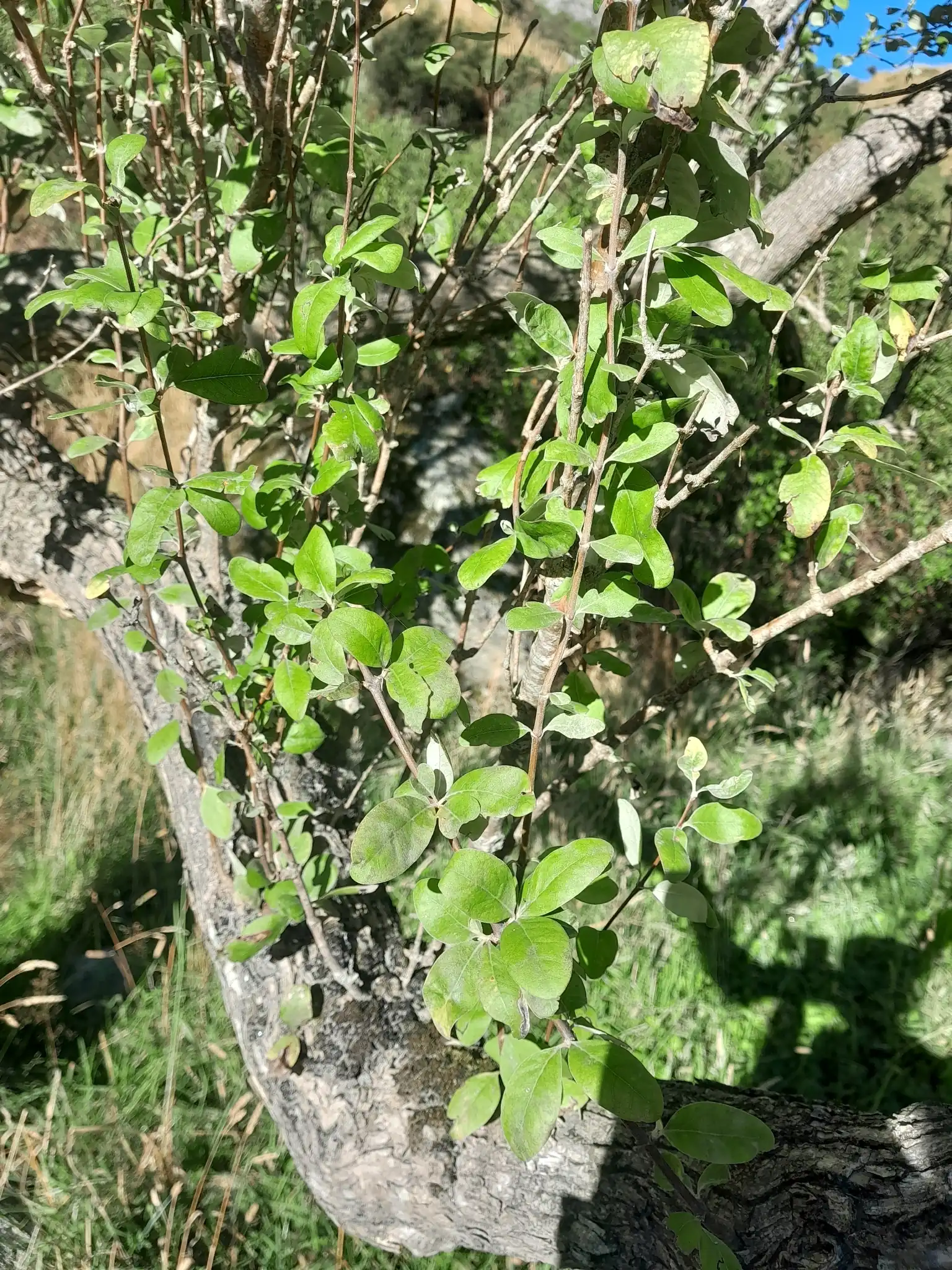
Olearia hectorii is a rare, small-leaved deciduous shrub or small tree native to the South Island of New Zealand, maturing to fifteen to twenty feet in cultivation. Young stems are grooved and reddish-brown, developing deeply furrowed, corky bark on older wood beneath narrow, grey-green foliage.
This species is unusual among tree daisies for its fully deciduous nature, shedding its small leaves each winter to expose an intricate branch structure. In spring, clusters of small, drooping, cream-to-yellow daisy flower heads open directly along the branchlets.
Uses & Benefits:
Essentials
At a Glance
Plant Type
Shrub
Height
236"
Width
197"
Light
Full Sun, Partial Sun
Zones
7, 8, 9
Water
Moderate
Humidity
Moderate
Lifespan
Long-lived
Native To
New Zealand (South Island)
Toxicity
Non-toxic
Bloom period
Spring
In flower about 3 months of the year
Planting
How to Grow
- Select a site in full sun or light partial shade with fertile, well-draining soil.
- Dig a planting hole twice as wide as the root ball and equal in depth.
- Place the plant, backfill with topsoil, and firm gently to clear air pockets.
- Water thoroughly to settle the soil around the young roots.
- Apply a two-inch layer of organic mulch around the base, keeping it clear of the trunk.
Pro Tip
Prune lightly only after spring flowering, as cutting back into thick, bare, corky wood yields poor regrowth and can kill entire branches.
Keep It Thriving
Care Guide
Do
- Provide regular water during the first growing season until established.
- Ensure the soil drains freely, as roots rot easily in standing water.
- Prune lightly right after flowering to shape the canopy.
Don't
- Do not hard-prune into thick, leafless, corky stems.
- Do not allow soil to remain waterlogged around the roots.
- Do not over-fertilize, as excess nutrients encourage weak, leggy growth.
Seasonal Care Calendar
| Task | Jan | Feb | Mar | Apr | May | Jun | Jul | Aug | Sep | Oct | Nov | Dec |
|---|---|---|---|---|---|---|---|---|---|---|---|---|
| Fertilize | ||||||||||||
| Mulch | ||||||||||||
| Pest Check | ||||||||||||
| Prune |
Watch Out For
Pests & Diseases
Common Pests
Common Diseases
In the Garden
Landscape Uses & Companions
Landscape Uses
Companion Plants
Multiply
Propagation Methods
Good to Know
Common Questions
Hector's Tree Daisy questions
What zones can Hector's Tree Daisy grow in?
Hector's Tree Daisy is hardy in USDA Zones 7–9: in that range it survives winter in the ground. Colder than Zone 7, grow it in a container you can move to shelter for the winter. Warmer than Zone 9, winter isn't the problem: it prefers colder winters, and summer heat can shorten its life.
Is Hector's Tree Daisy deer resistant?
Not reliably. Deer may browse Hector's Tree Daisy, especially tender spring growth — plan on repellents or fencing where pressure is high.
When does Hector's Tree Daisy bloom?
Hector's Tree Daisy typically blooms in spring. Exact timing shifts a week or two with your zone — Sow's bloom calendar maps it to your garden.
Does Hector's Tree Daisy need full sun?
Hector's Tree Daisy does best in full sun to part shade. In hot climates, afternoon shade keeps blooms fresher longer.
Is Hector's Tree Daisy drought tolerant?
Yes — once established (usually after the first full season), Hector's Tree Daisy handles dry spells with minimal watering. Water deeply its first year to build the root system that makes that possible.
More Olearia to compare
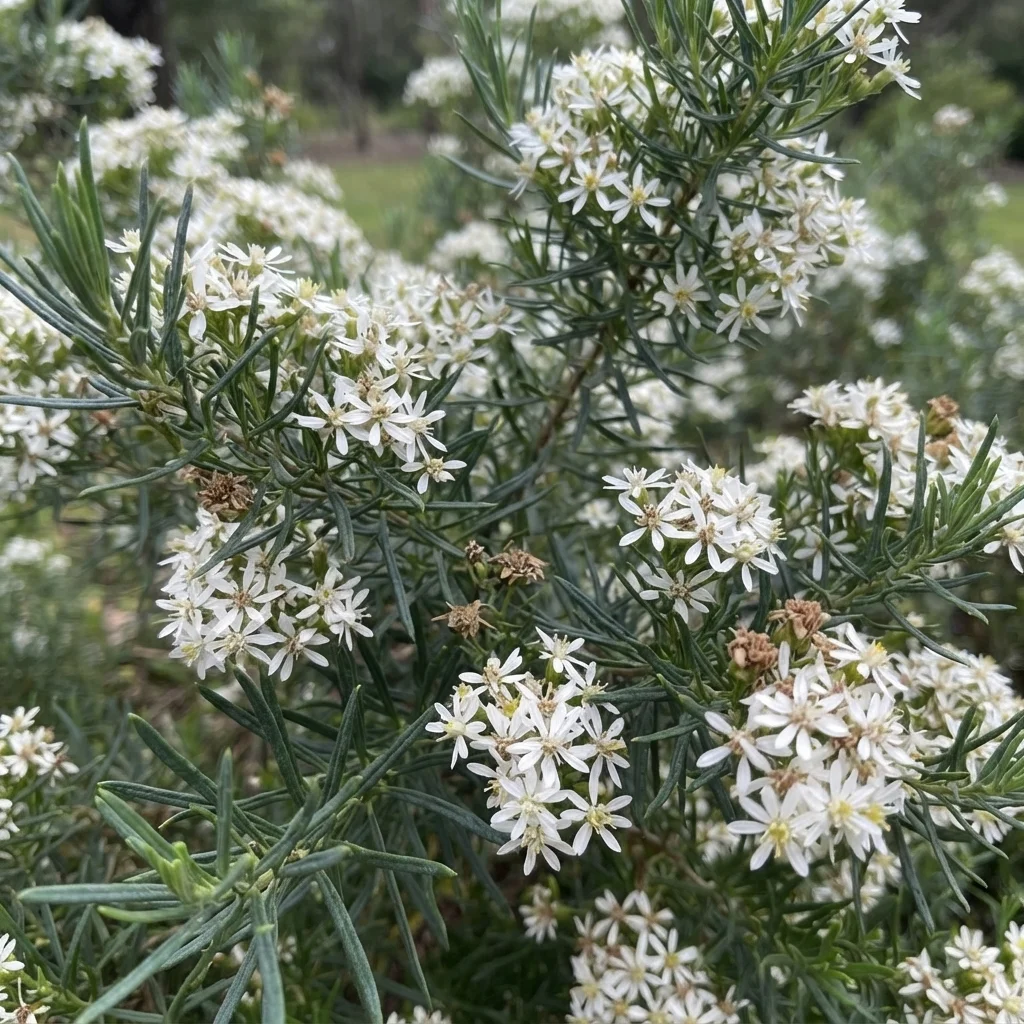
Sticky Daisy-bush
Olearia glutinosa
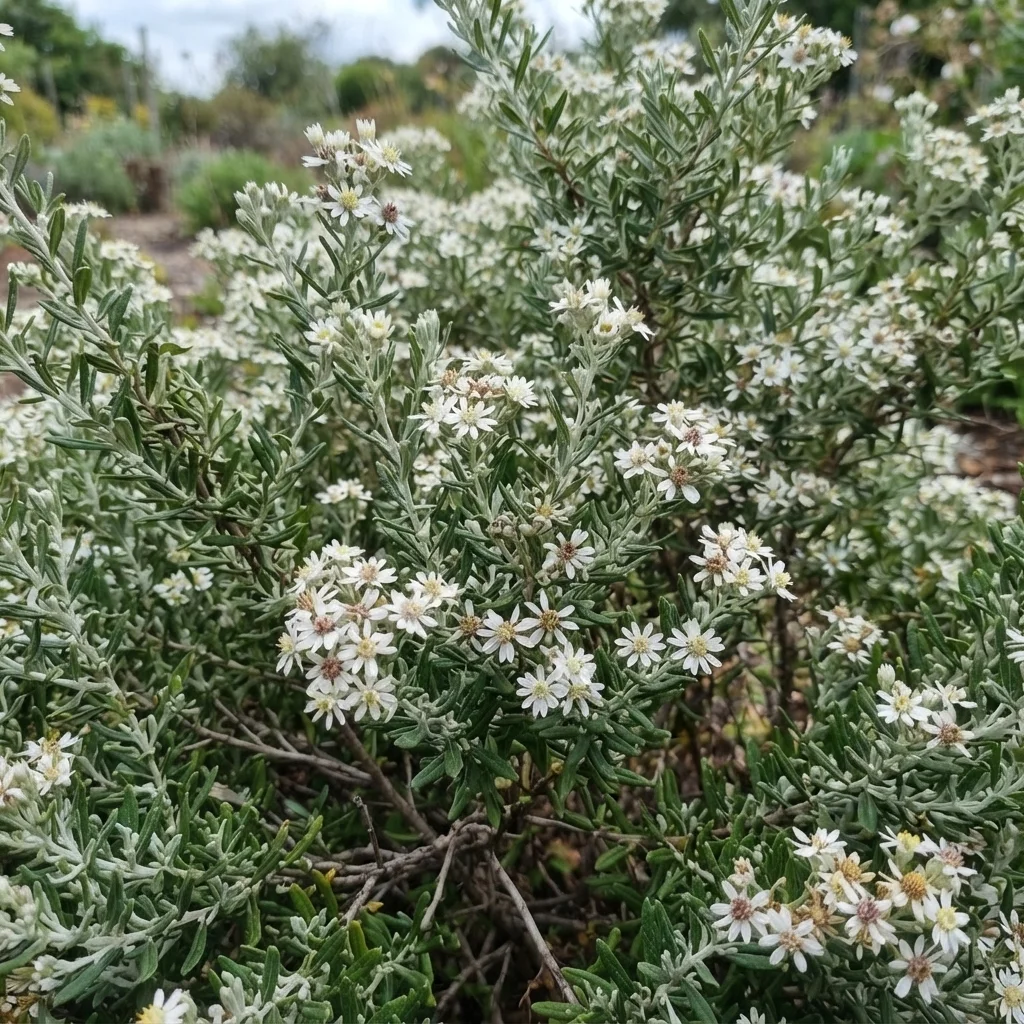
Twiggy Daisy-Bush
Olearia ramulosa
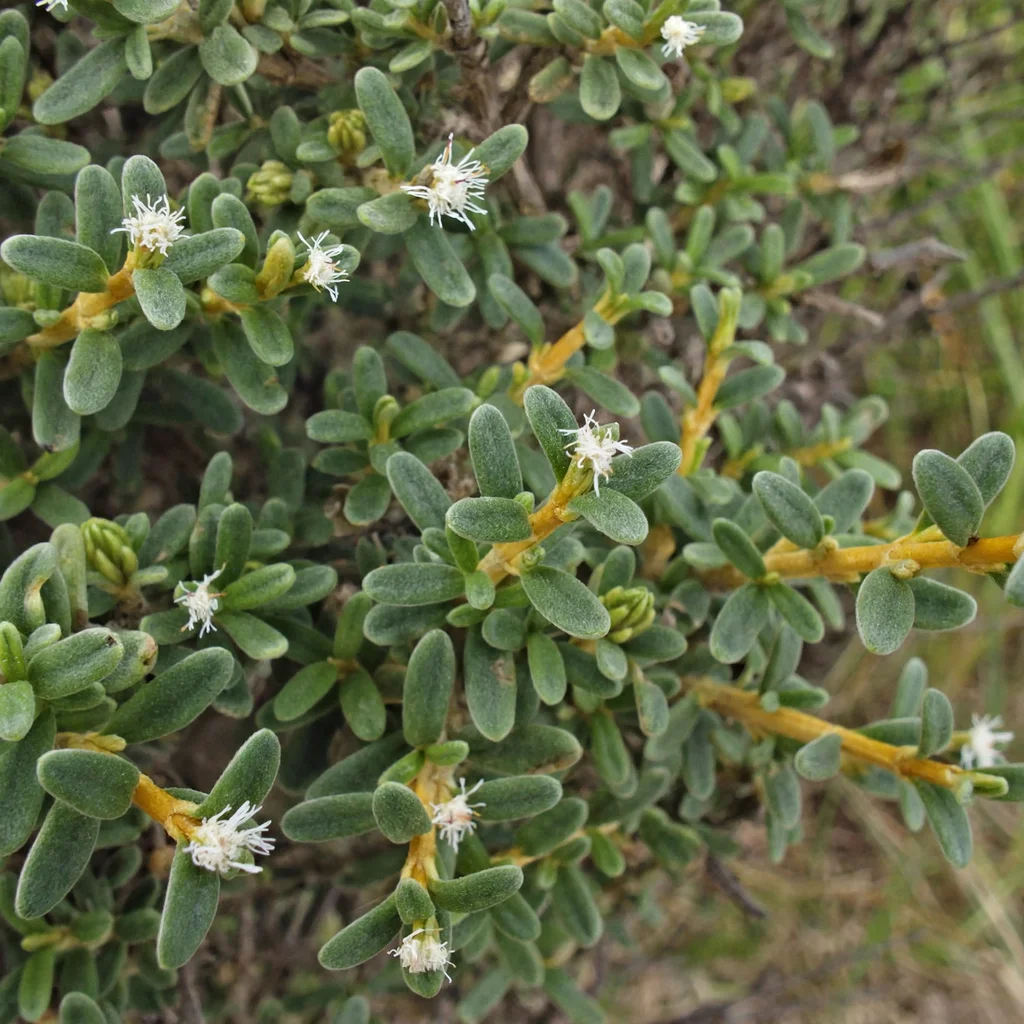
Coastal Daisy-Bush
Olearia solandri
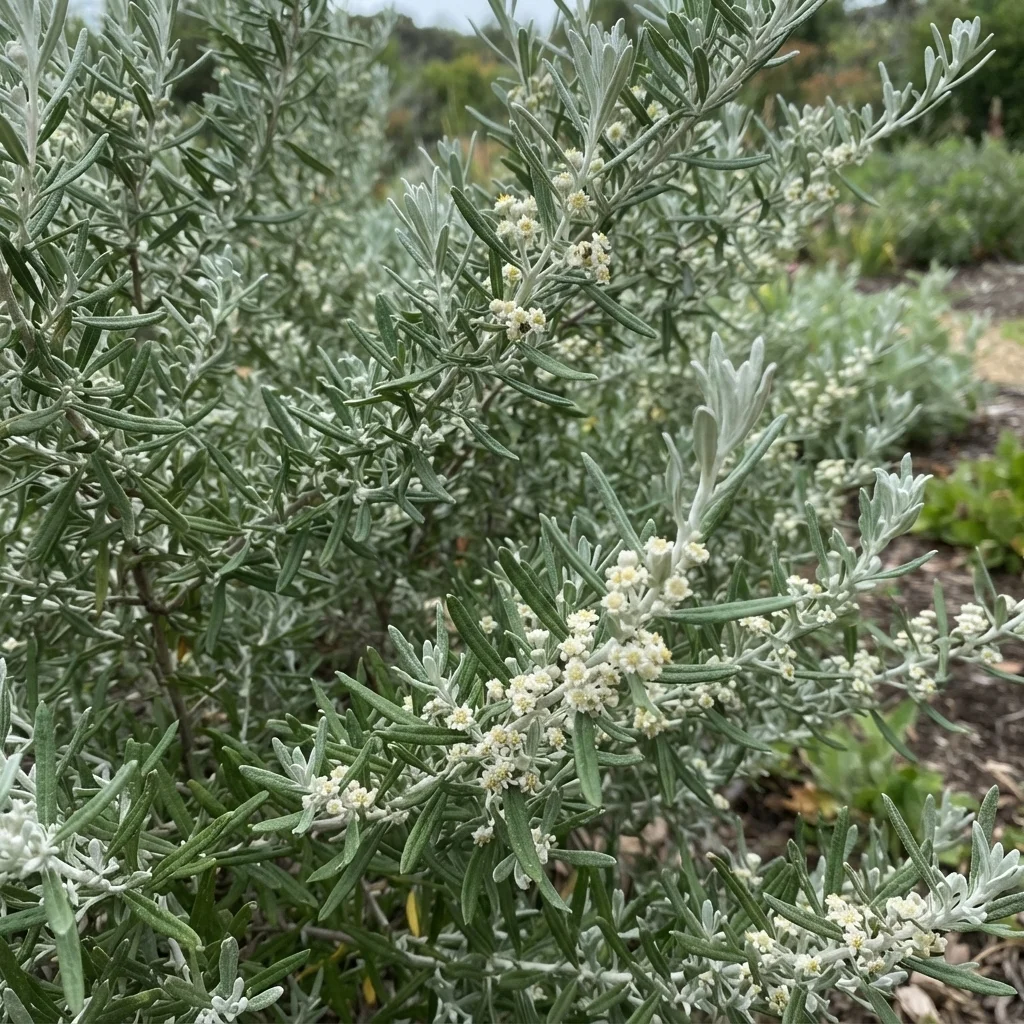
Coast Daisy-bush
Olearia axillaris
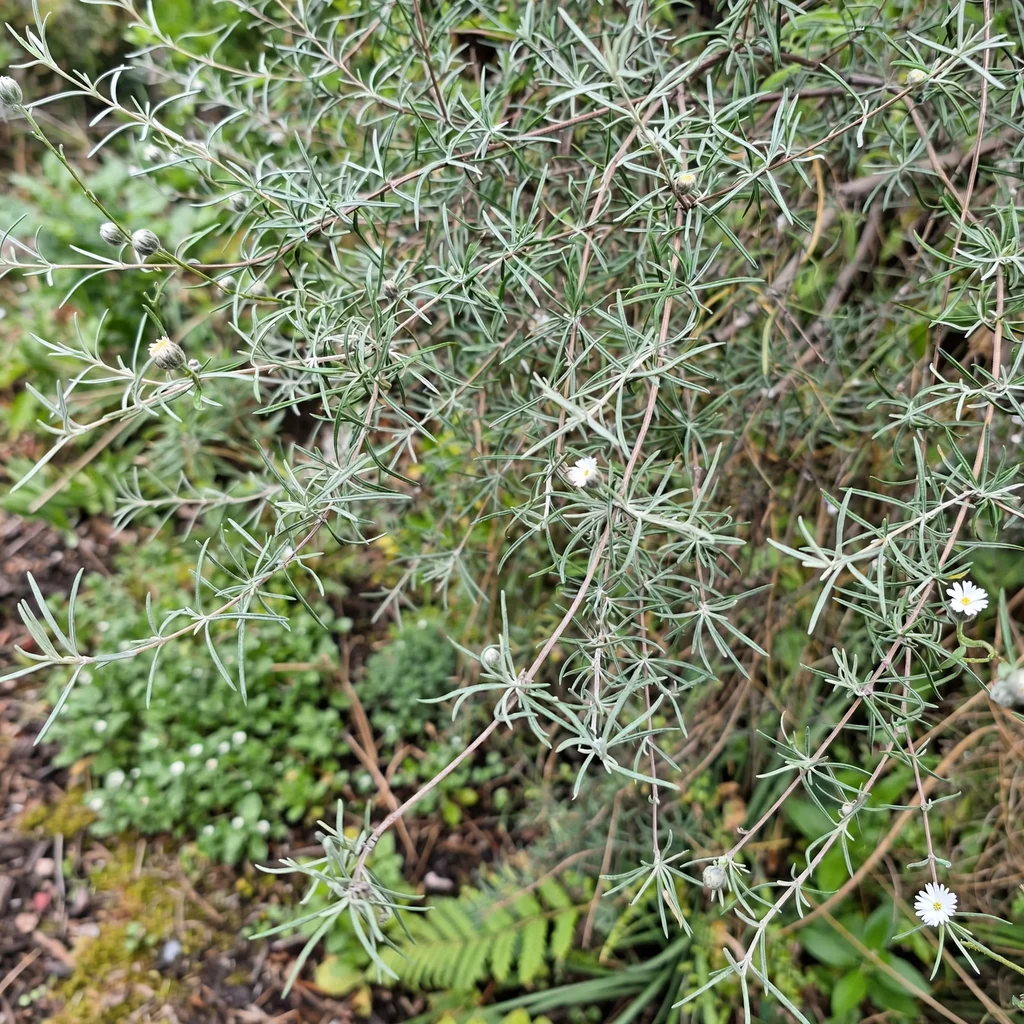
Twiggy Tree Daisy
Olearia lineata
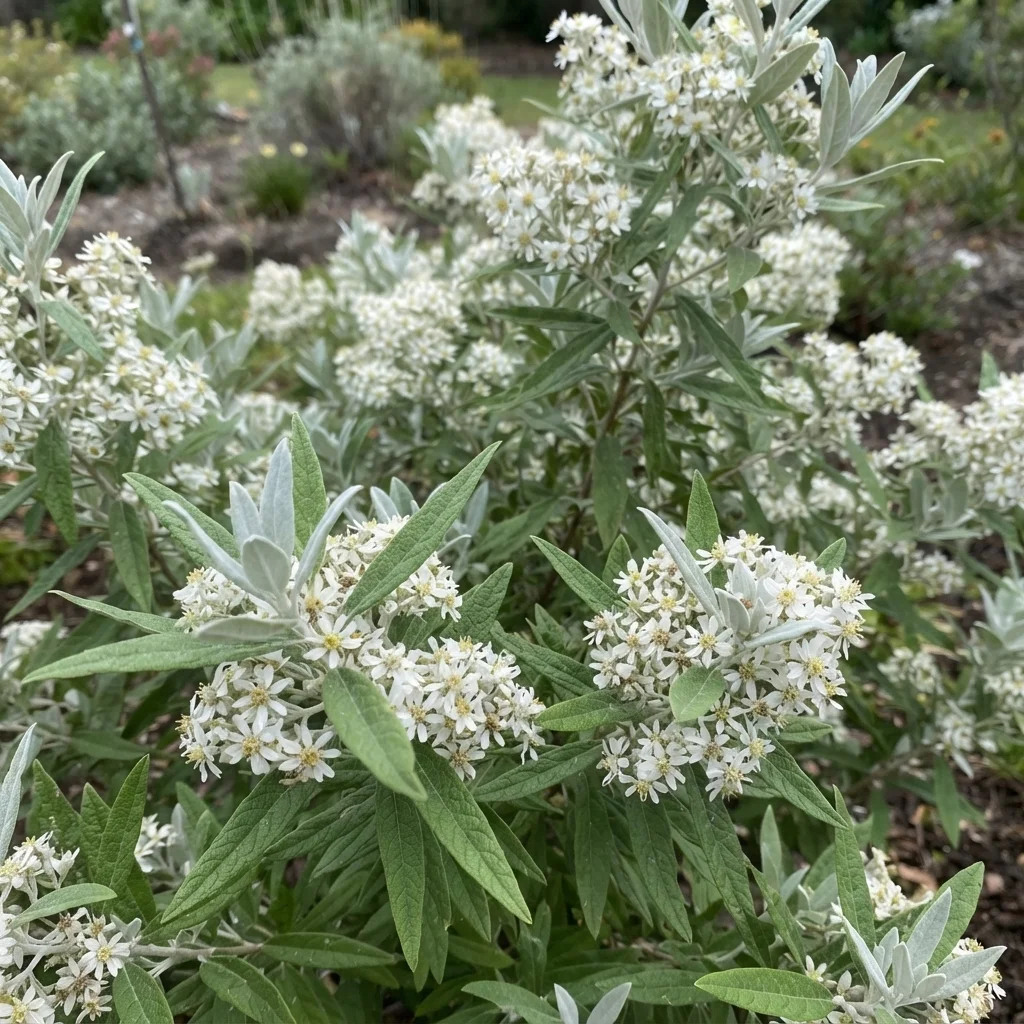
Snowy Daisy-Bush
Olearia lirata
Keep exploring
Explore the genus
Hardy in your zone?
Grow Hector's Tree Daisy with confidence
See it in a design of your actual yard, get zone-matched care reminders, and track it season by season in your garden journal.