The Story
Plant Bio
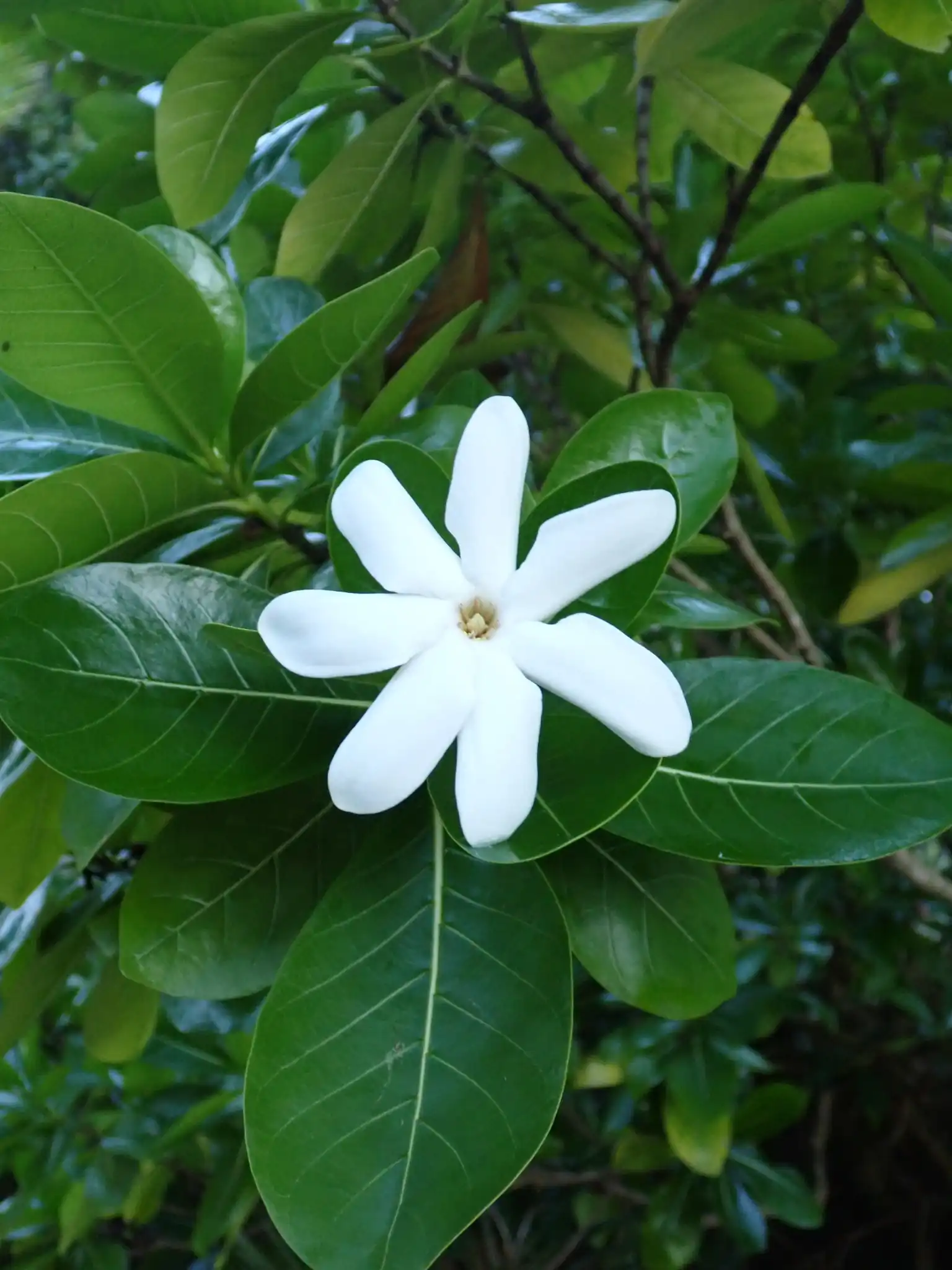
Gardenia taitensis is an evergreen shrub to small tree from Oceania, forming a dense upright framework with large glossy dark green leaves held opposite along the stems. It roots in free-draining acidic ground and grows fast in heat, building wood that carries solitary flowers at the shoot ends rather than in clusters.
It is distinguished by large solitary white pinwheel blooms that open creamy-white and age to pale ivory-yellow, each with five to nine waxy petals and a heavy sweet perfume. Unlike common cape jasmine it holds up better in heat and drier hillside ground, but its buds drop and roots rot where soil stays wet or alkaline.
Uses & Benefits:
Essentials
At a Glance
Plant Type
Shrub
Height
118"
Width
118"
Light
Full Sun, Partial Sun
Zones
8, 9, 10
Water
Average - evenly moist
Humidity
High - prefers warm humid air
Lifespan
Long-lived evergreen shrub
Native To
Fiji, Samoa, Tonga, Vanuatu, Niue, Wallis-Futuna
Toxicity
Unknown - conflicting reports; may cause stomach upset if ingested
Bloom period
Spring – Fall
In flower about 9 months of the year
Planting
How to Grow
- Plant after frost in full sun to light shade, with morning sun and afternoon shade in hot southern gardens.
- Set in fertile humus-rich acidic soil pH 5.5-6.5 that drains fast yet holds even moisture, with good air circulation.
- Water to keep soil evenly moist but never soggy; roots suffocate and rot in standing water.
- Feed with acidic water-soluble fertilizer every 2-4 weeks from spring through fall, none in winter.
- Prune after flowering to branch the stems; move pots indoors or cover when frost threatens.
Pro Tip
Prune right after each flush finishes and feed with acidic fertilizer through spring and summer; buds form on new wood and stall where roots sit wet or the pH runs high.
Keep It Thriving
Care Guide
Do
- Do plant in acidic well-drained soil and check pH stays below 6.5.
- Do water evenly and mulch to hold moisture without wetting foliage.
- Do prune after each flower flush to keep the shrub dense.
Don't
- Do not plant in alkaline or heavy clay that stays wet.
- Do not let frost or hard freeze hit unprotected buds and leaves.
- Do not spray blooms with water or handle overhead watering late in the day.
Seasonal Care Calendar
| Task | Jan | Feb | Mar | Apr | May | Jun | Jul | Aug | Sep | Oct | Nov | Dec |
|---|---|---|---|---|---|---|---|---|---|---|---|---|
| Fertilize | ||||||||||||
| Pest Check | ||||||||||||
| Plant | ||||||||||||
| Prune | ||||||||||||
| Winter Prep |
Watch Out For
Pests & Diseases
Common Pests
Common Diseases
In the Garden
Landscape Uses & Companions
Landscape Uses
Good to Know
Common Questions
Tahitian Gardenia questions
What zones can Tahitian Gardenia grow in?
Tahitian Gardenia is hardy in USDA Zones 8–10: in that range it survives winter in the ground. Colder than Zone 8, grow it in a container you can move to shelter for the winter.
When does Tahitian Gardenia bloom?
Tahitian Gardenia typically blooms from spring to fall. Exact timing shifts a week or two with your zone — Sow's bloom calendar maps it to your garden.
Does Tahitian Gardenia need full sun?
Tahitian Gardenia does best in full sun to part shade. In hot climates, afternoon shade keeps blooms fresher longer.
More Gardenia to compare
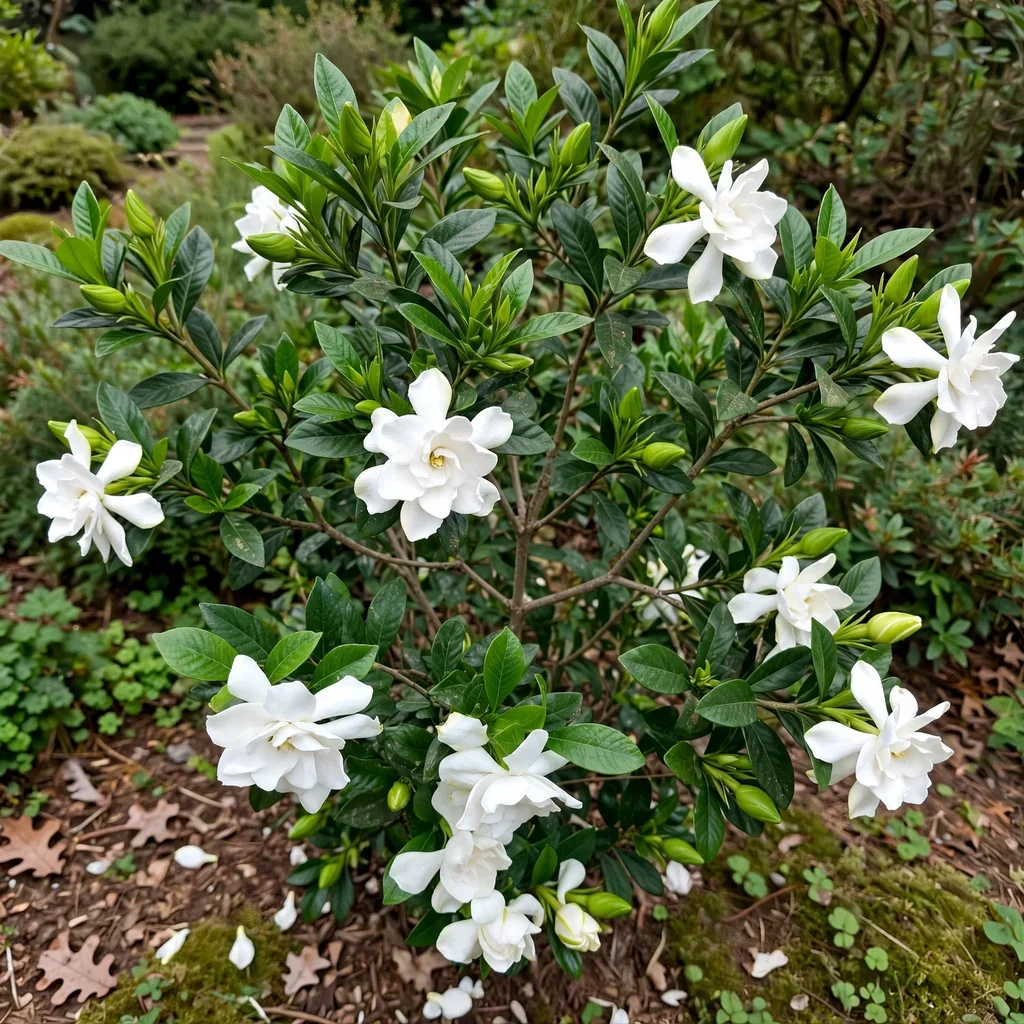
Gardenia Jubilation
Gardenia jasminoides 'Jubilation'
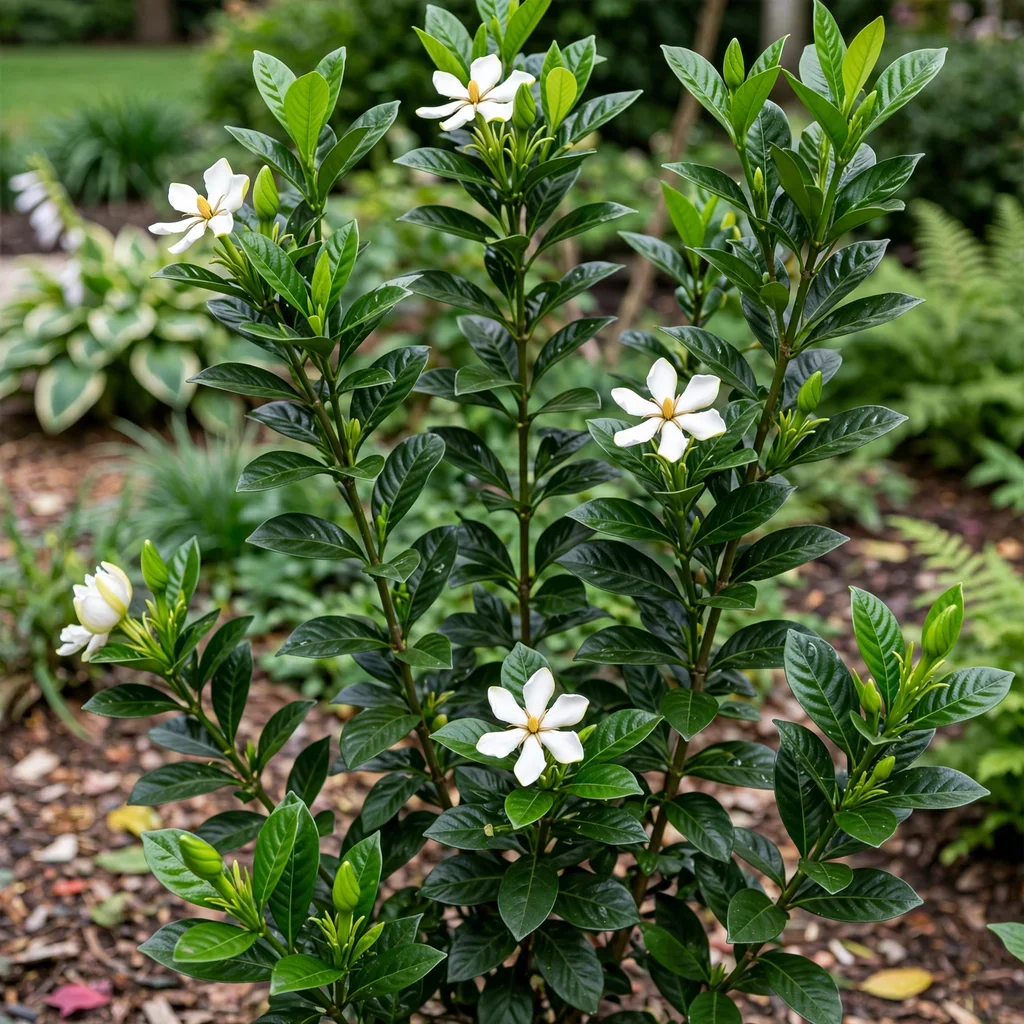
Gardenia jasminoides Diamond Spire
Gardenia jasminoides 'Diamond Spire'
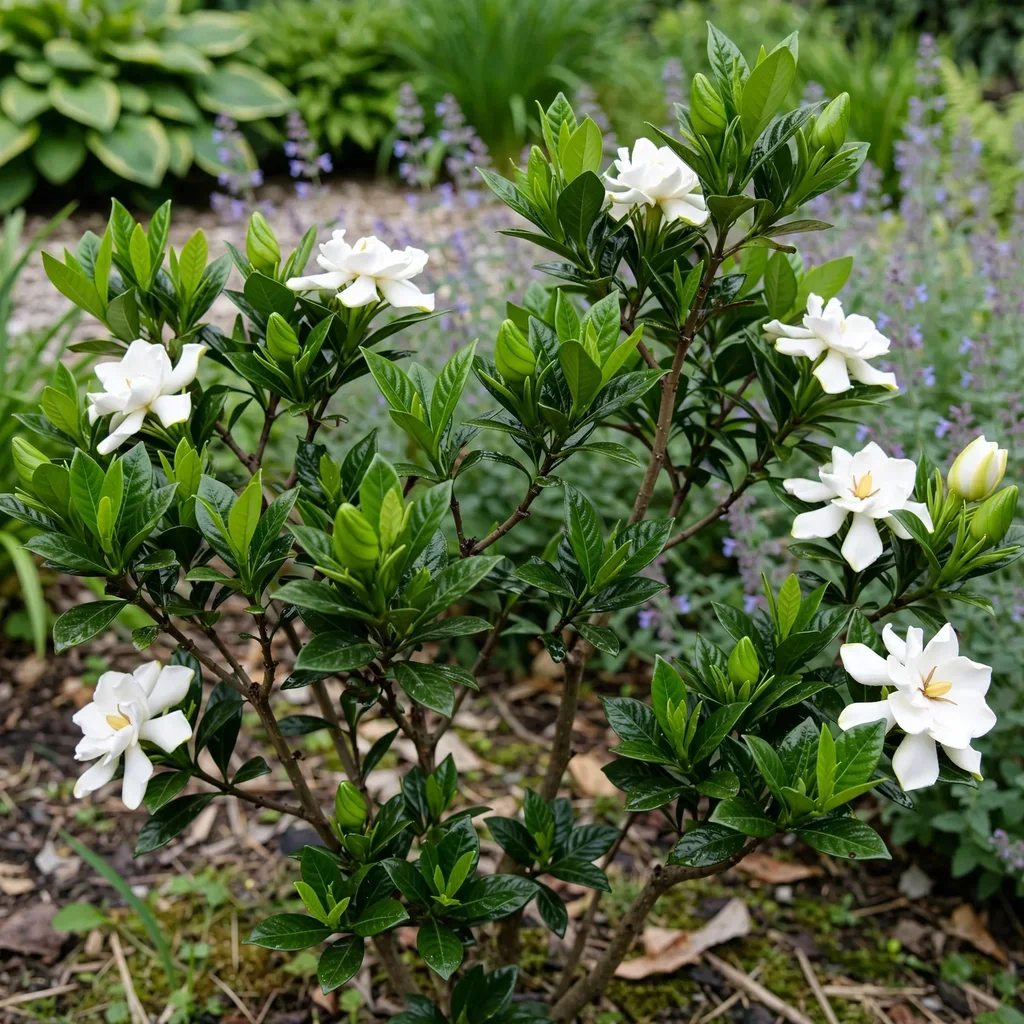
Steady As She Goes Gardenia
Gardenia jasminoides 'Steady As She Goes'
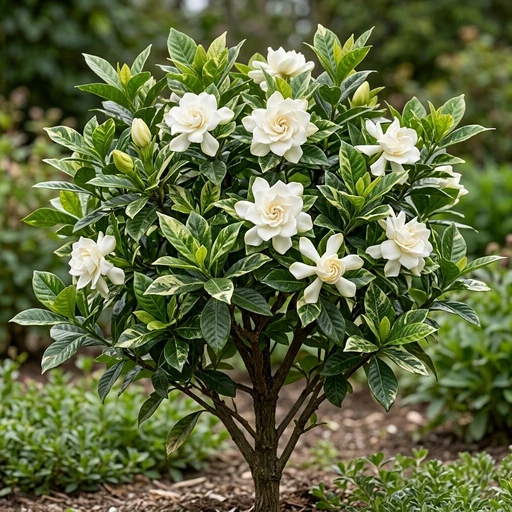
August Beauty Gardenia
Gardenia augusta 'August Beauty'
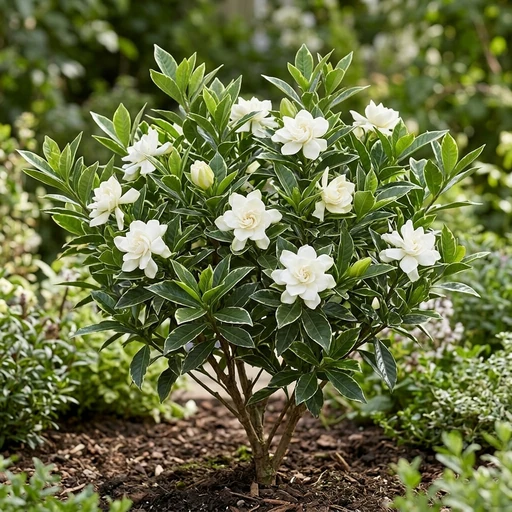
ScentAmazing Gardenia
Gardenia jasminoides 'Scent Amazing'
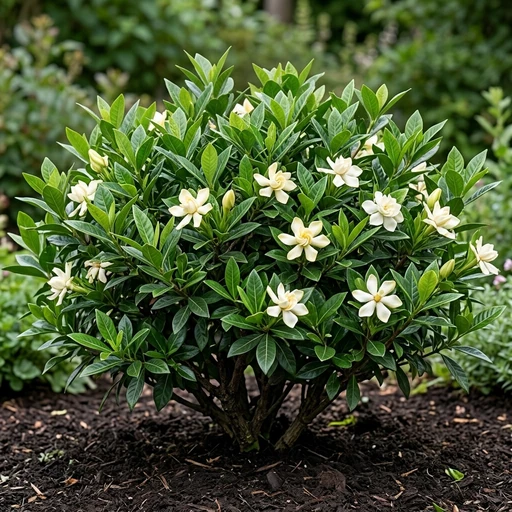
Dwarf Gardenia 'Radicans'
Gardenia jasminoides 'Radicans'
Keep exploring
Explore the genus
Hardy in your zone?
Grow Tahitian Gardenia with confidence
See it in a design of your actual yard, get zone-matched care reminders, and track it season by season in your garden journal.