The Story
Plant Bio
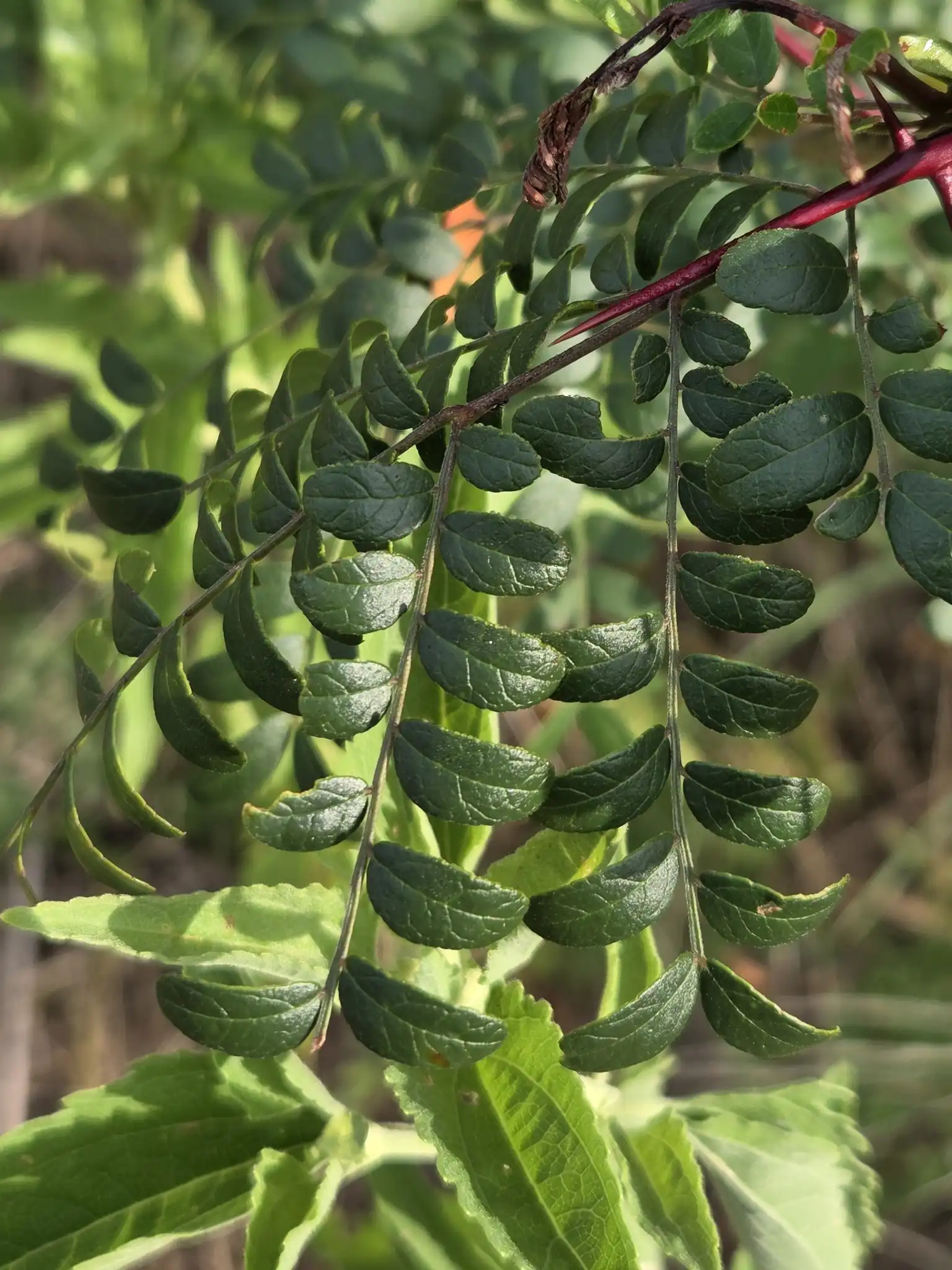
Pistacia mexicana is a multi-stemmed small tree or large shrub from limestone hills of southern Texas and northern Mexico, reaching 12 to 20 feet in gardens with an open rounded crown. The leaves are pinnately compound and glossy, emerging dark red to purple-red before hardening to dark green, and plants hold much of their foliage through winter in mild climates.
Male and female flowers grow on separate plants, and only females carry the clustered red nut-like drupes in fall that dry to near black. It is still sold as Pistacia texana, and most seed is empty, so filled seed must be separated by floating before sowing.
Uses & Benefits:
Essentials
At a Glance
Plant Type
Tree
Height
240"
Width
300"
Light
Full Sun, Partial Sun
Zones
7, 8, 9
Water
Low
Humidity
Low
Lifespan
Long-lived
Native To
S. Texas, N. Mexico to Honduras
Toxicity
Non-toxic
Bloom period
Spring – Summer
In flower about 6 months of the year
Planting
How to Grow
- Plant in full sun in deep, well-drained alkaline soil over limestone, rock or gravel.
- Set the root ball high with the crown above grade and backfill with native soil.
- Water deeply at planting, then taper to infrequent deep soakings once established.
- Mulch with gravel, not bark, keeping mulch off the trunk.
Pro Tip
Plant high in lean, calcareous gravel and withhold summer water once established; wet feet kills it faster than cold.
Keep It Thriving
Care Guide
Do
- Give full sun and sharp drainage over limestone or gravel.
- Float seed and sow only the sunk, filled seed.
- Leave female branches unpruned to set fall berries for birds.
Don't
- Do not overwater or plant in clay that holds winter wet.
- Do not expect edible pistachios; the nuts are tiny and largely empty.
- Do not shear the open crown into a tight ball.
Seasonal Care Calendar
| Task | Jan | Feb | Mar | Apr | May | Jun | Jul | Aug | Sep | Oct | Nov | Dec |
|---|---|---|---|---|---|---|---|---|---|---|---|---|
| Pest Check | ||||||||||||
| Plant | ||||||||||||
| Propagate | ||||||||||||
| Prune |
Watch Out For
Pests & Diseases
Common Pests
Common Diseases
In the Garden
Landscape Uses & Companions
Landscape Uses
Multiply
Propagation Methods
Good to Know
Common Questions
Mexican Pistachio questions
What zones can Mexican Pistachio grow in?
Mexican Pistachio is hardy in USDA Zones 7–9: in that range it survives winter in the ground. Colder than Zone 7, winters are too cold for it to survive outdoors. Warmer than Zone 9, winter isn't the problem: it prefers colder winters, and summer heat can shorten its life.
Is Mexican Pistachio deer resistant?
Yes — Mexican Pistachio is rated deer-resistant. Deer typically pass it over, though extreme hunger can override any plant's defenses.
When does Mexican Pistachio bloom?
Mexican Pistachio typically blooms from spring to summer. Exact timing shifts a week or two with your zone — Sow's bloom calendar maps it to your garden.
Does Mexican Pistachio need full sun?
Mexican Pistachio does best in full sun to part shade. In hot climates, afternoon shade keeps blooms fresher longer.
Is Mexican Pistachio drought tolerant?
Yes — once established (usually after the first full season), Mexican Pistachio handles dry spells with minimal watering. Water deeply its first year to build the root system that makes that possible.
More Pistacia to compare
Keep exploring
Explore the genus
Hardy in your zone?
Grow Mexican Pistachio with confidence
See it in a design of your actual yard, get zone-matched care reminders, and track it season by season in your garden journal.