The Story
Plant Bio
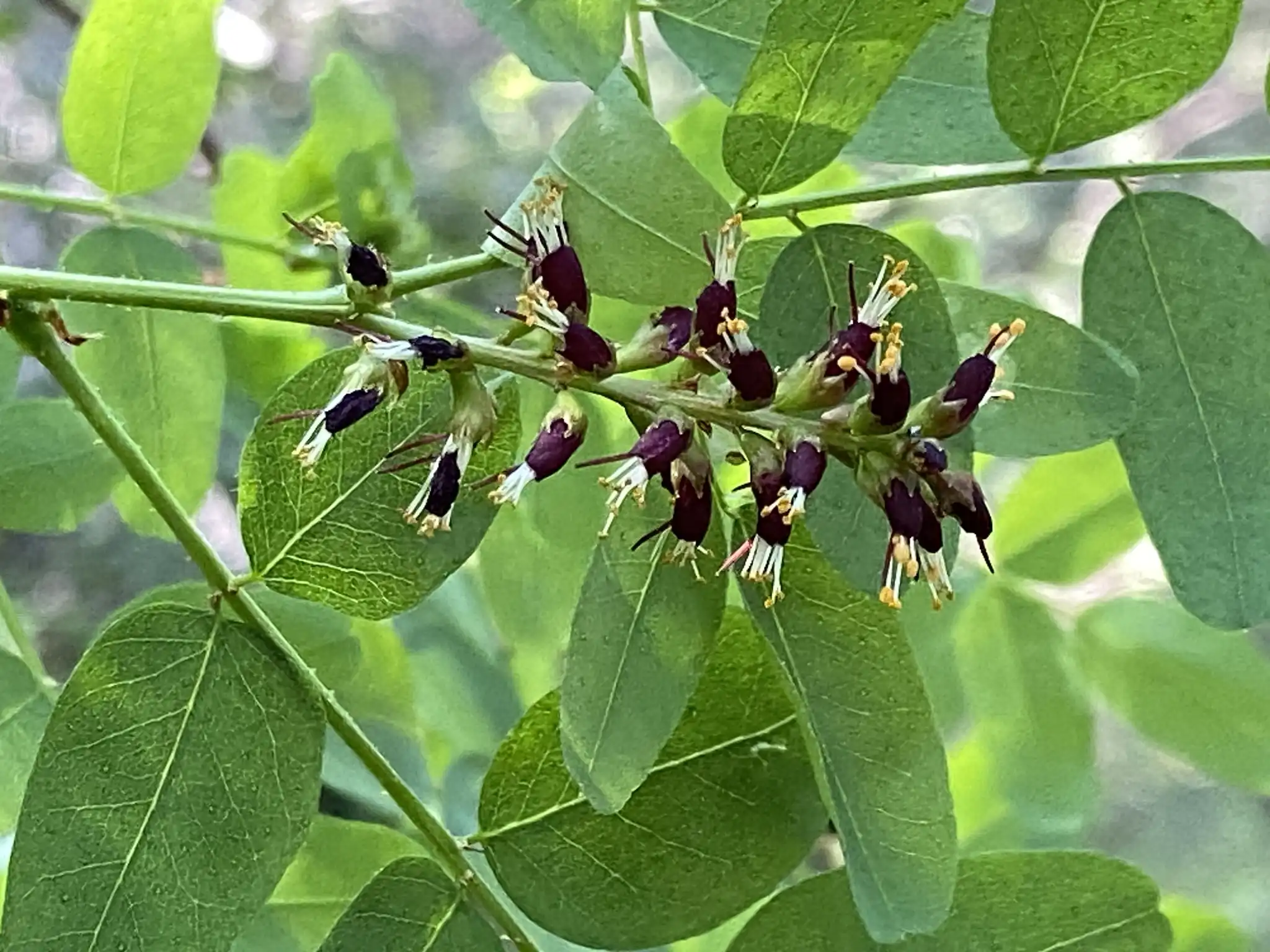
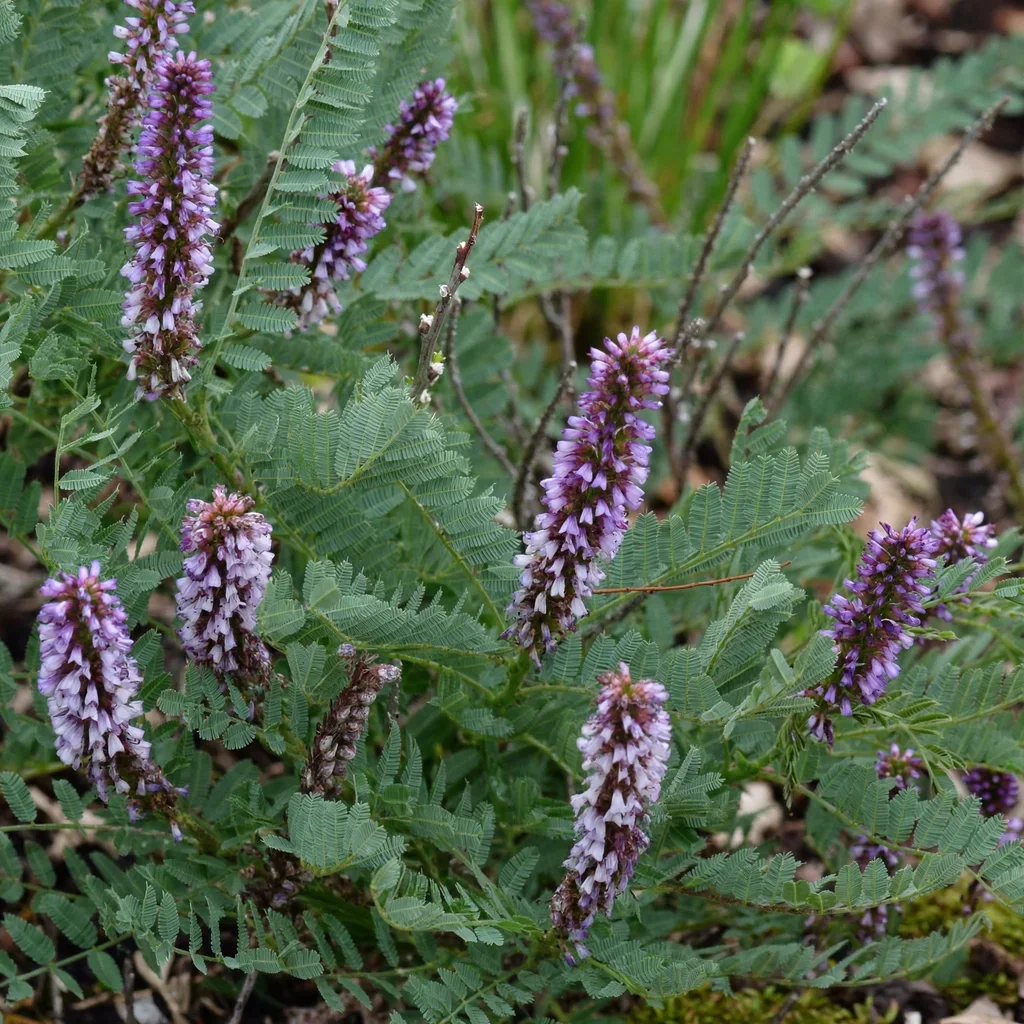
Amorpha californica, California false indigo, is a winter-deciduous unarmed shrub with an erect to spreading open canopy, reaching 3 to 6 feet tall and wide in cultivation and to 10 feet with age. The leaves are pinnately compound and hairy and release a pleasant scent when crushed, with new shoots and leaf undersides softly hairy throughout.
The flowers carry only a single purple to deep violet petal, with 10 protruding stamens tipped in bright orange anthers held in scattered spike-like racemes 4 to 8 inches long. Bloom comes in spring into summer, followed by an open see-through winter form that reads as a chaparral and oak-woodland understory shrub rather than a dense evergreen screen.
Uses & Benefits:
Essentials
At a Glance
Plant Type
Shrub
Height
72"
Width
72"
Light
Full Sun, Partial Sun
Zones
5, 6, 7, 8, 9, 10
Water
Low
Humidity
Unknown
Lifespan
Long-lived deciduous shrub
Native To
California, Arizona, northern Baja California
Toxicity
Unknown
Bloom period
Spring – Summer
In flower about 6 months of the year
Planting
How to Grow
- Plant in full sun for best bloom, with light afternoon shade tolerated in hot sites.
- Set in sandy, loamy, or rocky soil that drains sharply, pH slightly acid to neutral.
- Water to establish, then cut back to low water with optional summer irrigation only.
- Leave room for a 6-foot open canopy and avoid planting where winter wet collects.
Pro Tip
Give it lean, well-drained soil and low water once established; overwatering and shearing to force density do more harm than neglect.
Keep It Thriving
Care Guide
Do
- Plant where air moves and soil dries between waterings.
- Prune lightly to shape and remove dead wood.
- Deadhead spent racemes to encourage continued bloom.
Don't
- Do not overwater or plant in poorly drained clay.
- Do not shear into a tight evergreen hedge.
- Do not expect dense winter screening from this deciduous shrub.
Seasonal Care Calendar
| Task | Jan | Feb | Mar | Apr | May | Jun | Jul | Aug | Sep | Oct | Nov | Dec |
|---|---|---|---|---|---|---|---|---|---|---|---|---|
| Deadhead | ||||||||||||
| Pest Check | ||||||||||||
| Plant | ||||||||||||
| Propagate | ||||||||||||
| Prune |
Watch Out For
Pests & Diseases
Common Pests
Common Diseases
In the Garden
Landscape Uses & Companions
Landscape Uses
Multiply
Propagation Methods
Good to Know
Common Questions
California False Indigo questions
What zones can California False Indigo grow in?
California False Indigo is hardy in USDA Zones 5–10: in that range it survives winter in the ground. Colder than Zone 5, grow it in a container you can move to shelter for the winter.
Is California False Indigo deer resistant?
Yes — California False Indigo is rated deer-resistant. Deer typically pass it over, though extreme hunger can override any plant's defenses.
When does California False Indigo bloom?
California False Indigo typically blooms from spring to summer. Exact timing shifts a week or two with your zone — Sow's bloom calendar maps it to your garden.
Does California False Indigo need full sun?
California False Indigo does best in full sun to part shade. In hot climates, afternoon shade keeps blooms fresher longer.
Is California False Indigo drought tolerant?
Yes — once established (usually after the first full season), California False Indigo handles dry spells with minimal watering. Water deeply its first year to build the root system that makes that possible.
More Amorpha to compare
Keep exploring
Explore the genus
Grow California False Indigo with confidence
See it in a design of your actual yard, get zone-matched care reminders, and track it season by season in your garden journal.