The Story
Plant Bio
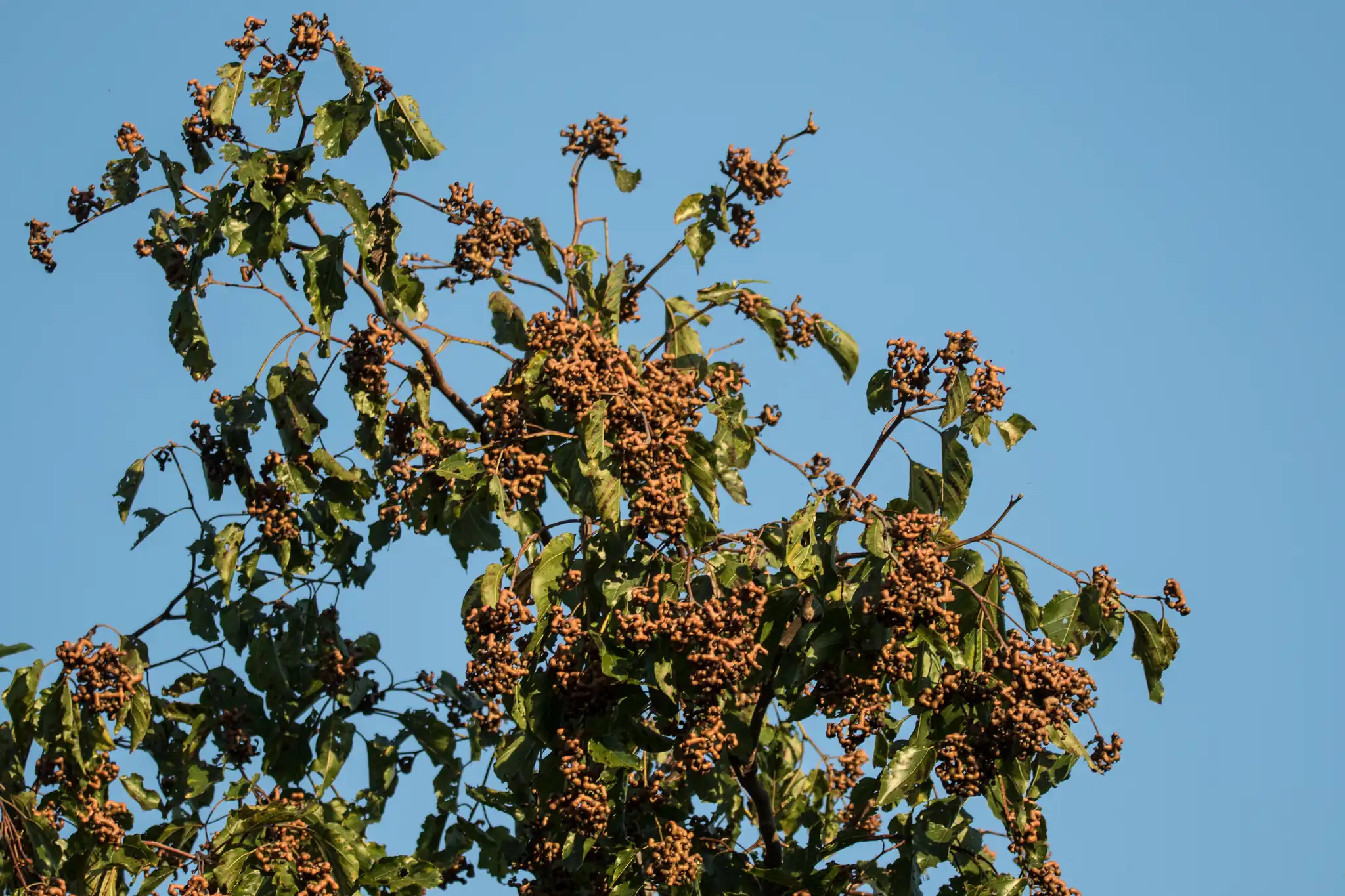
Hovenia dulcis is a deciduous tree in the buckthorn family reaching 30 to 35 feet in gardens with an open, upright-oval crown on a central leader and ridged light gray bark. Leaves are alternate, simple and ovate-elliptic 4 to 8 inches long, glossy green with serrate margins, falling green without fall color.
Flowers are small greenish-white stars one quarter inch across, borne in terminal cymose panicles of 50 to 80 blooms in early summer with a sweet fragrance. The crop is small brown drupes under one half inch, each on a swollen reddish peduncle stalk that turns sweet and raisin-flavored at ripeness and litters the ground.
Uses & Benefits:
Essentials
At a Glance
Plant Type
Tree
Height
420"
Width
300"
Light
Full Sun, Partial Sun
Zones
6, 7, 8, 9, 10
Water
Moderate
Humidity
Average garden humidity
Lifespan
Long-lived tree
Native To
China, Japan, Korea
Toxicity
Non-toxic; thorns on branches
Bloom period
Early summer – Summer
In flower about 3 months of the year
Planting
How to Grow
- Plant in full sun to partial shade with room for a 25-foot canopy in well-drained clay, sand or loam.
- Dig the hole twice as wide as the container, set the crown level with the soil and water deeply.
- Spread 2 to 3 inches of mulch under the canopy, keeping it off the trunk.
- Water regularly through the first season, then only during dry spells once established.
- Prune in late winter to lift lower limbs and keep a single leader; little other pruning is needed.
Pro Tip
Harvest the swollen stalks, not the seed-like drupes, when they turn red-brown and soft; plant well clear of power lines and compacted wet ground.
Keep It Thriving
Care Guide
Do
- Give it deep, well-drained soil and full sun for best flowering and fruiting.
- Clear fallen stalks and drupes if litter is a problem near paths.
- Stake young trees until the trunk calipers up.
Don't
- Do not plant under power lines or in tight street pits.
- Do not plant in poorly drained or heavily compacted soil.
- Do not expect the hard brown drupes to taste like raisins; only the swollen stalk is sweet.
Seasonal Care Calendar
| Task | Jan | Feb | Mar | Apr | May | Jun | Jul | Aug | Sep | Oct | Nov | Dec |
|---|---|---|---|---|---|---|---|---|---|---|---|---|
| Harvest | ||||||||||||
| Mulch | ||||||||||||
| Pest Check | ||||||||||||
| Plant | ||||||||||||
| Prune |
Watch Out For
Pests & Diseases
Common Pests
Common Diseases
In the Garden
Landscape Uses & Companions
Landscape Uses
Companion Plants
Multiply
Propagation Methods
Good to Know
Common Questions
Japanese Raisin Tree questions
What zones can Japanese Raisin Tree grow in?
Japanese Raisin Tree is hardy in USDA Zones 6–10: in that range it survives winter in the ground. Colder than Zone 6, winters are too cold for it to survive outdoors.
Is Japanese Raisin Tree deer resistant?
Not reliably. Deer may browse Japanese Raisin Tree, especially tender spring growth — plan on repellents or fencing where pressure is high.
When does Japanese Raisin Tree bloom?
Japanese Raisin Tree typically blooms in summer. Exact timing shifts a week or two with your zone — Sow's bloom calendar maps it to your garden.
Does Japanese Raisin Tree need full sun?
Japanese Raisin Tree does best in full sun to part shade. In hot climates, afternoon shade keeps blooms fresher longer.
Is Japanese Raisin Tree drought tolerant?
Yes — once established (usually after the first full season), Japanese Raisin Tree handles dry spells with minimal watering. Water deeply its first year to build the root system that makes that possible.
Keep exploring
Explore the genus
Hardy in your zone?
Grow Japanese Raisin Tree with confidence
See it in a design of your actual yard, get zone-matched care reminders, and track it season by season in your garden journal.