The Story
Plant Bio
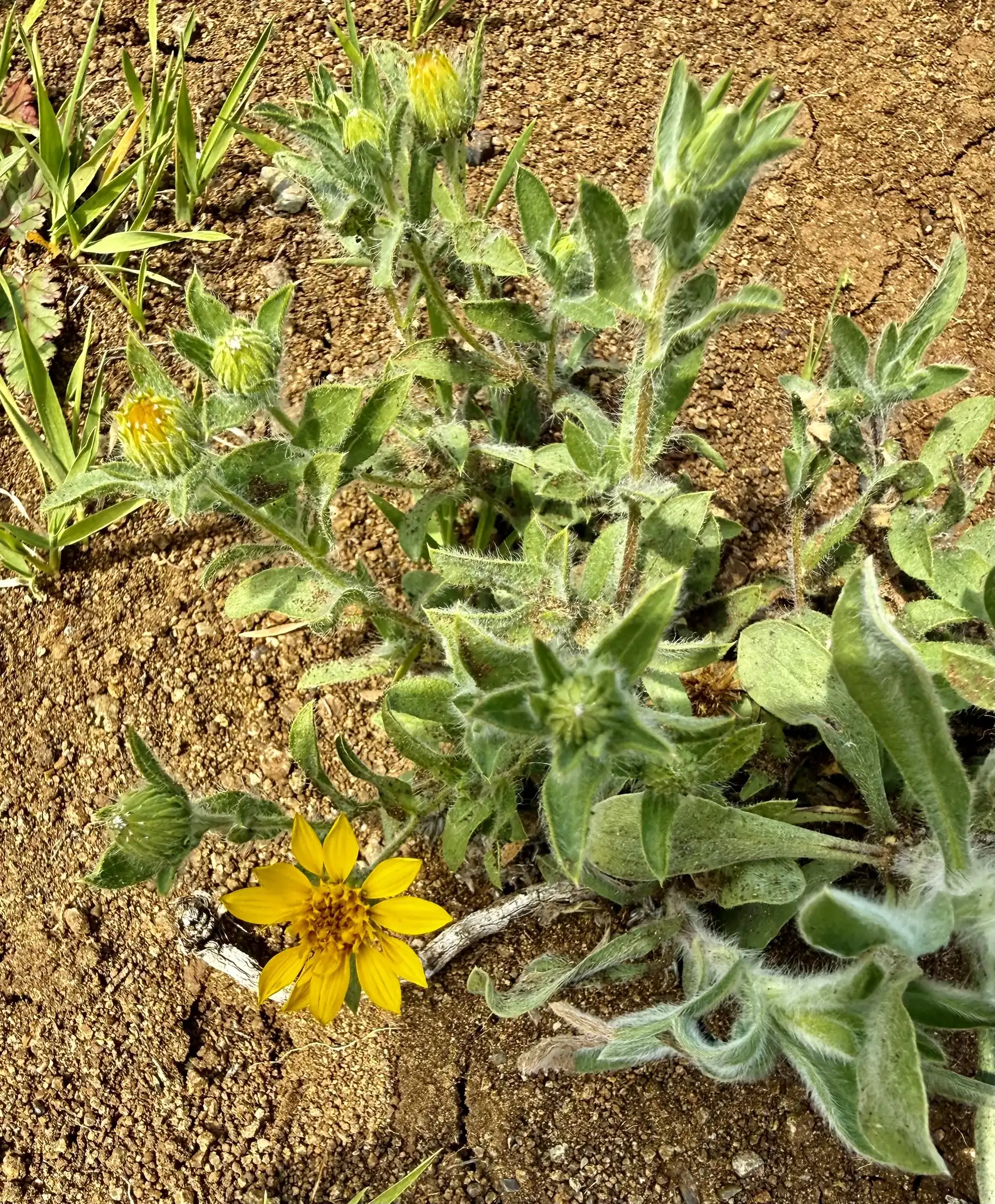
Heterotheca sessiliflora, native to the southwestern United States and northwestern Mexico, is a low-growing perennial herb or subshrub adapted to dry coastal dunes and sandy scrub habitats. Its branching stems form spreading clumps of grey-green foliage coated in bristly hairs and glandular secretions.
Yellow ray florets surround darker yellow central disc florets, held in tight heads clustered at branch tips across an unusually long blooming period. The glandular leaf hairs release an aromatic scent when brushed and discourage mammalian browsing.
Uses & Benefits:
Essentials
At a Glance
Plant Type
Perennial
Height
28"
Width
35"
Light
Full Sun, Partial Sun
Zones
8, 9, 10
Water
Low
Humidity
Low to moderate
Lifespan
Perennial
Native To
North America (Southwest US and Northwest Mexico)
Toxicity
Non-toxic (hairs may cause contact irritation)
Bloom period
Spring – Winter
In flower about 12 months of the year
Planting
How to Grow
- Select a site in full sun or light afternoon shade with sharply draining sandy or loamy soil.
- Dig a planting hole matching the root ball depth and set the plant crown flush with the soil surface.
- Water lightly at planting to settle the roots, avoiding standing water around the base.
- Establish deep, infrequent irrigation during the first growing season before tapering off watering.
Pro Tip
Prune back spent flowering stems lightly after peak bloom flushes to maintain a tight habit, avoiding cuts into old woody stems that lack green leaf nodes.
Keep It Thriving
Care Guide
Do
- Plant in sharply draining sandy or gravelly soil.
- Provide full sun exposure to maintain compact stems.
- Prune spent flower stems lightly to trim growth back.
Don't
- Do not plant in heavy, wet clay soils.
- Do not overwater established plants during dry summer months.
- Do not cut hard into old leafless woody stem bases.
Seasonal Care Calendar
| Task | Jan | Feb | Mar | Apr | May | Jun | Jul | Aug | Sep | Oct | Nov | Dec |
|---|---|---|---|---|---|---|---|---|---|---|---|---|
| Pest Check | ||||||||||||
| Propagate | ||||||||||||
| Prune | ||||||||||||
| Spring Cleanup |
Watch Out For
Pests & Diseases
Common Pests
Common Diseases
In the Garden
Landscape Uses & Companions
Landscape Uses
Multiply
Propagation Methods
Good to Know
Common Questions
Sessileflower False Goldenaster questions
What zones can Sessileflower False Goldenaster grow in?
Sessileflower False Goldenaster is hardy in USDA Zones 8–10: in that range it survives winter in the ground. Colder than Zone 8, grow it in a container you can move to shelter for the winter, or as an annual.
Is Sessileflower False Goldenaster deer resistant?
Yes — Sessileflower False Goldenaster is rated deer-resistant. Deer typically pass it over, though extreme hunger can override any plant's defenses.
When does Sessileflower False Goldenaster bloom?
Sessileflower False Goldenaster typically blooms in spring. Exact timing shifts a week or two with your zone — Sow's bloom calendar maps it to your garden.
Does Sessileflower False Goldenaster need full sun?
Sessileflower False Goldenaster does best in full sun to part shade. In hot climates, afternoon shade keeps blooms fresher longer.
Is Sessileflower False Goldenaster drought tolerant?
Yes — once established (usually after the first full season), Sessileflower False Goldenaster handles dry spells with minimal watering. Water deeply its first year to build the root system that makes that possible.
More Heterotheca to compare
Keep exploring
Explore the genus
Hardy in your zone?
Grow Sessileflower False Goldenaster with confidence
See it in a design of your actual yard, get zone-matched care reminders, and track it season by season in your garden journal.