The Story
Plant Bio
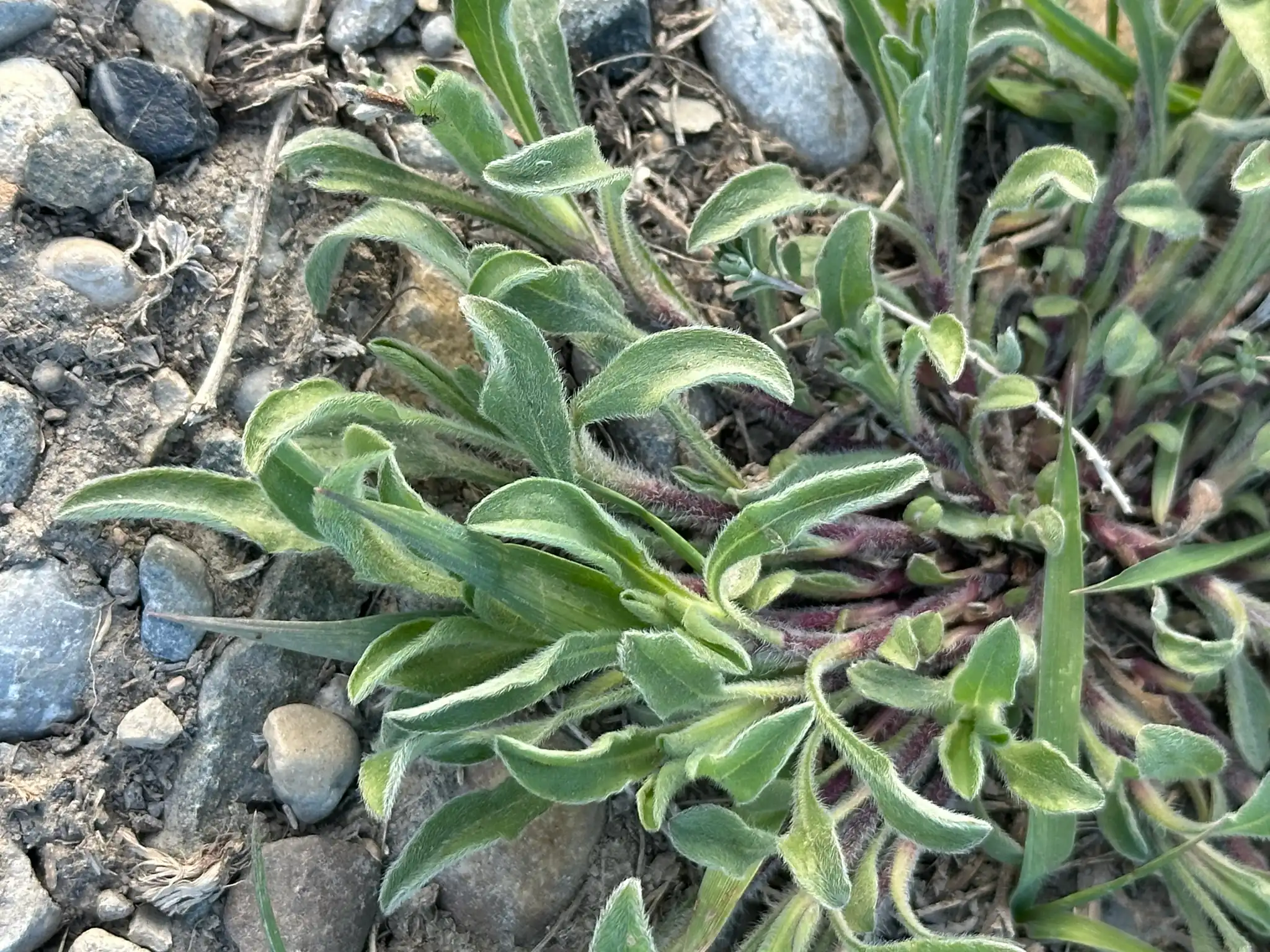
Heterotheca villosa is a tap-rooted herbaceous perennial of central and western North America, forming sprawling to bushy mounds 6 to 16 inches tall from a somewhat woody base. The foliage is softly grey-hairy with stiff spreading hairs and stalked glands, and the upper leaves are lance-shaped to narrowly oblong.
It carries many yellow daisy heads per plant, each with 12 to 25 ray florets around a central disk, opening from late spring through fall. Plants reseed profusely and vary widely across the range, with a deep taproot that resents moving once established.
Uses & Benefits:
Essentials
At a Glance
Plant Type
Perennial
Height
16"
Width
16"
Light
Full Sun, Partial Sun
Zones
4, 5, 6, 7, 8
Water
Low
Humidity
Low
Lifespan
Perennial
Native To
Central and Western North America
Toxicity
Unknown; reported toxic to some animals
Bloom period
Late spring – Autumn
In flower about 7 months of the year
Planting
How to Grow
- Set plants in full sun in very well-drained sandy or gravelly loam.
- Space 12 to 16 inches apart to allow airflow around the hairy foliage.
- Water in once, then water sparingly; established clumps thrive on dry conditions.
- Deadhead spent heads to limit self-sowing.
- Leave the base undisturbed; do not dig and divide tap-rooted crowns.
Pro Tip
Plant it where it can stay; the taproot resents moving, so control spread by deadheading before seed ripens.
Keep It Thriving
Care Guide
Do
- Grow in full sun for strongest bloom.
- Provide sharp drainage in sand or gravelly loam.
- Deadhead to curb self-sowing.
Don't
- Do not plant in heavy clay or soggy ground.
- Do not move established plants with taproots.
- Do not overwater or fertilize heavily.
Seasonal Care Calendar
| Task | Jan | Feb | Mar | Apr | May | Jun | Jul | Aug | Sep | Oct | Nov | Dec |
|---|---|---|---|---|---|---|---|---|---|---|---|---|
| Deadhead | ||||||||||||
| Pest Check | ||||||||||||
| Plant | ||||||||||||
| Spring Cleanup |
Watch Out For
Pests & Diseases
Common Pests
Common Diseases
In the Garden
Landscape Uses & Companions
Landscape Uses
Multiply
Propagation Methods
Good to Know
Common Questions
Hairy False Goldenaster questions
What zones can Hairy False Goldenaster grow in?
Hairy False Goldenaster is hardy in USDA Zones 4–8: in that range it survives winter in the ground. Warmer than Zone 8, winter isn't the problem: it prefers colder winters, and summer heat can shorten its life.
Is Hairy False Goldenaster deer resistant?
Yes — Hairy False Goldenaster is rated deer-resistant. Deer typically pass it over, though extreme hunger can override any plant's defenses.
When does Hairy False Goldenaster bloom?
Hairy False Goldenaster typically blooms from late spring to late fall. Exact timing shifts a week or two with your zone — Sow's bloom calendar maps it to your garden.
Does Hairy False Goldenaster need full sun?
Hairy False Goldenaster does best in full sun to part shade. In hot climates, afternoon shade keeps blooms fresher longer.
Is Hairy False Goldenaster drought tolerant?
Yes — once established (usually after the first full season), Hairy False Goldenaster handles dry spells with minimal watering. Water deeply its first year to build the root system that makes that possible.
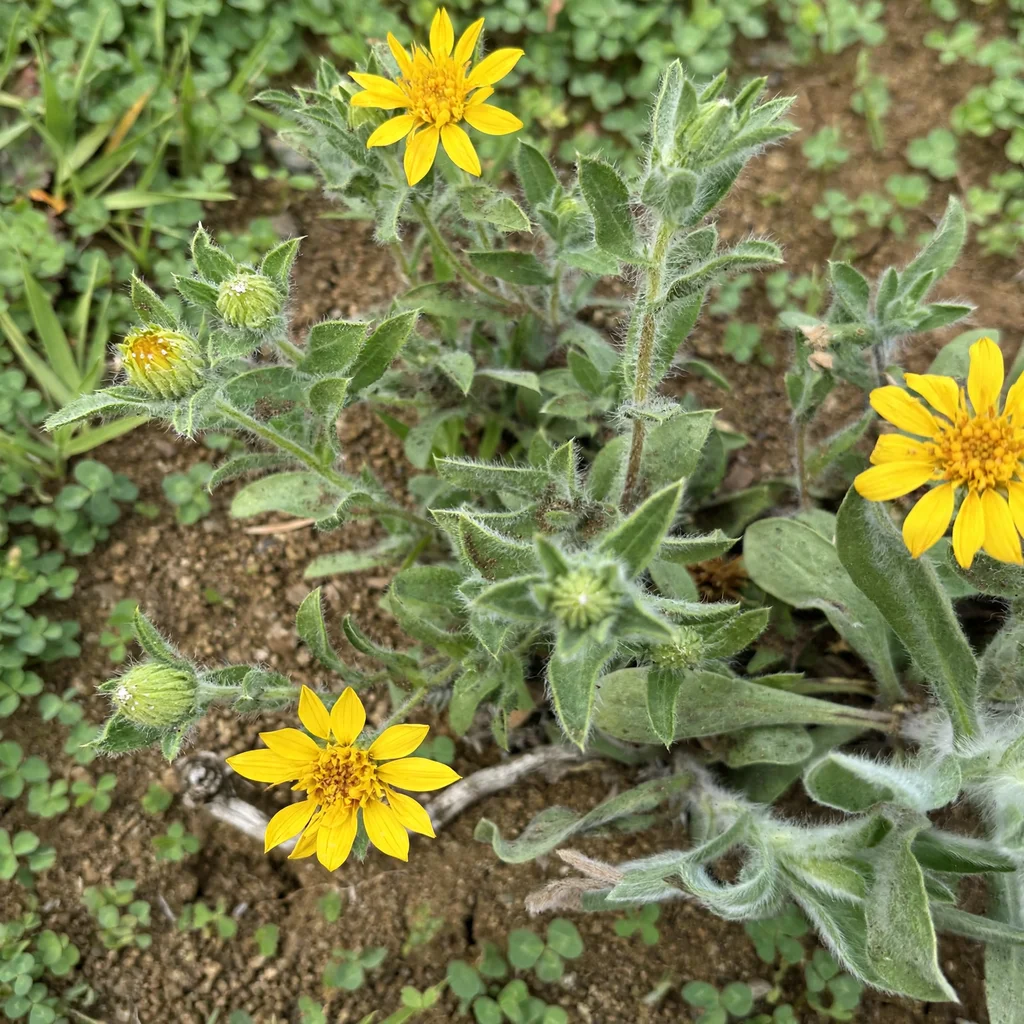
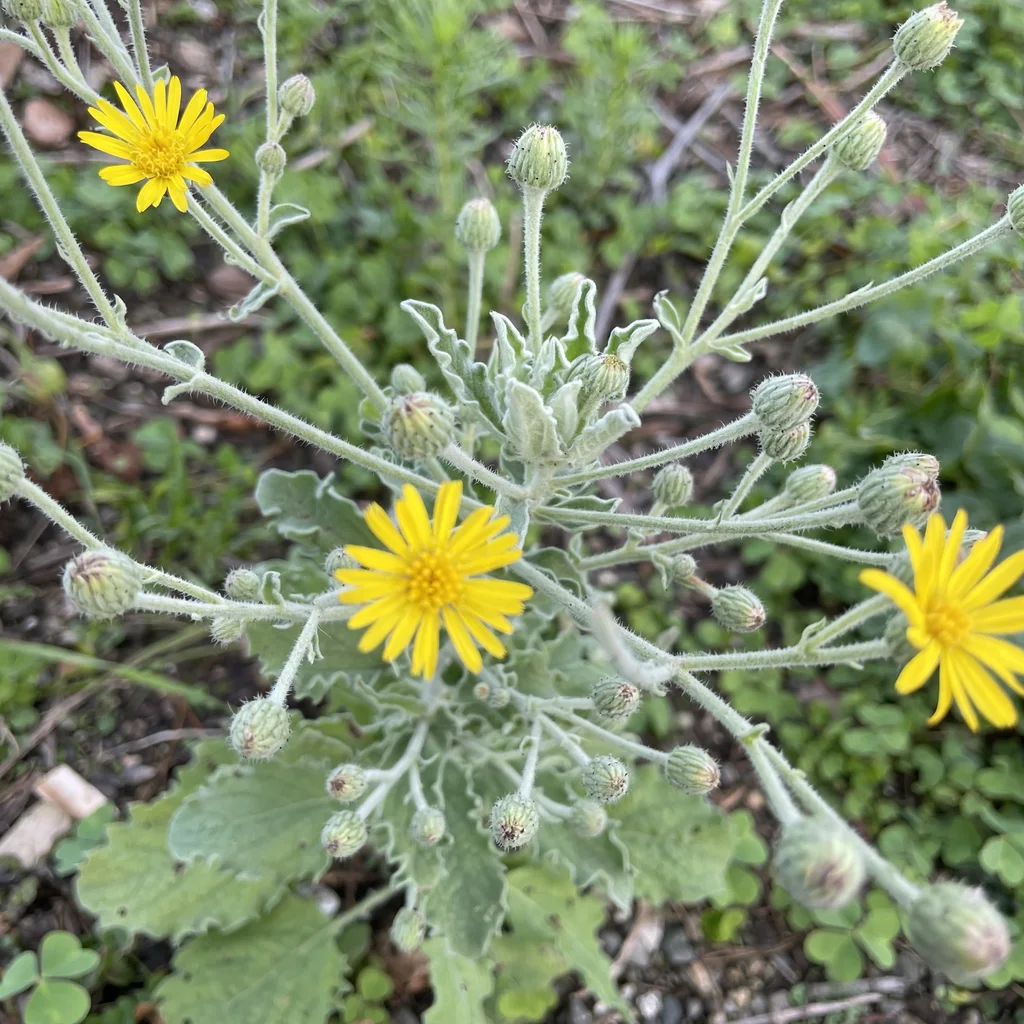
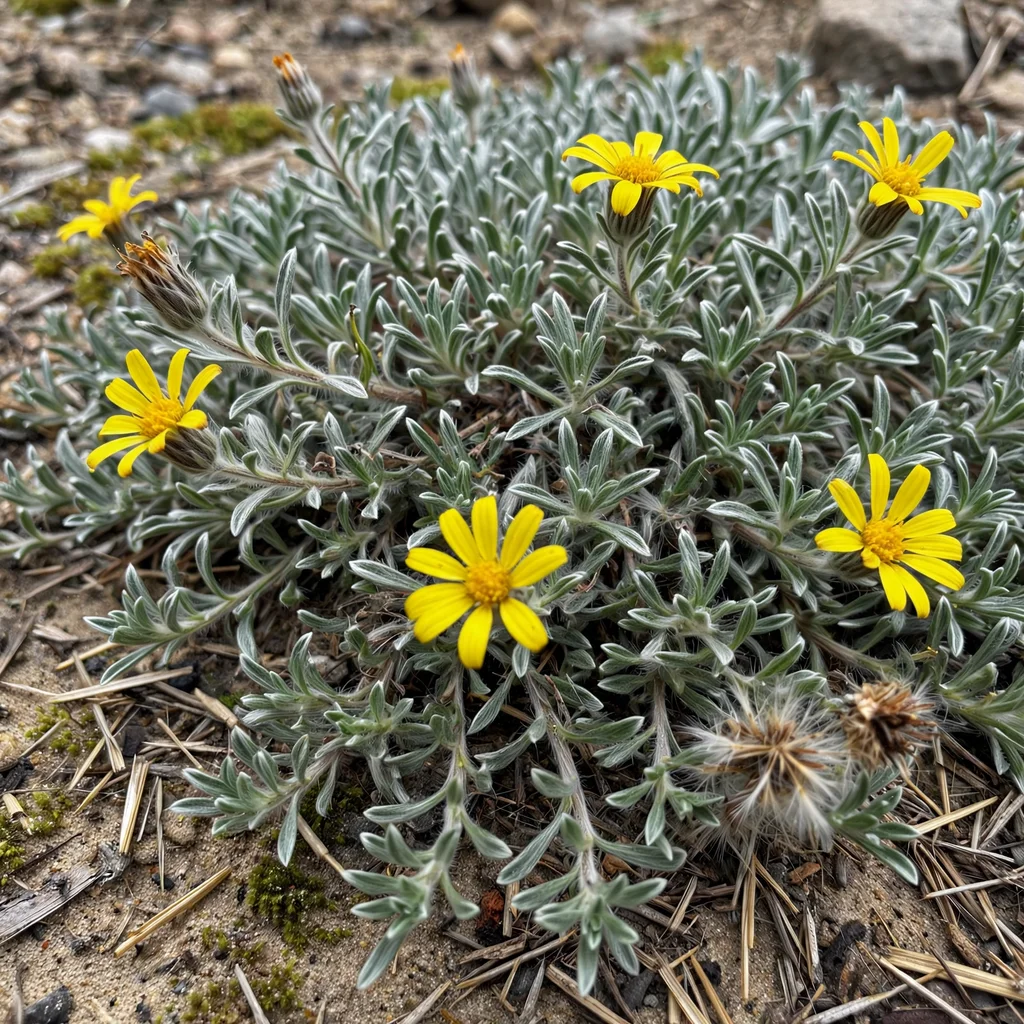
More Heterotheca to compare
Keep exploring
Explore the genus
Hardy in your zone?
Grow Hairy False Goldenaster with confidence
See it in a design of your actual yard, get zone-matched care reminders, and track it season by season in your garden journal.