The Story
Plant Bio
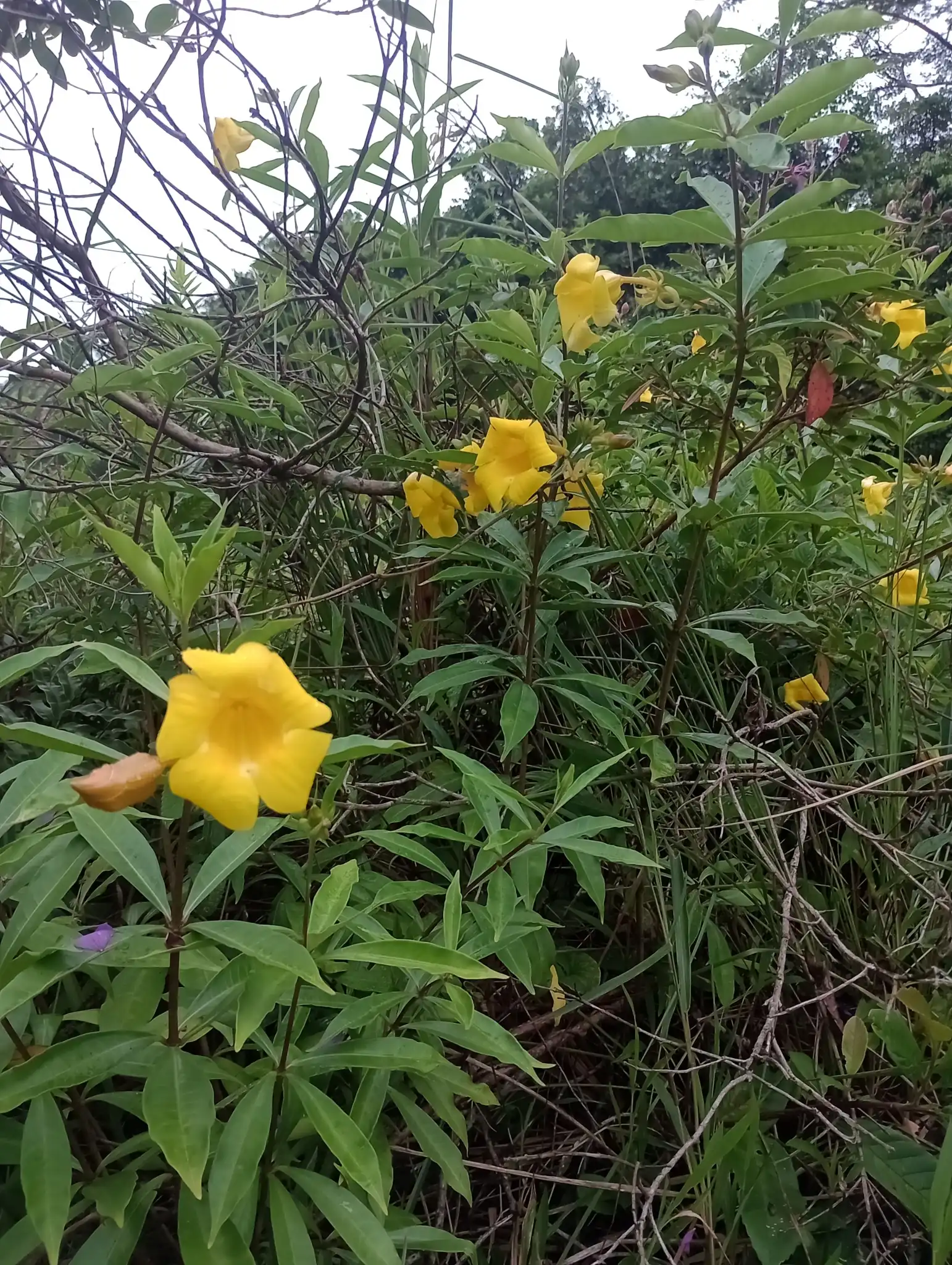
Allamanda schottii, the bush allamanda, is an evergreen tropical shrub reaching four to five feet tall with a compact upright habit and coarse dark green foliage. Leaves are leathery elliptic-obovate borne in whorls of three to five, and all stems exude milky sap when cut.
Unlike the vining common allamanda, this species grows as a self-supporting shrub that needs no trellis. Flowers are bright yellow funnels two to three inches across with orange-red striping in the throat, borne in clusters of up to twelve at the shoot ends and followed by round spiny capsules if spent blooms are left on.
Uses & Benefits:
Essentials
At a Glance
Plant Type
Shrub
Height
60"
Width
48"
Light
Full Sun, Partial Sun
Zones
9, 10
Water
Moderate
Humidity
High
Lifespan
Perennial shrub
Native To
Southern Brazil, northeastern Argentina and French Guiana
Toxicity
All parts poisonous; sap irritates skin
Bloom period
Summer – Fall
In flower about 6 months of the year
Planting
How to Grow
- Plant in full sun in well-drained soil enriched with organic matter.
- Water regularly to establish, then water during dry spells; it tolerates some drought but fails in soggy ground.
- Deadhead spent trumpets through summer and fall to keep flowers coming and avoid spiny seed pods.
- Prune lightly in spring to shape; avoid pruning after September 1 so new growth is not exposed to frost.
Pro Tip
Deadhead spent flowers to keep new buds coming; shearing the whole shrub hard each year produces soft growth that frost burns.
Keep It Thriving
Care Guide
Do
- Grow in full sun for the heaviest bloom.
- Deadhead regularly to prolong flowering.
- Wear gloves when pruning because milky sap irritates skin.
Don't
- Do not plant in Florida where it is rated high invasion risk.
- Do not confuse it with vining allamanda or give it a trellis it does not need.
- Do not prune after September 1 or cut hard into old wood each year.
Seasonal Care Calendar
| Task | Jan | Feb | Mar | Apr | May | Jun | Jul | Aug | Sep | Oct | Nov | Dec |
|---|---|---|---|---|---|---|---|---|---|---|---|---|
| Deadhead | ||||||||||||
| Fertilize | ||||||||||||
| Pest Check | ||||||||||||
| Prune | ||||||||||||
| Winter Prep |
Watch Out For
Pests & Diseases
Common Pests
Common Diseases
In the Garden
Landscape Uses & Companions
Landscape Uses
Companion Plants
Multiply
Propagation Methods
Good to Know
Common Questions
Bush Allamanda questions
What zones can Bush Allamanda grow in?
Bush Allamanda is hardy in USDA Zones 9–10: in that range it survives winter in the ground. Colder than Zone 9, grow it in a container you can move to shelter for the winter.
When does Bush Allamanda bloom?
Bush Allamanda typically blooms from summer to fall. Exact timing shifts a week or two with your zone — Sow's bloom calendar maps it to your garden.
Does Bush Allamanda need full sun?
Bush Allamanda does best in full sun to part shade. In hot climates, afternoon shade keeps blooms fresher longer.
Is Bush Allamanda drought tolerant?
Yes — once established (usually after the first full season), Bush Allamanda handles dry spells with minimal watering. Water deeply its first year to build the root system that makes that possible.
More Allamanda to compare
Keep exploring
Explore the genus
Hardy in your zone?
Grow Bush Allamanda with confidence
See it in a design of your actual yard, get zone-matched care reminders, and track it season by season in your garden journal.