The Story
Plant Bio
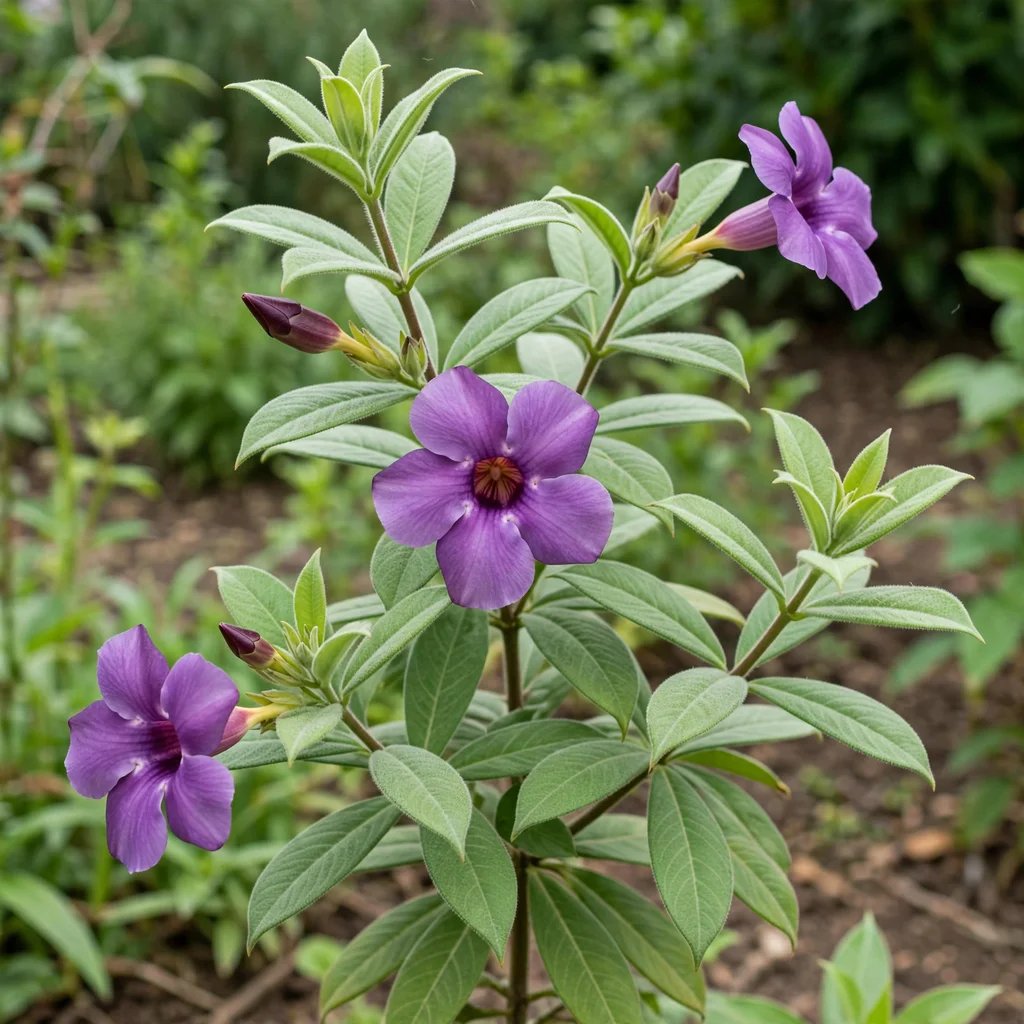
Allamanda blanchetii, sold as Allamanda violacea, is an evergreen vine or scrambling shrub from Brazil that climbs by sprawling and twining, reaching 5 to 10 feet with support. It carries whorled, light green, softly hairy elliptic leaves 4 to 8 inches long with a coarse texture and milky sap in all parts.
This purple-flowered form bears 3-inch funnel-shaped trumpets in reddish-purple fading to pink, carried in terminal clusters on new growth from summer to fall. Unlike the yellow allamandas, it stays sprawling without support and sets spiky capsules after flowering, and it needs pinching to hold a dense shape.
Uses & Benefits:
Essentials
At a Glance
Plant Type
Vine
Height
120"
Width
60"
Light
Full Sun, Partial Sun
Zones
9, 10
Water
Moderate
Humidity
High
Lifespan
Perennial vine
Native To
Brazil
Toxicity
Toxic if ingested
Bloom period
Summer – Fall
In flower about 6 months of the year
Planting
How to Grow
- Plant in full sun in well-drained clay, sand or loam after frost danger has passed, spacing 3 to 5 feet.
- Set a trellis, fence or wall support at planting and tie the sprawling stems as they lengthen.
- Water generously until established, then water moderately and mulch to hold even moisture.
- Pinch shoot tips when buds are not present to keep growth dense; prune only to shape and stay in bounds.
- In Zone 9B grow in a container that can move to frost-free shelter before cold nights.
Pro Tip
Pinch shoot tips when buds are not visible and tie stems to support from the start; blooms form on new growth, so shearing hard in bud removes the flowers.
Keep It Thriving
Care Guide
Do
- Give full sun for heaviest bloom
- Provide a trellis or fence from the start
- Water deeply until established, then moderately
Don't
- Do not shear hard while buds are forming; it blooms on new growth
- Do not plant in frost pockets without winter protection
- Do not ingest any part and keep sap off skin; keep away from children and pets
Seasonal Care Calendar
| Task | Jan | Feb | Mar | Apr | May | Jun | Jul | Aug | Sep | Oct | Nov | Dec |
|---|---|---|---|---|---|---|---|---|---|---|---|---|
| Fertilize | ||||||||||||
| Pest Check | ||||||||||||
| Pinch | ||||||||||||
| Prune | ||||||||||||
| Winter Prep |
Watch Out For
Pests & Diseases
Common Pests
Common Diseases
In the Garden
Landscape Uses & Companions
Landscape Uses
Multiply
Propagation Methods
Good to Know
Common Questions
Purple Allamanda questions
What zones can Purple Allamanda grow in?
Purple Allamanda is hardy in USDA Zones 9–10: in that range it survives winter in the ground. Colder than Zone 9, grow it in a container you can move to shelter for the winter, or as an annual.
When does Purple Allamanda bloom?
Purple Allamanda typically blooms from summer to fall. Exact timing shifts a week or two with your zone — Sow's bloom calendar maps it to your garden.
Does Purple Allamanda need full sun?
Purple Allamanda does best in full sun to part shade. In hot climates, afternoon shade keeps blooms fresher longer.
Is Purple Allamanda drought tolerant?
Yes — once established (usually after the first full season), Purple Allamanda handles dry spells with minimal watering. Water deeply its first year to build the root system that makes that possible.
More Allamanda to compare
Keep exploring
Explore the genus
Hardy in your zone?
Grow Purple Allamanda with confidence
See it in a design of your actual yard, get zone-matched care reminders, and track it season by season in your garden journal.