The Story
Plant Bio
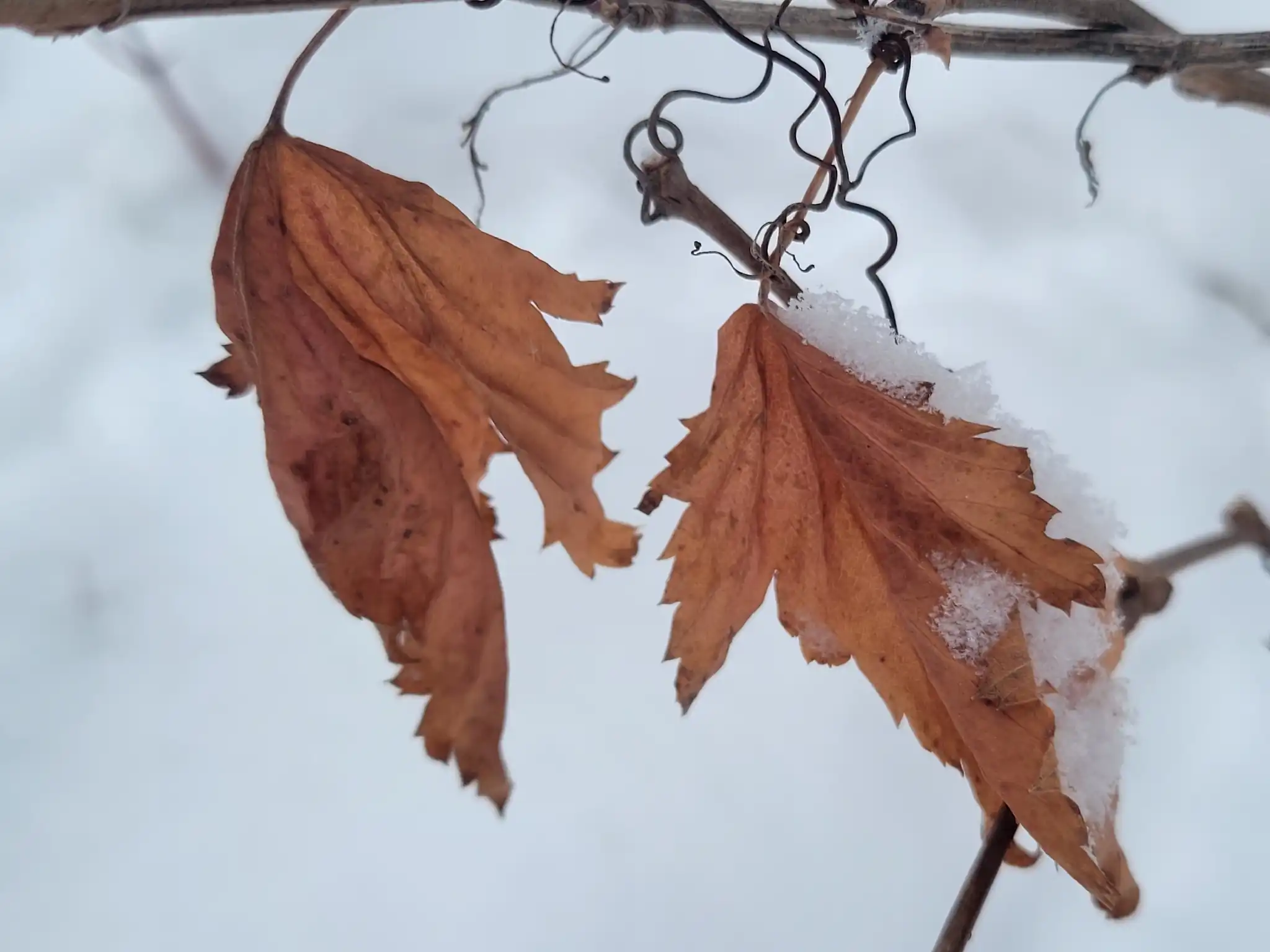
Vitis riparia is a fast-growing, long-lived woody climber native to North America, reaching lengths of up to 35 feet as it scales supports using forked tendrils. Its foliage consists of glossy, heart-shaped to three-lobed leaves with coarsely serrated edges, paired with reddish-brown bark that peels in long strips.
In late spring, the vine produces small, highly fragrant greenish-yellow flowers that attract hummingbirds and pollinators. It exhibits exceptional cold hardiness and tolerates wet soils, periodic flooding, and urban conditions better than most woody vines.
Uses & Benefits:
Essentials
At a Glance
Plant Type
Vine
Height
417"
Width
120"
Light
Full Sun, Partial Sun
Zones
4, 5, 6, 7, 8
Water
Moderate to High
Humidity
Tolerant of high humidity
Lifespan
Long-lived perennial
Native To
North America
Toxicity
Non-toxic
Bloom period
Late spring – Early summer
In flower about 2 months of the year
Planting
How to Grow
- Select a planting site in full sun to light shade near a sturdy trellis, arbor, or fence capable of supporting a heavy vine.
- Dig a hole twice as wide as the root mass and set the plant at its original nursery depth, backfilling with native soil.
- Water thoroughly after planting and maintain consistent moisture while the root system establishes.
- Train main shoots onto the support structure and secure loosely with soft ties.
Pro Tip
Prune heavily during winter dormancy, ensuring cuts leave active buds on live wood rather than bare stems.
Keep It Thriving
Care Guide
Do
- Prune main vines annually while dormant in late winter to maintain structure and control size.
- Provide a heavy-duty support system that can withstand high wind and mature vine weight.
- Clear away fallen mummified fruit and leaves in autumn to disrupt fungal life cycles.
Don't
- Do not apply excessive nitrogen fertilizer, which stimulates rampant leaf growth at the expense of fruit and flowers.
- Do not shear or cut into old, dead leafless wood lacking visible buds.
- Do not plant adjacent to small, young trees that could be overtaken and smothered by the canopy.
Seasonal Care Calendar
| Task | Jan | Feb | Mar | Apr | May | Jun | Jul | Aug | Sep | Oct | Nov | Dec |
|---|---|---|---|---|---|---|---|---|---|---|---|---|
| Fertilize | ||||||||||||
| Pest Check | ||||||||||||
| Prune | ||||||||||||
| Spring Cleanup |
Watch Out For
Pests & Diseases
Common Pests
Common Diseases
In the Garden
Landscape Uses & Companions
Landscape Uses
Companion Plants
Multiply
Propagation Methods
Good to Know
Common Questions
Riverbank Grape questions
What zones can Riverbank Grape grow in?
Riverbank Grape is hardy in USDA Zones 4–8: in that range it survives winter in the ground. Warmer than Zone 8, winter isn't the problem: it prefers colder winters, and summer heat can shorten its life.
Is Riverbank Grape deer resistant?
Not reliably. Deer may browse Riverbank Grape, especially tender spring growth — plan on repellents or fencing where pressure is high.
When does Riverbank Grape bloom?
Riverbank Grape typically blooms from late spring to early summer. Exact timing shifts a week or two with your zone — Sow's bloom calendar maps it to your garden.
Does Riverbank Grape need full sun?
Riverbank Grape does best in full sun to part shade. In hot climates, afternoon shade keeps blooms fresher longer.
Is Riverbank Grape drought tolerant?
Yes — once established (usually after the first full season), Riverbank Grape handles dry spells with minimal watering. Water deeply its first year to build the root system that makes that possible.
More Vitis to compare
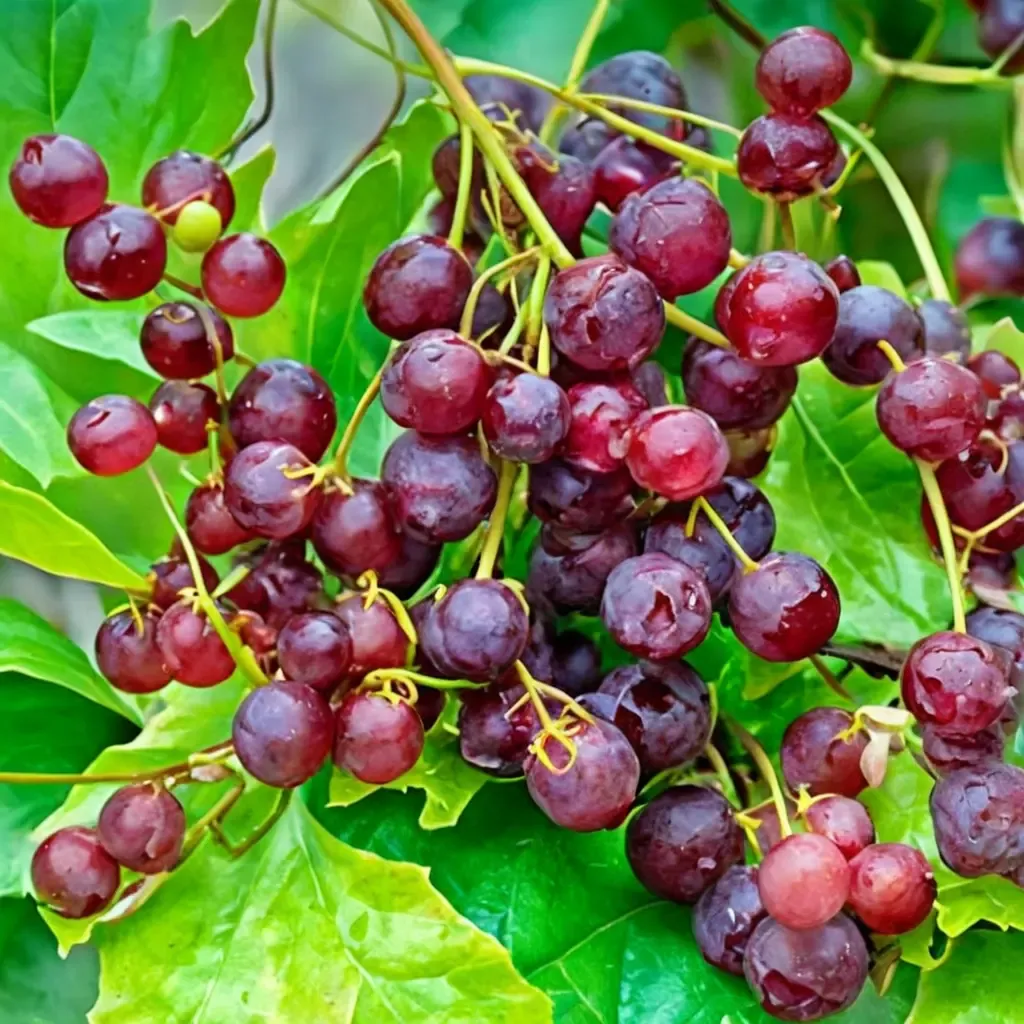
RazzMatazz Grape
Vitis vinifera 'RazzMatazz'
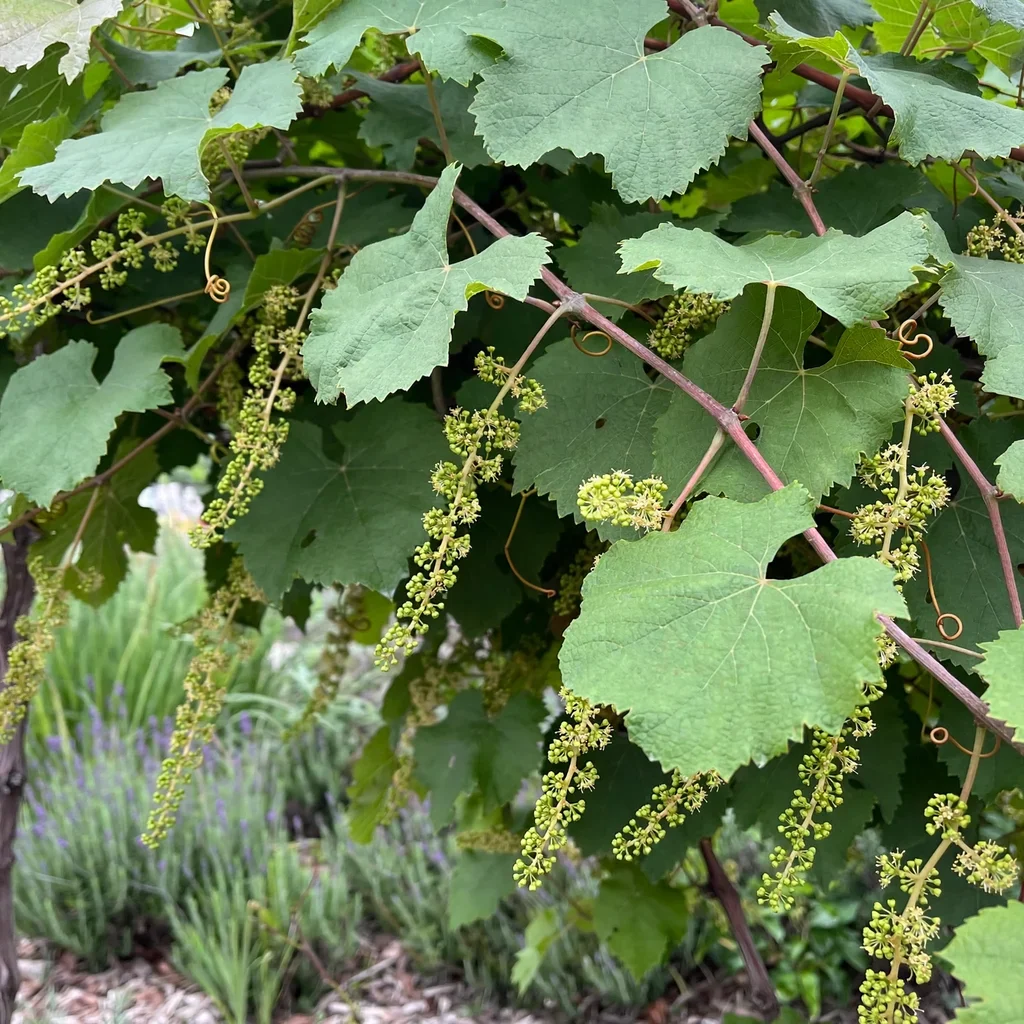
Roger's Red Grape
Vitis x californica 'Roger's Red'
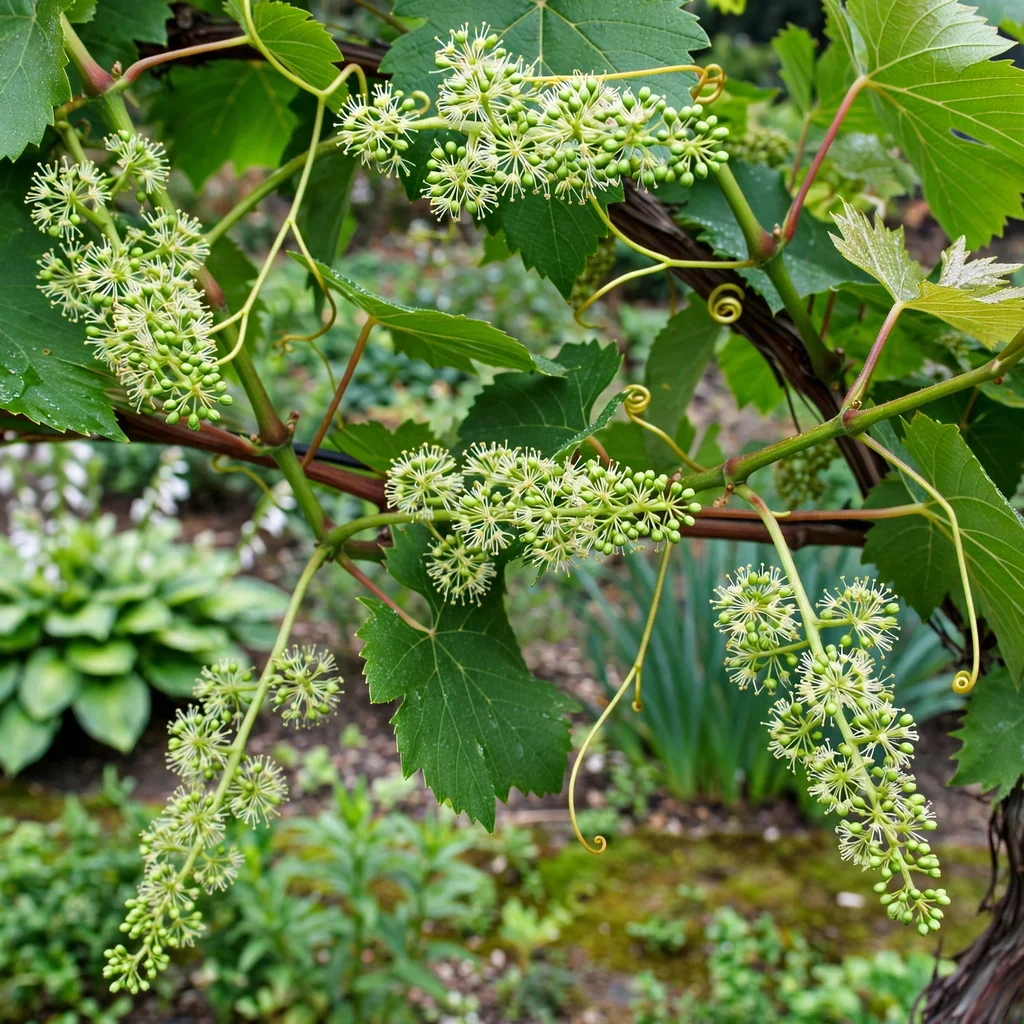
Cabernet Sauvignon Grape
Vitis vinifera 'Cabernet Sauvignon Tulip Blend'
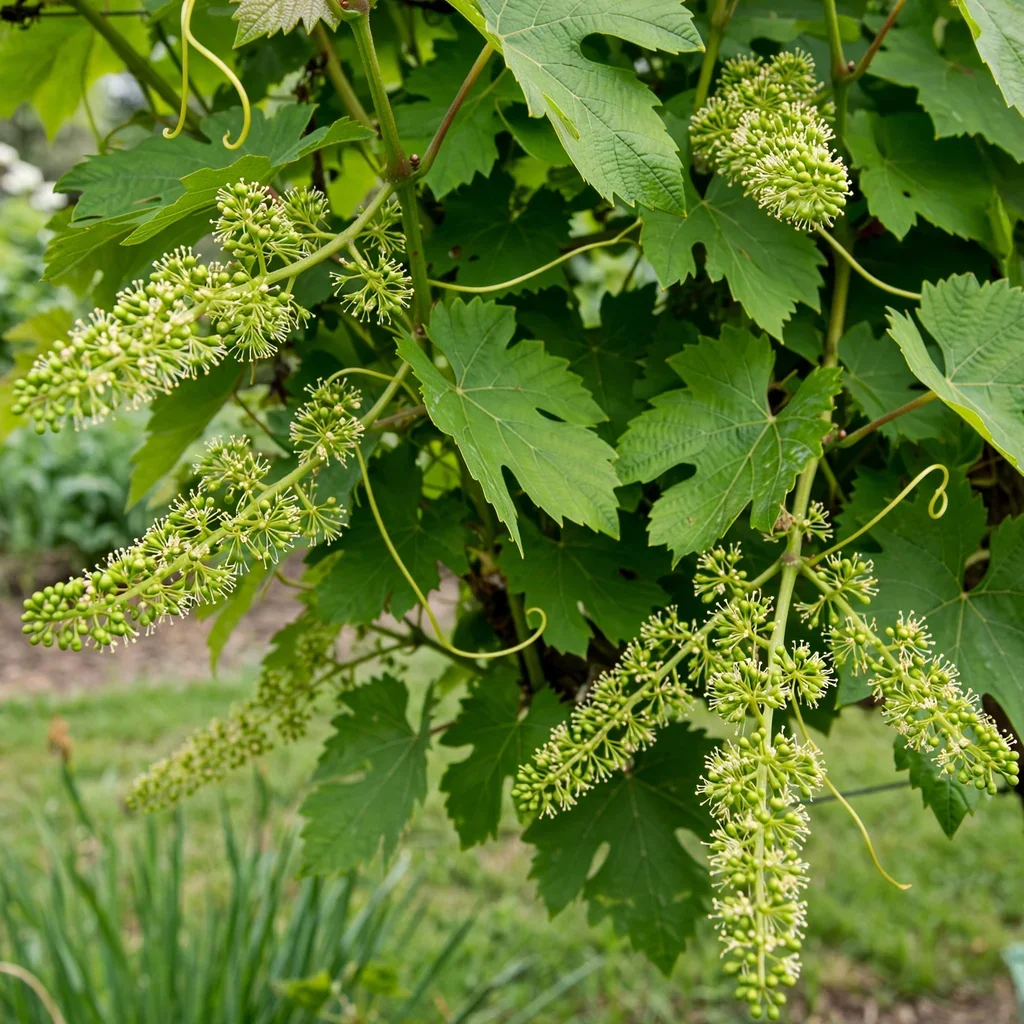
Thompson Seedless Grape
Vitis vinifera 'Thompson Seedless'
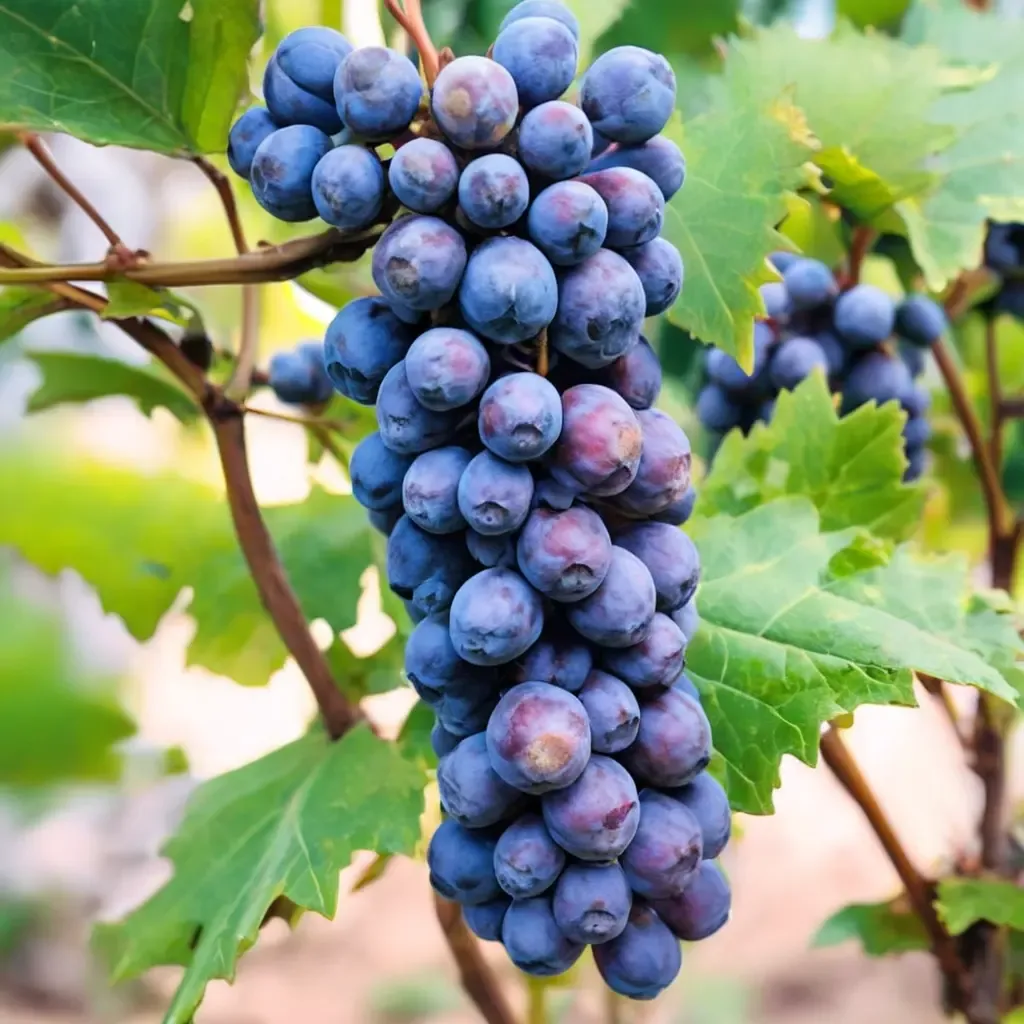
Blue Concord Seedless Grape
Vitis vinifera 'Blue Concord Seedless'
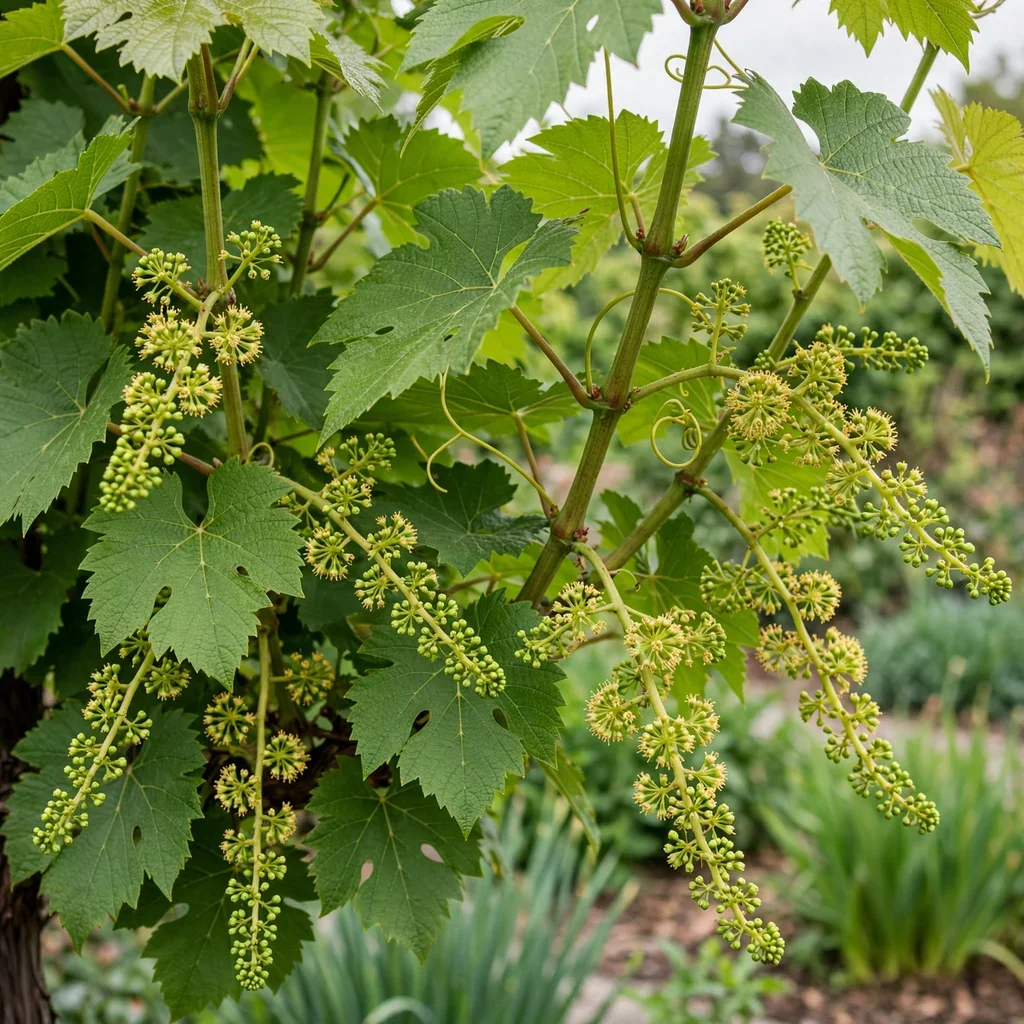
Emeryville Pink Grape
Vitis vinifera 'Emeryville Pink'
Keep exploring
Explore the genus
Hardy in your zone?
Grow Riverbank Grape with confidence
See it in a design of your actual yard, get zone-matched care reminders, and track it season by season in your garden journal.