The Story
Plant Bio
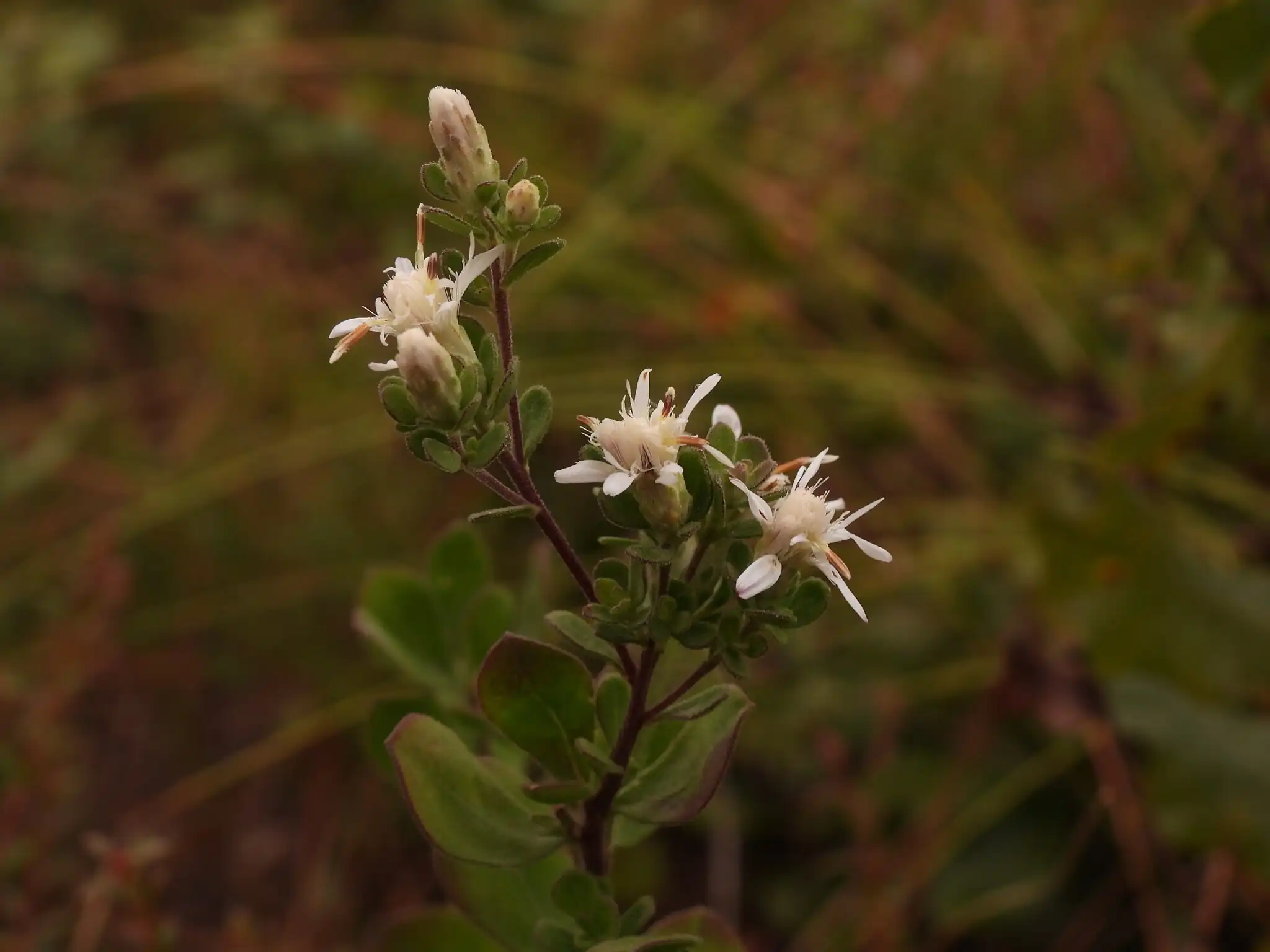
Sericocarpus tortifolius is an erect perennial of the southeastern Coastal Plain, reaching two to three feet in gardens on branched, hairy stems. The small heads are carried two to four to a branch in flat-topped clusters, each with two to five creamy-white rays around a center of yellowish disk florets.
Stem leaves are alternate, sessile and fuzzy-hairy, obovate to spatulate and twisting a quarter-turn or more with curling margins. The basal rosette withers by flowering time, so bare lower stems topped by twisted stem leaves and white-topped heads in late summer are normal, not decline.
Uses & Benefits:
Essentials
At a Glance
Plant Type
Perennial
Height
36"
Width
24"
Light
Full Sun, Partial Sun
Zones
8, 9, 10
Water
Dry to moist
Humidity
Tolerates humidity
Lifespan
Perennial
Native To
Southeastern USA
Toxicity
Unknown
Bloom period
Summer – Fall
In flower about 6 months of the year
Planting
How to Grow
- Plant in full sun to light shade in well-drained sandy or gravelly soil.
- Set plugs at the same depth as grown and water in to settle the roots.
- Water through the first dry spells, then taper off once new growth holds.
- Feed nothing; this species evolved for nutrient-poor ground and needs no fertilizer.
Pro Tip
Expect the basal leaves to disappear by bloom; judge vigor by the twisted stem leaves and new branches, not the base.
Keep It Thriving
Care Guide
Do
- Give full sun and open air for stocky stems and clean foliage.
- Leave fall seed heads to ripen for self-sowing and pollinators.
- Keep the crown drained with sand or grit over winter.
Don't
- Do not enrich the bed or overwater to push growth.
- Do not cut back expecting basal regrowth in bloom; lower leaf loss is normal.
- Do not collect wild seed without permission.
Seasonal Care Calendar
| Task | Jan | Feb | Mar | Apr | May | Jun | Jul | Aug | Sep | Oct | Nov | Dec |
|---|---|---|---|---|---|---|---|---|---|---|---|---|
| Deadhead | ||||||||||||
| Pest Check | ||||||||||||
| Plant | ||||||||||||
| Propagate |
Watch Out For
Pests & Diseases
Common Pests
Common Diseases
In the Garden
Landscape Uses & Companions
Landscape Uses
Multiply
Propagation Methods
Good to Know
Common Questions
Dixie Whitetop Aster questions
What zones can Dixie Whitetop Aster grow in?
Dixie Whitetop Aster is hardy in USDA Zones 8–10: in that range it survives winter in the ground. Colder than Zone 8, grow it in a container you can move to shelter for the winter, or as an annual.
When does Dixie Whitetop Aster bloom?
Dixie Whitetop Aster typically blooms from summer to fall. Exact timing shifts a week or two with your zone — Sow's bloom calendar maps it to your garden.
Does Dixie Whitetop Aster need full sun?
Dixie Whitetop Aster does best in full sun to part shade. In hot climates, afternoon shade keeps blooms fresher longer.
Is Dixie Whitetop Aster drought tolerant?
Yes — once established (usually after the first full season), Dixie Whitetop Aster handles dry spells with minimal watering. Water deeply its first year to build the root system that makes that possible.
Keep exploring
Explore the genus
Hardy in your zone?
Grow Dixie Whitetop Aster with confidence
See it in a design of your actual yard, get zone-matched care reminders, and track it season by season in your garden journal.