The Story
Plant Bio
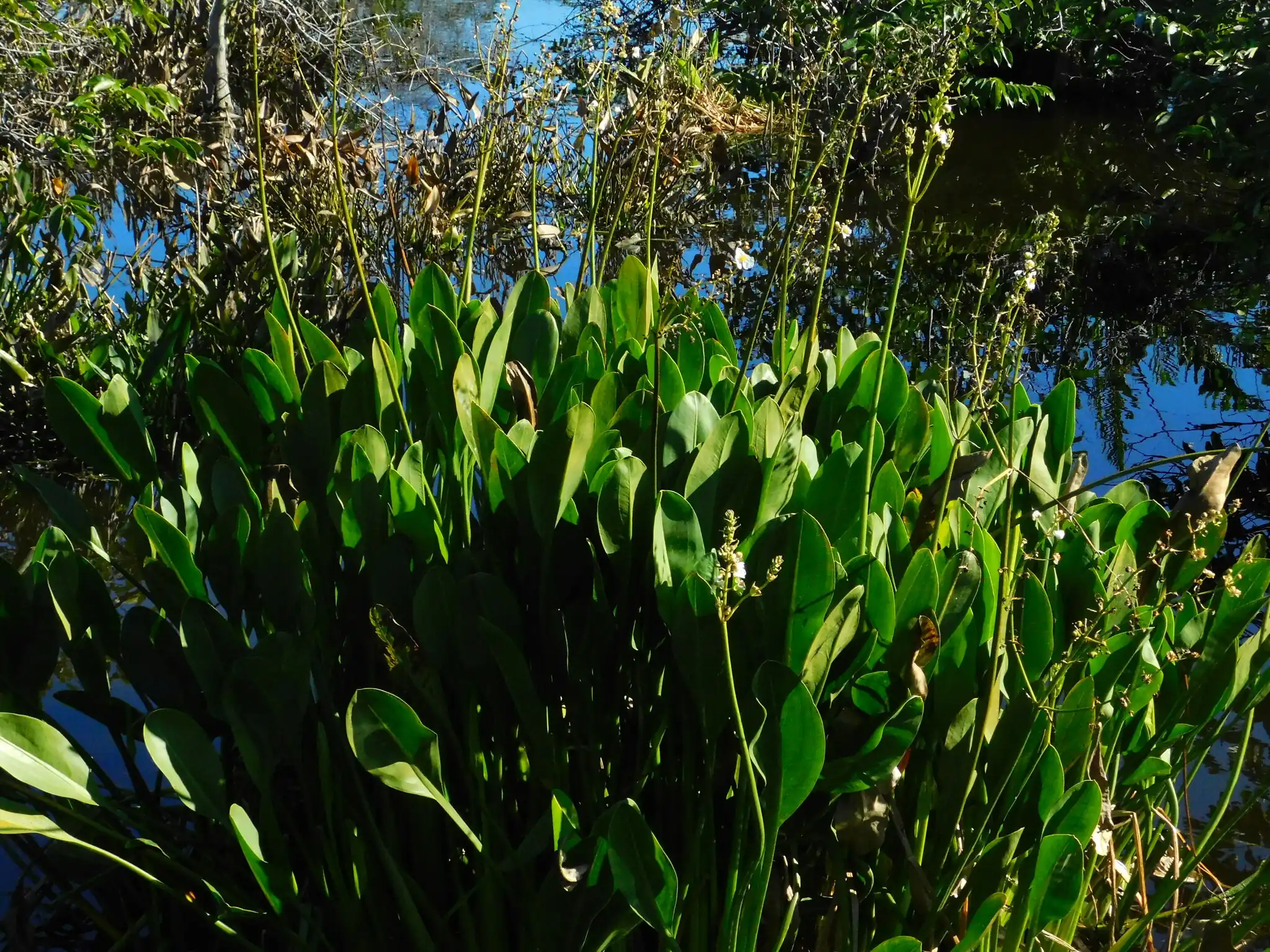
Sagittaria lancifolia is an emergent aquatic perennial forming a basal clump from tuberous rhizomes, reaching three to six feet in shallow water. The long-stalked basal leaves are lance-shaped to narrowly arrowhead-shaped, with submerged leaves reduced to ribbons or bladeless stalks.
Unlike broad-leaved arrowheads, its blades stay mostly lance-shaped to about ten inches long and never develop wide spreading lobes. Flower scapes rise above the foliage with four to twelve whorls of three white three-petalled blooms, male flowers above and female below, opening in late spring and summer.
Uses & Benefits:
Essentials
At a Glance
Plant Type
Aquatic
Height
72"
Width
36"
Light
Full Sun, Partial Sun
Zones
7, 8, 9, 10
Water
High - needs standing water
Humidity
High - tolerates brackish
Lifespan
Perennial
Native To
Southeastern U.S. to South America
Toxicity
Non-toxic - tubers edible cooked
Bloom period
Late spring – Summer
In flower about 4 months of the year
Planting
How to Grow
- Choose a sunny pond margin, tub, or bog pocket that holds 6 to 12 inches of standing water over mud.
- Set the tuber-rhizome with the crown at or just below the mud surface, never buried deep.
- Flood to cover the crown and keep the soil saturated through the growing season.
- Space clumps 24 to 36 inches apart to allow for rhizome spread and divide when crowded.
Pro Tip
Set the crown no more than twelve inches below the surface in full-sun mud; plants set deeper or in a dry bed stall and rot.
Keep It Thriving
Care Guide
Do
- Plant in full sun for bloom in mud under 6 to 12 inches of fresh to slightly brackish water
- Keep crowns wet at all times and never let the mud dry out
- Divide congested clumps in early spring to control spread in small ponds
Don't
- Do not plant deeper than 12 inches or in a dry perennial bed
- Do not let seed scapes shatter unchecked in a small water garden
- Do not allow deer-browsed or aphid-covered foliage to accumulate in the water
Seasonal Care Calendar
| Task | Jan | Feb | Mar | Apr | May | Jun | Jul | Aug | Sep | Oct | Nov | Dec |
|---|---|---|---|---|---|---|---|---|---|---|---|---|
| Deadhead | ||||||||||||
| Divide | ||||||||||||
| Harvest | ||||||||||||
| Pest Check | ||||||||||||
| Plant |
Watch Out For
Pests & Diseases
Common Pests
Common Diseases
In the Garden
Landscape Uses & Companions
Landscape Uses
Companion Plants
Multiply
Propagation Methods
Good to Know
Common Questions
Bulltongue Arrowhead questions
What zones can Bulltongue Arrowhead grow in?
Bulltongue Arrowhead is hardy in USDA Zones 7–10: in that range it survives winter in the ground. Colder than Zone 7, grow it in a container you can move to shelter for the winter, or as an annual.
Is Bulltongue Arrowhead deer resistant?
Not reliably. Deer may browse Bulltongue Arrowhead, especially tender spring growth — plan on repellents or fencing where pressure is high.
When does Bulltongue Arrowhead bloom?
Bulltongue Arrowhead typically blooms from late spring to late summer. Exact timing shifts a week or two with your zone — Sow's bloom calendar maps it to your garden.
Does Bulltongue Arrowhead need full sun?
Bulltongue Arrowhead does best in full sun to part shade. In hot climates, afternoon shade keeps blooms fresher longer.
More Sagittaria to compare
Keep exploring
Explore the genus
Hardy in your zone?
Grow Bulltongue Arrowhead with confidence
See it in a design of your actual yard, get zone-matched care reminders, and track it season by season in your garden journal.