The Story
Plant Bio
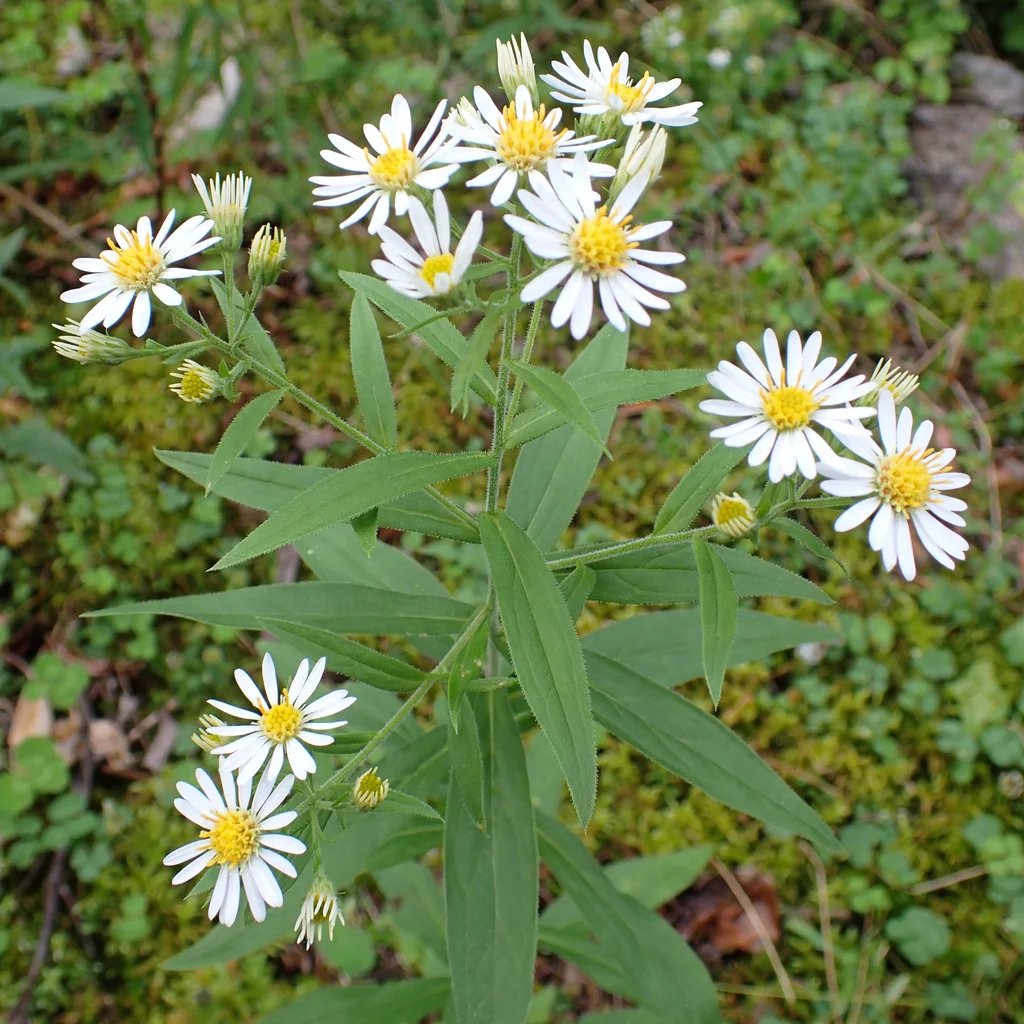
Doellingeria umbellata is an upright herbaceous perennial native to North American wetlands and damp meadows, growing two to seven feet tall on stiff, unbranched stems. Lacking basal rosette leaves, it produces alternate, lance-shaped foliage with fine marginal hairs along the stems.
Broad, flat-topped clusters of white ray flowers surrounding yellow central disks open from midsummer into autumn before maturing into pale greenish-tan seed heads. The plant spreads slowly via underground rhizomes to form tight colonies and exhibits stronger foliar disease resistance than most true asters.
Uses & Benefits:
Essentials
At a Glance
Plant Type
Perennial
Height
84"
Width
48"
Light
Full Sun, Partial Sun
Zones
4, 5, 6, 7, 8, 9
Water
Medium to High
Humidity
High
Lifespan
Perennial
Native To
North America
Toxicity
Non-Toxic
Bloom period
Summer – Fall
In flower about 6 months of the year
Planting
How to Grow
- Select a planting location in full sun to partial shade with moist to wet soil.
- Space plants 24 to 36 inches apart to accommodate spread from rhizomes.
- Water thoroughly throughout the first growing season until root systems establish.
- Cut spent stems back to the ground in late winter or early spring.
Pro Tip
Provide rich, consistently moist soil in full sun to produce maximum height and broad flat inflorescences; dry conditions cause stems to remain stunted and flower heads to shrink.
Keep It Thriving
Care Guide
Do
- Keep soil consistently moist to achieve mature plant height.
- Divide dense central clumps every few years in spring.
- Protect young stems from browsing rabbits and deer during establishment.
Don't
- Do not plant in dry, shallow soils without supplemental irrigation.
- Do not apply heavy fertilizer, as excessive nutrients yield weak stems.
- Do not allow soil to stagnate completely without oxygen movement around the roots.
Seasonal Care Calendar
| Task | Jan | Feb | Mar | Apr | May | Jun | Jul | Aug | Sep | Oct | Nov | Dec |
|---|---|---|---|---|---|---|---|---|---|---|---|---|
| Deadhead | ||||||||||||
| Divide | ||||||||||||
| Pest Check | ||||||||||||
| Spring Cleanup |
Watch Out For
Pests & Diseases
Common Pests
Common Diseases
In the Garden
Landscape Uses & Companions
Landscape Uses
Multiply
Propagation Methods
Good to Know
Common Questions
Flat-Topped White Aster questions
What zones can Flat-Topped White Aster grow in?
Flat-Topped White Aster is hardy in USDA Zones 4–9: in that range it survives winter in the ground. Warmer than Zone 9, winter isn't the problem: it prefers colder winters, and summer heat can shorten its life.
Is Flat-Topped White Aster deer resistant?
Not reliably. Deer may browse Flat-Topped White Aster, especially tender spring growth — plan on repellents or fencing where pressure is high.
When does Flat-Topped White Aster bloom?
Flat-Topped White Aster typically blooms from summer to fall. Exact timing shifts a week or two with your zone — Sow's bloom calendar maps it to your garden.
Does Flat-Topped White Aster need full sun?
Flat-Topped White Aster does best in full sun to part shade. In hot climates, afternoon shade keeps blooms fresher longer.
Is Flat-Topped White Aster drought tolerant?
Yes — once established (usually after the first full season), Flat-Topped White Aster handles dry spells with minimal watering. Water deeply its first year to build the root system that makes that possible.
Keep exploring
Explore the genus
Grow Flat-Topped White Aster with confidence
See it in a design of your actual yard, get zone-matched care reminders, and track it season by season in your garden journal.