The Story
Plant Bio
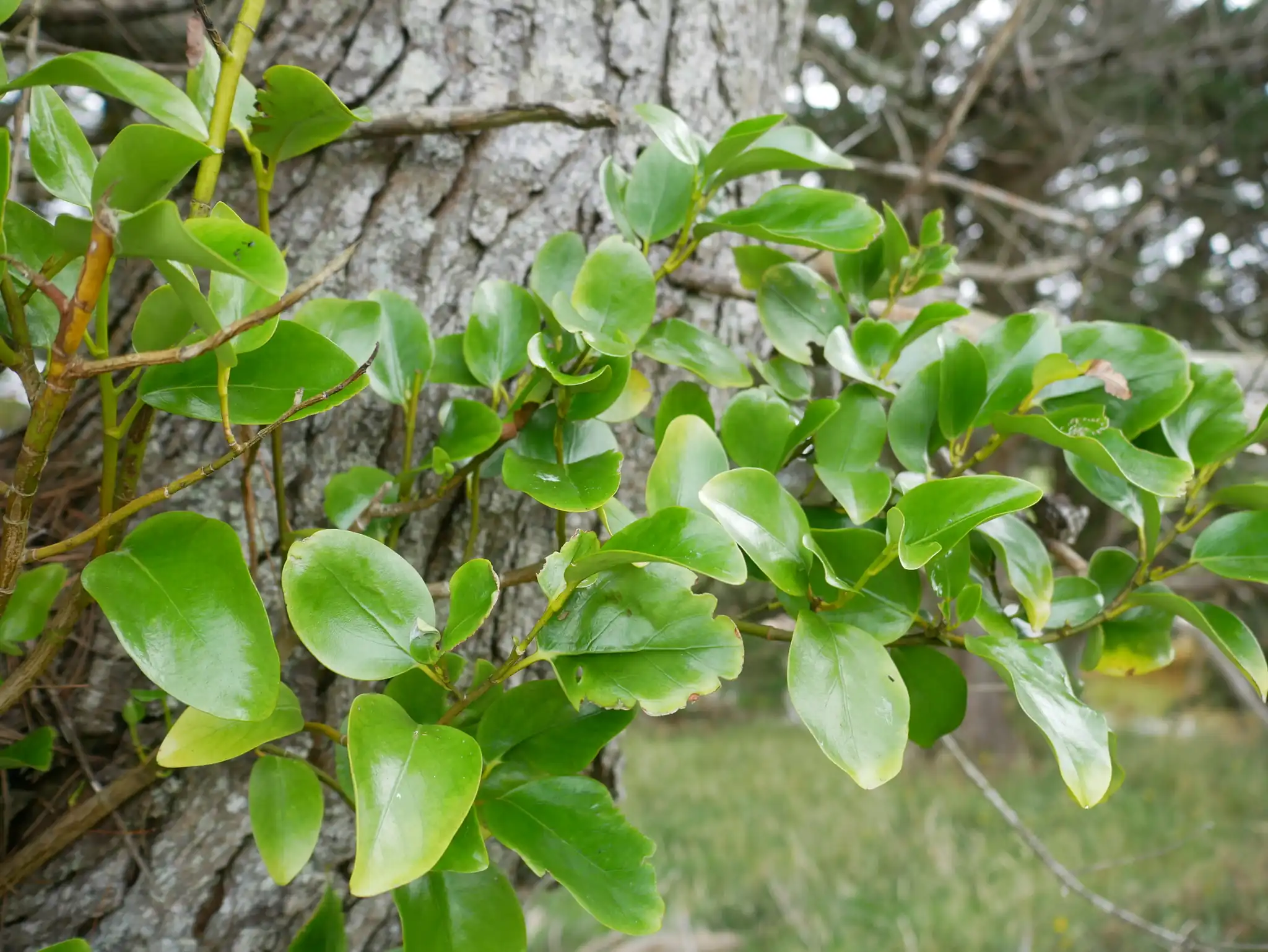
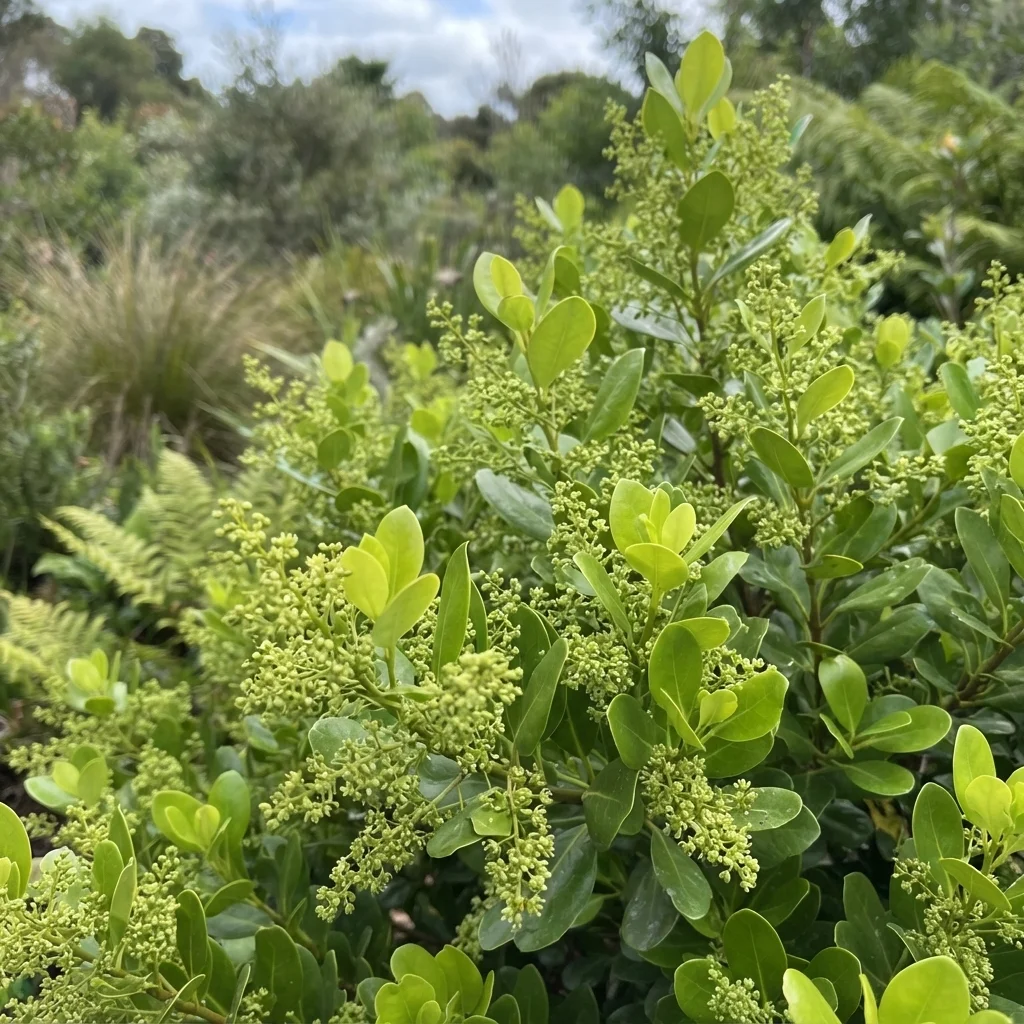
Griselinia lucida is an evergreen shrub or small tree native to New Zealand, featuring thick, leathery, highly glossy green leaves with distinctly asymmetrical bases. Small greenish-yellow flowers appear in axillary panicles from spring to mid-summer, followed on female plants by dark purple berries.
This species is distinguished by its varnished foliage reaching up to seven inches long and deep longitudinal grooves on its stout woody stems. In its natural habitat, it often grows as a hemiepiphyte on tall forest trees or rocky cliffs, producing descending roots that eventually reach the soil.
Uses & Benefits:
Essentials
At a Glance
Plant Type
Shrub
Height
315"
Width
197"
Light
Full Sun, Partial Sun
Zones
8, 9, 10
Water
Low to moderate
Humidity
High atmospheric moisture preferred
Lifespan
Perennial
Native To
New Zealand
Toxicity
Non-toxic
Bloom period
Spring – Mid-summer
In flower about 5 months of the year
Planting
How to Grow
- Select a position in full sun to partial shade protected from severe freezing winds.
- Dig a planting hole twice as wide as the root ball and backfill with well-draining loam or sandy soil enriched with organic matter.
- Set the plant so the crown sits level with the surrounding soil grade and firm gently.
- Water thoroughly after planting, then allow the top few inches of soil to dry between moisture applications.
Pro Tip
Provide absolute sharp drainage at the root zone; while it thrives in high atmospheric humidity and ocean spray, stagnant water around the crown causes rapid root rot.
Keep It Thriving
Care Guide
Do
- Ensure soil drains quickly to prevent root diseases.
- Plant in coastal positions exposed to salt spray and high air humidity.
- Prune lightly after flowering to maintain an informal shape.
Don't
- Do not plant in heavy clay or waterlogged soils.
- Do not cut heavily into old, bare woody stems when pruning.
- Do not over-fertilize, as excess nitrogen weakens structural stems.
Seasonal Care Calendar
| Task | Jan | Feb | Mar | Apr | May | Jun | Jul | Aug | Sep | Oct | Nov | Dec |
|---|---|---|---|---|---|---|---|---|---|---|---|---|
| Fertilize | ||||||||||||
| Mulch | ||||||||||||
| Pest Check | ||||||||||||
| Prune | ||||||||||||
| Winter Prep |
Watch Out For
Pests & Diseases
Common Pests
Common Diseases
In the Garden
Landscape Uses & Companions
Landscape Uses
Multiply
Propagation Methods
Good to Know
Common Questions
Puka questions
What zones can Puka grow in?
Puka is hardy in USDA Zones 8–10: in that range it survives winter in the ground. Colder than Zone 8, grow it in a container you can move to shelter for the winter.
Is Puka deer resistant?
Not reliably. Deer may browse Puka, especially tender spring growth — plan on repellents or fencing where pressure is high.
When does Puka bloom?
Puka typically blooms from early spring to mid-summer. Exact timing shifts a week or two with your zone — Sow's bloom calendar maps it to your garden.
Does Puka need full sun?
Puka does best in full sun to part shade. In hot climates, afternoon shade keeps blooms fresher longer.
Is Puka drought tolerant?
Yes — once established (usually after the first full season), Puka handles dry spells with minimal watering. Water deeply its first year to build the root system that makes that possible.
More Griselinia to compare
Keep exploring
Explore the genus
Hardy in your zone?
Grow Puka with confidence
See it in a design of your actual yard, get zone-matched care reminders, and track it season by season in your garden journal.