The Story
Plant Bio
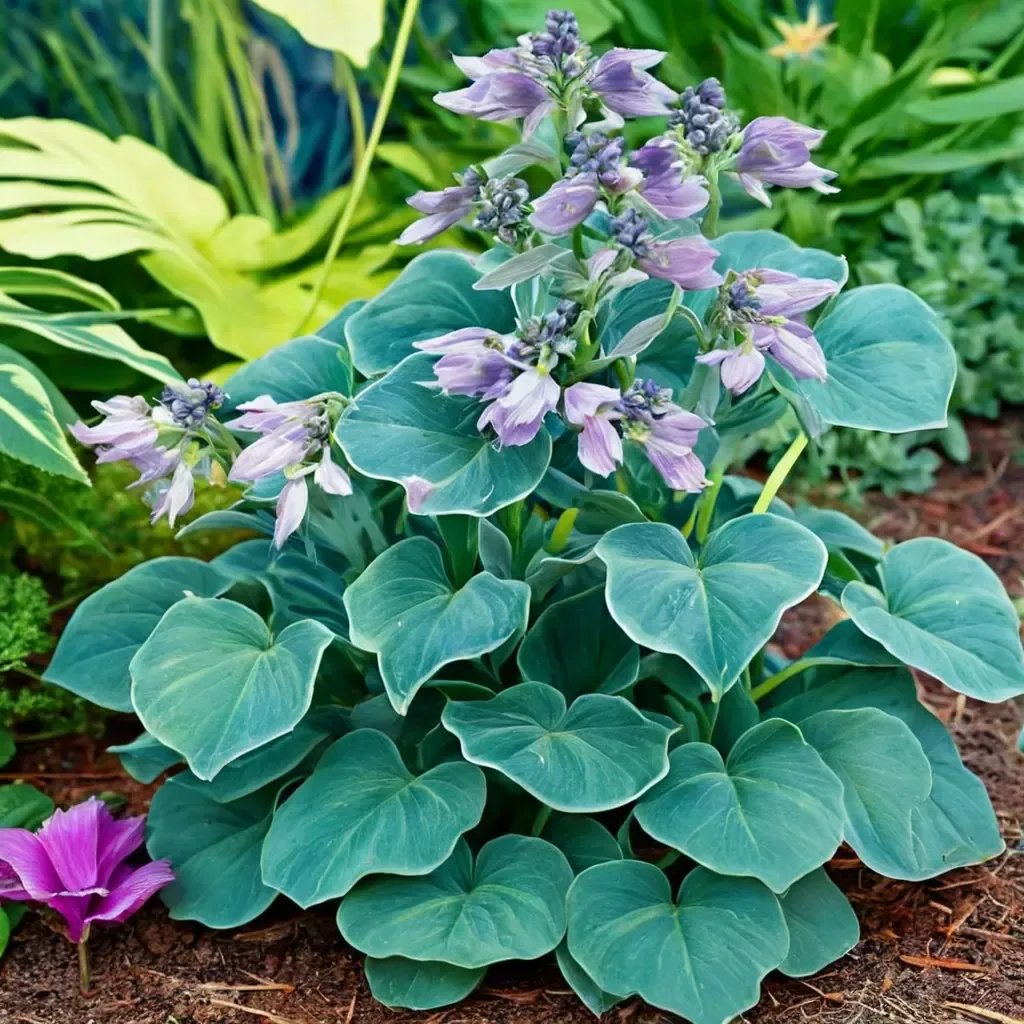
A miniature, clump-forming hosta prized for its thick, rubbery, heart-shaped to nearly round, blue-gray leaves.
A durable miniature hosta whose thick leaves resist slug damage. Forms a perfectly symmetrical mound, making it excellent for troughs, rock gardens, and container edges.
Uses & Benefits:
Vivid, lush foliage adds a soft texture to shaded gardens, thriving in low-light conditions.
Provides ground cover that suppresses weeds and retains soil moisture.
Supports pollinators with fragrant flowers and attracts beneficial insects.
Essentials
At a Glance
Plant Type
Perennial
Height
8"
Width
16"
Light
Partial Sun, Shade
Zones
4, 5, 6, 7, 8, 9
Water
Moderate
Humidity
Average
Lifespan
Perennial
Native To
Asia
Toxicity
Toxic to dogs, cats, and horses
Bloom period
Late summer – Early fall
J
F
M
A
M
J
J
A
S
O
N
D
In flower about 2 months of the year
Planting
How to Grow
- Tuck young plants into well-prepared, moist soil in early spring.
- Mist cuttings regularly to maintain humidity and encourage rooting.
- Water consistently, especially during dry spells, to keep soil moist but not waterlogged.
- Fertilize with a balanced, slow-release fertilizer in early spring and mid-summer.
- Mulch around plants to retain moisture and suppress weeds.
- Divide clumps every 3-4 years in early spring or fall for best growth.
Pro Tip
Plant in partial shade for vibrant foliage and to prevent leaf scorch.
Keep It Thriving
Care Guide
Do
- Water regularly to keep soil evenly moist 💧
- Apply mulch to conserve moisture and suppress weeds 🌱
- Fertilize in early spring and mid-summer for lush growth
- Divide every few years to rejuvenate clumps
Don't
- Avoid full sun exposure to prevent leaf scorch ❌
- Do not let soil dry out completely between watering
- Avoid over-fertilizing which can cause weak stems
- Do not disturb roots during the growing season
Seasonal Care Calendar
| Task | Jan | Feb | Mar | Apr | May | Jun | Jul | Aug | Sep | Oct | Nov | Dec |
|---|---|---|---|---|---|---|---|---|---|---|---|---|
| Deadhead | ||||||||||||
| Divide | ||||||||||||
| Fertilize | ||||||||||||
| Mulch | ||||||||||||
| Pest Check | ||||||||||||
| Spring Cleanup |
Watch Out For
Pests & Diseases
Common Pests
Common Diseases
In the Garden
Landscape Uses & Companions
Landscape Uses
Shaded borderWoodland garden edgeDappled shade accent
Multiply
Propagation Methods
Good to Know