Quick answer
Most hostas do best in dappled shade or a few hours of morning sun followed by afternoon shade, in soil that never dries out. Blue hostas such as 'Halcyon' and 'Krossa Regal' need the most shade. Gold types need 2 to 3 hours of morning sun to color well. Hosta plantaginea, 'Royal Standard', 'Sum and Substance' and 'Guacamole' take the most sun.
Key facts
- Best light
- Dappled shade, or morning sun with afternoon shade
- Blue hostas
- The most shade; hot sun strips the blue wax
- Gold hostas
- 2 to 3 hours of morning sun for full color
- Most sun tolerant
- Hosta plantaginea and its hybrids, 'Sum and Substance', 'Guacamole'
- Water
- About 1 inch (2.5 cm) a week, more in sun, heat or under trees
- Hardiness
- Zones 3 to 9; on the Gulf Coast many fade within two winters
- Biggest threats
- Deer, slugs and hosta virus X
- Pets
- Toxic to dogs, cats and horses
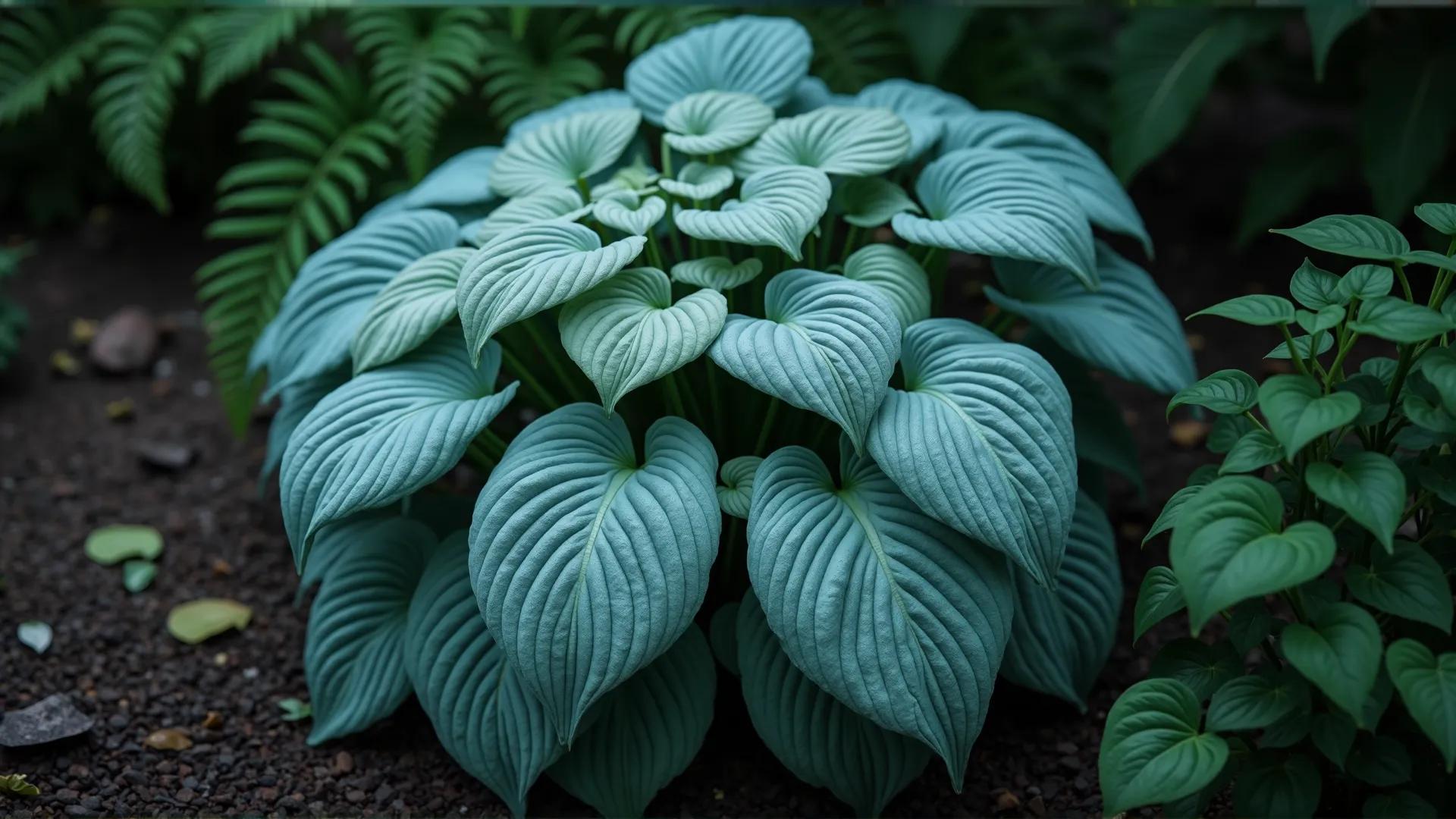
Hostas grow best in light, dappled shade or in a spot with a few hours of morning sun and shade from midday on, in soil that stays evenly moist. Leaf color tells you how far you can push the light. Blue hostas want the deepest shade, gold ones need some morning sun to turn gold, and the thick-leaved and fragrant types take the most sun, as long as their roots never dry out.
The 25 picks below are sorted by the light they handle best, each with its mature size and the one weakness to plan around. After them come the problem cultivars and regional exceptions, sizing and planting rules, and the defenses against slugs, deer and hosta virus X. Keep pets in mind as you plan: all hostas are poisonous to dogs, cats and horses.
How these plants were chosen
Every pick has its mature size, bloom season and light range documented by a botanical garden, a land-grant university or the American Hosta Society, not just a nursery tag. Twelve have been named Hosta of the Year, and eight made the top ten in a four-year trial of 61 cultivars in southern Louisiana, where mild winters are hard on hostas. Within each light group, thick-leaved cultivars were favored, because heavy leaves stand up to sun and slugs better than thin ones.
Cautions come from the same records: cultivars that fail in Southern heat, scorch in sun or are among those in which hosta virus X has been found are flagged. Sizes are for clumps five or more years old, and Southern clumps stay smaller than Northern ones.
| Hosta | Leaf | Light | Size class | Best for |
|---|---|---|---|---|
| 'Halcyon' | Blue | Part to full shade | Medium | Blue that lasts into late summer |
| 'Krossa Regal' | Blue-gray | Part to full shade | Giant | Upright blue, heat tested |
| 'Blue Angel' | Blue | Light shade, brief morning sun | Giant | One of the biggest blues |
| 'Abiqua Drinking Gourd' | Blue-green | Part to full shade | Medium | Deeply cupped leaves |
| 'Hadspen Blue' | Blue | Part to full shade | Small | Compact powder-blue |
| 'Frances Williams' | Blue-green, yellow-green rim | Part to full shade | Large | Classic two-tone specimen |
| 'Elegans' | Blue-gray | Part to full shade | Giant | Corrugated blue specimen |
| 'Blue Mouse Ears' | Blue-green | Part to full shade | Mini | Pots and edging |
| 'Empress Wu' | Blue-green, aging green | Part to full shade | Giant | The biggest clump of all |
| 'June' | Gold center, blue-green rim | Part shade | Small to medium | Bright center with substance |
| 'Francee' | Green, narrow white edge | Part to full shade | Medium | White edge, heat tested |
| 'Patriot' | Green, wide white edge | Part shade, some sun | Medium | Crisp, wide white edge |
| 'Sagae' | Blue-green, cream edge | Part to full shade | Giant | Vase-shaped focal point |
| 'Liberty' | Blue-green, gold-to-cream edge | Part to full shade | Large | Widest pale edge |
| 'Fragrant Bouquet' | Apple-green, cream edge | Part to full shade | Medium | Fragrant, vigorous, heat tested |
| 'Wide Brim' | Green, cream edge | Part to full shade | Medium | Puckered, cream-rimmed leaves |
| 'Golden Tiara' | Green, gold edge | Part shade | Small | Low edging |
| 'Gold Standard' | Gold center, green edge | Part shade, some sun for color | Medium | Gold center that brightens with light |
| 'Stained Glass' | Gold center, green edge | Part shade, some morning sun | Medium | Fragrant, heat-tested gold |
| 'Sum and Substance' | Chartreuse to gold | Morning sun to part shade | Giant | Gold giant for sun |
| 'Guacamole' | Chartreuse center, green edge | Some sun to part shade | Medium to large | Fast, fragrant, glossy |
| 'August Moon' | Chartreuse to gold | Morning sun to part shade | Medium | Puckered gold, heat tested |
| 'Royal Standard' | Bright green | Morning sun to part shade | Large | Fragrant white flowers in sun |
| 'So Sweet' | Green, cream-to-white edge | Morning sun to part shade | Medium | Fragrant, fast, heat tested |
| Hosta plantaginea | Bright green | Up to three-quarters sun | Small to medium | Hot summers and fragrance |
Size classes follow the American Hosta Growers Association clump-height standard for the North. As a group, hostas are rated for Zones 3 to 9, and most are hardy to Zone 3 or 4.
How much shade hostas need, by leaf color
The less sun a leaf can withstand, the more shade it needs: blue hostas sit at the shady end, golds and fragrant types at the sunny end. Most hostas do best in filtered shade for much of the day. They tolerate deep shade, but where it is too dark they grow slowly, and in full sun most bleach or scorch by midsummer.
| Leaf type | Best light | Why |
|---|---|---|
| Blue | Light to full shade, early morning sun at most | The blue is a wax coat that melts in hot sun and does not regrow that season |
| Gold or yellow | 2 to 3 hours of morning sun, then shade | Light turns chartreuse leaves gold; in deep shade they stay greenish |
| Thick-leaved green or gold | Part shade, with more sun if roots stay moist | Heavy leaves scorch less than thin, papery ones |
| White- or cream-variegated | Light shade | Pale tissue makes less food and burns first |
| Fragrant, Hosta plantaginea types | Shade to about three-quarters of the day in sun | The most heat- and sun-tolerant group |
Light needs by leaf type; in the South, shift every row toward more shade.
Timing matters as much as hours. Morning sun is cooler and gentler than afternoon sun, so a bed that gets sun until late morning and shade after that suits almost every hosta, and every type does best with afternoon shade. Partial shade means roughly 2 to 6 hours of direct sun a day. Full or deep shade means less than that, and definitions of the cutoff run from under 2 hours to under 4 hours of direct sun.
Water sets the ceiling on sun. Hostas need two things above all, organic soil that drains well and moisture that never runs out, and a so-called sun-tolerant hosta only earns that label when its roots stay damp. Scorch shows as brown, bleached or crisped patches and leaf tips. When you see it, move the plant to more shade or water more, depending on which one the site is short of.
Water blue hostas at the soil, not over the top. Hard sprays from a hose or sprinkler, and some pesticide sprays, rub off the same wax that hot sun melts, and the leaves stay green for the rest of the season.
Best hostas for full shade: blues and giants
These nine hold their color and shape in the shadiest beds. Blues lead the group because shade is what keeps their wax intact.
'Halcyon'
Halcyon is the benchmark blue for shade and the Hosta of the Year for 2026. Its thick leaves keep their blue later into summer than most blue hostas and suffer less slug damage than thin-leaved kinds. Expect a clump 1.5 to 2 feet (45–60 cm) tall and 2.5 to 3 feet (75–90 cm) wide, with lilac-blue flowers in August. It is slow, taking several years to reach full size, and too much sun scorches it.
'Krossa Regal'
Krossa Regal forms an upright vase of frosty blue-gray, heavy, leathery leaves that hold up well against slugs. It was the only blue in the top ten of the Louisiana trial, which makes it the first blue to try where summers are hot. Plants reach about 3 feet (90 cm) tall and spread 3 to 6 feet (0.9–1.8 m), sending lavender flowers up on unusually tall stalks of 5 to 6 feet (1.5–1.8 m) at midsummer. Put it at the back of a bed, where that height belongs.
'Blue Angel'
Blue Angel is one of the largest blue hostas, a mound about 3 feet (90 cm) tall and 4 feet (1.2 m) wide. Pale lavender to white flowers rise on stalks up to 4 feet (1.2 m) tall in July and August. Its blue is best in light shade with a little morning sun. It did not come back after winter in southern Louisiana, so Deep South gardeners should grow it in a pot or choose 'Krossa Regal'.
'Abiqua Drinking Gourd'
Abiqua Drinking Gourd has the most deeply cupped leaves of almost any hosta, dark blue-green, puckered and heavy in texture. It was Hosta of the Year in 2014. Clumps grow 18 to 24 inches (45–60 cm) tall and 3 to 4 feet (0.9–1.2 m) wide, with near-white flowers in midsummer. Its heavy leaves should resist slugs the way other thick-leaved hostas do, though no trial has tested this cultivar.
'Hadspen Blue'
Hadspen Blue is the blue for the front of a shady border, about 14 inches (35 cm) tall and 24 inches (60 cm) wide, with thick, puckered, powdery gray-blue leaves that keep good color all season. Lavender-gray to off-white flowers open in high summer. It failed to return in the Louisiana trial, so it belongs in cooler regions.
'Frances Williams'
Frances Williams, a Hosta sieboldiana selection found in the 1930s, pairs puckered, cupped blue-green leaves up to 12 by 11 inches (30 by 28 cm) with an irregular yellow-green margin. It grows about 2 feet (60 cm) tall and 48 to 60 inches (1.2–1.5 m) wide, with lilac-tinged white flowers in early summer. In the Louisiana heat its leaf edges browned, though it grew well in a container under shade.
'Elegans'
Elegans is the old Hosta sieboldiana form with large, thick, corrugated blue-gray leaves, and the parent of many later cultivars. Mature clumps reach about 30 inches (75 cm) tall and 48 inches (120 cm) wide, with near-white flowers from late spring into midsummer. Buy it as a long-term specimen: it takes several years to reach its mature shape.
'Blue Mouse Ears'
Blue Mouse Ears is a miniature only 6 to 8 inches (15–20 cm) tall and 11 to 19 inches (28–48 cm) wide, with round, extremely thick blue-green leaves. It was Hosta of the Year in 2008 and fits pots and the front edge of a path, flowering lavender in midsummer. It died out in Louisiana ground beds but came back in containers.
'Empress Wu'
Empress Wu is reputed to be the largest hosta ever sold, 4 to 5 feet (1.2–1.5 m) tall and 6 to 8 feet (1.8–2.4 m) wide. Leaves emerge blue-green, then lose their wax and turn green by summer, and pale lavender flowers open in early to midsummer. At that width it has to be placed first, with everything else spaced around it.
Best hostas for part shade: variegated and edged leaves
These ten look their best in bright, indirect light or with a little morning sun. Pale margins and centers make less food than green tissue, so variegated hostas grow a little slower and scorch sooner than all-green ones.
'June'
June, a sport of 'Halcyon', has a gold center framed by a blue-green margin, and great substance. It was Hosta of the Year in 2001. Plants reach 9 to 16 inches (23–40 cm) tall and 24 to 37 inches (60–95 cm) wide, with pale lavender flowers at midsummer. In bright light the center bleaches to creamy white, and 'June' is on the list of cultivars susceptible to hosta virus X.
'Francee'
Francee has dark green leaves with a narrow white edge that stays crisp all season. It grows about 21 inches (53 cm) tall and 3 feet (90 cm) wide, with pale lavender flowers from June to August. It made the Louisiana top ten, so it is a safe white-edged choice for hot summers.
'Patriot'
Patriot is a sport of 'Francee' with a wide white margin, and the Hosta of the Year in 1997, noted for good sun tolerance. Expect 12 to 22 inches (30–56 cm) of height and 24 to 50 inches (60–127 cm) of spread, with lavender flowers in July and August. It is susceptible to hosta virus X and grew slowly in Louisiana.
'Sagae'
Sagae is a vase-shaped giant with frosty blue-green leaves whose margin opens gold and turns cream or white by midsummer. It was Hosta of the Year in 2000, with good slug resistance. Clumps grow 22 to 31 inches (55–79 cm) tall and 3 to nearly 6 feet (0.9–1.8 m) wide, with lavender-tinged white flowers in high summer. It is also on the hosta virus X susceptible list.
'Liberty'
Liberty is a sport of 'Sagae' with a wider gold margin that ages to cream. It was Hosta of the Year in 2012. Published sizes run from 20 to 26 inches (50–66 cm) tall and 30 to 63 inches (75–160 cm) wide, so leave room for the larger figure. Pale lavender flowers bloom in July. That broad pale margin is the first part to scorch, so keep it out of strong afternoon sun.
'Fragrant Bouquet'
Fragrant Bouquet carries apple-green leaves with a cream edge and large, fragrant, near-white flowers in mid to late summer. It was Hosta of the Year in 1998 for its excellent growth rate, made the Louisiana top ten, and is the parent of 'Guacamole'. Clumps reach 15 to 22 inches (38–56 cm) tall and 32 to 48 inches (80–122 cm) wide. Its cream edge is the first part to scorch if it gets strong sun.
'Wide Brim'
Wide Brim has puckered, dark green leaves tinged blue, edged with a broad cream band. It forms a mound about 16 inches (40 cm) high and 36 inches (90 cm) across, flowering pale lavender in July and August. Its leaf edges browned from heat in Louisiana, so it suits cooler regions best. Hosta virus X has turned up in this cultivar, so check every leaf before you buy.
'Golden Tiara'
Golden Tiara is a small mound of green leaves edged in gold. Sizes vary by source, from about 12 to 16 inches (30–40 cm) tall and 2 to 3 feet (60–90 cm) wide, with lavender to purple flowers in June and July. It showed heat stress on the leaf edges in Louisiana, and it is one of the hostas found carrying hosta virus X, so buy from a grower you trust.
'Gold Standard'
Gold Standard has a chartreuse center framed by a dark green margin, and it needs some sun for that center to turn bright gold. Clumps grow 20 to 22 inches (50–55 cm) tall and about 3 feet (90 cm) wide, with pinkish-lavender flowers at midsummer. Along with 'Sum and Substance', it shows hosta virus X more often than most cultivars, and it was slow to establish in Louisiana.
'Stained Glass'
Stained Glass, a sport of 'Guacamole', keeps a brighter gold center than its parent all season, with prominent veins and a dark green edge. It was Hosta of the Year in 2006 and made the Louisiana top ten. Expect about 15 to 20 inches (38–50 cm) of height and 32 to 36 inches (80–90 cm) of spread, with sweetly fragrant near-white flowers in midsummer to August. It grows more slowly than 'Guacamole'.
Sun-tolerant hostas for morning sun
These six take more sun than most hostas, but only with afternoon shade and soil that never dries. Gold, green and chartreuse leaves handle sun better than blue-green ones. Other cultivars rated more sun tolerant than most include 'Gold Edger', Shade Fanfare, Invincible and Fall Bouquet.
'Sum and Substance'
Sum and Substance is the classic gold giant. Its leaves open chartreuse and need substantial sun to turn their best gold, and their thick, glossy texture resists slugs. It was Hosta of the Year in 2004. It matures at about 30 inches (75 cm) tall and 60 to 70 inches (1.5–1.8 m) wide, with lavender flowers in August. It is one of the cultivars in which hosta virus X turns up most often, so inspect it closely before you buy.
'Guacamole'
Guacamole, a sport of 'Fragrant Bouquet', has glossy chartreuse-to-gold centers with a dark green edge and fragrant white to pale lavender flowers on stalks to 3 feet (90 cm) in July and August. It was Hosta of the Year in 2002 for good sun tolerance and fast growth. In Louisiana it flourished with some direct sun and was among the last to go dormant. Plants reach 1.5 to 2 feet (45–60 cm) tall and 50 to 54 inches (127–137 cm) wide. It is also susceptible to hosta virus X.
'August Moon'
August Moon has puckered leaves that open chartreuse and turn golden with sun, and it takes more sun than most hostas. It made the Louisiana top ten. Clumps grow 16 to 20 inches (40–50 cm) tall and 3 to 3.5 feet (90–107 cm) wide, with pale lavender to white flowers in August and September. In sun it needs steady watering to keep its edges from browning.
'Royal Standard'
Royal Standard, a cross of Hosta plantaginea and Hosta sieboldiana, has bright green leaves that turn yellow-green in full sun and very fragrant white flowers on stalks to 42 inches (105 cm) in late summer. It has proved very sun tolerant around St. Louis and made the Louisiana top ten. Expect a clump 18 to 26 inches (45–66 cm) tall and 3 to 5 feet (0.9–1.5 m) wide. Its sun tolerance holds only while the soil stays moist.
'So Sweet'
So Sweet has glossy green leaves with a creamy margin that turns white by midsummer, and very fragrant pale lavender to white flowers in midsummer to August. It was Hosta of the Year in 1996 for its fast growth and sun tolerance, and it made the Louisiana top ten. In the North it reaches about 22 inches (56 cm) tall and 50 inches (1.3 m) wide; in Louisiana it stayed near 8 inches (20 cm) tall and 2 feet (60 cm) wide. Inspect it for hosta virus X before buying, since it is a susceptible cultivar.
Fragrant plantain lily (Hosta plantaginea)
Fragrant plantain lily, also called August lily, is the species behind most heat-tolerant hybrids. It takes anything from shade to sun for three-quarters of the day, and opens large, fragrant white trumpets 3 to 5 inches (8–13 cm) long in August and September. Plants reach 12 to 18 inches (30–45 cm) tall and 18 to 24 inches (45–60 cm) wide. Deer and rabbits eat the foliage.
Hostas to avoid in the wrong spot, by region
Most hosta failures are a good plant in the wrong place: a blue in afternoon sun, a white-centered hosta in heat, or a northern cultivar in the Deep South.
- 'Fire and Ice' in sun. Fire and Ice is listed for full sun to part shade, but its pure white center develops brown patches and holes in warm climates or strong sun. Grow 'Patriot', the green-centered hosta it sported from, which handles morning sun better.
- Gold hostas in deep shade. They stay chartreuse or green. Give them 2 to 3 hours of morning sun.
- Blue hostas in afternoon sun. The wax melts, the leaves burn and the blue turns green. Swap in a thick-leaved gold such as 'Sum and Substance'.
The Deep South
Hostas need a cold winter to go dormant and cool nights to recover from hot days. In southern Louisiana's mild winters and humid nights, many northern favorites grow for a season, then disappear after a winter or two. A four-year trial of 61 cultivars there found the ten best performers were Iron Gate Delight, 'Fragrant Bouquet', 'Guacamole', 'Stained Glass', 'Krossa Regal', 'So Sweet', 'August Moon', 'Royal Standard', H. undulata 'Albo-marginata' and 'Francee'. Most are Hosta plantaginea hybrids, which handle heat better and need less winter chill. For a second blue, Fragrant Blue is one of the few blue hostas that grows and returns reliably in southeastern Louisiana.
The same trial lost 'Blue Angel', 'Blue Mouse Ears' and 'Hadspen Blue' in the ground, while 'Frances Williams', 'Golden Tiara' and 'Wide Brim' browned at the edges. 'June', 'Patriot', 'Sum and Substance' and 'Gold Standard' survived but grew slowly. Containers changed the picture: a pot runs colder than a bed in winter, which helps a hosta go dormant, and 'Blue Mouse Ears' came back in pots after failing in the ground. Golden types there tolerate full morning sun if the soil stays moist.
The Southeast and mid-South
Through the Carolinas and similar climates, give every hosta afternoon shade, and full or dappled shade where you can; blue cultivars there need deep shade to avoid burn. The fragrant Hosta plantaginea types handle the most sun and heat. Hostas are rated to Zone 9, but in Gulf Coast heat many cultivars decline within two winters, so choose heat-tested types.
The North and Midwest
Most hostas are hardy to Zone 3 or 4, and clumps grow bigger here than in the South, so space them toward the upper end of the widths in the size table below.
The Pacific Northwest
Slugs are the main fight in cool, wet gardens, where hostas are among their favorite foods. Choose thick-leaved cultivars, start slug control in fall before slugs lay their eggs, and keep mulch near 1 inch (2.5 cm) so it shelters fewer of them.
Size, spacing and planting
Plant hostas in spring in rich, moist, well-drained soil, and space them by the width they will reach in five years, not the size of the pot.
| Size class | Height, North | Height, South | Mature width (North) | Example |
|---|---|---|---|---|
| Mini | up to 8 in (20 cm) | up to 7 in (18 cm) | up to 20 in (50 cm) | 'Blue Mouse Ears' |
| Small | 9–14 in (23–36 cm) | 8–11 in (20–28 cm) | 18–35 in (45–90 cm) | 'Hadspen Blue' |
| Medium | 15–22 in (38–56 cm) | 12–18 in (30–46 cm) | 30–55 in (75–140 cm) | 'Francee' |
| Large | 23–29 in (58–74 cm) | 19–24 in (48–61 cm) | 46–73 in (1.2–1.85 m) | 'Royal Standard' |
| Giant | 30 in (76 cm) and up | 25 in (64 cm) and up | 60 in (1.5 m) and up | 'Sum and Substance' |
Clump heights from the American Hosta Growers Association standard (North means above Interstate 80, South below Interstate 40); widths calculated at 2 to 2.5 times height for clumps five or more years old.
Spacing
Two rules apply, depending on how soon you want the bed filled. For clumps that will stay put, space each hosta at its mature width from the table, which for 'Empress Wu' means up to 8 feet (2.4 m). For a faster massed planting, set plants 1 to 3 feet (30–90 cm) apart, center to center, and expect to divide or thin them as they size up. Wider spacing also cuts slug damage, because slugs shelter under dense, overlapping leaves. The plant spacing calculator works out how many plants a bed holds at a given spacing.
Soil and planting depth
Hostas want rich, moist, organic soil that drains well; soggy ground rots crowns and roots, especially in winter. In heavy or compacted soil, work 2 to 3 inches (5–8 cm) of compost into the top 10 inches (25 cm). Dig the hole slightly shallower than the root ball and at least 1.5 times as wide, set the crown level with or just above the soil surface, firm the soil and water well.
Water and mulch
Give hostas about 1 inch (2.5 cm) of water a week, applied deeply and less often rather than in daily sprinkles, and more in sun, heat or where tree roots compete. Mulch advice ranges from 1 to 4 inches (2.5–10 cm), and slugs are what decide it: thick mulch shelters them, so keep it near 1 inch (2.5 cm) where slugs are bad. Apply mulch after the soil warms and keep it off the crown.
Dry shade under trees
Tree roots win any contest for water, so under a canopy the job is getting hostas established without hurting the tree. Add no more than 2 inches (5 cm) of soil or compost over the roots, and never build a raised bed there. Plant small divisions, starting about 1 foot (30 cm) from the trunk, and water deeply once a week for the first one to two years. Established hostas with thick leaves cope with some dry shade, but no hosta should be left to dry out. Hostas tolerate black walnut.
Hostas in pots
Roots in an above-ground pot get as cold as the winter air, so choose a hosta hardy to two zones colder than your garden and use a large pot. For winter, either bury the pot or move it to an unheated garage, shed or cold frame. Clay and glazed pots can crack in a freeze. Set pots on feet or bricks so slugs have less shelter underneath.
Companions
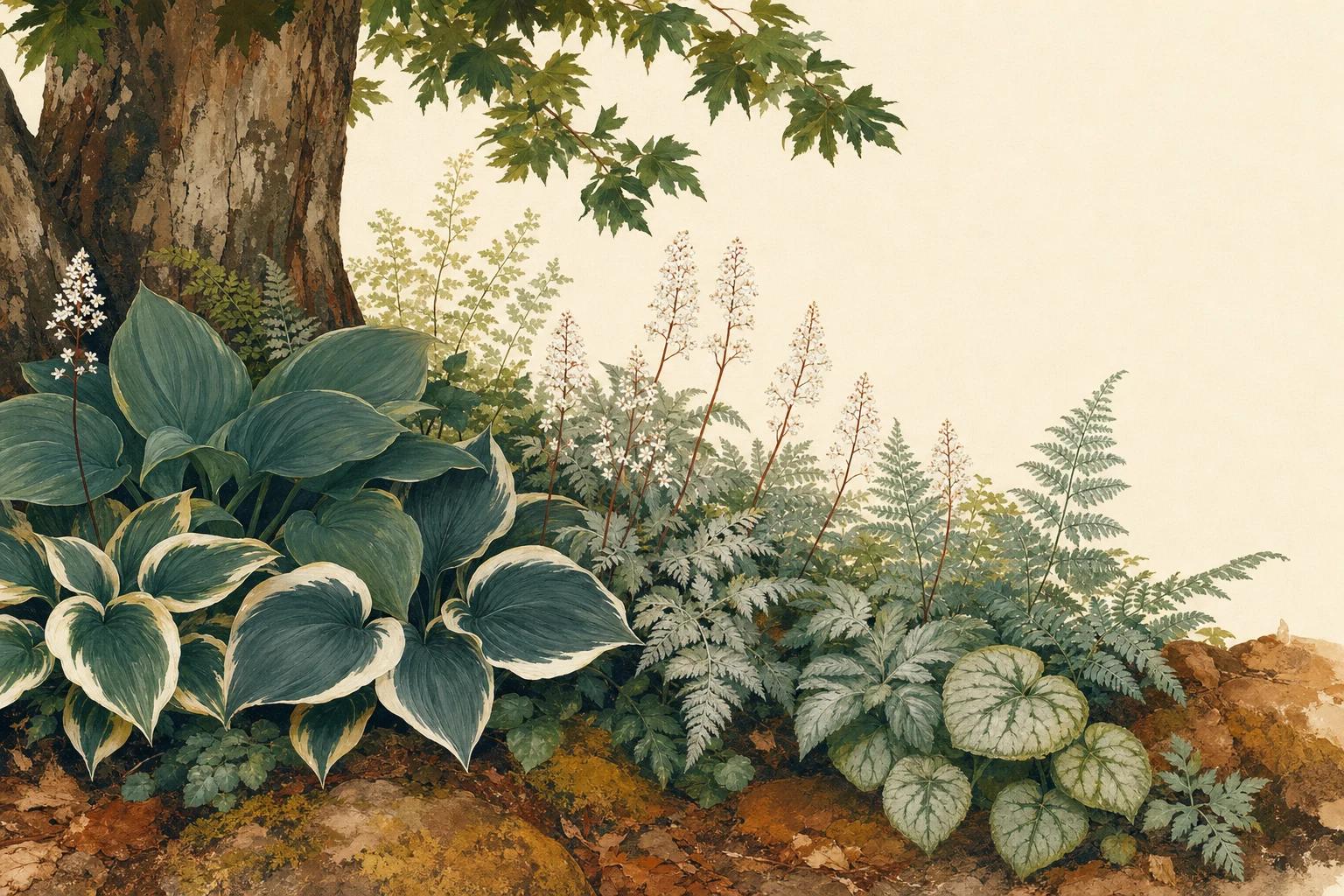
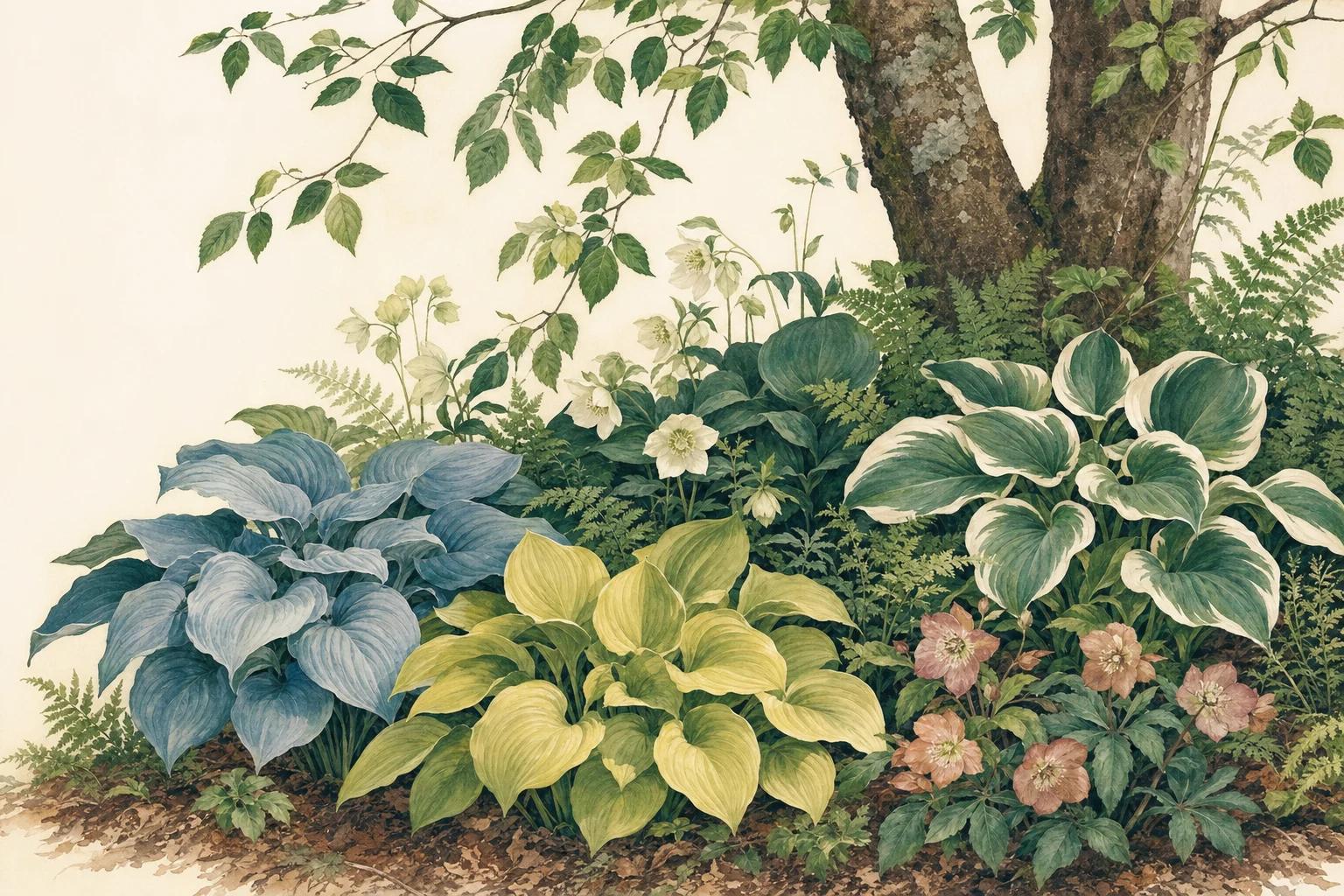
Slugs pass over ferns, ornamental grasses, bleeding heart, coral bells and hellebores, so they make good neighbors in a hosta bed. Under trees, Christmas fern, marginal wood fern, Lenten rose and evergreen epimediums hold up in dry shade, and Japanese forest grass adds a fine, grassy texture against broad hosta leaves. For more ideas, see the best plants for shade, ground covers for shade and the long-blooming perennials for shade.
Slugs, deer, hosta virus X and pet safety
Plan for deer and slugs before you plant, and buy only clean stock, because chewed leaves stay damaged all season and an infected plant never recovers.
Slugs
Slugs are the most common hosta pest. They hide by day under mulch, boards, pots and dense foliage, so removing that cover is the first defense, followed by watering in the morning so the surface is dry by dark, and trapping. Never use salt, which damages soil and plants. Slugs lay eggs in fall, so a fall cleanup cuts next spring's numbers, and holes chewed in new spring leaves stay all summer. Thick-leaved cultivars such as 'Sum and Substance', 'Halcyon', 'Sagae' and 'Krossa Regal' are damaged less, though slugs chew every hosta to some degree.
Every part of a hosta is toxic to dogs, cats and horses. The plants contain saponins, which cause vomiting, diarrhea and depression. Slug baits add a second risk: metaldehyde baits are poisonous to people, pets and wildlife, and iron phosphate baits, though low in toxicity, can still sicken a pet that eats a lot. Scatter any bait thinly and follow the label.
Deer, rabbits and voles
Hostas are a favorite deer food, and deer can strip a clump to bare leaf stalks in one or two nights. Fencing is the dependable fix; wire cages work for single plants, and beds close to the house are hit less. Where you cannot fence, a repellent is the fallback, and the beds you cannot protect are better filled with deer-resistant plants. Rabbits clip leaves cleanly at the stalk, and chicken wire around a plant keeps them off. Voles work from below, eating roots and crowns.
Hosta virus X
Hosta virus X (HVX) stays in an infected plant for life and has no cure. Look for ink-like bleeding along the veins, mottling, puckering and ring spots. Symptoms can take more than a year to appear, and some cultivars never show them. The virus moves in sap on tools and hands, very often during division.
- Buy carefully. Choose a reputable grower, ask where the stock came from, and inspect plants before you buy. Even well-known brands have sold infected plants. Susceptible or infected cultivars include 'Gold Standard', 'Golden Tiara', 'Guacamole', 'June', 'Patriot', 'Sagae', 'So Sweet', 'Sum and Substance' and 'Wide Brim'.
- Quarantine new plants. Keep them away from your other hostas for several weeks and wash your hands after handling them.
- Destroy, do not prune. Cutting off spotted leaves does not cure the plant. Dig it out, bin it rather than composting it, and wait three years before planting another hosta in that spot.
- Clean your tools. Dip blades in a 10 percent bleach solution between plants.
Aftercare and what to expect
Hostas reach the sizes on this page at about five years, and slow cultivars such as 'Halcyon' and 'Elegans' take several years just to show their mature shape. Water through every dry spell while they establish.
Flower stalks rise above the leaves from early summer into fall, depending on the cultivar. Cutting them off at the crown after bloom does the plant no harm. Shelter beds from strong wind and hail: winds above 35 mph (56 km/h) damage most cultivars, and hail shreds exposed leaves.
When the leaves collapse after frost, clear them away to remove the cover slugs need for egg-laying. Hostas rarely need winter protection, but a late-planted division benefits from a layer of loose mulch applied once the top 3 inches (8 cm) of soil has frozen. Pull it back from the crown in spring.
Divide a clump only when it needs it, in spring as the growing tips emerge or in late summer as temperatures fall. Old clumps often die out in the middle, which is normal: lift the clump, cut away the dead center and replant the healthy outer pieces. Disinfect your knife or spade between plants so you do not spread hosta virus X. For month-by-month care, see the hosta growing guide, and sketch where each new division will go in Sow's garden design studio.
From the Sow catalog
Perennials in the Sow catalog
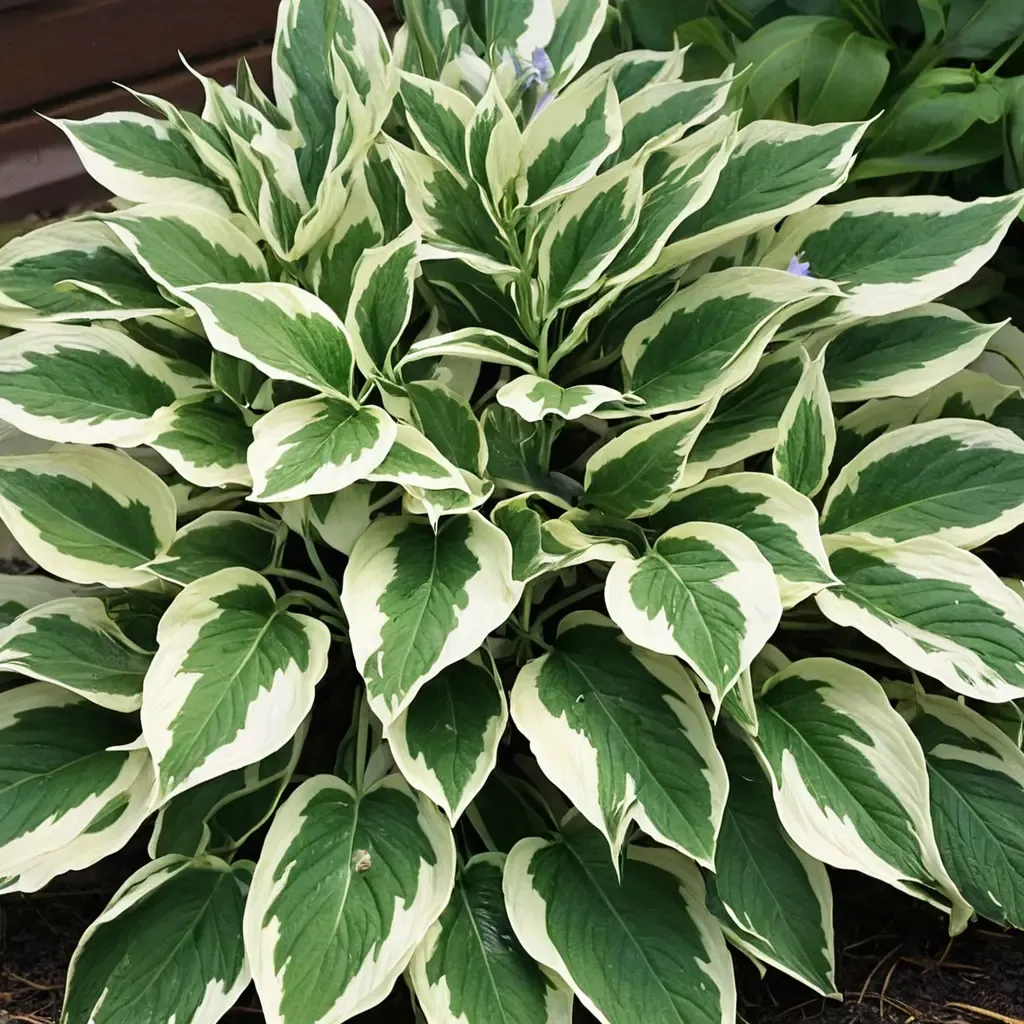
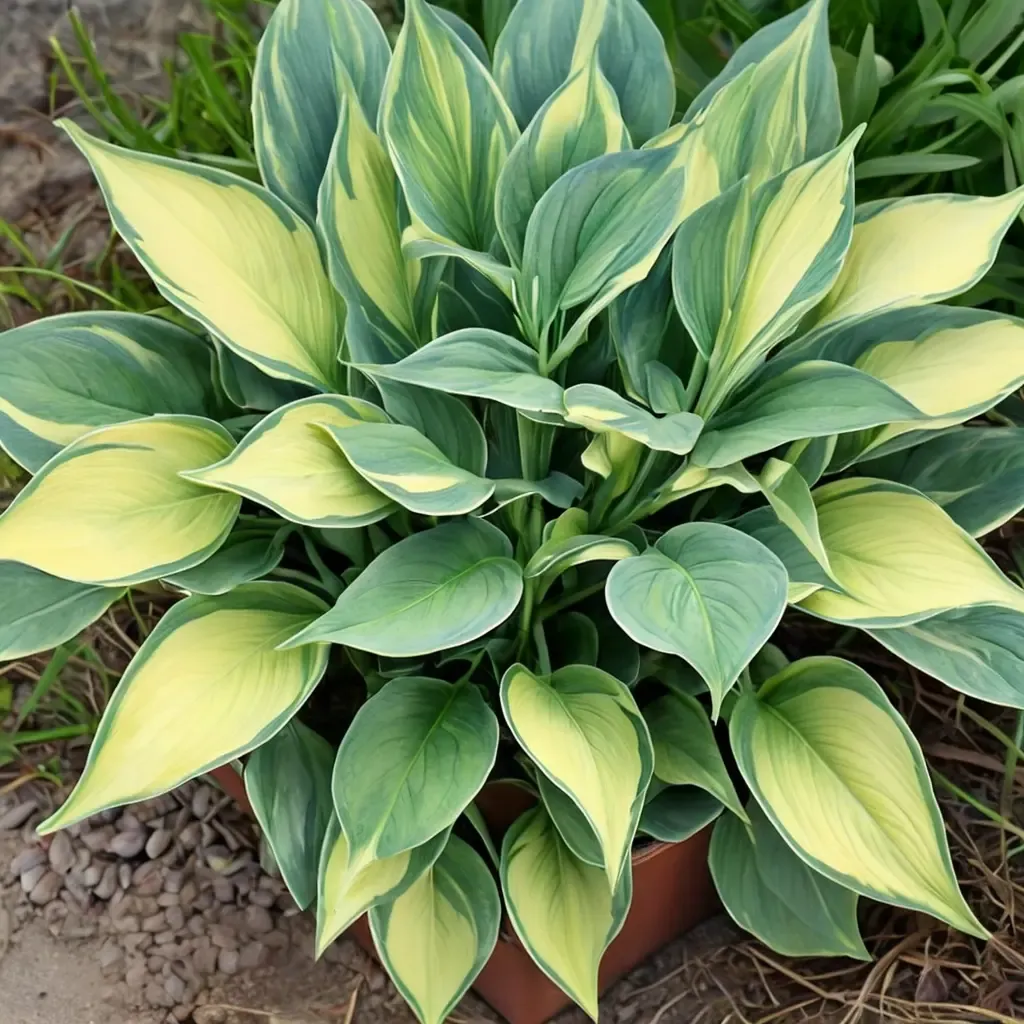
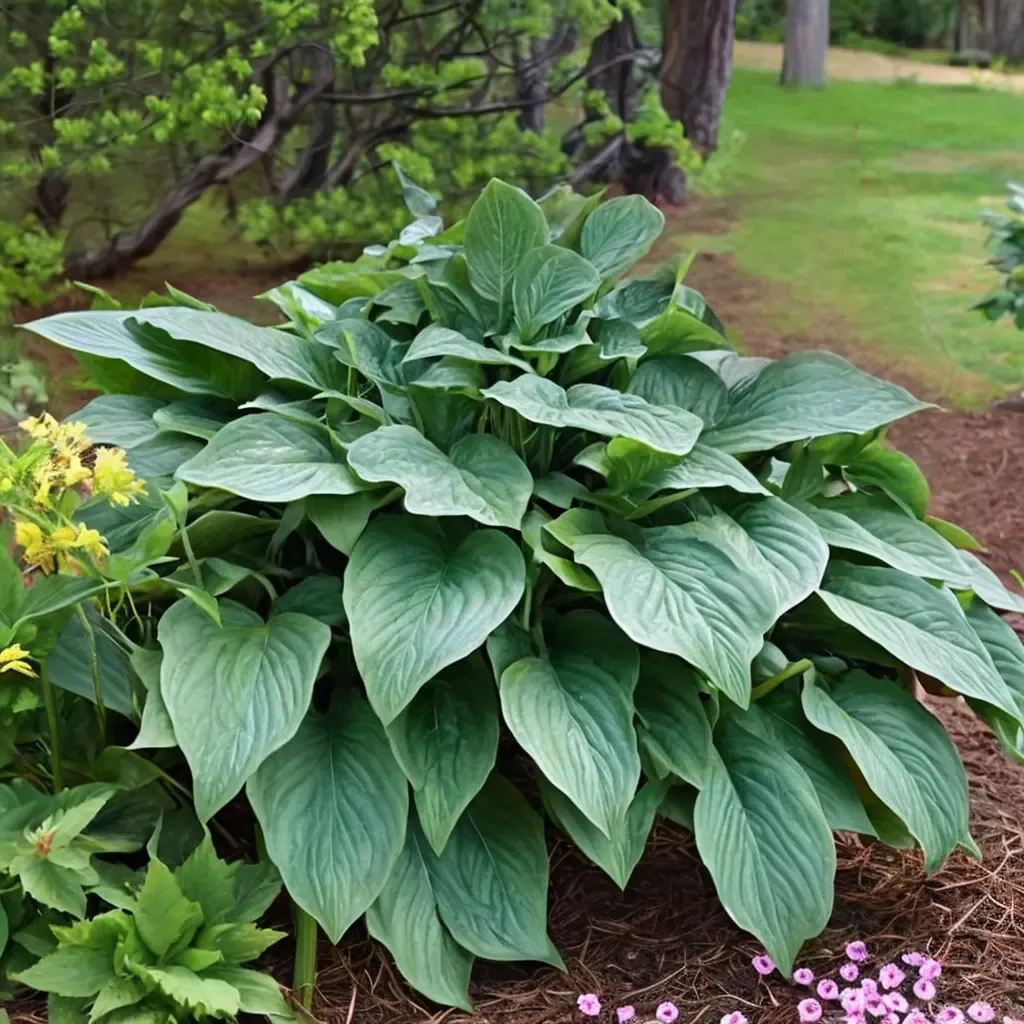
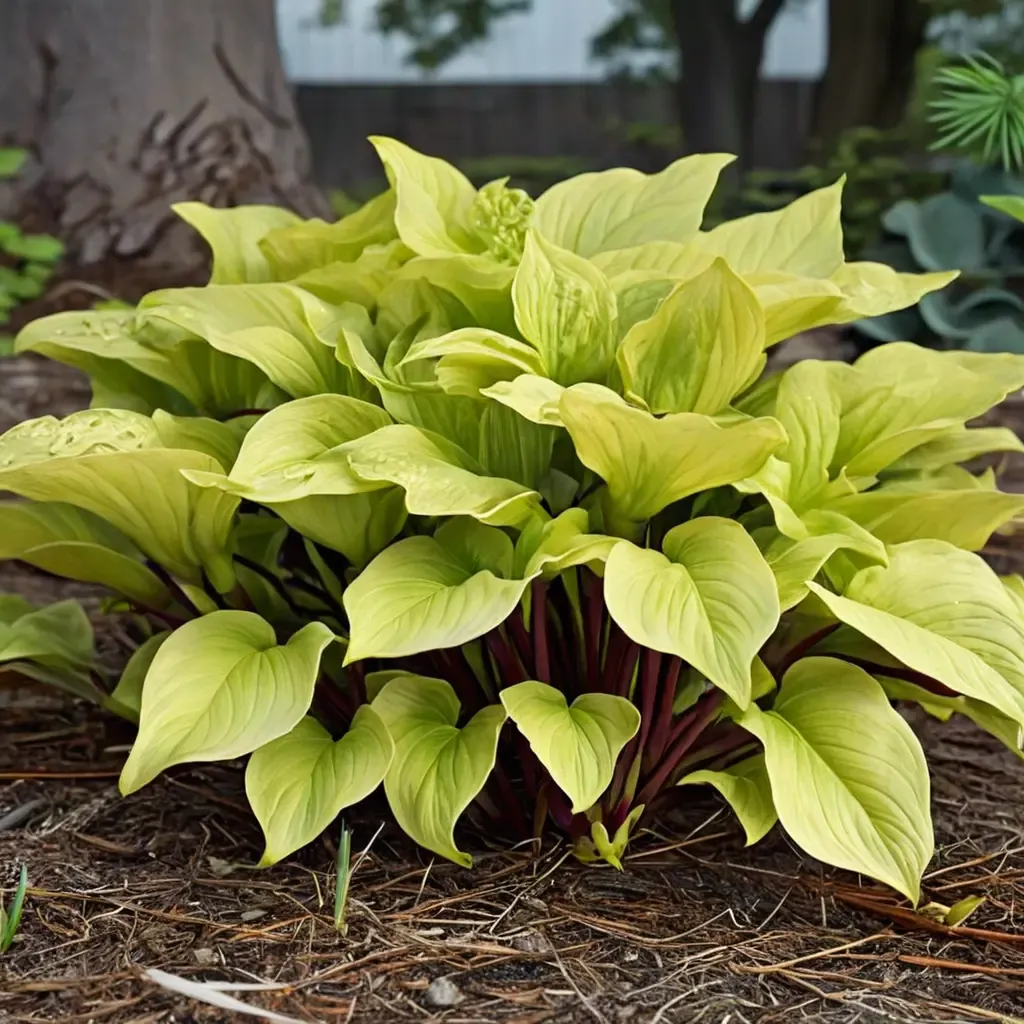
Sow tracks 1130 Hosta varieties, hardy across USDA Zones 4 to 9 between them. These are the 8 gardeners save most. Each one opens its own page with its zone range, sun, mature size and, where a nursery lists it, today's price.
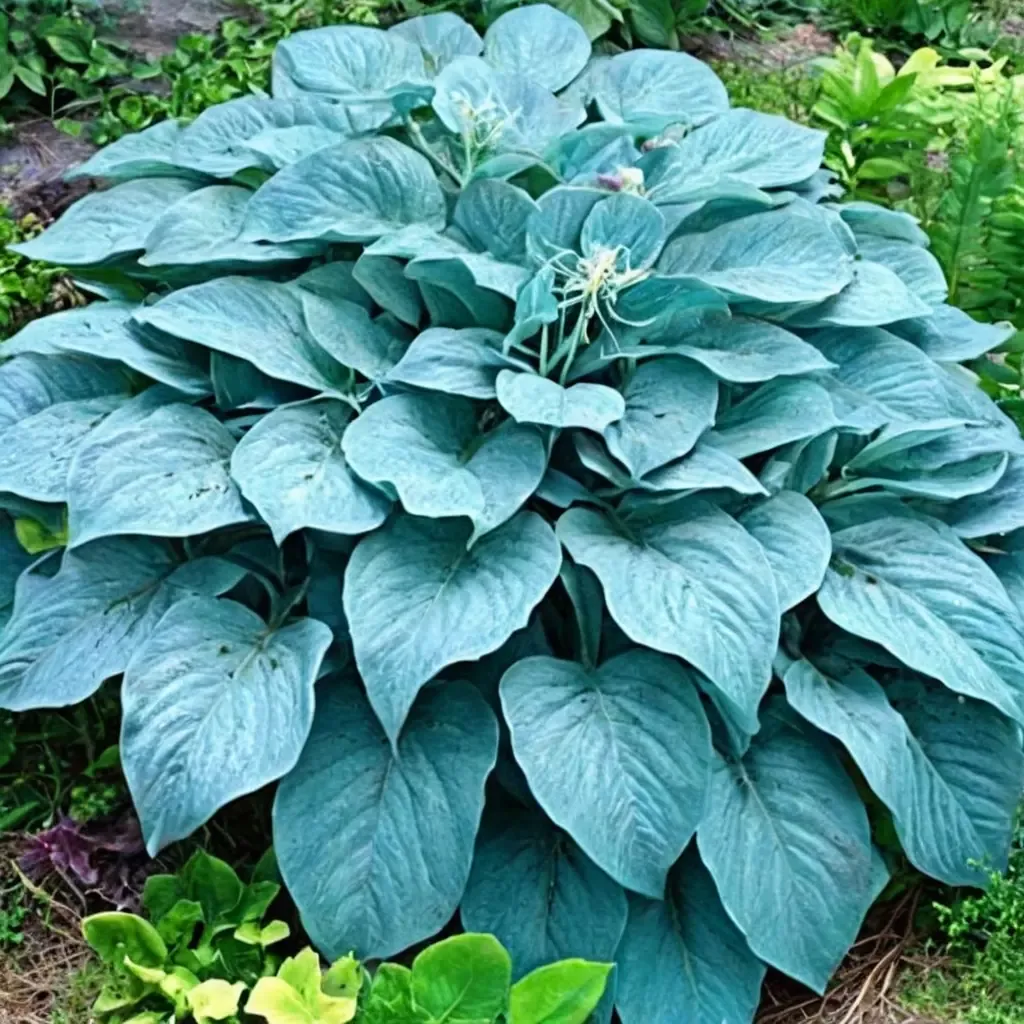
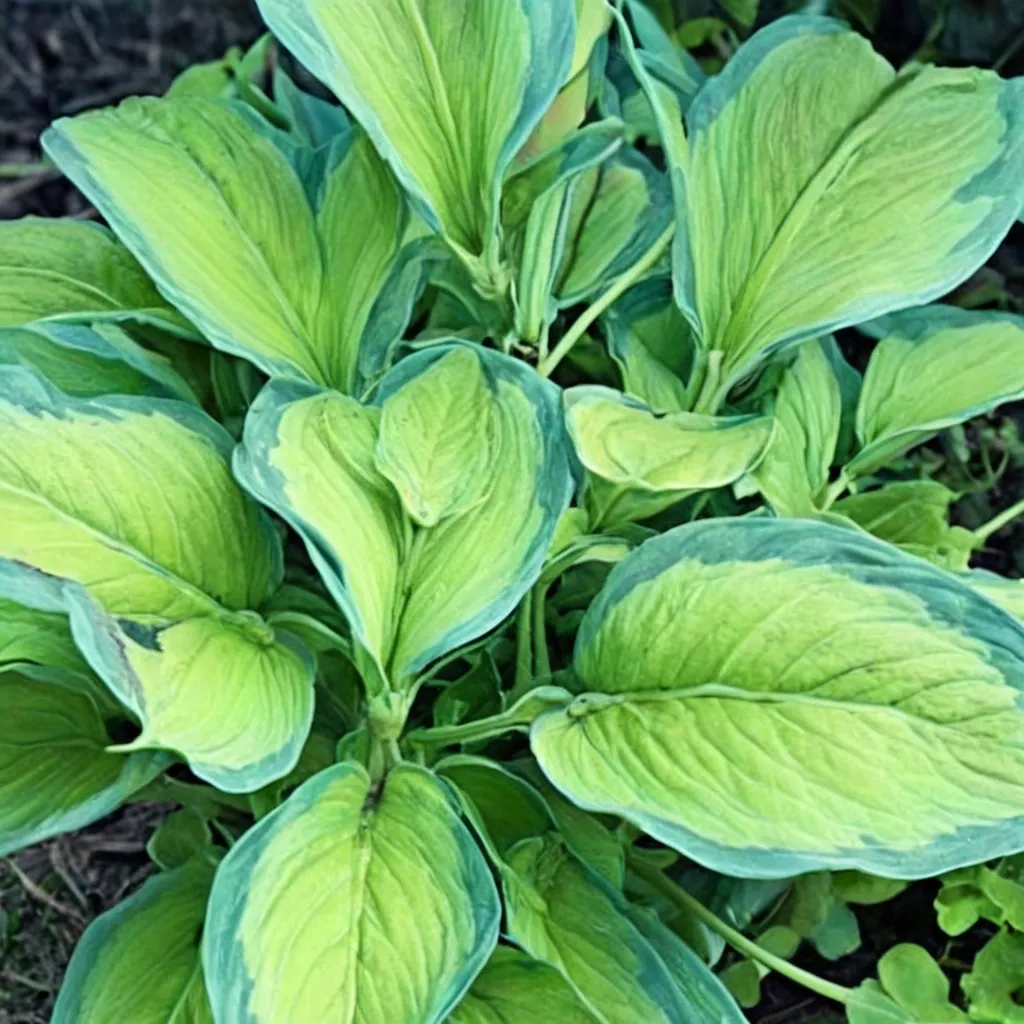
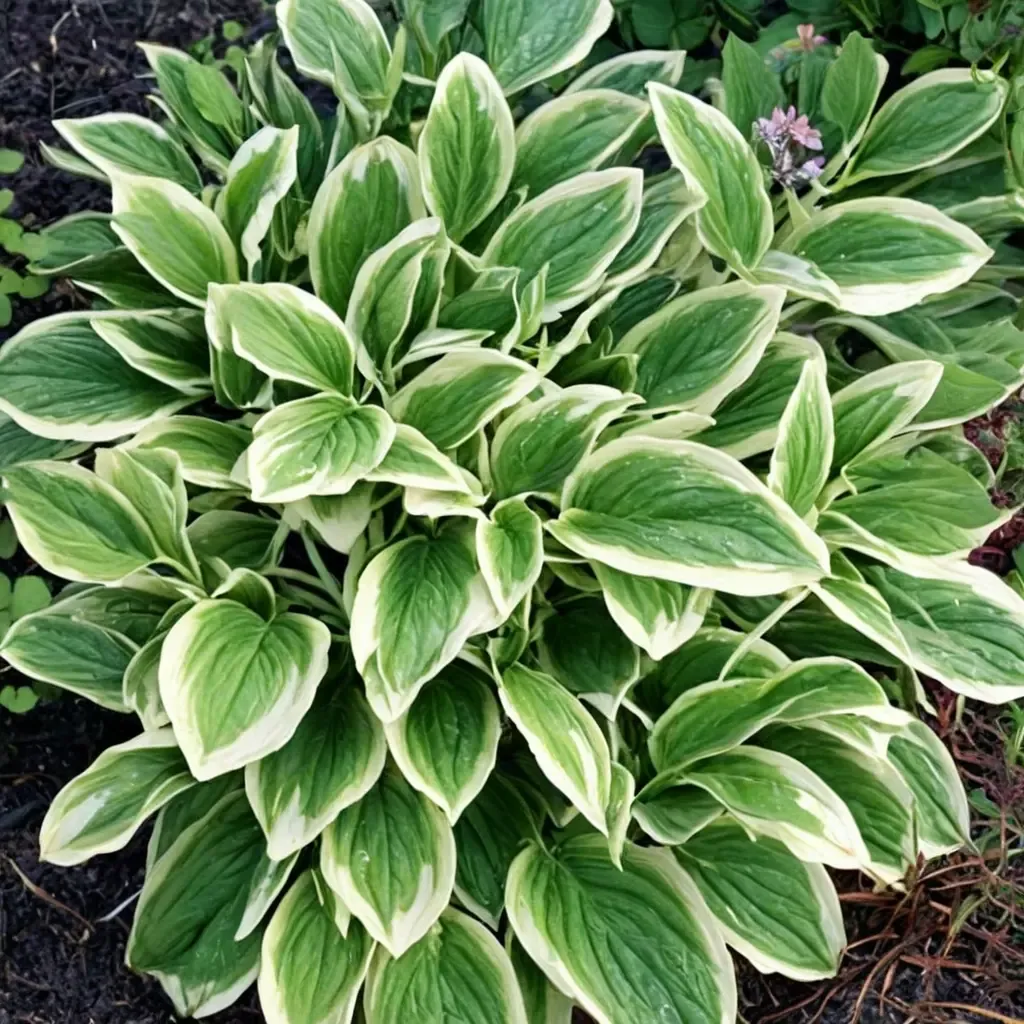
Companions from real gardens
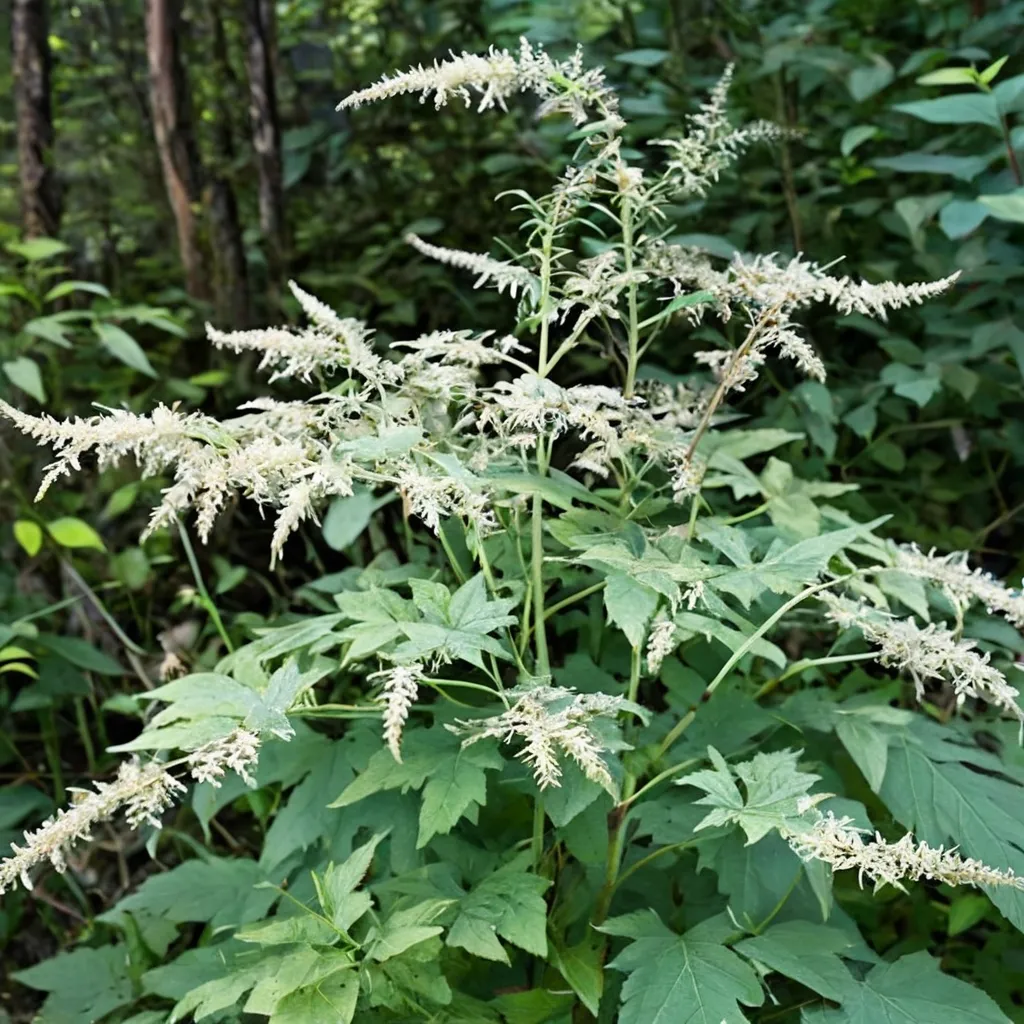
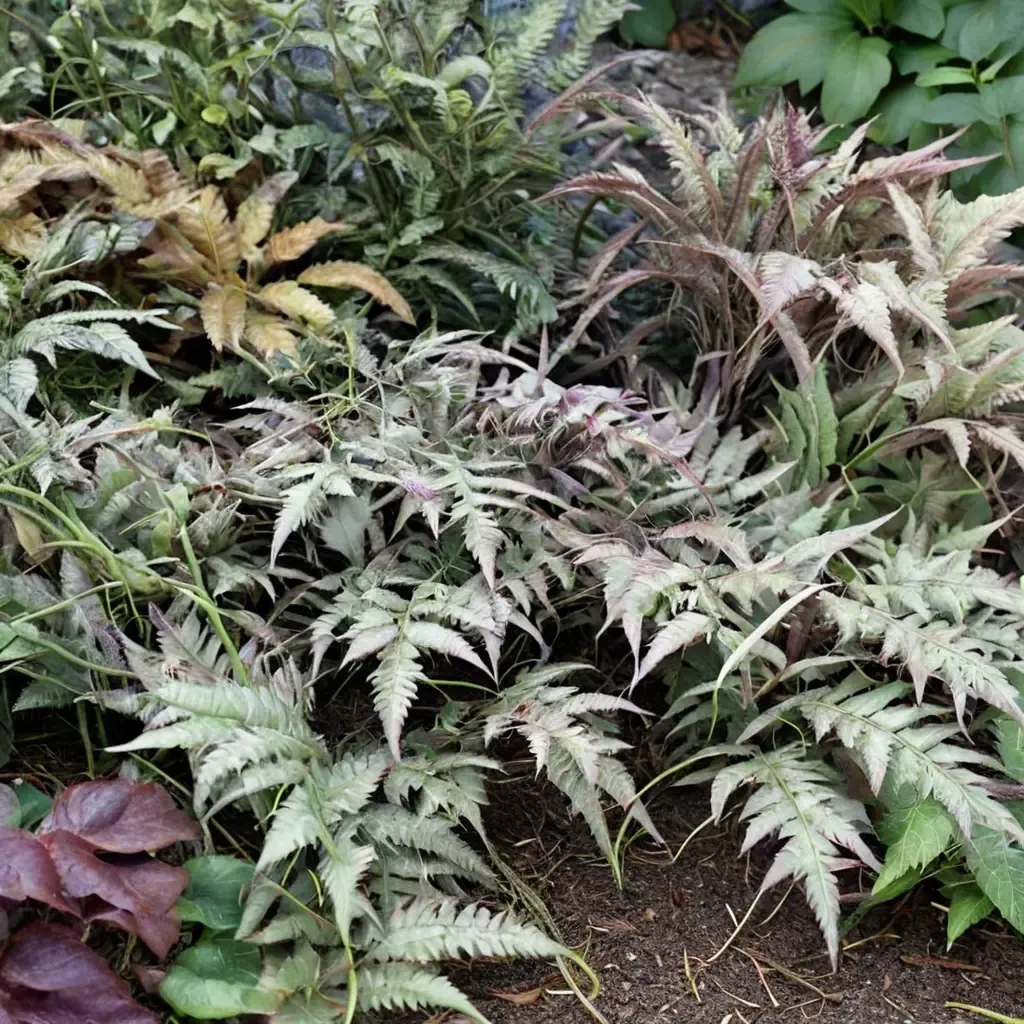
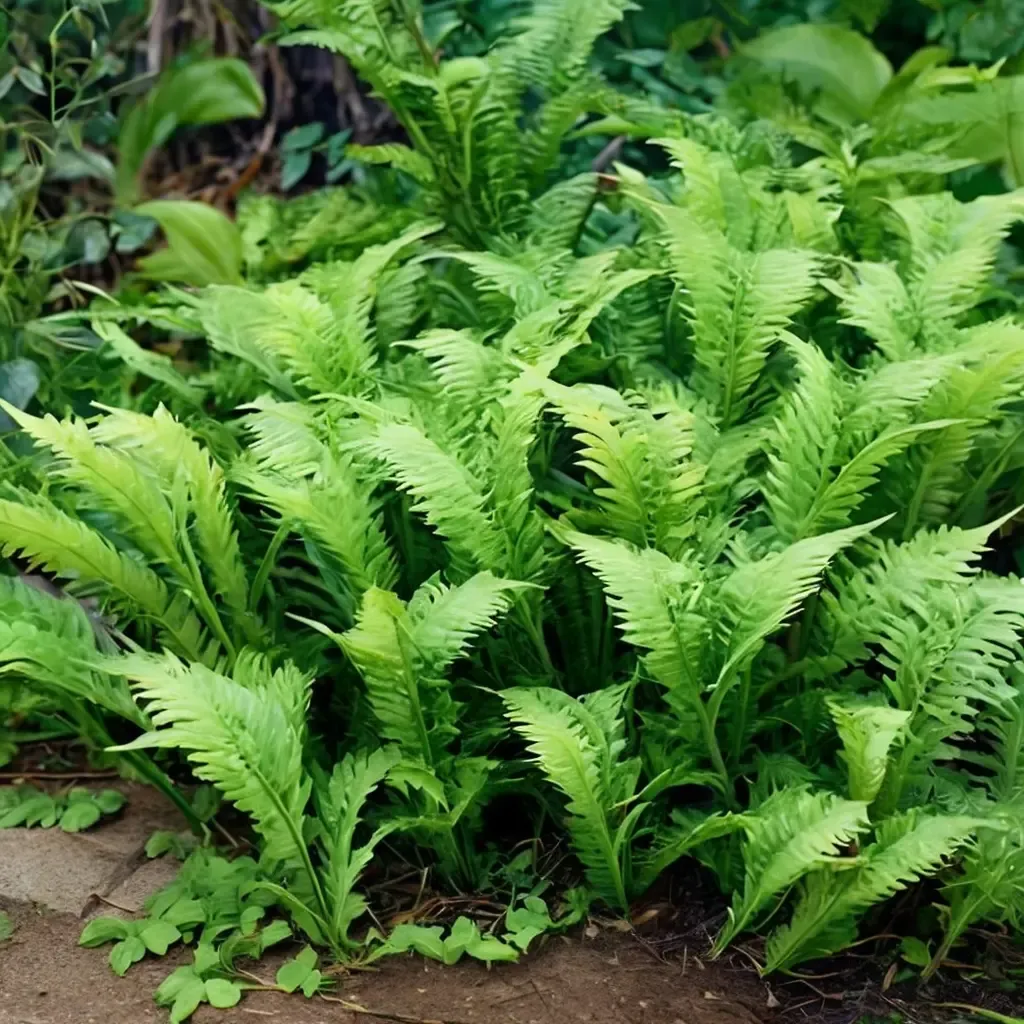
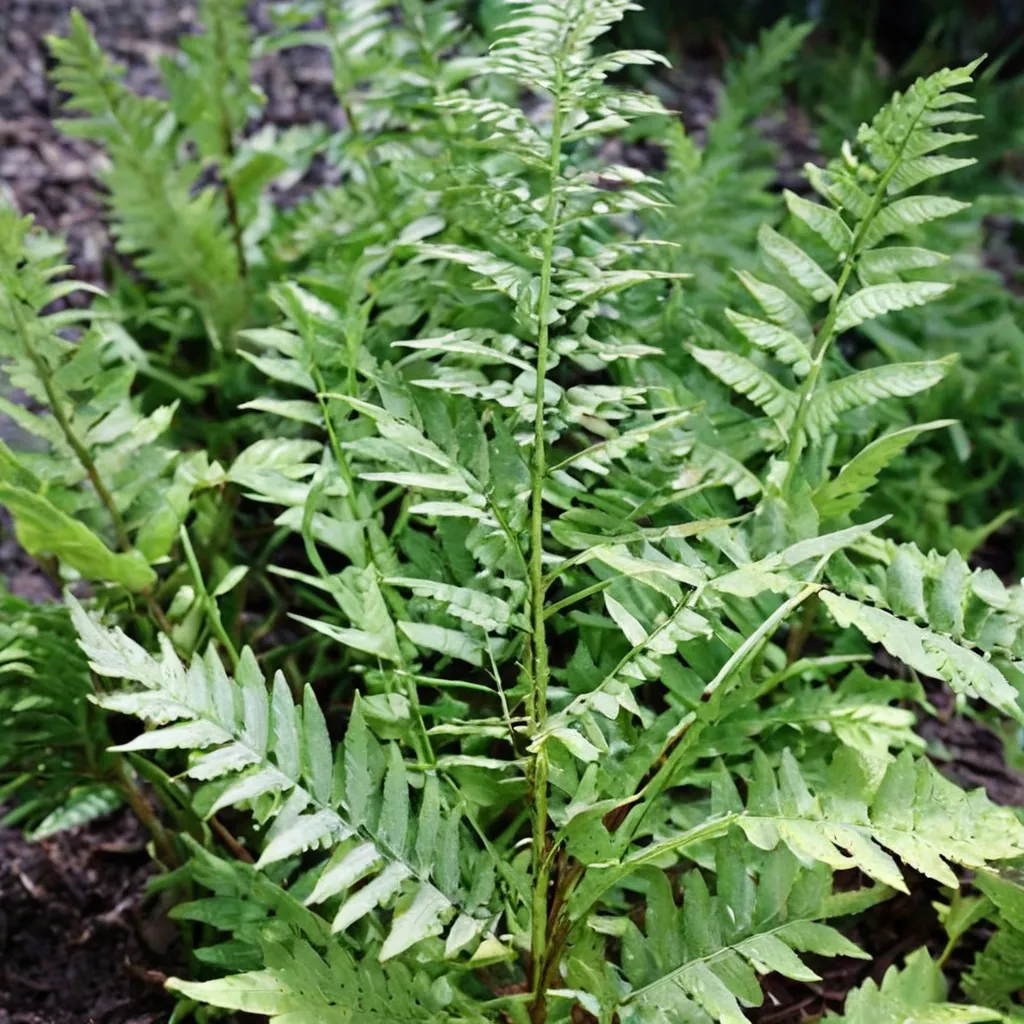
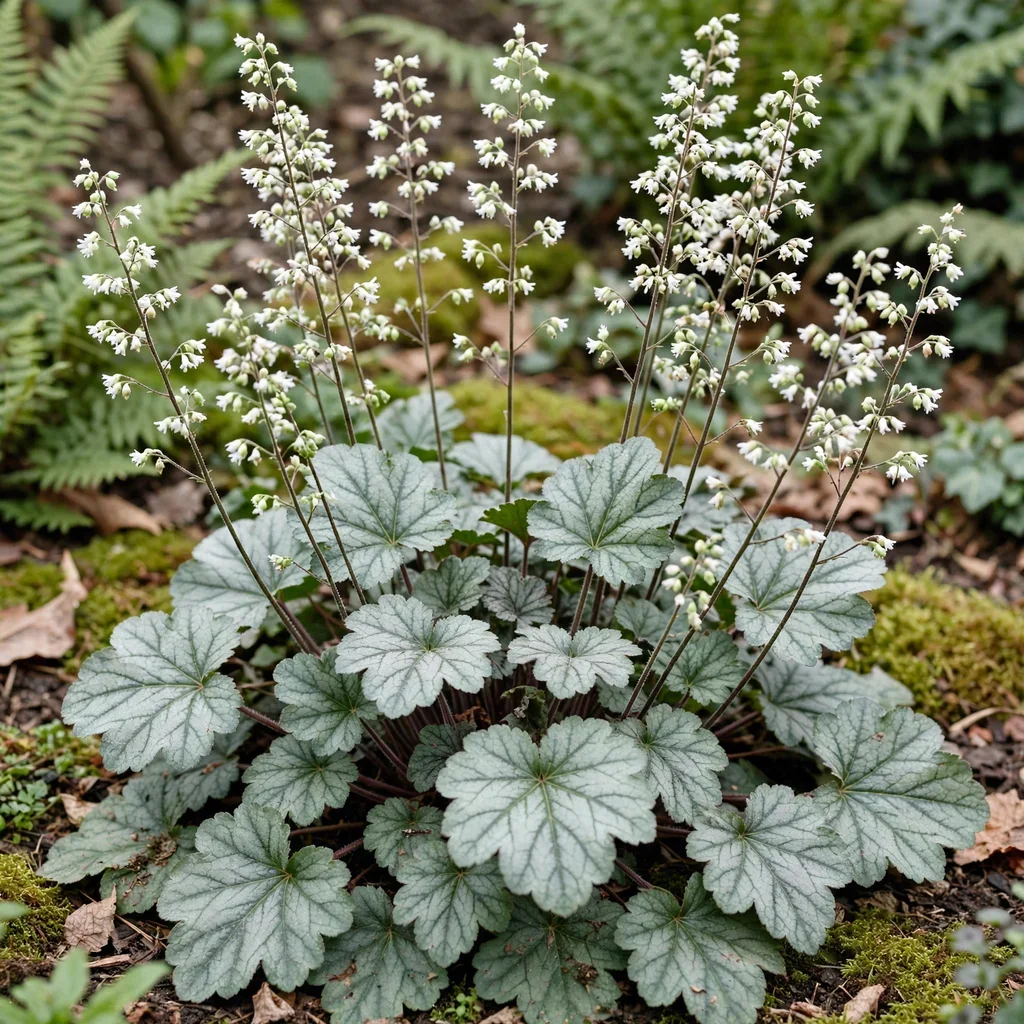
Among the 2.8k gardeners who designed with Hosta in Sow, these are the plants they most consistently put beside it. Each was chosen by at least 20 different gardeners, so this is a palette people actually use, not a textbook list.
Prices across nurseries
534 Hosta varieties are listed by the online nurseries Sow checks every day, from $8.99 to $54.86, with a median of $18.00. The cheapest listing is usually the smallest pot, so compare sizes as well as prices.
Frequently asked questions
Where should you not plant hostas?
Skip soggy ground, where crowns rot, especially over winter. Avoid beds that bake in afternoon sun or dry out, because leaves scorch there, and open sites where wind above 35 mph (56 km/h) or hail can shred large leaves. In deer country, an unfenced bed far from the house is the most likely to be grazed. In the Deep South, avoid northern cultivars that need a real winter to rest.
What is the best perennial for full shade?
Hosta is a reliable choice, because it tolerates heavy shade and survives in deep shade, where a bed gets less than about 4 hours of direct sun a day. Growth slows where the site is very dark, so expect smaller clumps there. Under trees, where roots take most of the water, pair it with Christmas fern, Lenten rose and evergreen epimediums, which cope with dry shade.
What are the downsides of hostas?
Slugs and deer are the big two: hostas are a favorite deer food, and slugs chew every kind to some degree. Hosta virus X has no cure, voles eat roots, and hail and hot sun ruin leaves. Plants die back to the ground each winter, old clumps hollow out in the middle, and every part is toxic to dogs, cats and horses.
Do hostas do better in pots or in the ground?
The ground is easier, because soil insulates the roots. In a pot above ground, roots get as cold as the winter air, so choose a hosta hardy to two zones colder than yours, use a large pot, and bury it or move it to an unheated garage or shed for winter. In the Deep South the reverse holds: a pot runs colder than a bed, which helps hostas go dormant.
Can hostas grow in full sun?
A few can, but with conditions. With heavy mulch and regular watering some hostas survive full sun, yet most bleach or scorch by midsummer. The best candidates are Hosta plantaginea and its hybrids such as 'Royal Standard', plus thick-leaved golds like 'Sum and Substance'. Even these burn in extreme heat with bright sun and wind, so give them morning sun and afternoon shade.
Why is my blue hosta turning green?
The blue is a coat of wax on a green leaf, and hot sun, hard sprays of water and some pesticide sprays wear it away. Once gone, it does not return on those leaves until next spring. Some blues also lose their wax naturally by summer, 'Empress Wu' among them. Move a blue that greens early into more shade and water at the soil.
Are hostas poisonous to dogs and cats?
Yes. Hostas are toxic to dogs, cats and horses because they contain saponins, and eating them causes vomiting, diarrhea and depression. If a pet eats hosta leaves, call your veterinarian or an animal poison control line. Watch your slug control too: metaldehyde baits are poisonous to pets and people, and even low-toxicity iron phosphate baits can harm a pet that eats a lot.
How far apart should you plant hostas?
For clumps you will leave in place, space each hosta at its mature width, about 2 to 2.5 times its height at five years: roughly 1.5 to 3 feet (45–90 cm) for small hostas, 2.5 to 4.5 feet (75–140 cm) for medium ones and up to 8 feet (2.4 m) for 'Empress Wu'. For a faster massed planting, set them 1 to 3 feet (30–90 cm) apart and plan to divide or thin later.
Do hostas come back every year?
Yes, hostas are perennials that die back in fall and regrow from the crown each spring. As a group they are rated for Zones 3 to 9, and most are hardy to Zone 3 or 4. They need a cold winter to rest. In mild Gulf Coast winters with humid summer nights, many northern cultivars grow for a year, then fade after a winter or two, so choose heat-tested types there.
References
- University of Minnesota Extension. Growing Hostas in Minnesota. Accessed October 16, 2026.
- Missouri Botanical Garden. Which hostas are tolerant of direct sun?. Accessed October 16, 2026.
- Missouri Botanical Garden. Hosta 'Sum and Substance' (Plant Finder). Accessed October 16, 2026.
- Missouri Botanical Garden. Hosta 'Empress Wu' (Plant Finder). Accessed October 16, 2026.
- Missouri Botanical Garden. Hosta 'Fire and Ice' (Plant Finder). Accessed October 16, 2026.
- Nebraska Extension in Lancaster County, University of Nebraska-Lincoln. Hosta: A Shade-loving Garden Perennial. Accessed October 16, 2026.
- Penn State Extension. Underplanting Trees: Respect the Roots. Accessed October 16, 2026.
- Penn State Extension. Overwintering Plants in Containers. Accessed October 16, 2026.
- Clemson Cooperative Extension, Home and Garden Information Center. Hosta (HGIC factsheet). Accessed October 16, 2026.
- NC State Extension. Hosta spp. (Plant Toolbox). Accessed October 16, 2026.
- LSU AgCenter. Thriving Hostas for Southern Louisiana Landscapes. Accessed October 16, 2026.
- LSU AgCenter. Choose hostas for Louisiana gardens. Accessed October 16, 2026.
- UW-Madison Division of Extension, Horticulture. Hosta Virus X (HVX). Accessed October 16, 2026.
- American Hosta Society. How to Identify HVX - Hosta Virus X. Accessed October 16, 2026.
- American Hosta Society. Hosta Clump Size Standard. Accessed October 16, 2026.
- American Hosta Society. Hosta of the Year booklet, 3rd edition. Accessed October 16, 2026.
- ASPCA Animal Poison Control. Hosta (Toxic and Non-Toxic Plants). Accessed October 16, 2026.
- Iowa State University Extension and Outreach. Pests and Diseases of Hosta. Accessed October 16, 2026.
- Oregon State University Extension Service. Fall and spring are prime times to battle garden slugs. Accessed October 16, 2026.
- Walters Gardens. Hosta Color Changes. Accessed October 16, 2026.
Sow Editorial
Written by the Sow team from university extension services, botanical gardens, USDA and NOAA data and plant breeders. Every source is listed under References.
The plants Sow gardeners save most