The Story
Plant Bio
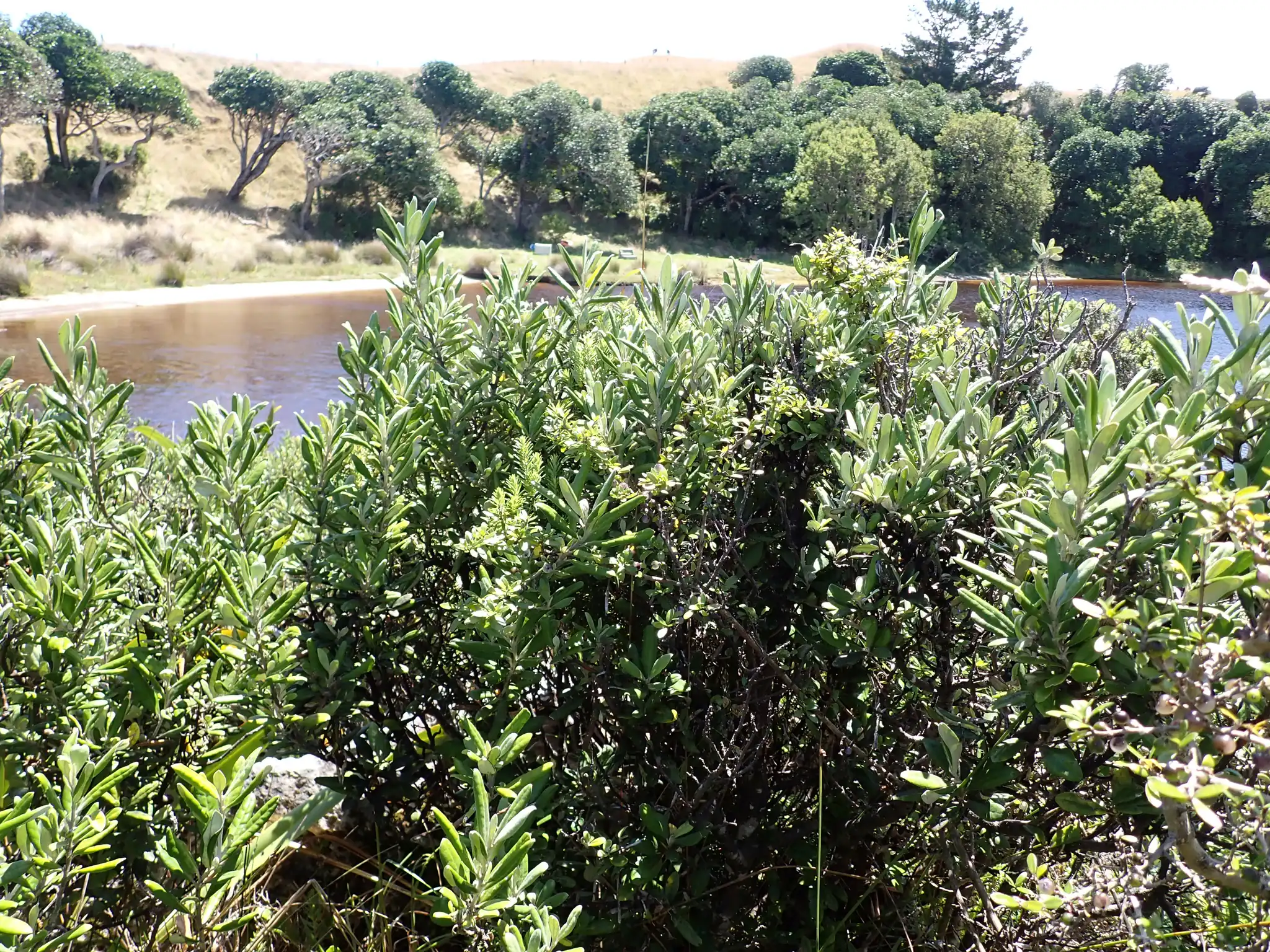
Corokia macrocarpa, the Chatham Islands corokia, is an upright evergreen shrub featuring stiff, architectural branches covered in leathery dark green leaves with silvery-white woolly undersides. Bright yellow, star-shaped flowers appear in spring and summer, followed by small fleshy fruits that feed garden birds.
Distinguished from other corokias by its larger foliage and flowers, this Chatham Islands native forms a dense, wind-tolerant shelter belt or structural hedge. Its distinct silvery leaf undersides and slightly zigzagging stems create stark visual texture in coastal and gravel plantings.
Uses & Benefits:
Essentials
At a Glance
Plant Type
Shrub
Height
157"
Width
118"
Light
Full Sun, Partial Sun
Zones
8, 9, 10
Water
Low to moderate
Humidity
Moderate to high
Lifespan
Perennial
Native To
Chatham Islands, New Zealand
Toxicity
Non-toxic
Bloom period
Spring – Summer
In flower about 6 months of the year
Planting
How to Grow
- Select a full sun to partially shaded planting site with exceptionally well-draining soil.
- Dig a hole twice the width of the root ball and backfill with coarse sand or grit if soil is heavy.
- Set the plant at the same soil depth as in its original container and water thoroughly to settle.
- Apply a light gravel mulch around the base to retain soil warmth while ensuring the root crown remains dry.
Pro Tip
Plant in light, freely draining soil and avoid heavy clay, as winter wet rapidly triggers fatal root rot.
Keep It Thriving
Care Guide
Do
- Plant in gritty, well-aerated soils that shed excess winter moisture quickly.
- Tip-prune lightly after flowering to encourage dense, bushy growth.
- Expose to coastal winds and salt spray without concern for foliage burn.
Don't
- Never plant in heavy clay or waterlogged soils.
- Do not prune hard back into old, leafless woody stems.
- Avoid heavy applications of high-nitrogen fertilizers.
Seasonal Care Calendar
| Task | Jan | Feb | Mar | Apr | May | Jun | Jul | Aug | Sep | Oct | Nov | Dec |
|---|---|---|---|---|---|---|---|---|---|---|---|---|
| Fertilize | ||||||||||||
| Pest Check | ||||||||||||
| Propagate | ||||||||||||
| Prune |
Watch Out For
Pests & Diseases
Common Pests
Common Diseases
In the Garden
Landscape Uses & Companions
Landscape Uses
Multiply
Propagation Methods
Good to Know
Common Questions
Chatham Islands Corokia questions
What zones can Chatham Islands Corokia grow in?
Chatham Islands Corokia is hardy in USDA Zones 8–10: in that range it survives winter in the ground. Colder than Zone 8, grow it in a container you can move to shelter for the winter.
Is Chatham Islands Corokia deer resistant?
Not reliably. Deer may browse Chatham Islands Corokia, especially tender spring growth — plan on repellents or fencing where pressure is high.
When does Chatham Islands Corokia bloom?
Chatham Islands Corokia typically blooms from spring to summer. Exact timing shifts a week or two with your zone — Sow's bloom calendar maps it to your garden.
Does Chatham Islands Corokia need full sun?
Chatham Islands Corokia does best in full sun to part shade. In hot climates, afternoon shade keeps blooms fresher longer.
Is Chatham Islands Corokia drought tolerant?
Yes — once established (usually after the first full season), Chatham Islands Corokia handles dry spells with minimal watering. Water deeply its first year to build the root system that makes that possible.
More Corokia to compare
Keep exploring
Explore the genus
Hardy in your zone?
Grow Chatham Islands Corokia with confidence
See it in a design of your actual yard, get zone-matched care reminders, and track it season by season in your garden journal.