The Story
Plant Bio
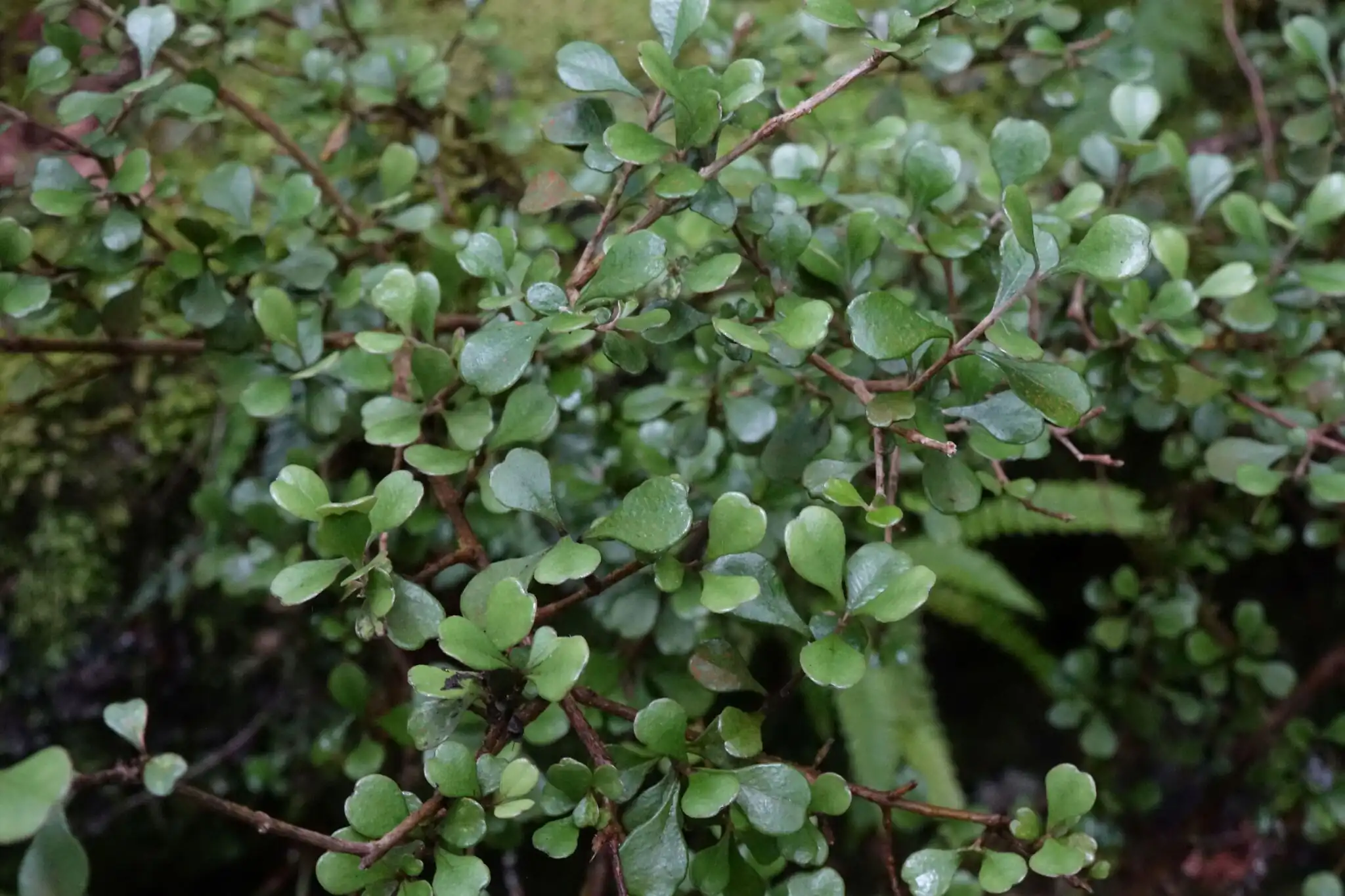
Lophomyrtus obcordata is an evergreen shrub or small tree characterized by small, heart-shaped leaves with deeply notched tips. Solitary white flowers with prominent stamens bloom in leaf axils during summer, followed by dark red to black berries.
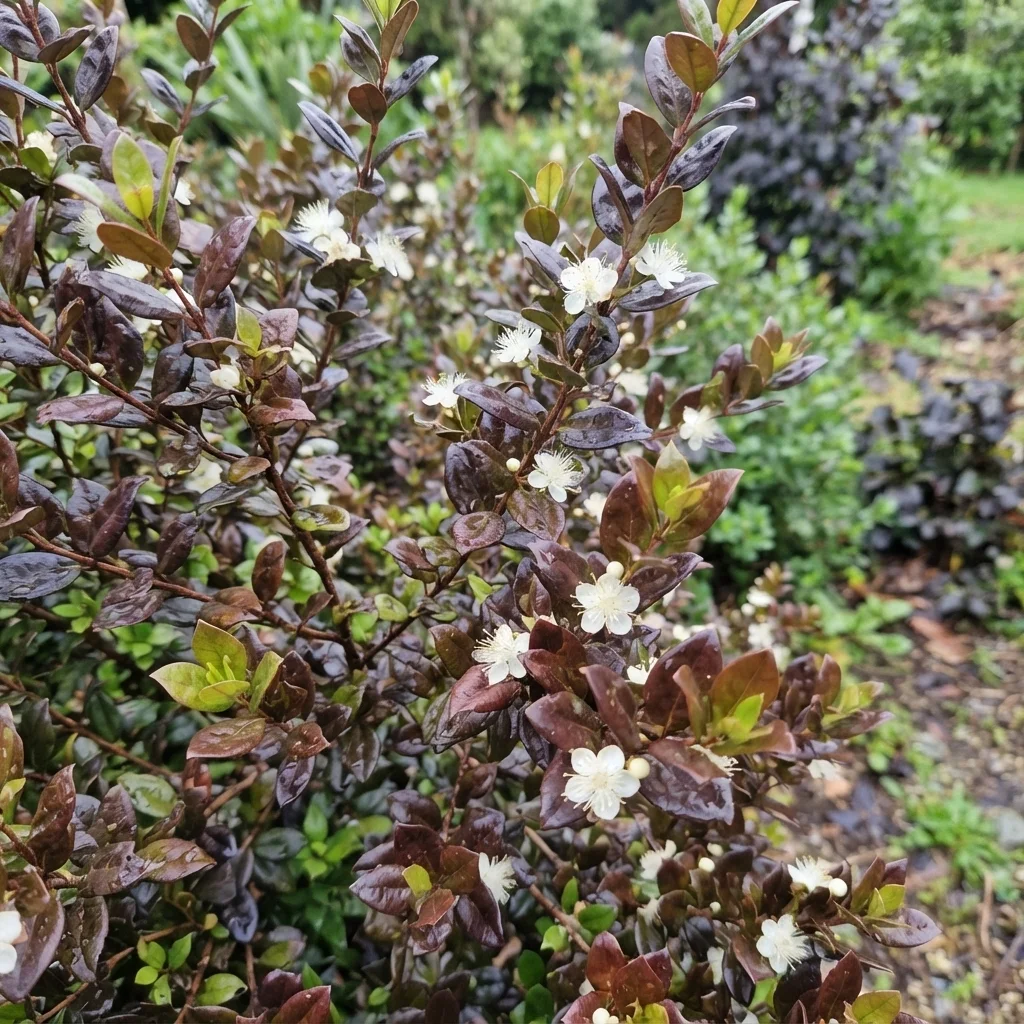
New growth emerges with dark reddish-bronze or purplish foliage tones that deepen in full sun exposures. The dense, fine-textured branching habit allows the plant to function well as a hedge or container specimen in mild winter climates.
Uses & Benefits:
Essentials
At a Glance
Plant Type
Shrub
Height
118"
Width
79"
Light
Full Sun, Partial Sun
Zones
8, 9, 10
Water
Moderate
Humidity
Moderate to high
Lifespan
Perennial
Native To
New Zealand
Toxicity
Non-toxic
Bloom period
Summer – Late summer
In flower about 3 months of the year
Planting
How to Grow
- Select a site in full sun or light partial shade with well-draining, humus-rich soil.
- Dig a planting hole twice as wide as the root ball and equal in depth.
- Set the plant into the hole ensuring the top of the root crown rests flush with the surrounding soil level.
- Backfill with soil, firm gently to eliminate air pockets, and water deeply to settle the roots.
Pro Tip
Avoid heavy pruning into old, leafless woody stems, as they lack dormant buds required to resprout.
Keep It Thriving
Care Guide
Do
- Plant in light, freely draining soil to avoid root saturation.
- Place in full sun for maximum foliage color intensity.
- Water regularly during prolonged dry spells to maintain consistent soil moisture.
Don't
- Do not plant in heavy, waterlogged clay soil.
- Do not hard-prune into thick, leafless old wood.
- Do not over-fertilize, which induces sappy growth vulnerable to pests.
Seasonal Care Calendar
| Task | Jan | Feb | Mar | Apr | May | Jun | Jul | Aug | Sep | Oct | Nov | Dec |
|---|---|---|---|---|---|---|---|---|---|---|---|---|
| Fertilize | ||||||||||||
| Mulch | ||||||||||||
| Pest Check | ||||||||||||
| Prune |
Watch Out For
Pests & Diseases
Common Pests
Common Diseases
In the Garden
Landscape Uses & Companions
Landscape Uses
Multiply
Propagation Methods
Good to Know
Common Questions
Rōhutu questions
What zones can Rōhutu grow in?
Rōhutu is hardy in USDA Zones 8–10: in that range it survives winter in the ground. Colder than Zone 8, grow it in a container you can move to shelter for the winter.
Is Rōhutu deer resistant?
Not reliably. Deer may browse Rōhutu, especially tender spring growth — plan on repellents or fencing where pressure is high.
When does Rōhutu bloom?
Rōhutu typically blooms in summer. Exact timing shifts a week or two with your zone — Sow's bloom calendar maps it to your garden.
Does Rōhutu need full sun?
Rōhutu does best in full sun to part shade. In hot climates, afternoon shade keeps blooms fresher longer.
More Lophomyrtus to compare
Keep exploring
Explore the genus
Hardy in your zone?
Grow Rōhutu with confidence
See it in a design of your actual yard, get zone-matched care reminders, and track it season by season in your garden journal.