The Story
Plant Bio
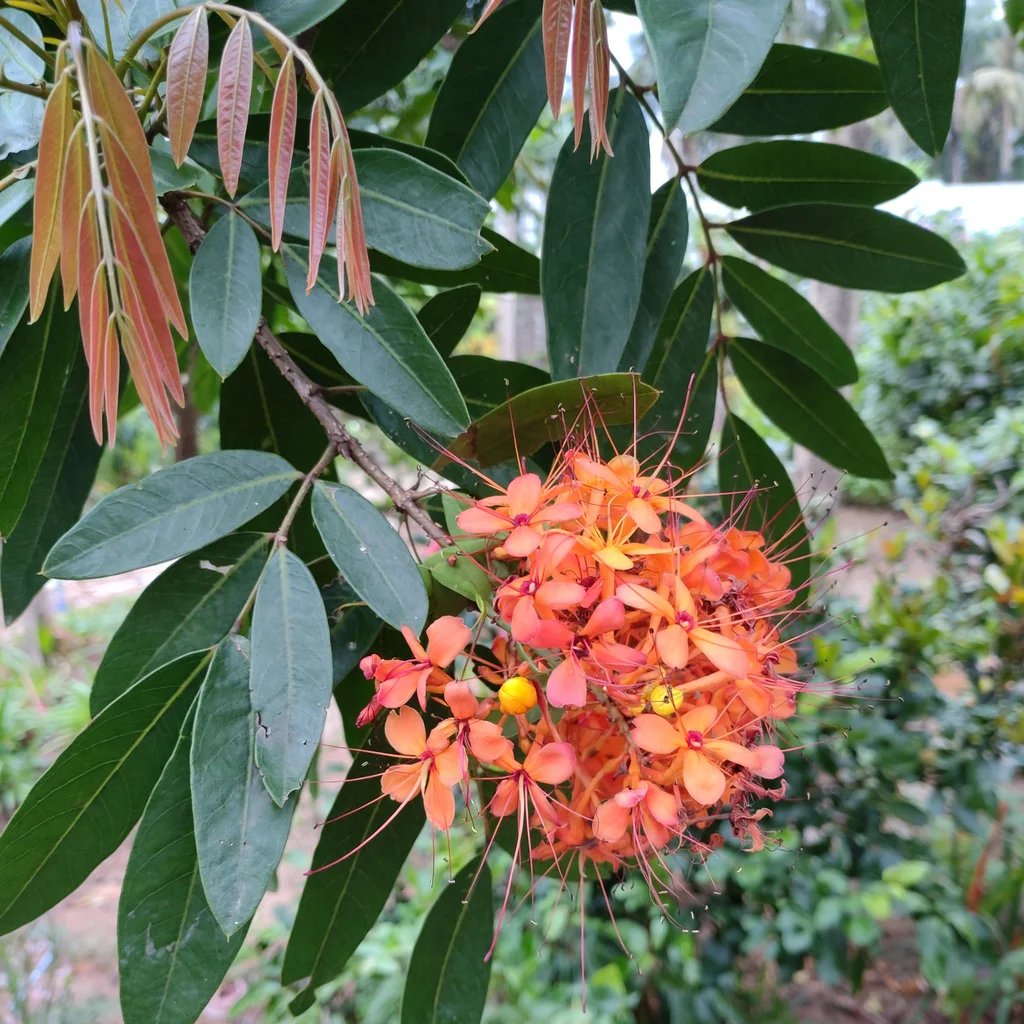
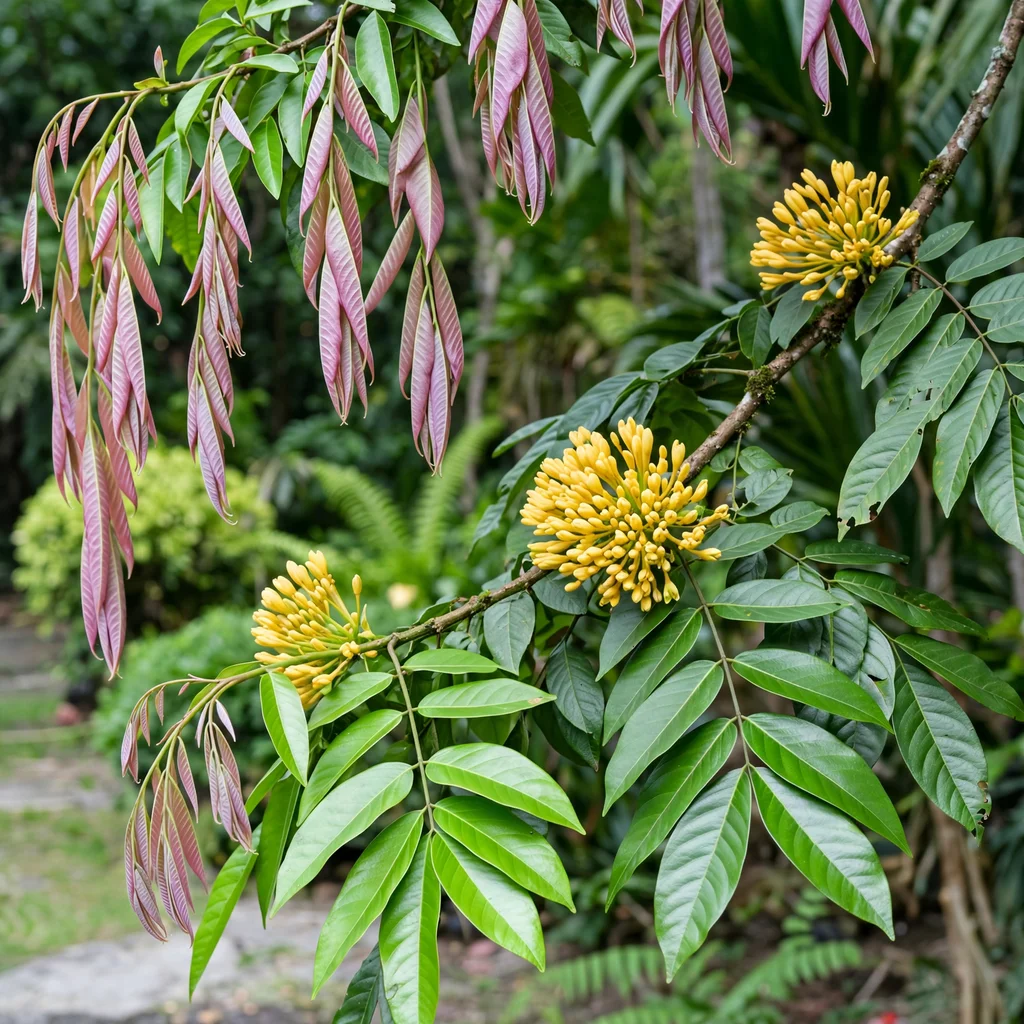
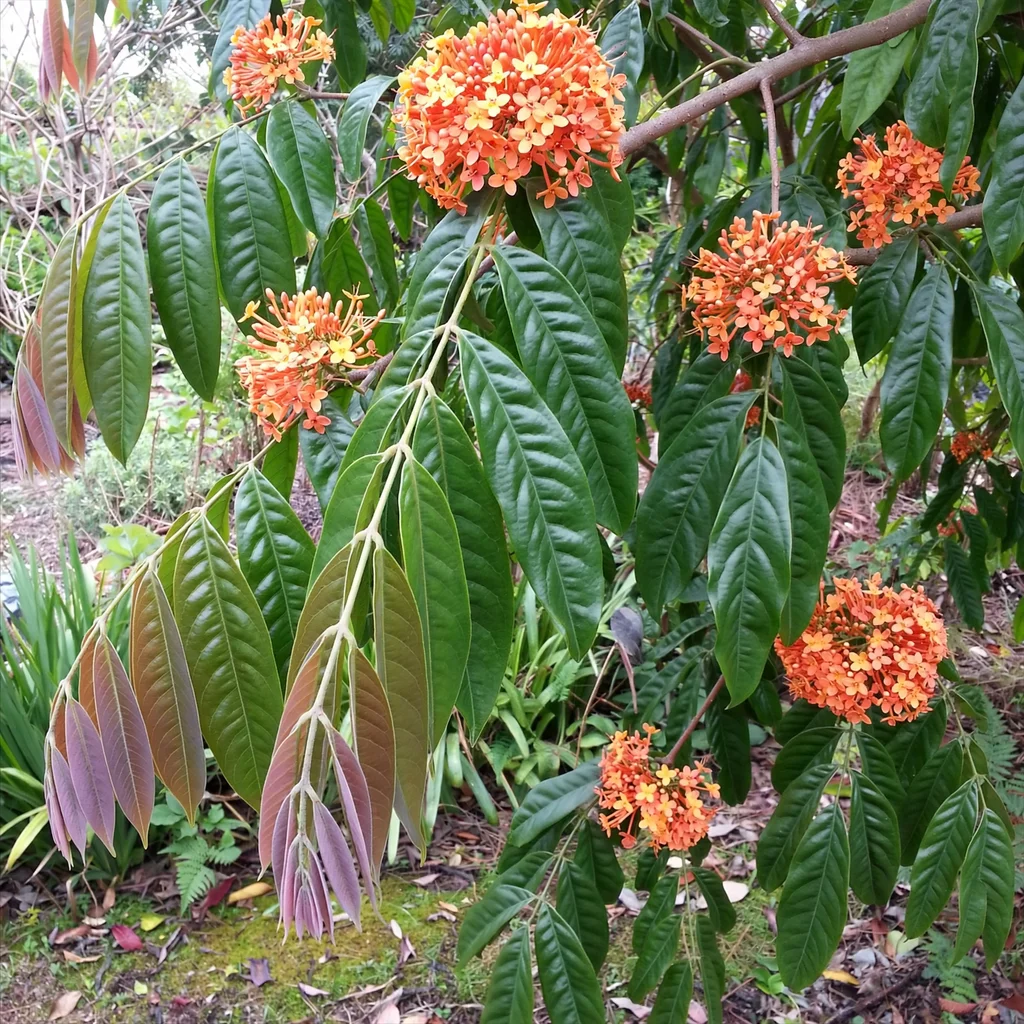
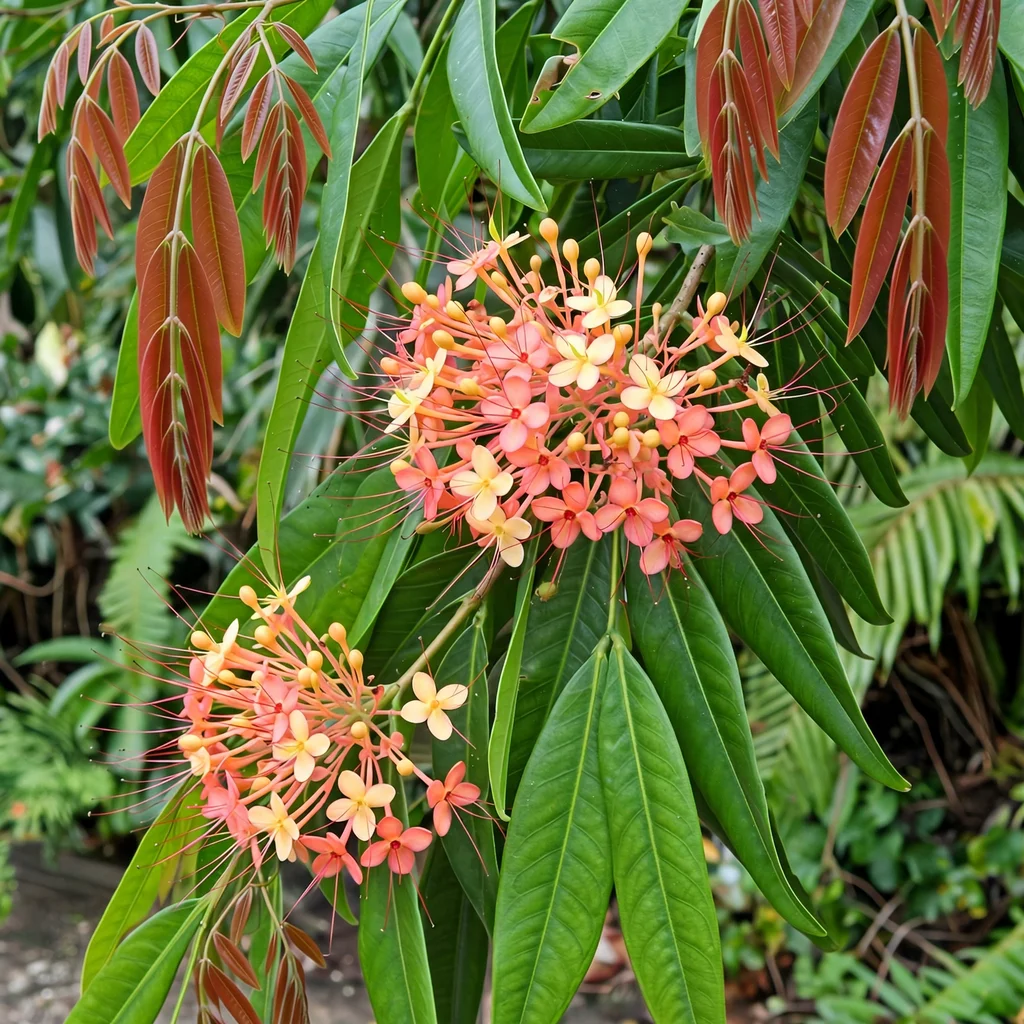
Saraca indica is a slow-growing evergreen tree from humid tropical Southeast Asia, reaching 16 to 30 feet in gardens with an erect trunk and dense crown. Its paripinnate leaves carry six to twelve oblong dark green leaflets, with new flushes emerging pale green to reddish and drooping before hardening.
The flowers have no true petals; the display is four petal-like sepals packed in dense fragrant corymbs on the branches and trunk, opening yellow-orange and aging to scarlet-vermilion in spring into summer. It needs constant warmth and moisture to hold leaf and fails outdoors below Zone 9, and much Indian stock sold under this name is properly Saraca asoca, the true Sita-Ashok.
Uses & Benefits:
Essentials
At a Glance
Plant Type
Tree
Height
360"
Width
240"
Light
Full Sun, Partial Sun
Zones
9, 10
Water
High - constantly moist
Humidity
High
Lifespan
Long-lived tree
Native To
Java, Laos, Malaya, Myanmar, Sumatra, Thailand, Vietnam
Toxicity
Unconfirmed - do not ingest
Bloom period
Spring – Summer
In flower about 6 months of the year
Planting
How to Grow
- Plant outdoors only in Zone 9 to 11 in enriched moisture-retentive loam that stays constantly moist.
- Site in hot overhead sun to part shade with shelter from frost and drying wind.
- Water deeply to keep soil evenly moist and mulch 2 to 3 inches to hold moisture.
- Grow in a large container elsewhere and move indoors to a warm bright room before cold weather.
- Inspect new growth regularly for aphids and scale and prune only for form or deadwood.
Pro Tip
Keep the root zone evenly moist at all times and site container plants where night temperatures stay warm; cold or dry soil drops leaves and regrowth is slow.
Keep It Thriving
Care Guide
Do
- Keep soil constantly moist and never let containers dry out.
- Plant in enriched mildly acidic to mildly alkaline loam.
- Provide overhead sun to part shade and high humidity with shelter.
Don't
- Do not plant outdoors below Zone 9 or expose to frost.
- Do not allow drought or bog-dry cycles that defoliate the crown.
- Do not ingest bark or flowers used in traditional medicine without medical advice.
Seasonal Care Calendar
| Task | Jan | Feb | Mar | Apr | May | Jun | Jul | Aug | Sep | Oct | Nov | Dec |
|---|---|---|---|---|---|---|---|---|---|---|---|---|
| Mulch | ||||||||||||
| Pest Check | ||||||||||||
| Plant | ||||||||||||
| Prune | ||||||||||||
| Winter Prep |
Watch Out For
Pests & Diseases
Common Pests
Common Diseases
In the Garden
Landscape Uses & Companions
Landscape Uses
Multiply
Propagation Methods
Good to Know
Common Questions
Ashoka questions
What zones can Ashoka grow in?
Ashoka is hardy in USDA Zones 9–10: in that range it survives winter in the ground. Colder than Zone 9, winters are too cold for it to survive outdoors.
When does Ashoka bloom?
Ashoka typically blooms from spring to summer. Exact timing shifts a week or two with your zone — Sow's bloom calendar maps it to your garden.
Does Ashoka need full sun?
Ashoka does best in full sun to part shade. In hot climates, afternoon shade keeps blooms fresher longer.
More Saraca to compare
Keep exploring
Explore the genus
Hardy in your zone?
Grow Ashoka with confidence
See it in a design of your actual yard, get zone-matched care reminders, and track it season by season in your garden journal.