The Story
Plant Bio
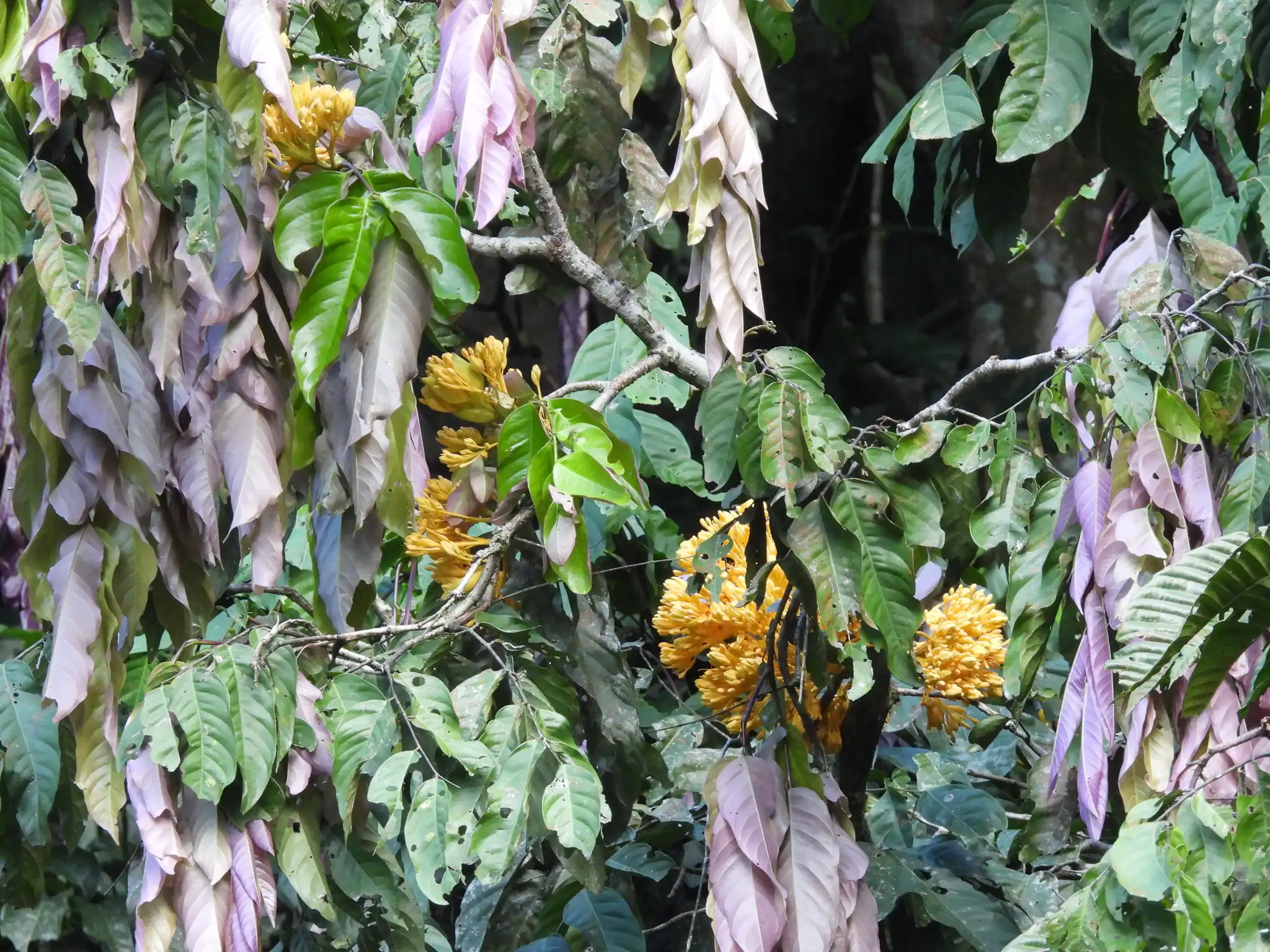
Saraca thaipingensis, sold as yellow saraca, is a small evergreen tree from humid Southeast Asian lowland forest, reaching about 26 feet in gardens with a dense crown and flowers borne on the trunk and older branches. It carries even-pinnate leaves with four to eight pairs of oblong-lanceolate leaflets, the new flush hanging in white-pink-purple tassels before hardening bright green.
It is distinguished by dense sessile corymbs to 16 inches wide borne directly on the trunk and branches, each apetalous flower opening yellow on a narrow calyx tube then deepening through orange to red with a darker eye. Trade plants remain labeled S. thaipingensis though the name is now treated as a synonym of Saraca cauliflora, a source of confusion with the orange-red Saraca asoca.
Uses & Benefits:
Essentials
At a Glance
Plant Type
Tree
Height
315"
Width
180"
Light
Full Sun, Partial Sun
Zones
9, 10
Water
Moderate, evenly moist
Humidity
High
Lifespan
Long-lived tree
Native To
Myanmar, Thailand, Peninsular Malaysia, Java
Toxicity
Unknown - no toxicity reported
Bloom period
Year round
In flower about 12 months of the year
Planting
How to Grow
- Plant in spring after all frost danger in a sheltered, full sun to light shade spot protected from wind.
- Set into fertile, organic, well-drained soil kept evenly moist, slightly acidic to neutral, and mulch to hold moisture.
- Water regularly to keep the root zone moist; it tolerates brief waterlogging but not drying or cold soil.
- Hold above freezing at all times; move container plants into a warm humid greenhouse for winter in zone 9.
Pro Tip
Give it constant heat and humidity in rich, evenly moist soil; it stalls below zone 9 and will not recover from a hard freeze.
Keep It Thriving
Care Guide
Do
- Do provide warmth, humidity, and evenly moist rich soil.
- Do give light shade to young plants and shelter from strong wind.
- Do mulch with organic matter to keep roots moist.
Don't
- Don't plant outdoors where frost occurs or winter protection is not possible.
- Don't let the soil dry out completely or sit in cold, chilled conditions.
- Don't expect flowering outdoors below zone 9; it needs sustained heat.
Seasonal Care Calendar
| Task | Jan | Feb | Mar | Apr | May | Jun | Jul | Aug | Sep | Oct | Nov | Dec |
|---|---|---|---|---|---|---|---|---|---|---|---|---|
| Fertilize | ||||||||||||
| Mulch | ||||||||||||
| Pest Check | ||||||||||||
| Plant | ||||||||||||
| Winter Prep |
Watch Out For
Pests & Diseases
Common Pests
Common Diseases
In the Garden
Landscape Uses & Companions
Landscape Uses
Multiply
Propagation Methods
Good to Know
Common Questions
Yellow Saraca questions
What zones can Yellow Saraca grow in?
Yellow Saraca is hardy in USDA Zones 9–10: in that range it survives winter in the ground. Colder than Zone 9, winters are too cold for it to survive outdoors.
When does Yellow Saraca bloom?
Yellow Saraca typically blooms year-round. Exact timing shifts a week or two with your zone — Sow's bloom calendar maps it to your garden.
Does Yellow Saraca need full sun?
Yellow Saraca does best in full sun to part shade. In hot climates, afternoon shade keeps blooms fresher longer.
More Saraca to compare
Keep exploring
Explore the genus
Hardy in your zone?
Grow Yellow Saraca with confidence
See it in a design of your actual yard, get zone-matched care reminders, and track it season by season in your garden journal.