The Story
Plant Bio
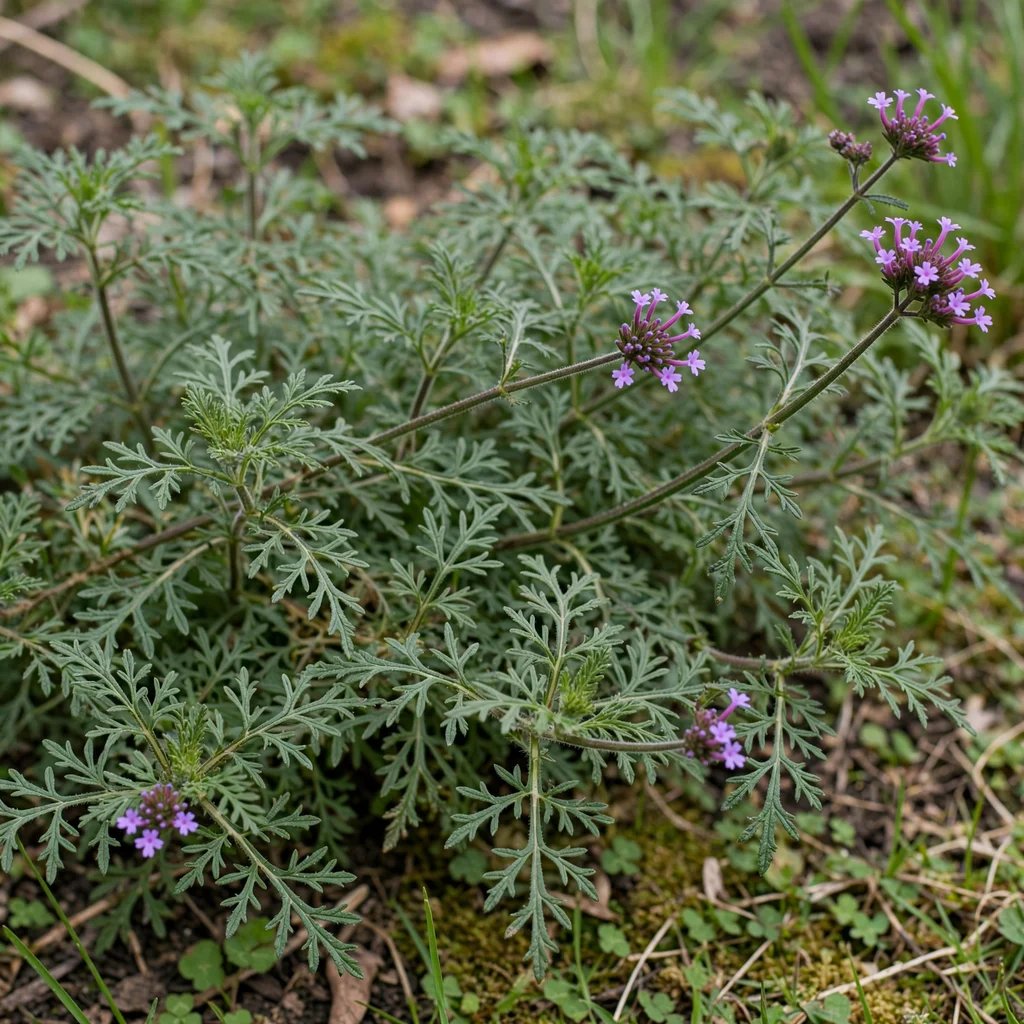
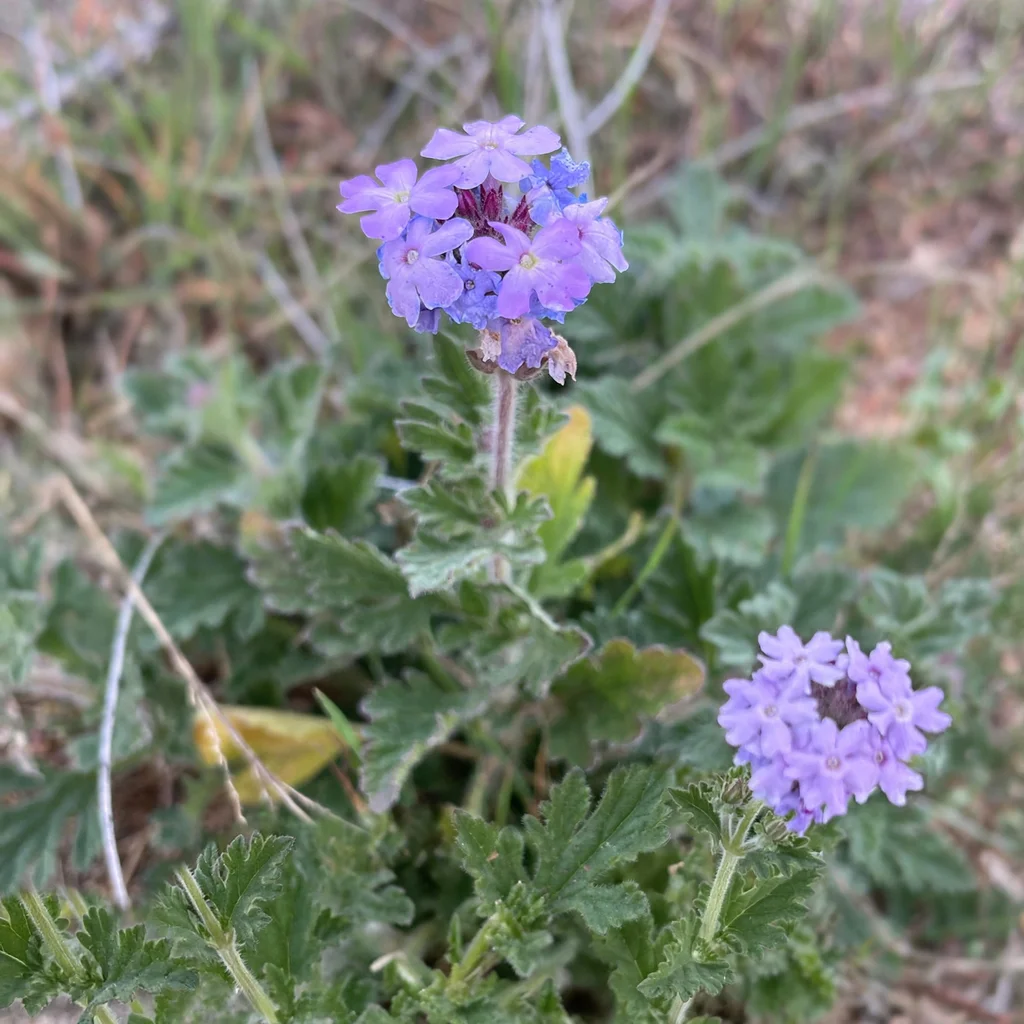
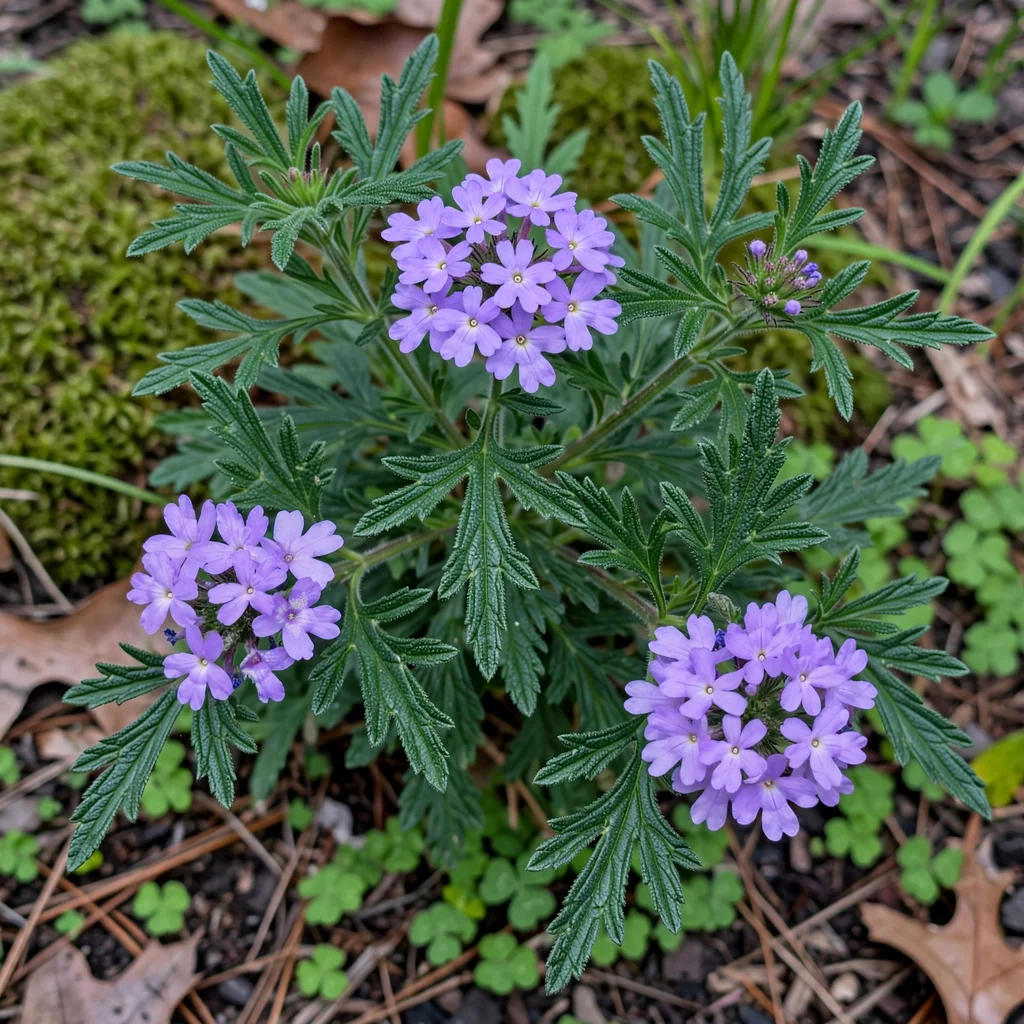
Glandularia pulchella, the South American mock vervain, is a low mat-forming perennial herb reaching 6 to 8 inches tall and spreading 3 to 4 feet wide, with dense clumps of narrow finely dissected lacy leaves on hairy stems. The half-inch corollas carry five notch-lobed petals in tight spikes atop upright branches, opening white and pink to purple with a white eye from spring through fall.
It is separated from the native Dakota mock vervain by much finer-cut foliage, very short floral bracts, short calyx hairs and distinctive nutlets, with a large glandular appendage on the anthers. Nursery stock is still sold interchangeably as Verbena tenuisecta and Verbena tenera, now treated as the same South American species accepted as Glandularia tenera.
Uses & Benefits:
Essentials
At a Glance
Plant Type
Groundcover
Height
8"
Width
48"
Light
Full Sun, Partial Sun
Zones
7, 8, 9, 10
Water
Low
Humidity
Low
Lifespan
Perennial, grown as annual in cold zones
Native To
Brazil, Argentina, Uruguay
Toxicity
Unknown
Bloom period
Spring – Fall
In flower about 9 months of the year
Planting
How to Grow
- Plant in full sun to partial shade after last frost in average well-drained soil around pH 5.8-7.2.
- Space 18 to 24 inches apart so the hairy mats knit without crowding the crowns.
- Water to establish, then water deeply only when dry; never leave crowns waterlogged.
- Shear spent spikes through summer to extend bloom and limit free self-seeding.
- In zones below 7 treat as a summer annual; it is hardy to about 15F as a perennial in zones 7-11.
Pro Tip
Site it high and dry in lean well-drained soil; crowns that sit wet rot, and foot traffic crushes the mat.
Keep It Thriving
Care Guide
Do
- Plant in full sun with good air movement and sharp drainage.
- Allow soil to dry between waterings once established.
- Shear lightly to keep the mat dense and remove spent spikes.
Don't
- Do not plant in wet or waterlogged soil where root rot develops.
- Do not walk through the planting; it does not tolerate foot traffic.
- Do not overwater or overfertilize in rich moist soil.
Seasonal Care Calendar
| Task | Jan | Feb | Mar | Apr | May | Jun | Jul | Aug | Sep | Oct | Nov | Dec |
|---|---|---|---|---|---|---|---|---|---|---|---|---|
| Deadhead | ||||||||||||
| Pest Check | ||||||||||||
| Plant | ||||||||||||
| Prune | ||||||||||||
| Winter Prep |
Watch Out For
Pests & Diseases
Common Pests
Common Diseases
In the Garden
Landscape Uses & Companions
Landscape Uses
Multiply
Propagation Methods
Good to Know
Common Questions
Moss Verbena questions
What zones can Moss Verbena grow in?
Moss Verbena is hardy in USDA Zones 7–10: in that range it survives winter in the ground. Colder than Zone 7, grow it in a container you can move to shelter for the winter, or as an annual.
Is Moss Verbena deer resistant?
Yes — Moss Verbena is rated deer-resistant. Deer typically pass it over, though extreme hunger can override any plant's defenses.
When does Moss Verbena bloom?
Moss Verbena typically blooms from spring to fall. Exact timing shifts a week or two with your zone — Sow's bloom calendar maps it to your garden.
Does Moss Verbena need full sun?
Moss Verbena does best in full sun to part shade. In hot climates, afternoon shade keeps blooms fresher longer.
Is Moss Verbena drought tolerant?
Yes — once established (usually after the first full season), Moss Verbena handles dry spells with minimal watering. Water deeply its first year to build the root system that makes that possible.
More Glandularia to compare
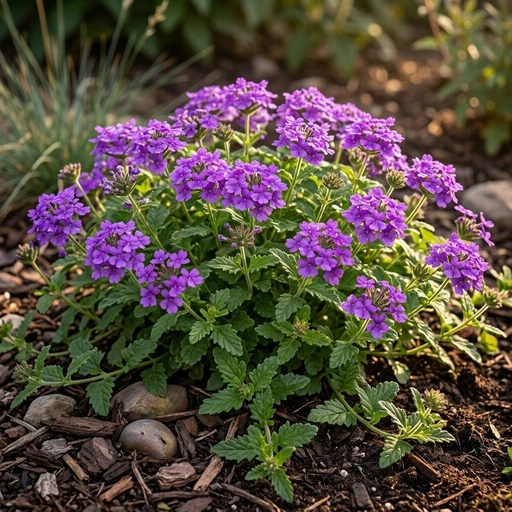
Homestead Purple Verbena
Glandularia canadensis 'Homestead Purple'
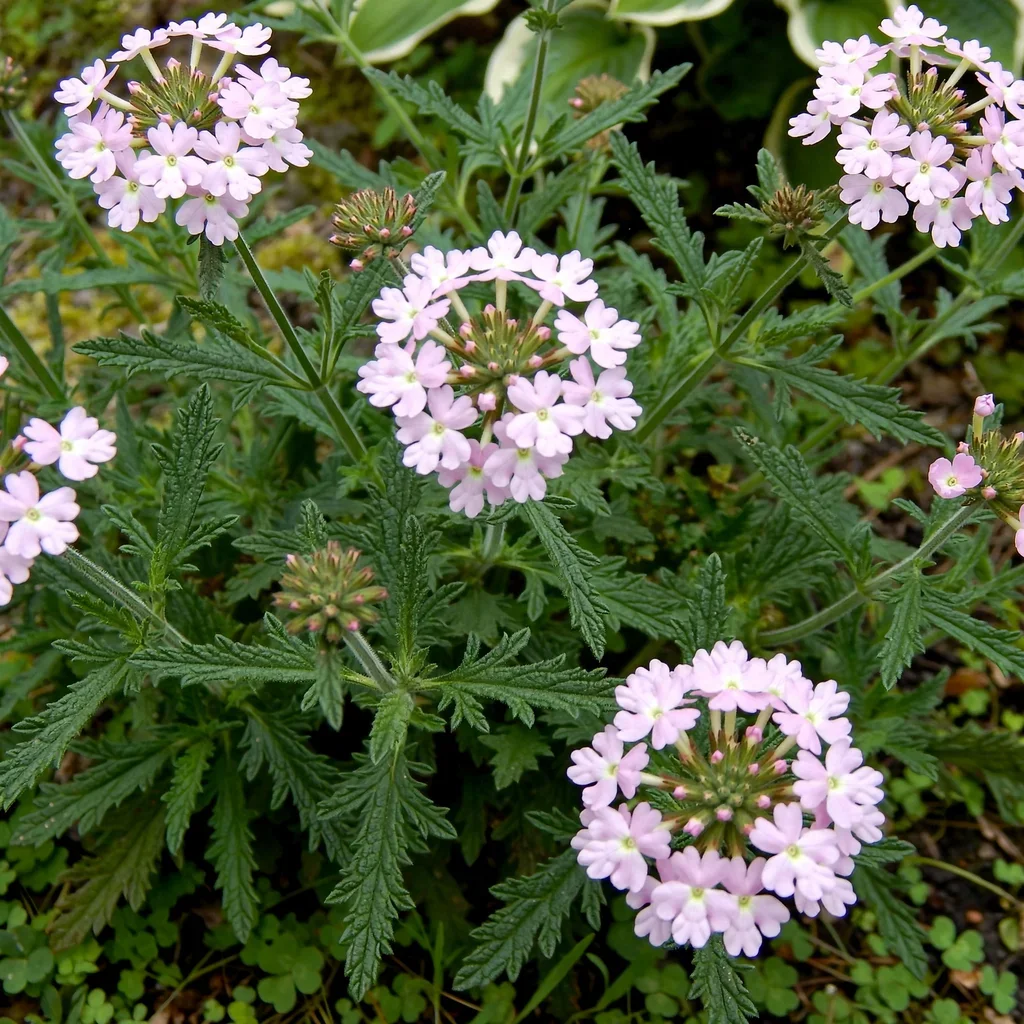
Texas Appleblossom Verbena
Glandularia x hybrida 'Texas Appleblossom'
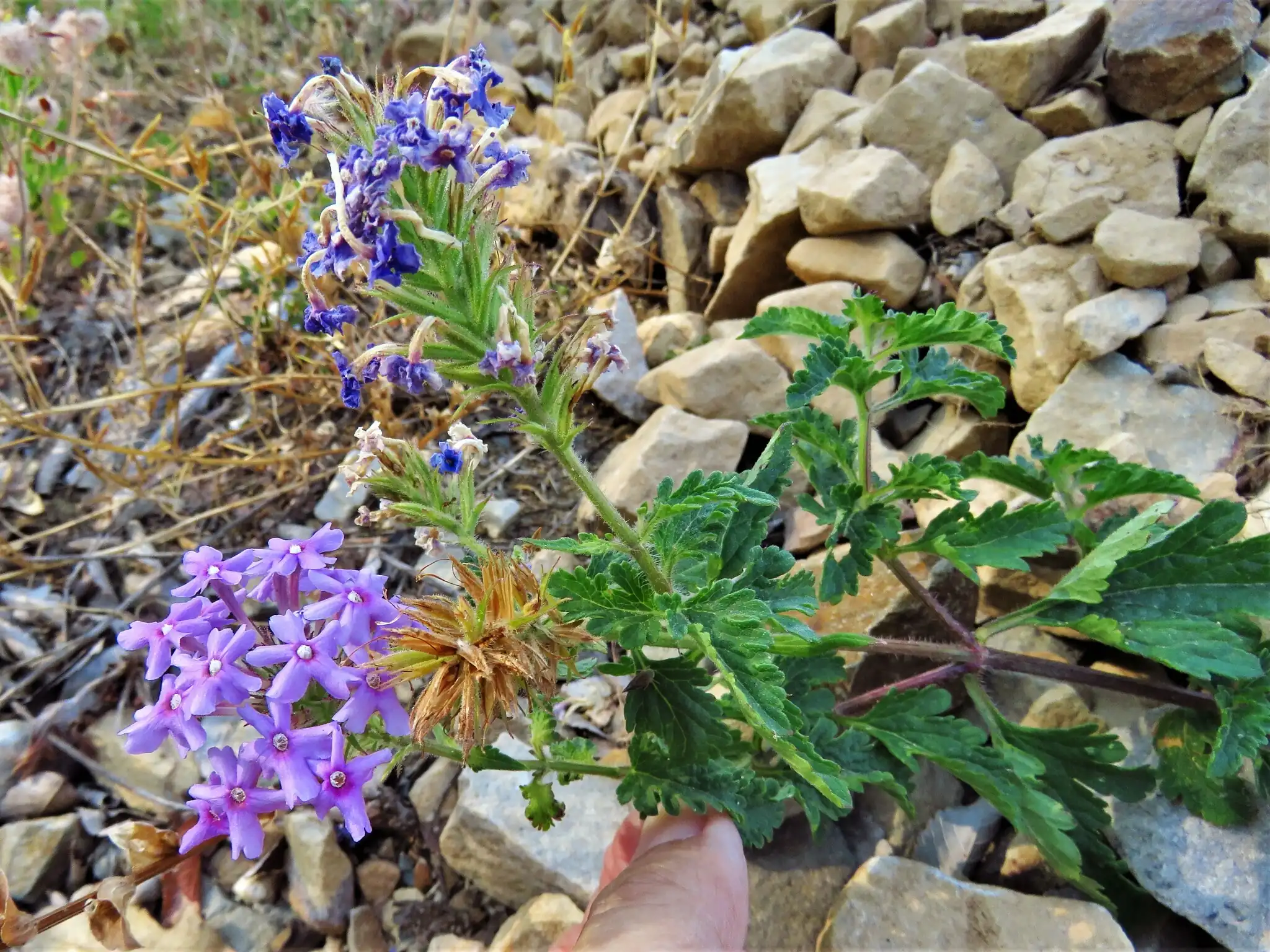
Verbena
Glandularia canadensis
Goodding's Verbena
Glandularia gooddingii
Beach Verbena
Glandularia maritima
Keep exploring
Explore the genus
Hardy in your zone?
Grow Moss Verbena with confidence
See it in a design of your actual yard, get zone-matched care reminders, and track it season by season in your garden journal.