The Story
Plant Bio
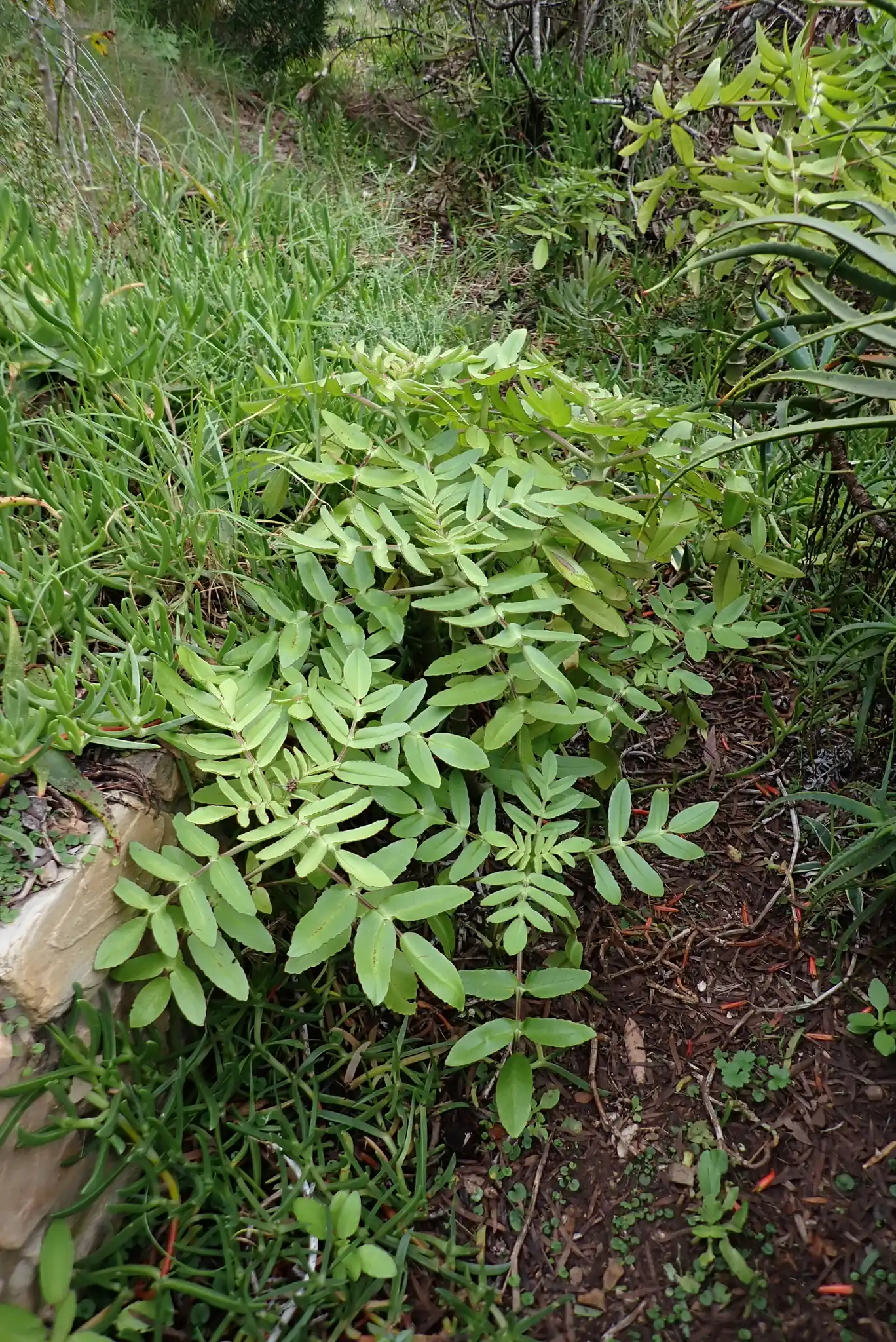
Kalanchoe prolifera is a fast-growing succulent biennial from central Madagascar, forming a single stout jointed stem with opposite fleshy pinnately compound leaves to 12 inches long. Like other bryophyllum-type kalanchoes, it reproduces vegetatively from abundant plantlets that form along the leaf margins and root where they fall.
This species is distinguished by scale, reaching six to nine feet in one push before the heavy stem topples, curves up, and roots where it touches soil to form a thicket. After several years it sends up an 80-inch candelabra panicle of pendent tubular box-shaped fuzzy flowers, green flushed red to orange, that opens only once the stem is about three feet tall.
Uses & Benefits:
Essentials
At a Glance
Plant Type
Cactus Succulent
Height
84"
Width
42"
Light
Full Sun, Partial Sun
Zones
9, 10
Water
Low
Humidity
Low
Lifespan
Biennial / short-lived shrub
Native To
Madagascar
Toxicity
Toxic if ingested
Bloom period
Late winter – Early spring
In flower about 2 months of the year
Planting
How to Grow
- Grow indoors in the brightest window available, moving the pot outdoors to full sun after last frost.
- Pot in a light sandy succulent mix in a container with a drainage hole; never use heavy garden soil.
- Water deeply then let the mix dry completely before watering again; keep almost dry in winter.
- Bring indoors before first fall frost and hold at 60-85F with no fertilizer through winter.
Pro Tip
Give it sharp drainage and withhold water; overwatering rots the stem faster than drought ever harms it.
Keep It Thriving
Care Guide
Do
- Grow in full sun to light shade with maximum indoor light for red leaf margins
- Use a sharply draining succulent mix and a pot with drainage
- Remove spent flower stalks and pick up fallen stems and plantlets to prevent spread
Don't
- Do not overwater or leave the pot standing in a saucer of water
- Do not dump stems or plantlets in garden waste or compost
- Do not plant outdoors year-round below Zone 10a
Seasonal Care Calendar
| Task | Jan | Feb | Mar | Apr | May | Jun | Jul | Aug | Sep | Oct | Nov | Dec |
|---|---|---|---|---|---|---|---|---|---|---|---|---|
| Fertilize | ||||||||||||
| Pest Check | ||||||||||||
| Propagate | ||||||||||||
| Prune | ||||||||||||
| Winter Prep |
Watch Out For
Pests & Diseases
Common Pests
Common Diseases
In the Garden
Landscape Uses & Companions
Landscape Uses
Companion Plants
Multiply
Propagation Methods
Good to Know
Common Questions
Blooming Boxes questions
What zones can Blooming Boxes grow in?
Blooming Boxes is hardy in USDA Zones 9–10: in that range it survives winter in the ground. Colder than Zone 9, grow it in a container you can move to shelter for the winter, or as an annual.
When does Blooming Boxes bloom?
Blooming Boxes typically blooms from late winter to early spring. Exact timing shifts a week or two with your zone — Sow's bloom calendar maps it to your garden.
Does Blooming Boxes need full sun?
Blooming Boxes does best in full sun to part shade. In hot climates, afternoon shade keeps blooms fresher longer.
Is Blooming Boxes drought tolerant?
Yes — once established (usually after the first full season), Blooming Boxes handles dry spells with minimal watering. Water deeply its first year to build the root system that makes that possible.
More Kalanchoe to compare
Keep exploring
Explore the genus
Hardy in your zone?
Grow Blooming Boxes with confidence
See it in a design of your actual yard, get zone-matched care reminders, and track it season by season in your garden journal.