The Story
Plant Bio
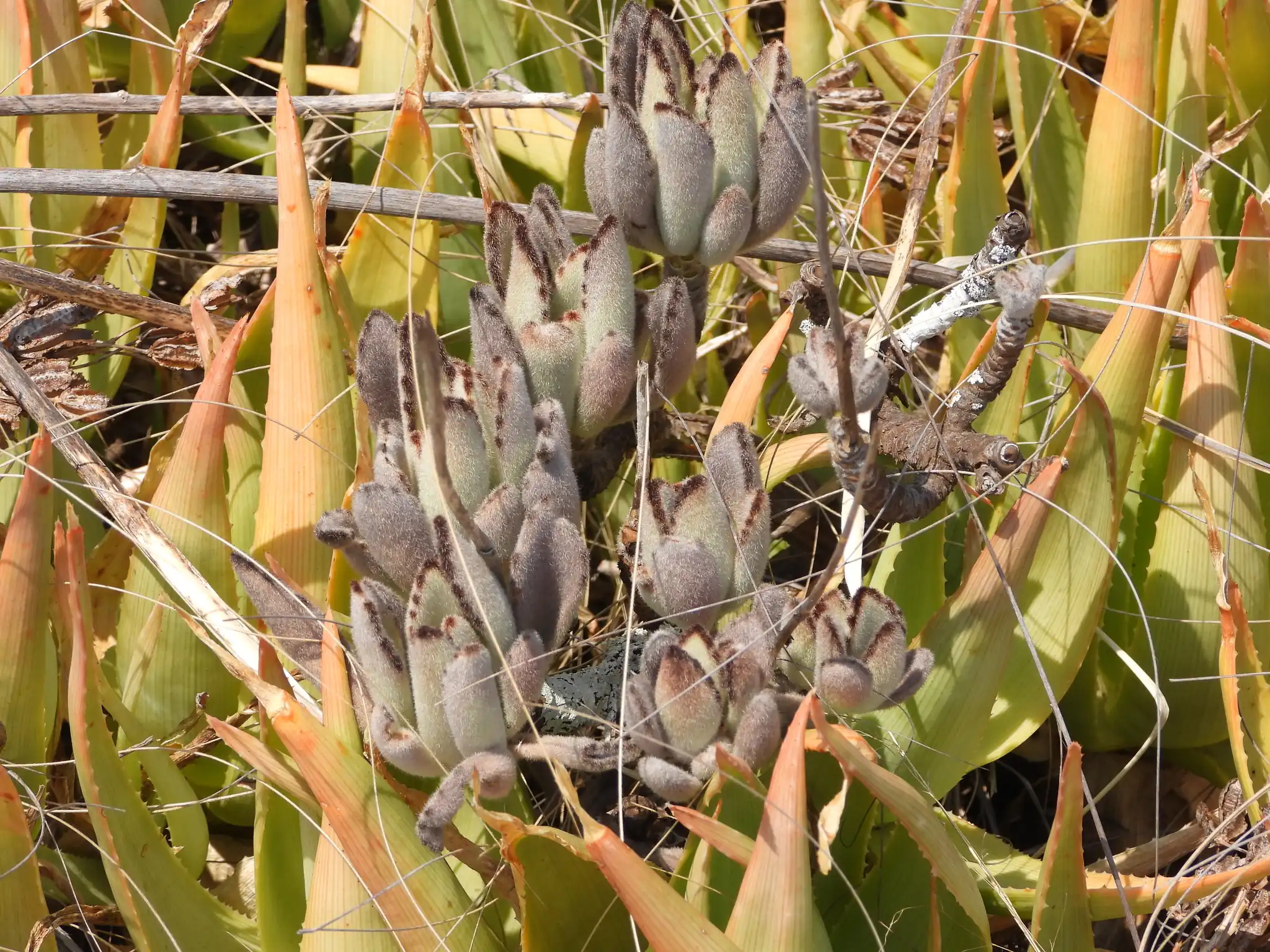
Kalanchoe tomentosa is a slow-growing perennial succulent subshrub from central Madagascar, branching upright to two feet with thick water-storing stems and leaves. It grows from dry rocky ground and carries a dense coat of fine hairs that slows water loss and shields the leaf from strong sun.
The oblong spoon-shaped leaves are silver-green to gray-green with a velvety felted surface, edged and flecked with reddish brown. New growth emerges pale and densely fuzzy, and the brown margin colors most strongly in bright light.
Uses & Benefits:
Essentials
At a Glance
Plant Type
Cactus Succulent
Height
24"
Width
24"
Light
Full Sun, Partial Sun
Zones
9, 10
Water
Low
Humidity
Tolerates dry air; needs air circulation
Lifespan
Perennial
Native To
Central Madagascar
Toxicity
Toxic to cats, dogs and humans if ingested
Bloom period
Early spring – Spring
In flower about 3 months of the year
Marketplace
Where to Buy
Shipping costs Year-round shipping Free shipping
Planting
How to Grow
- Set in bright light with several hours of direct sun; a south-facing window indoors or full sun to partial shade outdoors.
- Plant in a light cactus/succulent mix of cactus soil with perlite or pumice and coarse sand, in a pot with drainage holes.
- Water deeply, then wait until the top inch is dry; empty saucers and never mist the felted leaves.
- Keep above 40F; move indoors before frost and overwinter dry and bright at room temperature.
- Feed sparingly once in spring with diluted succulent fertilizer; overfeeding burns roots.
Pro Tip
Keep water off the felted leaves and let the top inch dry between waterings; trapped moisture rots the crown faster than drought ever will.
Keep It Thriving
Care Guide
Do
- Give bright light and moving air around the leaves
- Use a gritty, fast-draining mix in a pot with drainage
- Water only when the top inch is dry
- Bring indoors before temperatures near 25F
Don't
- Do not overwater or mist the fuzzy leaves
- Do not leave in wet, heavy soil or standing water
- Do not hard-prune or strip healthy leaves
- Do not expose to frost
Seasonal Care Calendar
| Task | Jan | Feb | Mar | Apr | May | Jun | Jul | Aug | Sep | Oct | Nov | Dec |
|---|---|---|---|---|---|---|---|---|---|---|---|---|
| Fertilize | ||||||||||||
| Pest Check | ||||||||||||
| Plant | ||||||||||||
| Propagate | ||||||||||||
| Winter Prep |
Watch Out For
Pests & Diseases
Common Pests
Common Diseases
In the Garden
Landscape Uses & Companions
Landscape Uses
Companion Plants
Multiply
Propagation Methods
Good to Know
Common Questions
Panda Plant questions
What zones can Panda Plant grow in?
Panda Plant is hardy in USDA Zones 9–10: in that range it survives winter in the ground. Colder than Zone 9, grow it in a container you can move to shelter for the winter, or as an annual.
When does Panda Plant bloom?
Panda Plant typically blooms in spring. Exact timing shifts a week or two with your zone — Sow's bloom calendar maps it to your garden.
Does Panda Plant need full sun?
Panda Plant does best in full sun to part shade. In hot climates, afternoon shade keeps blooms fresher longer.
Is Panda Plant drought tolerant?
Yes — once established (usually after the first full season), Panda Plant handles dry spells with minimal watering. Water deeply its first year to build the root system that makes that possible.
More Kalanchoe to compare
Cathedral Bells
Kalanchoe pinnata
Flaming Katy
Kalanchoe blossfeldiana
Neverdie
Kalanchoe crenata
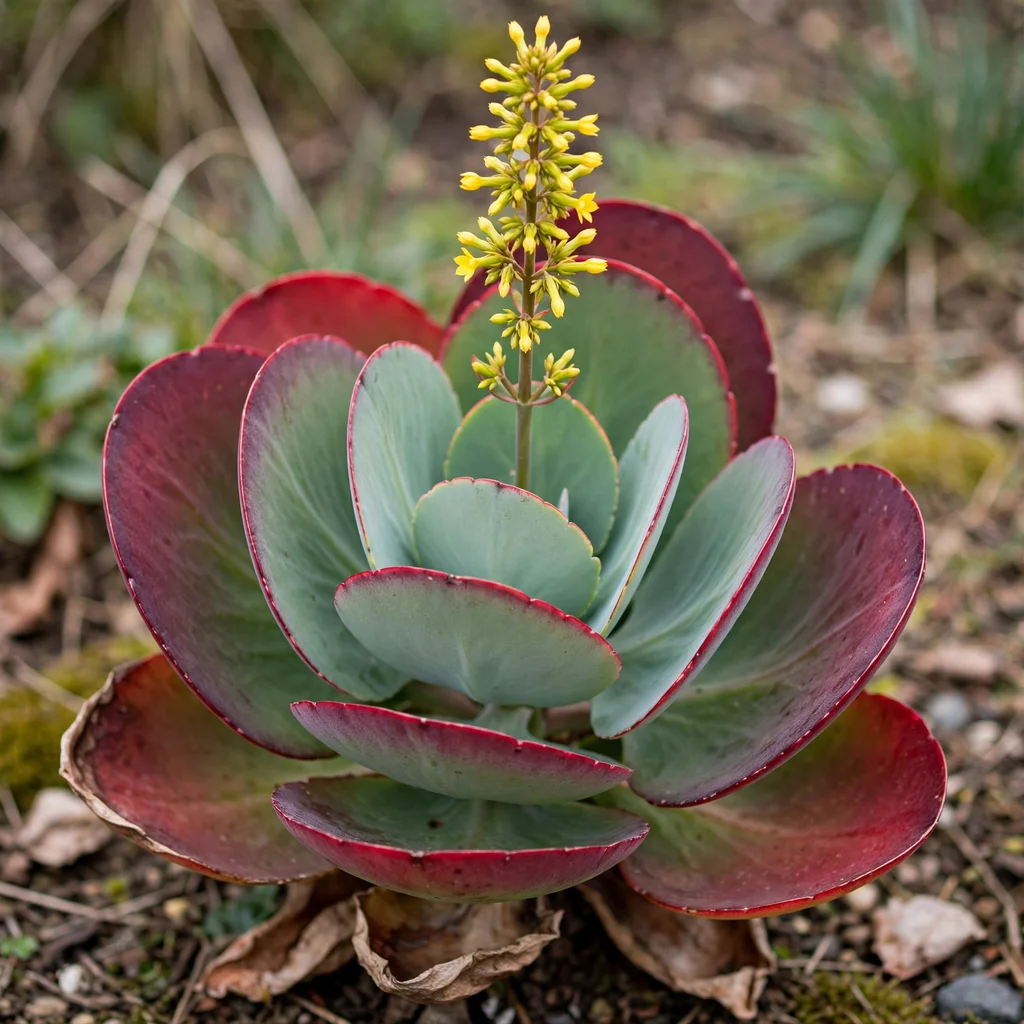
Paddle Plant
Kalanchoe luciae
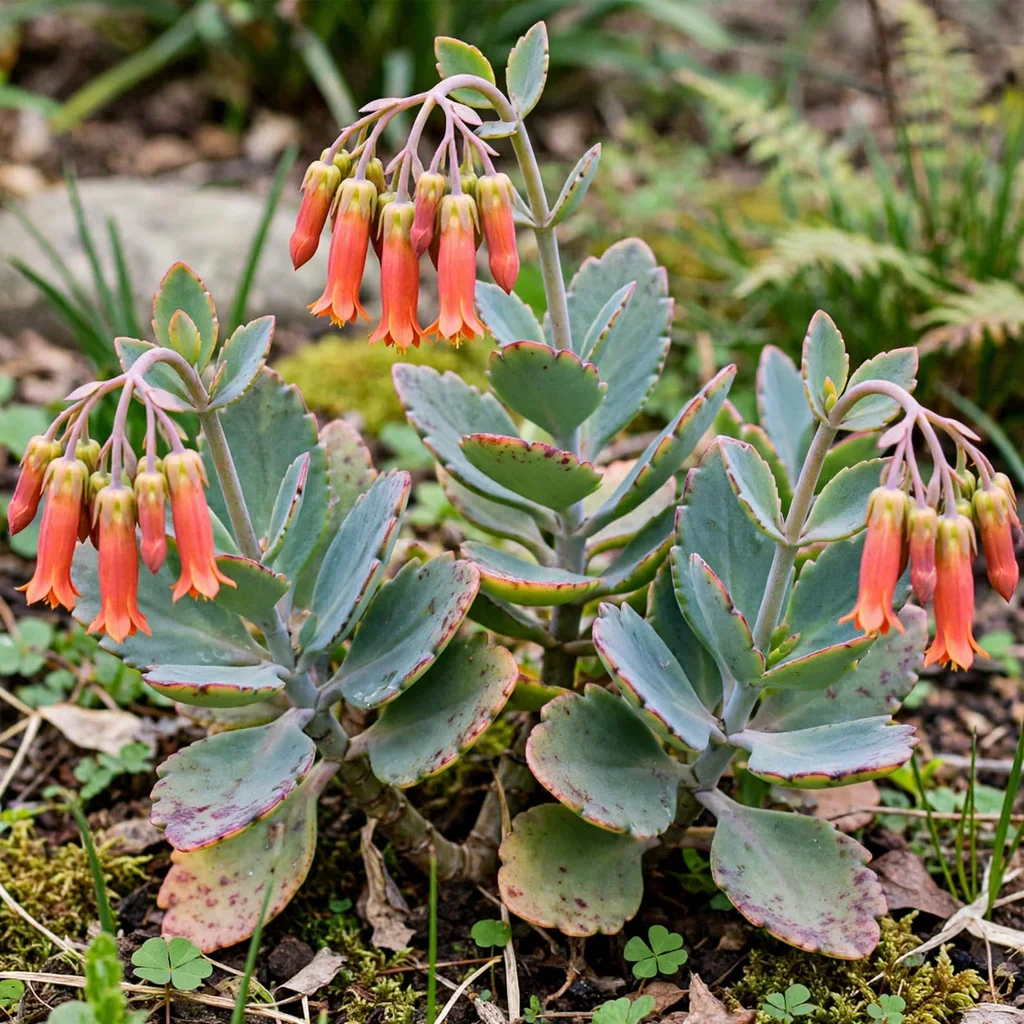
Christmas Bells
Kalanchoe laxiflora 'Milky Widow's Tears'
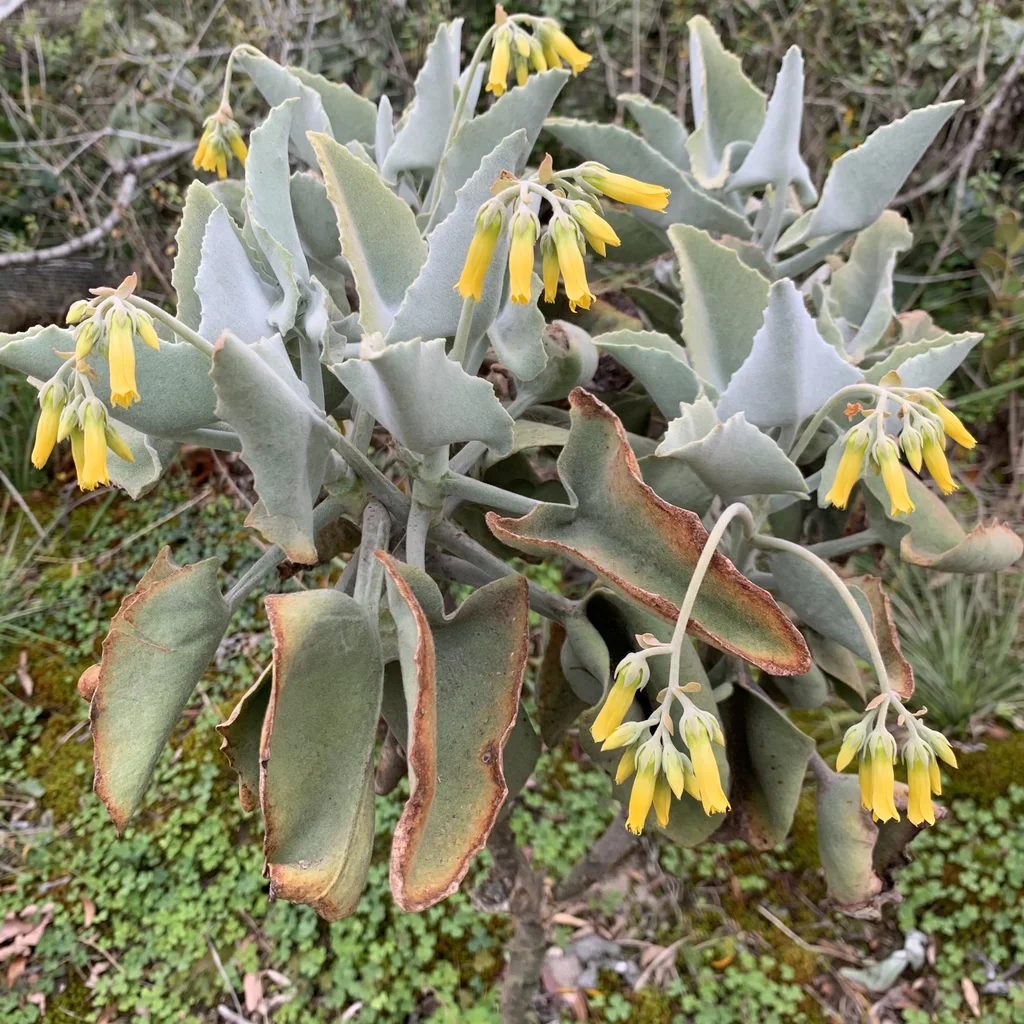
Felt Bush
Kalanchoe beharensis
Keep exploring
Explore the genus
Hardy in your zone?
Grow Panda Plant with confidence
See it in a design of your actual yard, get zone-matched care reminders, and track it season by season in your garden journal.