The Story
Plant Bio
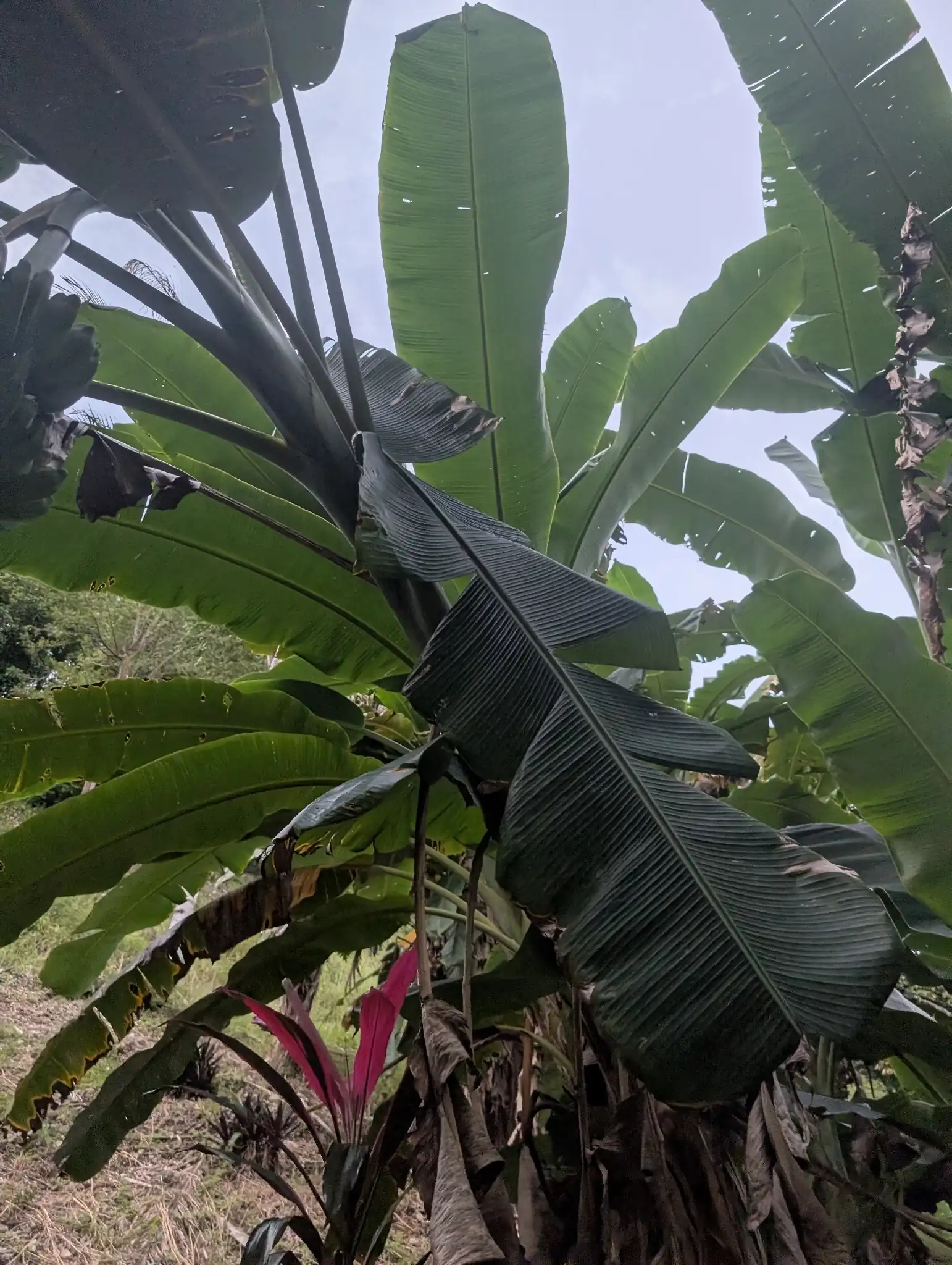
Musa are giant herbaceous perennials with no true woody trunk; what looks like a trunk is a pseudostem of tightly overlapping leaf sheaths. Leaves emerge from the center and unfurl into huge paddle-shaped blades that shred readily in strong wind.
Musa x paradisiaca is the sterile triploid hybrid of M. acuminata and M. balbisiana grown as the edible banana and plantain. Each pseudostem fruits once in its second or third year and then dies, with suckers from the base replacing it to carry the clump forward.
Uses & Benefits:
Essentials
At a Glance
Plant Type
Tropical
Height
180"
Width
96"
Light
Full Sun, Partial Sun
Zones
9, 10
Water
Medium, consistently moist
Humidity
Unknown
Lifespan
Perennial
Native To
Garden hybrid of SE Asian wild bananas
Toxicity
Unknown
Bloom period
Summer
In flower about 3 months of the year
Marketplace
Where to Buy
Shipping costs Year-round shipping Free shipping
Planting
How to Grow
- Plant in full sun in organically rich, well-drained soil that stays consistently moist but never wet.
- Give shelter from strong wind to prevent leaf shredding and provide ample space for suckering.
- Water consistently and feed regularly through the growing season, then mulch to hold moisture.
- In Zones 9-11 leave clumps in place; elsewhere grow in containers or dig, cut back, and store frost-free indoors for winter.
Pro Tip
Remove only the pseudostem that has fruited and leave green suckers alone; plants cut to the ground each fall for indoor storage rarely build enough maturity to flower.
Keep It Thriving
Care Guide
Do
- Water consistently so soil never dries out
- Feed regularly during active growth
- Mulch to conserve moisture
- Remove only the spent fruited pseudostem
Don't
- Do not cut green suckers
- Do not leave outdoors where winters freeze
- Do not let soil stay soggy
Seasonal Care Calendar
| Task | Jan | Feb | Mar | Apr | May | Jun | Jul | Aug | Sep | Oct | Nov | Dec |
|---|---|---|---|---|---|---|---|---|---|---|---|---|
| Fertilize | ||||||||||||
| Lift Store | ||||||||||||
| Mulch | ||||||||||||
| Pest Check | ||||||||||||
| Plant |
Watch Out For
Pests & Diseases
Common Pests
Common Diseases
In the Garden
Landscape Uses & Companions
Landscape Uses
Multiply
Propagation Methods
Good to Know
Common Questions
Banana questions
What zones can Banana grow in?
Banana is hardy in USDA Zones 9–10: in that range it survives winter in the ground. Colder than Zone 9, grow it in a container you can move to shelter for the winter, or as an annual.
When does Banana bloom?
Banana typically blooms in summer. Exact timing shifts a week or two with your zone — Sow's bloom calendar maps it to your garden.
Does Banana need full sun?
Banana does best in full sun to part shade. In hot climates, afternoon shade keeps blooms fresher longer.
More Musa to compare
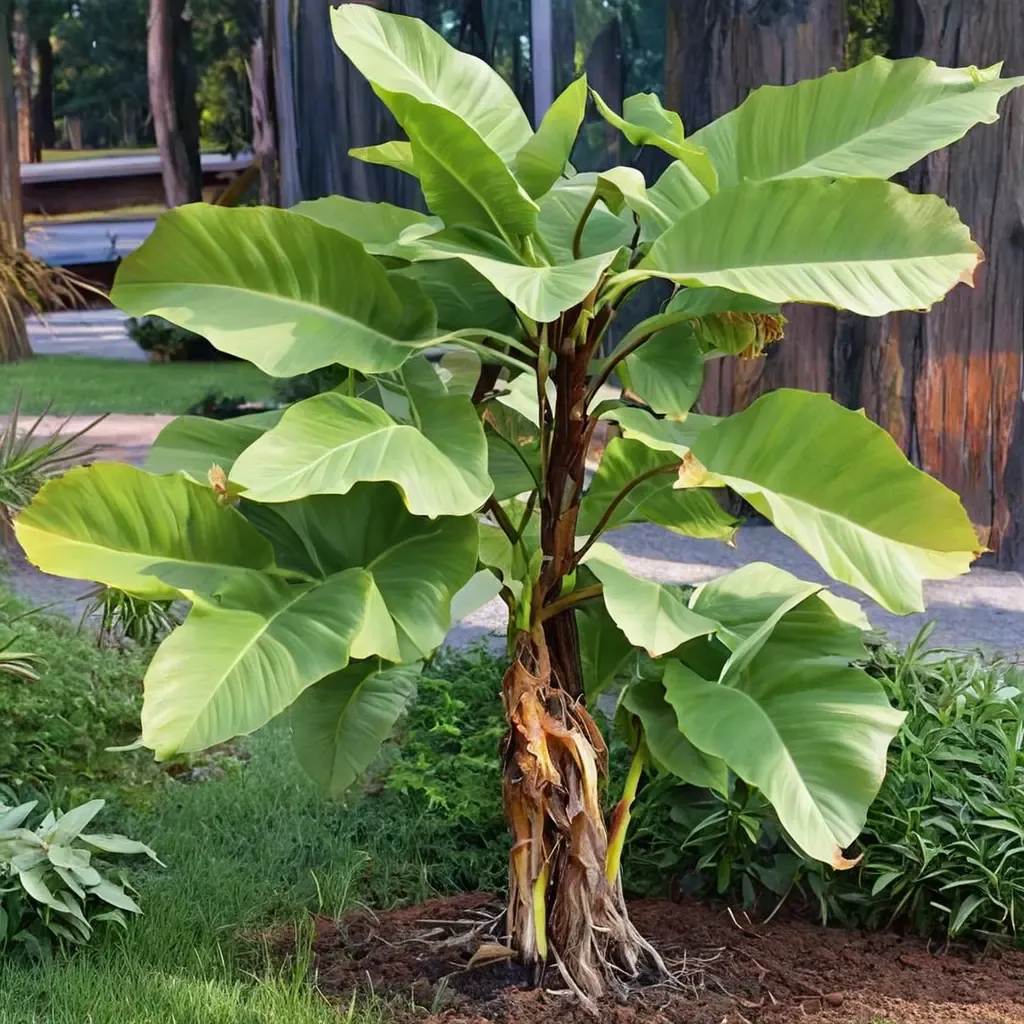
Japanese Banana
Musa basjoo
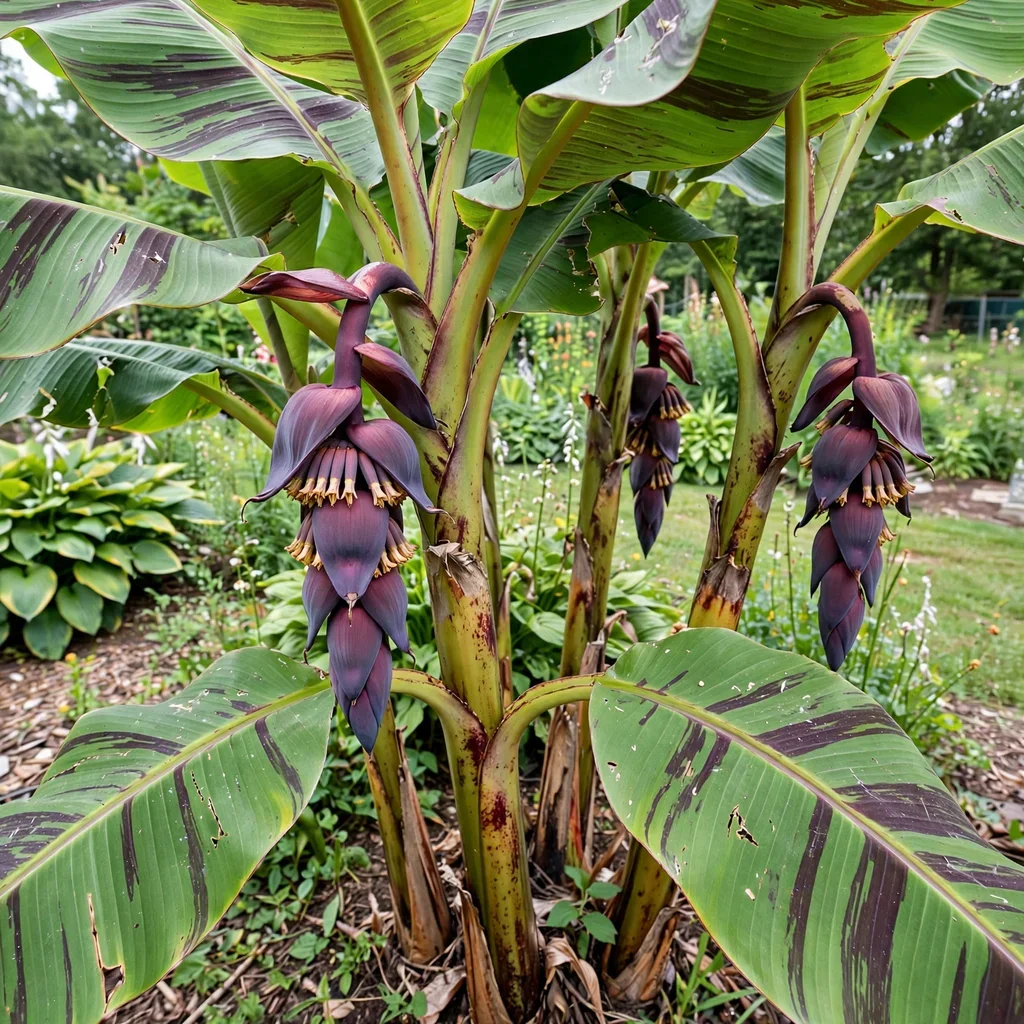
Sikkim Banana
Musa sikkimensis
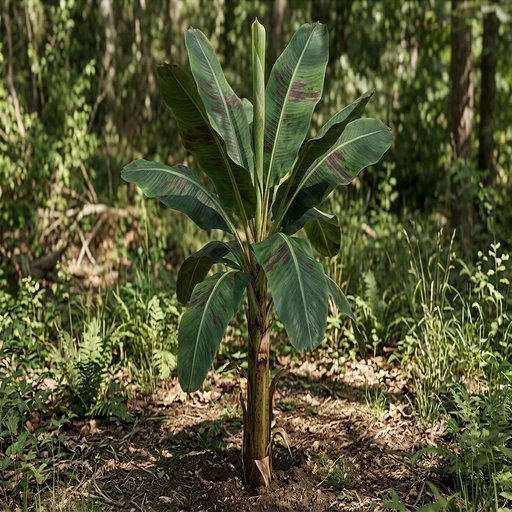
Dwarf Cavendish Banana
Musa acuminata 'Dwarf Cavendish'
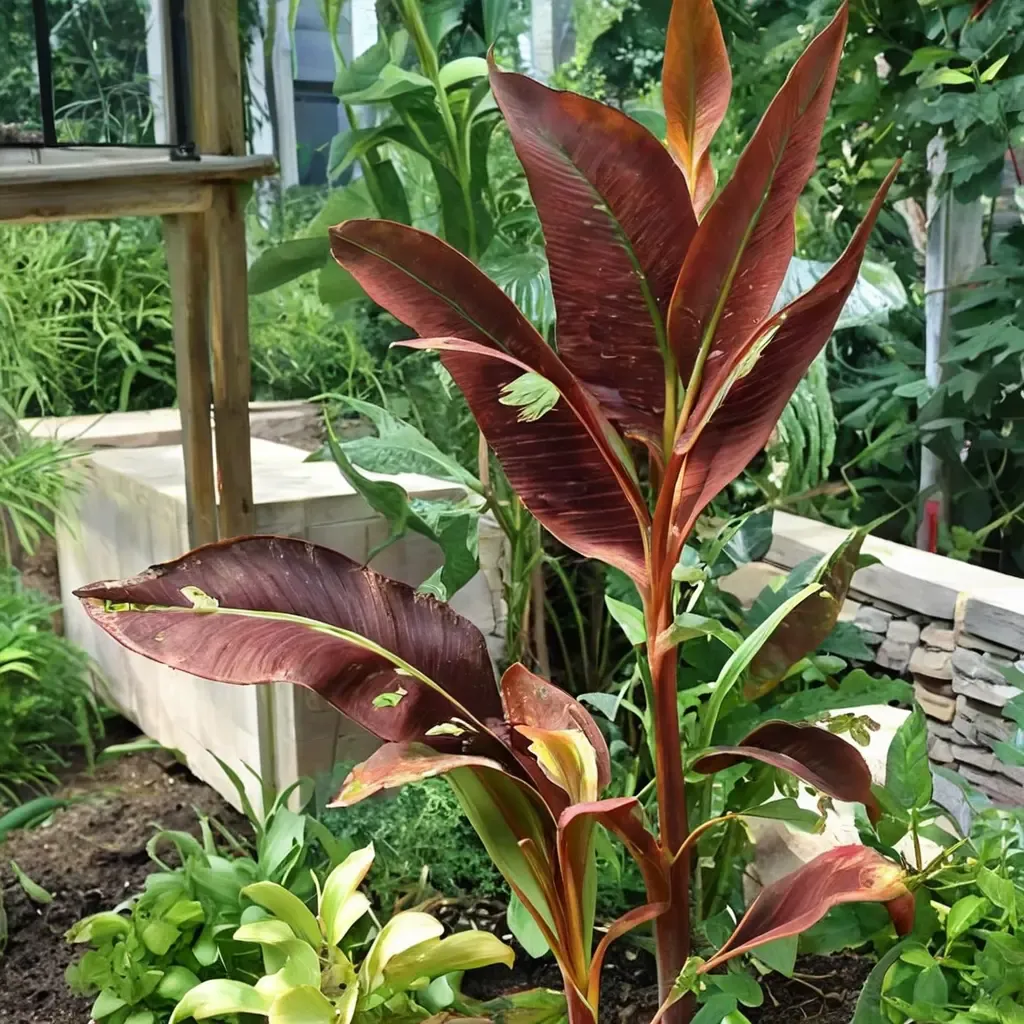
Siam Ruby Banana
Musa acuminata 'Siam Ruby'
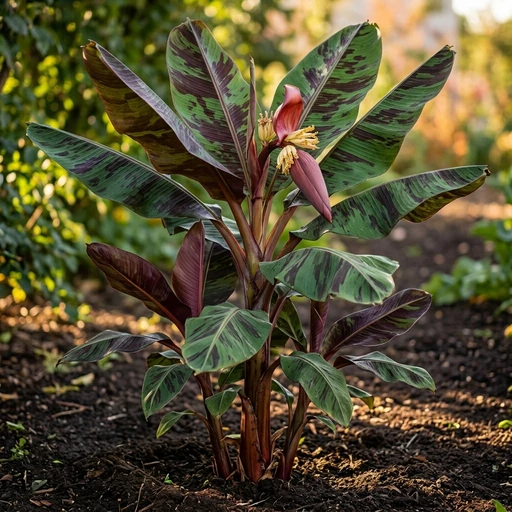
Blood Banana
Musa acuminata 'Rojo'
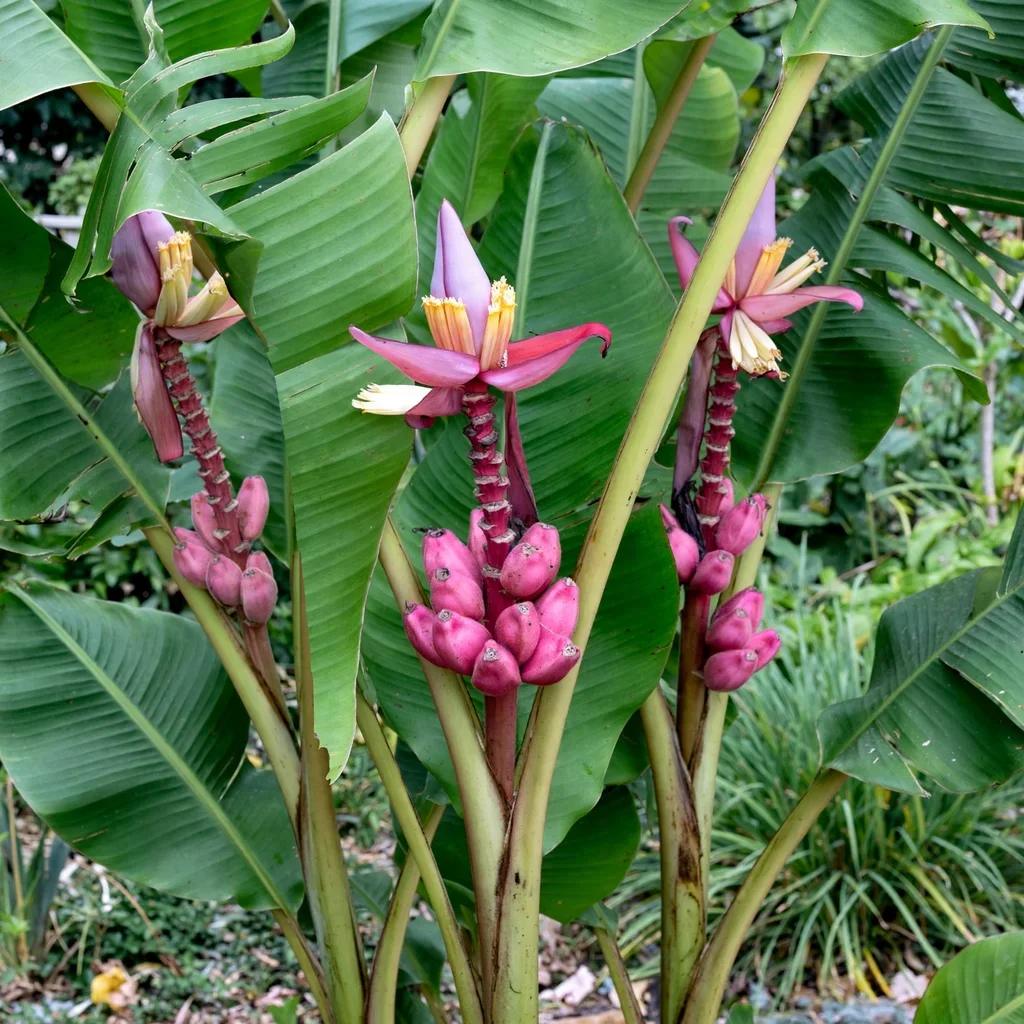
Pink Banana
Musa velutina
Keep exploring
Explore the genus
Hardy in your zone?
Grow Banana with confidence
See it in a design of your actual yard, get zone-matched care reminders, and track it season by season in your garden journal.