The Story
Plant Bio
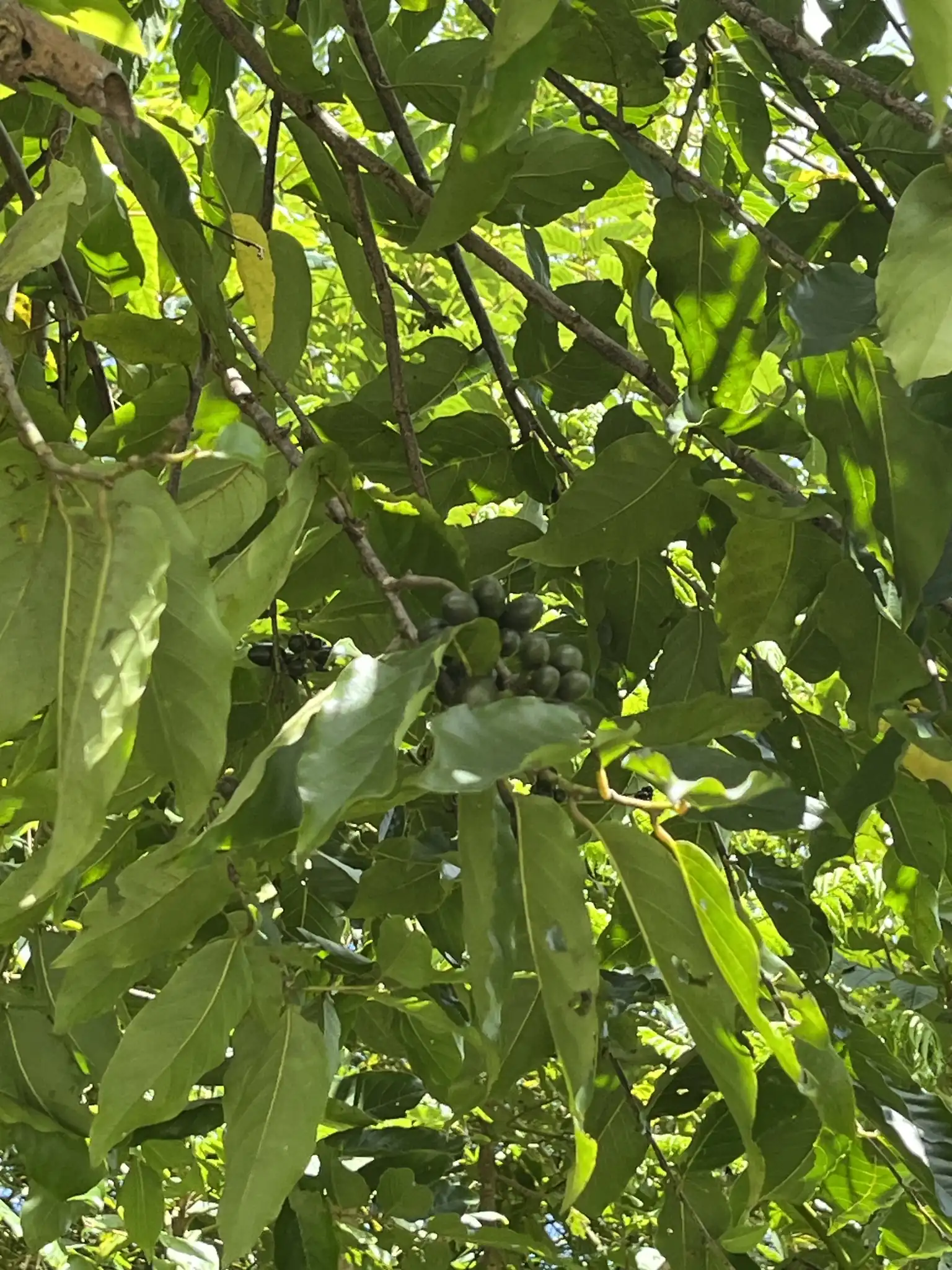
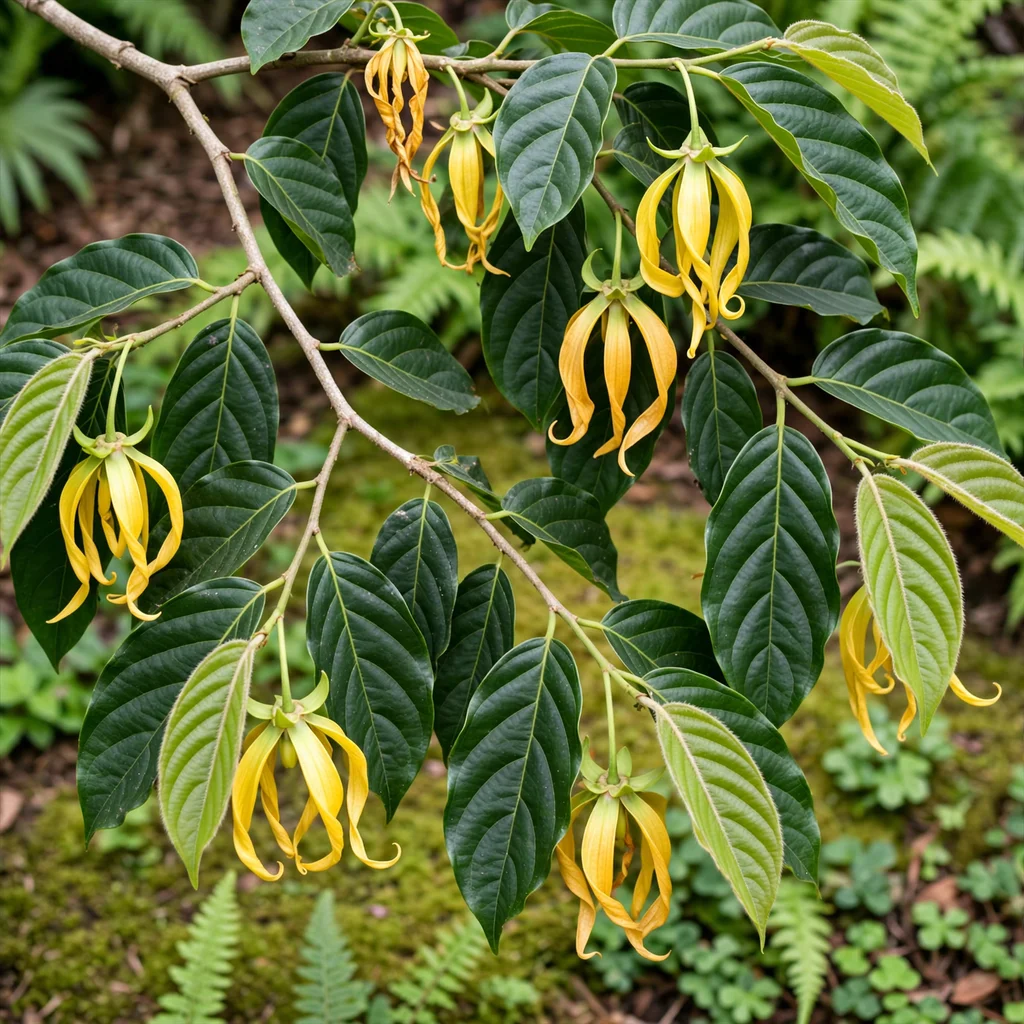
Cananga odorata, the ylang-ylang, is a fast-growing evergreen tree reaching 40 to 60 feet in the ground, columnar and narrow when young and crooked-branched with brittle drooping limbs with age. The alternate pointed-oval leaves are 5 to 9 inches long with wavy margins and a glossy green surface, hairy along the midrib when young.
The flowers open pale lime-green and mature to rich golden yellow, borne in massed clusters along the drooping branches with six long twisted pointed petals to 6 inches long. They release a heavy sweet perfume at night that intensifies after dark and bloom in any frost-free season, with peak oil production in late spring to early summer.
Uses & Benefits:
Essentials
At a Glance
Plant Type
Tree
Height
600"
Width
420"
Light
Full Sun, Partial Sun
Zones
9, 10
Water
Evenly moist
Humidity
High
Lifespan
Long-lived tree
Native To
Southeast Asia to Malesia and NE Australia
Toxicity
Low toxicity
Bloom period
Year round
In flower about 12 months of the year
Marketplace
Where to Buy
Shipping costs Year-round shipping Free shipping
Planting
How to Grow
- Plant in full sun in evenly moist, well-drained soil sheltered from strong wind that snaps brittle branches.
- Water to keep soil consistently moist but never waterlogged, and avoid overhead watering that spreads leaf spot.
- Mulch with organic matter kept clear of the trunk to hold moisture and humidity.
- Move containers to a warm greenhouse or bright interior before cool nights arrive; hardy only in Zone 10 and up.
- Prune as needed to control its 30-foot-plus size and open the crown for air flow.
Pro Tip
Hold it constantly warm and humid with evenly moist soil; chill combined with dry air and wide day-night swings yellows the leaves and drops them.
Keep It Thriving
Care Guide
Do
- Do provide full sun, constant warmth and high humidity.
- Do mulch with organic matter kept off the trunk.
- Do monitor for seedlings where self-seeding occurs in Zone 10-11 and remove unwanted volunteers.
Don't
- Do not overwater or leave roots standing wet, which causes root rot.
- Do not use overhead watering, which spreads fungal leaf spot.
- Do not confuse it with the ylang-ylang vine Artabotrys odoratissimus, a climber with flower-stalk hooks that is not the perfume source.
Seasonal Care Calendar
| Task | Jan | Feb | Mar | Apr | May | Jun | Jul | Aug | Sep | Oct | Nov | Dec |
|---|---|---|---|---|---|---|---|---|---|---|---|---|
| Mulch | ||||||||||||
| Pest Check | ||||||||||||
| Prune | ||||||||||||
| Winter Prep |
Watch Out For
Pests & Diseases
Common Pests
Common Diseases
In the Garden
Landscape Uses & Companions
Landscape Uses
Multiply
Propagation Methods
Good to Know
Common Questions
Ylang-Ylang questions
What zones can Ylang-Ylang grow in?
Ylang-Ylang is hardy in USDA Zones 9–10: in that range it survives winter in the ground. Colder than Zone 9, winters are too cold for it to survive outdoors.
When does Ylang-Ylang bloom?
Ylang-Ylang typically blooms year-round. Exact timing shifts a week or two with your zone — Sow's bloom calendar maps it to your garden.
Does Ylang-Ylang need full sun?
Ylang-Ylang does best in full sun to part shade. In hot climates, afternoon shade keeps blooms fresher longer.
More Cananga to compare
Keep exploring
Explore the genus
Hardy in your zone?
Grow Ylang-Ylang with confidence
See it in a design of your actual yard, get zone-matched care reminders, and track it season by season in your garden journal.