The Story
Plant Bio
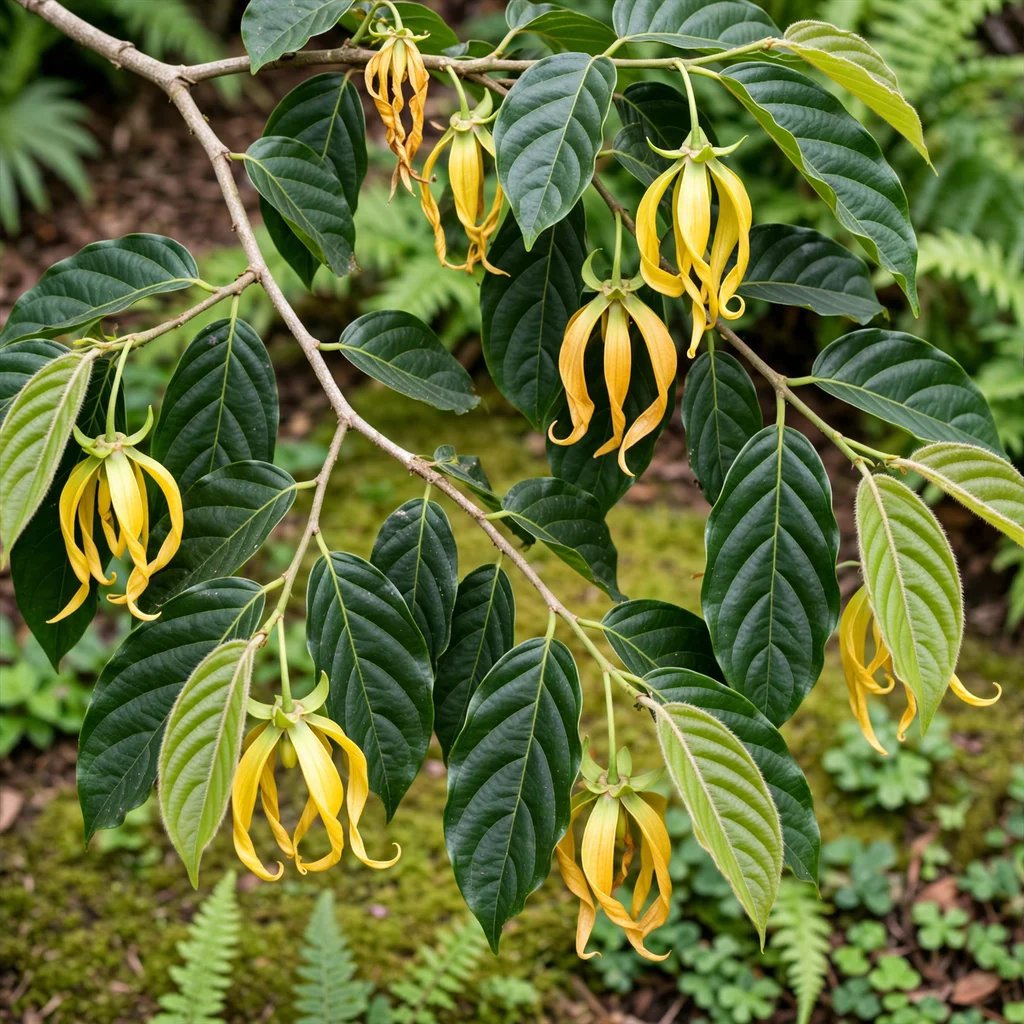
Cananga odorata, the ylang-ylang, is an evergreen tree of tropical Asia to the Indo-Pacific that reaches 30 to 60 foot in the wild, with dark green oval leaves 3 to 9 inches long that are hairy on the midrib when young. The flowers are solitary drooping blooms held in the leaf axils, each with narrow twisted ribbon petals 2 to 4 inches long that open greenish white and age to yellow-orange with a heavy perfume.
The dwarf form sold as var. fruticosa is a compact large bush or small tree that stays 5 to 10 foot in gardens and flowers while still in a pot, unlike the tall tree form. Its blooms are borne freely on shrubby spreading growth, but they only develop full perfume in warm humid air and smell faint in cool or dry inland conditions.
Uses & Benefits:
Essentials
At a Glance
Plant Type
Tropical
Height
118"
Width
79"
Light
Full Sun, Partial Sun
Zones
9, 10
Water
Medium
Humidity
High
Lifespan
Long-lived
Native To
Tropical Asia to Indo-Pacific
Toxicity
Toxic to cats and dogs
Bloom period
Year round
In flower about 12 months of the year
Planting
How to Grow
- Plant in full sun in a large container with free-draining loam after night temperatures stay above 50F
- Water regularly, letting the top inch dry slightly between waterings
- Feed lightly through the warm season to support leaf growth and bud set
- Tip-prune lightly after each flush to keep the shrub compact
- Move indoors to bright light before first frost and keep the air humid
Pro Tip
Buy a plant already in bud or flower to be sure you have the true dwarf, not a seedling of the tall tree form; hold it in the warmest humid spot you have when buds open.
Keep It Thriving
Care Guide
Do
- Give full sun and warm humid air for strongest scent
- Water consistently and keep drainage sharp
- Inspect new nursery stock for scale and whitefly before bringing it home
Don't
- Do not plant in the ground north of Zone 9
- Do not cut hard back into old leafless wood
- Do not let cats or dogs chew leaves or flowers
Seasonal Care Calendar
| Task | Jan | Feb | Mar | Apr | May | Jun | Jul | Aug | Sep | Oct | Nov | Dec |
|---|---|---|---|---|---|---|---|---|---|---|---|---|
| Fertilize | ||||||||||||
| Pest Check | ||||||||||||
| Plant | ||||||||||||
| Prune | ||||||||||||
| Winter Prep |
Watch Out For
Pests & Diseases
Common Pests
Common Diseases
In the Garden
Landscape Uses & Companions
Landscape Uses
Multiply
Propagation Methods
Good to Know
Common Questions
Dwarf Ylang-Ylang questions
What zones can Dwarf Ylang-Ylang grow in?
Dwarf Ylang-Ylang is hardy in USDA Zones 9–10: in that range it survives winter in the ground. Colder than Zone 9, grow it in a container you can move to shelter for the winter, or as an annual.
When does Dwarf Ylang-Ylang bloom?
Dwarf Ylang-Ylang typically blooms year-round. Exact timing shifts a week or two with your zone — Sow's bloom calendar maps it to your garden.
Does Dwarf Ylang-Ylang need full sun?
Dwarf Ylang-Ylang does best in full sun to part shade. In hot climates, afternoon shade keeps blooms fresher longer.
More Cananga to compare
Keep exploring
Explore the genus
Hardy in your zone?
Grow Dwarf Ylang-Ylang with confidence
See it in a design of your actual yard, get zone-matched care reminders, and track it season by season in your garden journal.