The Story
Plant Bio
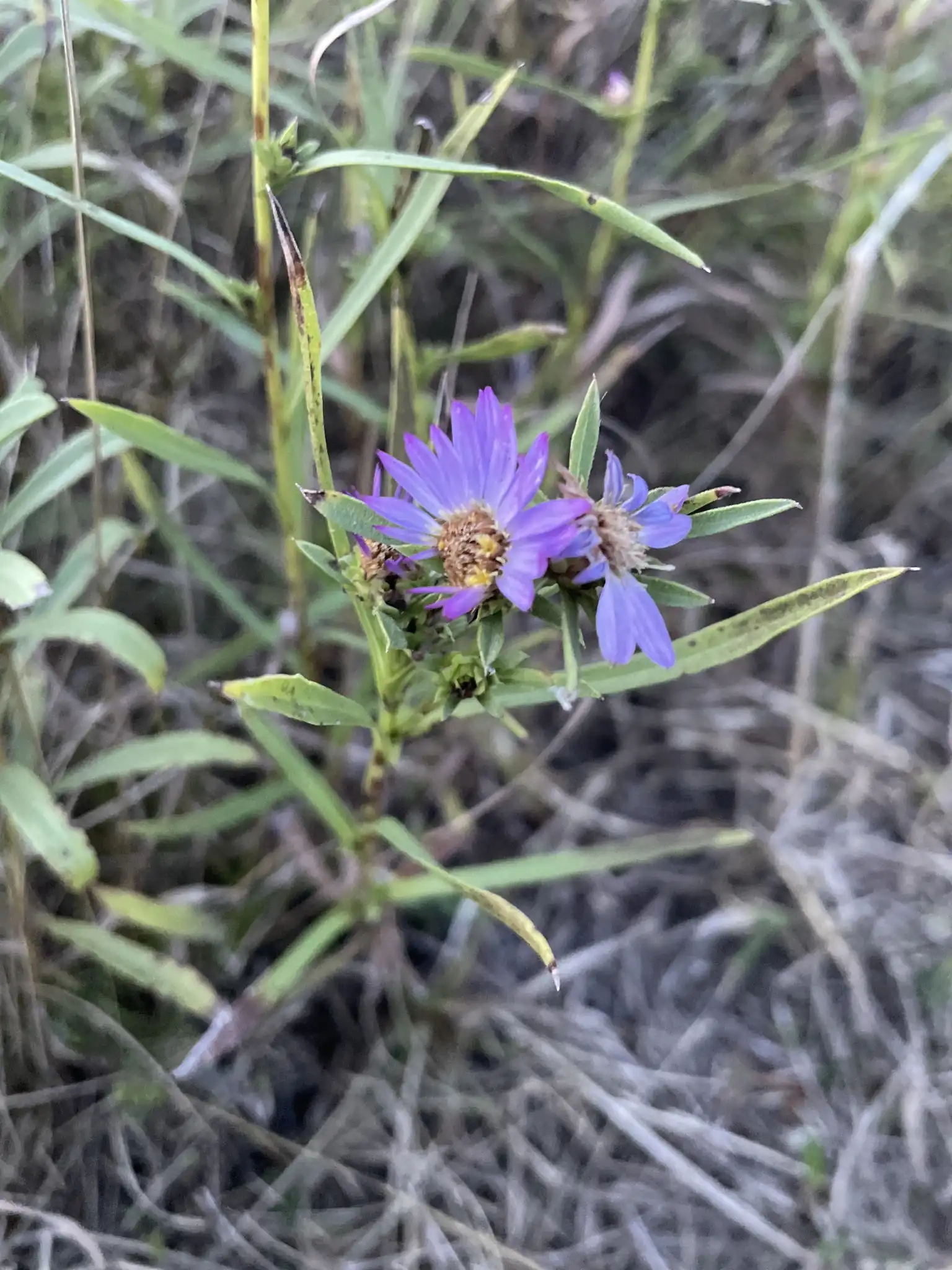
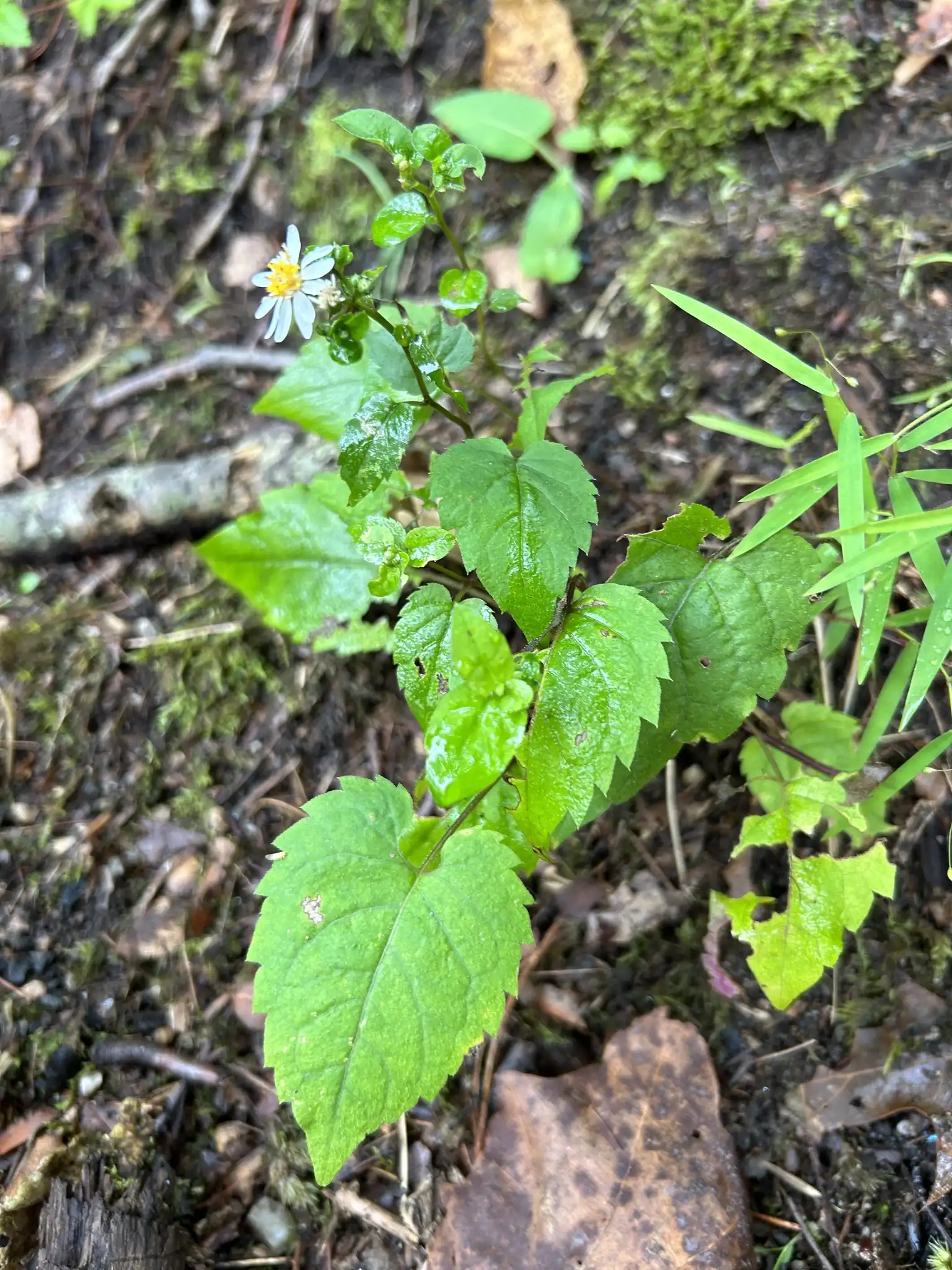
Eurybia hemisphaerica, the southern prairie aster, is a herbaceous perennial from the south-central United States forming an upright to spreading clump 1 to 2.5 feet tall from a woody rootstock. The narrow linear to lanceolate leaves reach 6 inches below and shrink upward until the upper leaves press against the stem, and each stem ends in a loose elongated cluster of daisy heads with violet-purple rays around a yellow center.
It builds slowly into a colony on creeping tangled rhizomes, carrying 0.4 to 1 inch heads with 15 to 30 rays and 52 to 80 or more disk florets in a terminal raceme-like array. Despite the bog-aster name it prefers dry to mesic sandy loam in open oak-pine woods, savannas and prairies, and it replaces the closely similar E. paludosa across the lower Mississippi Valley to the southeastern Great Plains.
Uses & Benefits:
Essentials
At a Glance
Plant Type
Perennial
Height
30"
Width
36"
Light
Full Sun, Partial Sun
Zones
6, 7, 8, 9
Water
Dry to medium
Humidity
Average
Lifespan
Perennial
Native To
South-central USA
Toxicity
Unknown
Bloom period
Late summer – Fall
In flower about 4 months of the year
Planting
How to Grow
- Choose full sun in dry to medium sandy loam with open air flow.
- Set plants 18 to 24 inches apart at the same depth as in the pot.
- Water in and keep evenly moist until new growth holds, then ease off.
- Leave fall stems standing for seed, then cut back in early spring.
Pro Tip
Plant in full sun in sandy loam and leave the rootstock undisturbed to knit into a colony; crowded shade stretches stems and cuts bloom.
Keep It Thriving
Care Guide
Do
- Grow in full sun for compact stems and full bloom.
- Use lean sandy loam and let soil dry between waterings.
- Leave space for the colony to knit in meadows.
Don't
- Do not plant in rich wet ground or heavy shade.
- Do not divide the tangled rootstock every year.
- Do not fertilize heavily to push growth.
Seasonal Care Calendar
| Task | Jan | Feb | Mar | Apr | May | Jun | Jul | Aug | Sep | Oct | Nov | Dec |
|---|---|---|---|---|---|---|---|---|---|---|---|---|
| Deadhead | ||||||||||||
| Divide | ||||||||||||
| Pest Check | ||||||||||||
| Plant | ||||||||||||
| Spring Cleanup |
Watch Out For
Pests & Diseases
Common Pests
Common Diseases
In the Garden
Landscape Uses & Companions
Landscape Uses
Multiply
Propagation Methods
Good to Know
Common Questions
Southern Prairie Aster questions
What zones can Southern Prairie Aster grow in?
Southern Prairie Aster is hardy in USDA Zones 6–9: in that range it survives winter in the ground. Colder than Zone 6, grow it in a container you can move to shelter for the winter, or as an annual. Warmer than Zone 9, winter isn't the problem: it prefers colder winters, and summer heat can shorten its life.
When does Southern Prairie Aster bloom?
Southern Prairie Aster typically blooms from late summer to late fall. Exact timing shifts a week or two with your zone — Sow's bloom calendar maps it to your garden.
Does Southern Prairie Aster need full sun?
Southern Prairie Aster does best in full sun to part shade. In hot climates, afternoon shade keeps blooms fresher longer.
Is Southern Prairie Aster drought tolerant?
Yes — once established (usually after the first full season), Southern Prairie Aster handles dry spells with minimal watering. Water deeply its first year to build the root system that makes that possible.
More Eurybia to compare
Keep exploring
Explore the genus
Hardy in your zone?
Grow Southern Prairie Aster with confidence
See it in a design of your actual yard, get zone-matched care reminders, and track it season by season in your garden journal.