The Story
Plant Bio
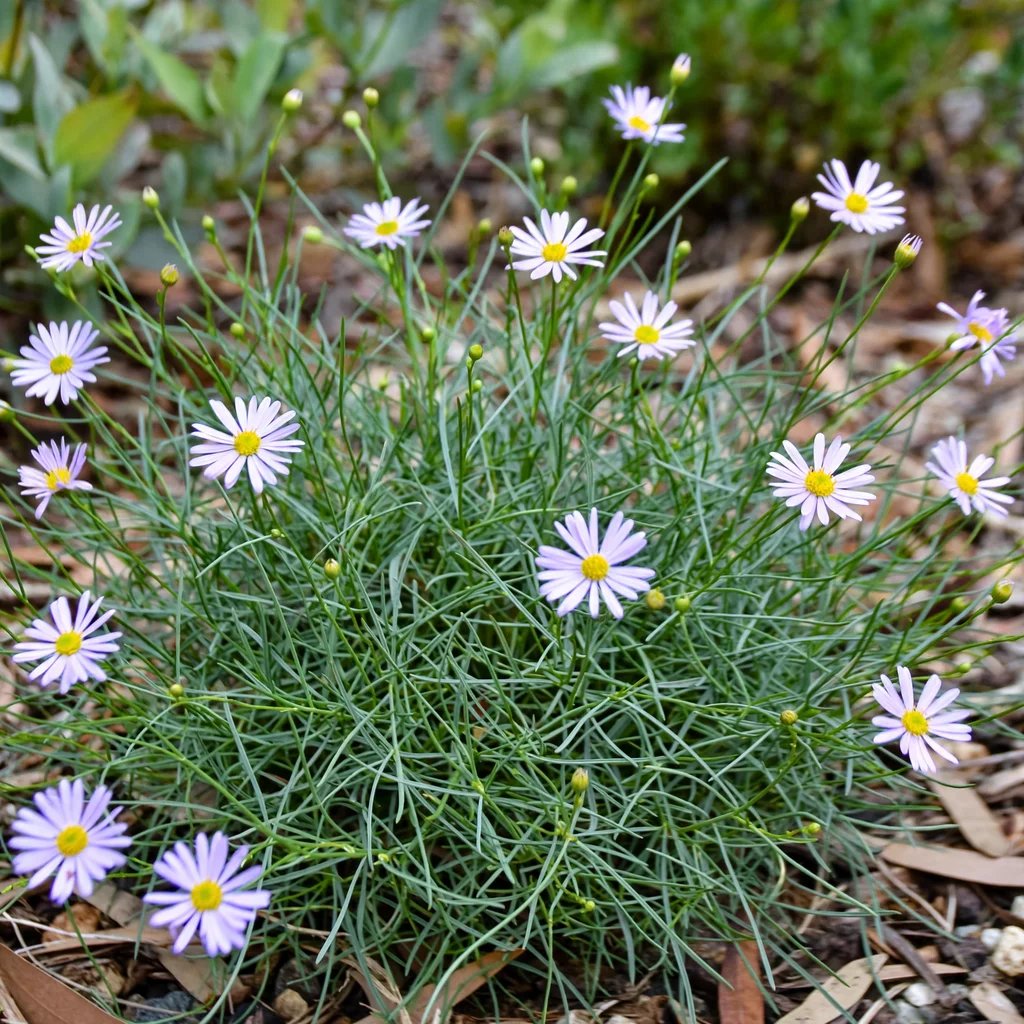
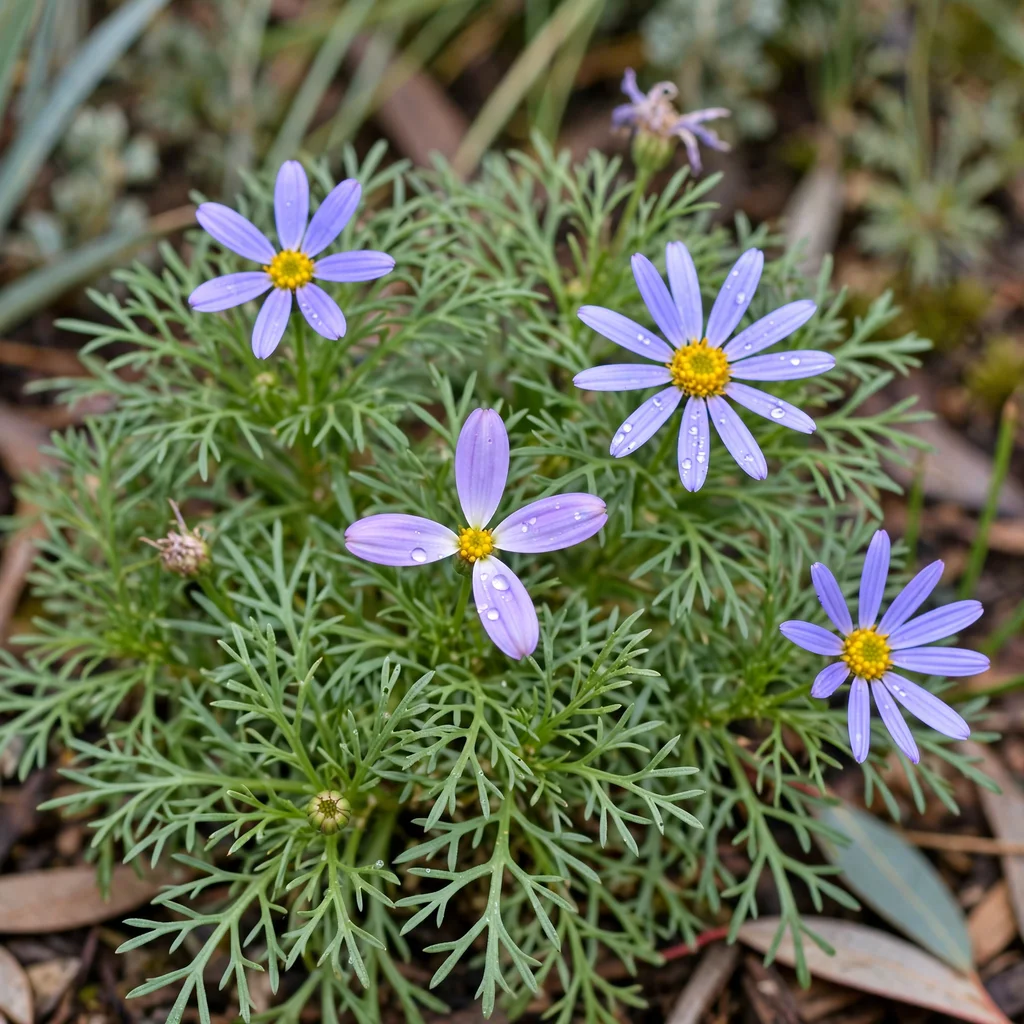
Brachyscome graminea, still sold as Brachyscome angustifolia, is an evergreen perennial from southeastern Australia forming a low sprawling mound of fine grassy foliage. The leaves are narrow linear blades to about two inches long, and the daisy heads about half an inch across are held singly on slender stalks above the foliage.
It makes a dense mat about twelve inches high and twenty inches wide, blooming from spring to fall with mauve to pale purple daisies with gold centers plus pink and white selections. It is distinct from the annual Swan River daisy, Brachyscome iberidifolia, which is more upright, short-lived and grown for bedding display.
Uses & Benefits:
Essentials
At a Glance
Plant Type
Groundcover
Height
12"
Width
20"
Light
Full Sun, Partial Sun
Zones
8, 9, 10
Water
Medium
Humidity
Average
Lifespan
Perennial, grown as annual in cold zones
Native To
Southeastern Australia
Toxicity
Non-toxic
Bloom period
Spring – Fall
In flower about 9 months of the year
Planting
How to Grow
- Plant in full sun with light afternoon shade tolerated, after last frost in cold zones.
- Set in fertile well-drained sandy loam with compost, pH 6.0-7.5, spacing 12 inches apart.
- Water to keep soil lightly moist, watering during dry periods and mulching to hold moisture.
- Fertilize lightly in spring and again in early fall to support continuous bloom.
Pro Tip
In zones below 8 grow it as a warm-season annual and replant each spring; winter loss in cold soil is normal, not failure.
Keep It Thriving
Care Guide
Do
- Give full sun for densest growth and most flowers.
- Keep soil lightly moist and mulch to reduce drying.
- Feed lightly in spring and early fall.
Don't
- Do not plant in soggy or poorly drained soil.
- Do not cut back hard into old bare stems.
- Do not expect outdoor plants to survive winter below zone 8.
Seasonal Care Calendar
| Task | Jan | Feb | Mar | Apr | May | Jun | Jul | Aug | Sep | Oct | Nov | Dec |
|---|---|---|---|---|---|---|---|---|---|---|---|---|
| Deadhead | ||||||||||||
| Fertilize | ||||||||||||
| Mulch | ||||||||||||
| Plant | ||||||||||||
| Winter Prep |
Watch Out For
Pests & Diseases
Common Pests
Common Diseases
In the Garden
Landscape Uses & Companions
Landscape Uses
Companion Plants
Multiply
Propagation Methods
Good to Know
Common Questions
Grass Daisy questions
What zones can Grass Daisy grow in?
Grass Daisy is hardy in USDA Zones 8–10: in that range it survives winter in the ground. Colder than Zone 8, grow it in a container you can move to shelter for the winter, or as an annual.
Is Grass Daisy deer resistant?
Yes — Grass Daisy is rated deer-resistant. Deer typically pass it over, though extreme hunger can override any plant's defenses.
When does Grass Daisy bloom?
Grass Daisy typically blooms from spring to fall. Exact timing shifts a week or two with your zone — Sow's bloom calendar maps it to your garden.
Does Grass Daisy need full sun?
Grass Daisy does best in full sun to part shade. In hot climates, afternoon shade keeps blooms fresher longer.
Is Grass Daisy drought tolerant?
Yes — once established (usually after the first full season), Grass Daisy handles dry spells with minimal watering. Water deeply its first year to build the root system that makes that possible.
More Brachyscome to compare
Keep exploring
Explore the genus
Hardy in your zone?
Grow Grass Daisy with confidence
See it in a design of your actual yard, get zone-matched care reminders, and track it season by season in your garden journal.