The Story
Plant Bio
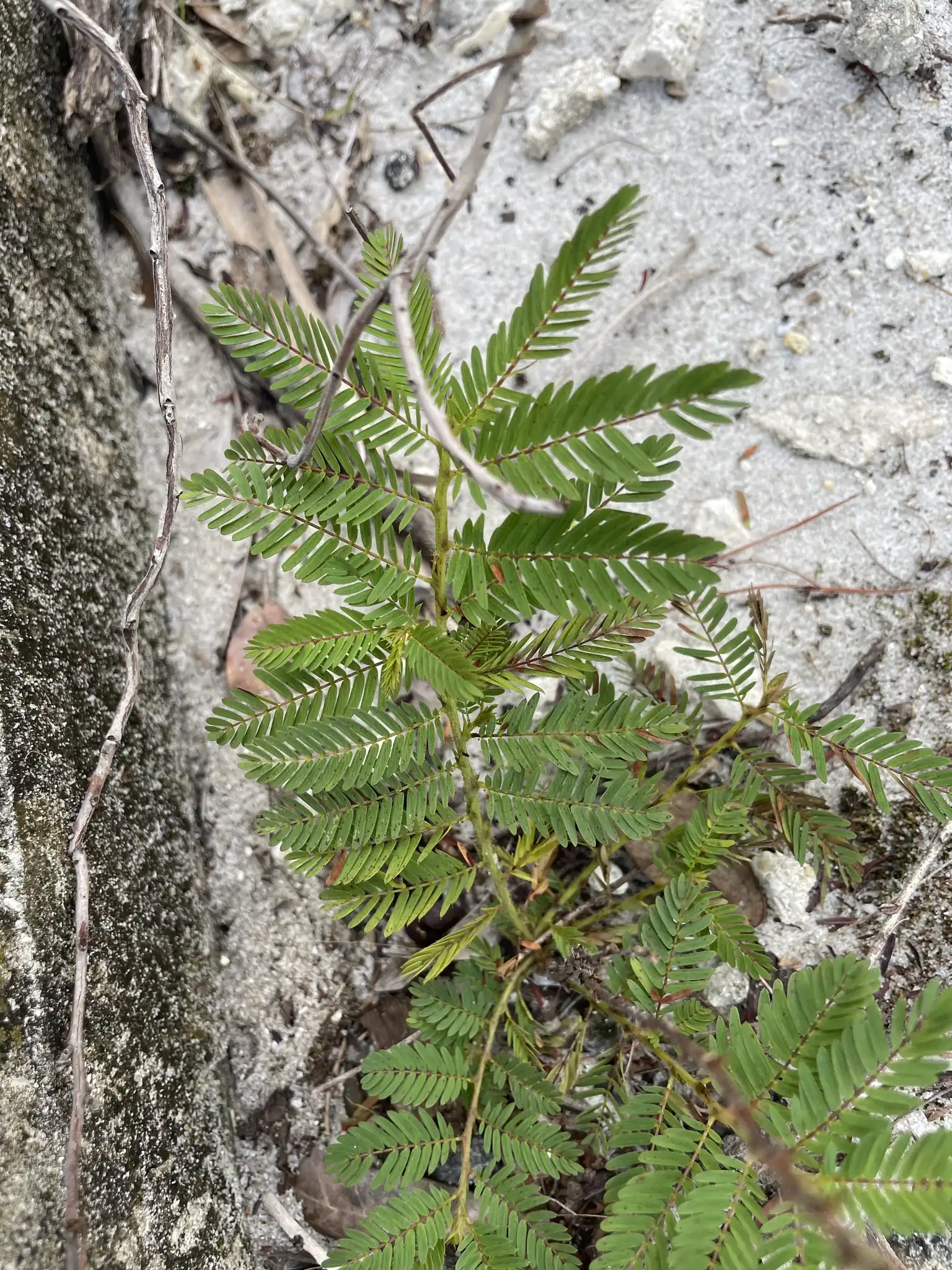
Chamaecrista nictitans, the sensitive partridge pea, is an erect annual legume growing 4 to 20 inches tall on slender branching stems from a taproot. The alternate leaves are 1 to 2 inches long with about 25 small yellow-green leaflets that fold together when touched, each leaf stalk bearing a single nectar gland.
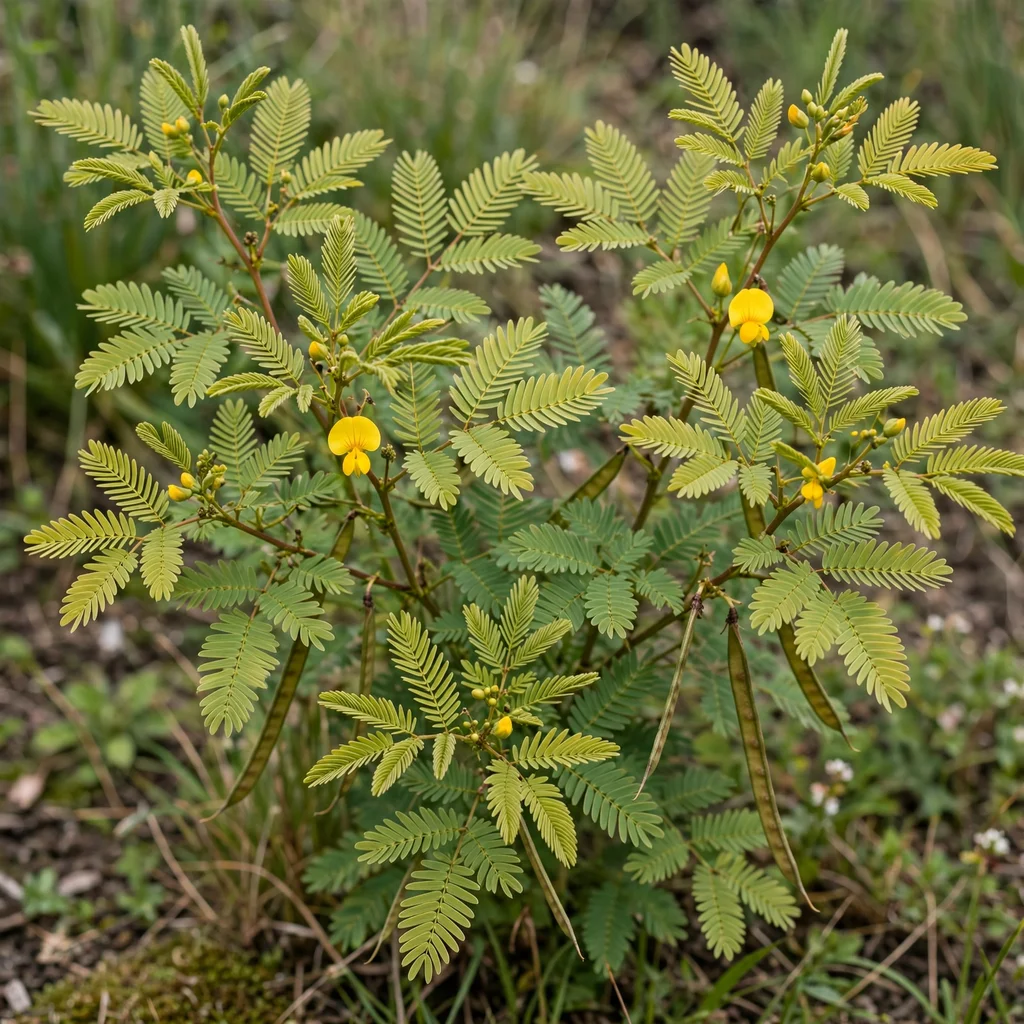
It is about half the stature of Chamaecrista fasciculata, with small hanging yellow flowers about half an inch wide borne singly on short stalks where the leaf meets the stem. The flat pods split explosively at maturity to throw brown to black seed, and plants disappear once taller perennials close the canopy.
Uses & Benefits:
Essentials
At a Glance
Plant Type
Annual
Height
12"
Width
12"
Light
Full Sun
Zones
4, 5, 6, 7, 8, 9, 10
Water
Low
Humidity
Unknown
Lifespan
Annual
Native To
Eastern and Central U.S. to South America
Toxicity
Possibly toxic to livestock; human toxicity unknown
Bloom period
Summer – Autumn
In flower about 6 months of the year
Planting
How to Grow
- Sow scarified seed in late spring to early summer in full sun on sandy, well-prepared ground.
- Cover seed 1/4 to 3/4 inch deep at about 10 pounds per acre for a solid stand.
- Keep competing grasses mowed back while seedlings establish; plants bloom about 6 weeks from germination.
- Allow pods to ripen and shed, then lightly disk in fall to incorporate seed for next year.
Pro Tip
Give it full sun and yearly disturbance; mow competing grasses and lightly disk in fall to work shed seed into the soil.
Keep It Thriving
Care Guide
Do
- Grow in full sun on sandy ground with room for self-sowing.
- Use larger patches to support ants and parasitoid wasps that protect seed from predators.
- Cut hay at first flowering if grown for forage.
Don't
- Do not plant under closing canopy or in shade where it dies out.
- Do not expect plants to return from roots; they persist only from shed seed.
- Do not overgraze fresh stands, which can be toxic to livestock.
Seasonal Care Calendar
| Task | Jan | Feb | Mar | Apr | May | Jun | Jul | Aug | Sep | Oct | Nov | Dec |
|---|---|---|---|---|---|---|---|---|---|---|---|---|
| Pest Check | ||||||||||||
| Plant | ||||||||||||
| Propagate | ||||||||||||
| Prune |
Watch Out For
Pests & Diseases
Common Pests
Common Diseases
In the Garden
Landscape Uses & Companions
Landscape Uses
Multiply
Propagation Methods
Good to Know
Common Questions
Sensitive Partridge Pea questions
What zones can Sensitive Partridge Pea grow in?
Sensitive Partridge Pea is an annual: it grows, flowers and sets seed in one season, so winter cold doesn't limit where it grows. Gardeners in any zone can grow it by planting at the right time, usually after the last spring frost.
When does Sensitive Partridge Pea bloom?
Sensitive Partridge Pea typically blooms from summer to fall. Exact timing shifts a week or two with your zone — Sow's bloom calendar maps it to your garden.
Does Sensitive Partridge Pea need full sun?
Sensitive Partridge Pea does best in full sun (6+ hours).
More Chamaecrista to compare
Keep exploring
Explore the genus
Grow Sensitive Partridge Pea with confidence
See it in a design of your actual yard, get zone-matched care reminders, and track it season by season in your garden journal.