The Story
Plant Bio
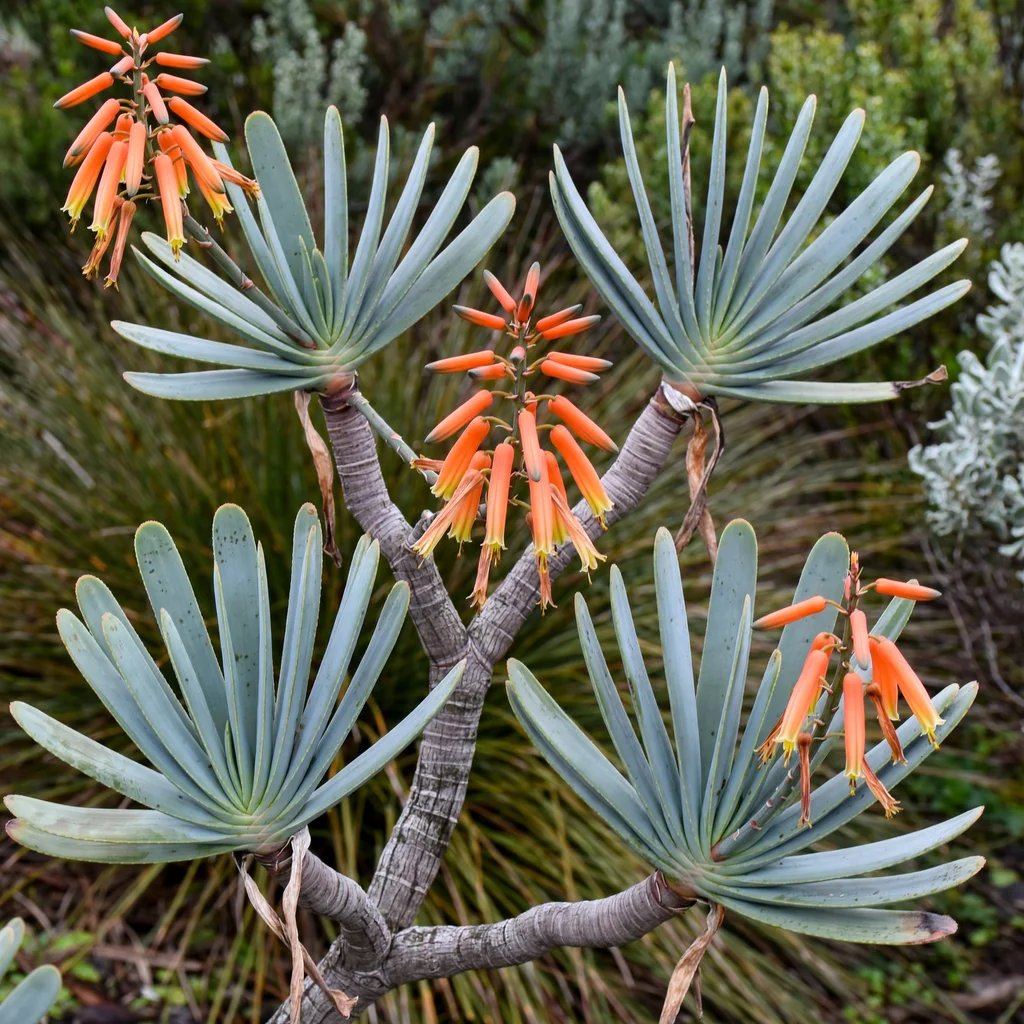
Kumara plicatilis, sold as Aloe plicatilis, is a slow-growing evergreen succulent shrub to small tree from the Western Cape, reaching four to eight feet in gardens on dichotomously forked corky gray stems. The gray-green to blue-gray strap leaves sit in two opposite ranks to form a flat rounded fan about twelve inches across, each leaf smooth with a rounded tip and no teeth.
Unlike other tree aloes, it carries its leaves in a single flat fan at each branch tip and is the only tree aloe confined to fynbos on acid sandstone scree. Mature crowns send up branched stalks to eighteen inches bearing cylindrical racemes of thirty to fifty tubular scarlet to orange-red flowers about two inches long in late winter to spring.
Uses & Benefits:
Essentials
At a Glance
Plant Type
Cactus Succulent
Height
84"
Width
60"
Light
Full Sun, Partial Sun
Zones
8, 9, 10
Water
Low
Humidity
Low, dry air preferred
Lifespan
Long-lived
Native To
Western Cape, South Africa
Toxicity
Low toxicity if ingested - not for consumption
Bloom period
Late winter – Spring
In flower about 4 months of the year
Planting
How to Grow
- Plant in full sun to light afternoon shade in very well-drained sandy or gravelly cactus mix at pH 5.5-6.5.
- Set the crown above the soil line and top with grit or pebbles to keep the stem dry.
- Water deeply in fall through spring during active growth, then keep almost dry in summer once established.
- Protect below 25F; move containers under cover during hard frost and cold rain.
- Keep clear of faster plants that shade or smother the fan and restrict air flow.
Pro Tip
Treat it as a winter grower: withhold summer water once established and never let the crown sit wet.
Keep It Thriving
Care Guide
Do
- Do provide sharp drainage and air around the crown.
- Do water in winter growth and keep summer dry.
- Do protect from hard frost and hot inland afternoon sun.
Don't
- Do not overpot, overfeed, or plant in rich moisture-holding loam.
- Do not irrigate heavily in summer or let the base sit soggy.
- Do not prune the fan; remove only spent flower stalks.
Seasonal Care Calendar
| Task | Jan | Feb | Mar | Apr | May | Jun | Jul | Aug | Sep | Oct | Nov | Dec |
|---|---|---|---|---|---|---|---|---|---|---|---|---|
| Fertilize | ||||||||||||
| Pest Check | ||||||||||||
| Plant | ||||||||||||
| Prune | ||||||||||||
| Winter Prep |
Watch Out For
Pests & Diseases
Common Pests
Common Diseases
In the Garden
Landscape Uses & Companions
Landscape Uses
Companion Plants
Multiply
Propagation Methods
Good to Know
Common Questions
Fan Aloe questions
What zones can Fan Aloe grow in?
Fan Aloe is hardy in USDA Zones 8–10: in that range it survives winter in the ground. Colder than Zone 8, grow it in a container you can move to shelter for the winter, or as an annual.
Is Fan Aloe deer resistant?
Yes — Fan Aloe is rated deer-resistant. Deer typically pass it over, though extreme hunger can override any plant's defenses.
When does Fan Aloe bloom?
Fan Aloe typically blooms from late winter to late spring. Exact timing shifts a week or two with your zone — Sow's bloom calendar maps it to your garden.
Does Fan Aloe need full sun?
Fan Aloe does best in full sun to part shade. In hot climates, afternoon shade keeps blooms fresher longer.
Is Fan Aloe drought tolerant?
Yes — once established (usually after the first full season), Fan Aloe handles dry spells with minimal watering. Water deeply its first year to build the root system that makes that possible.
More Aloe to compare
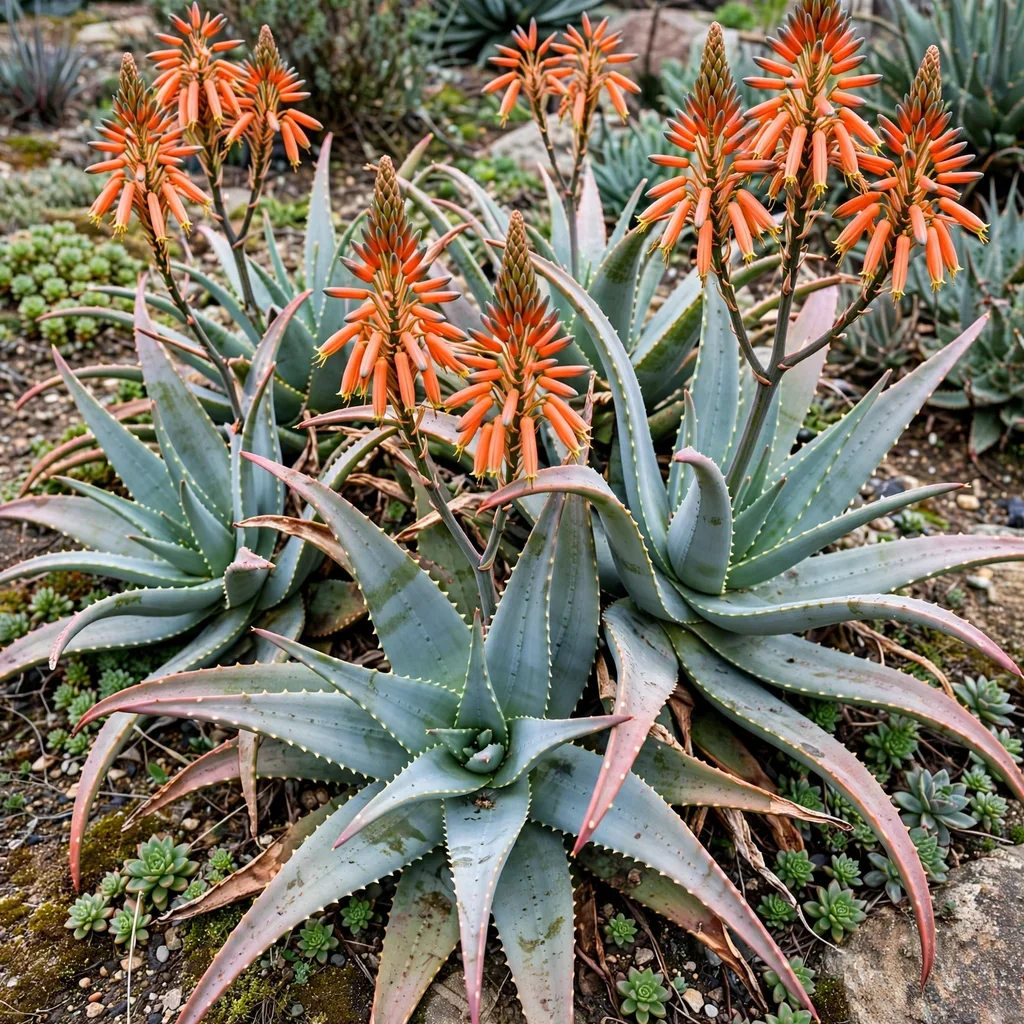
Compton's Aloe
Aloe comptonii
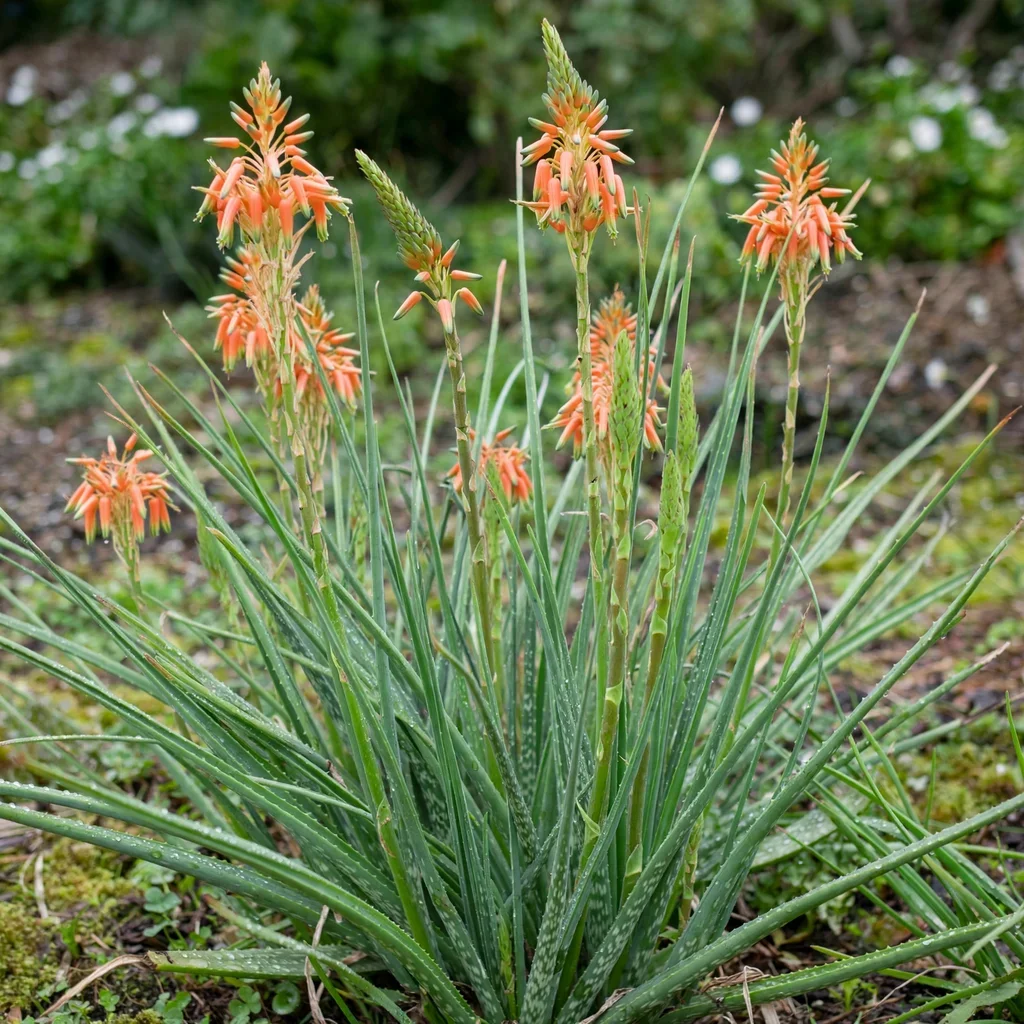
Cooper's Aloe
Aloe cooperi
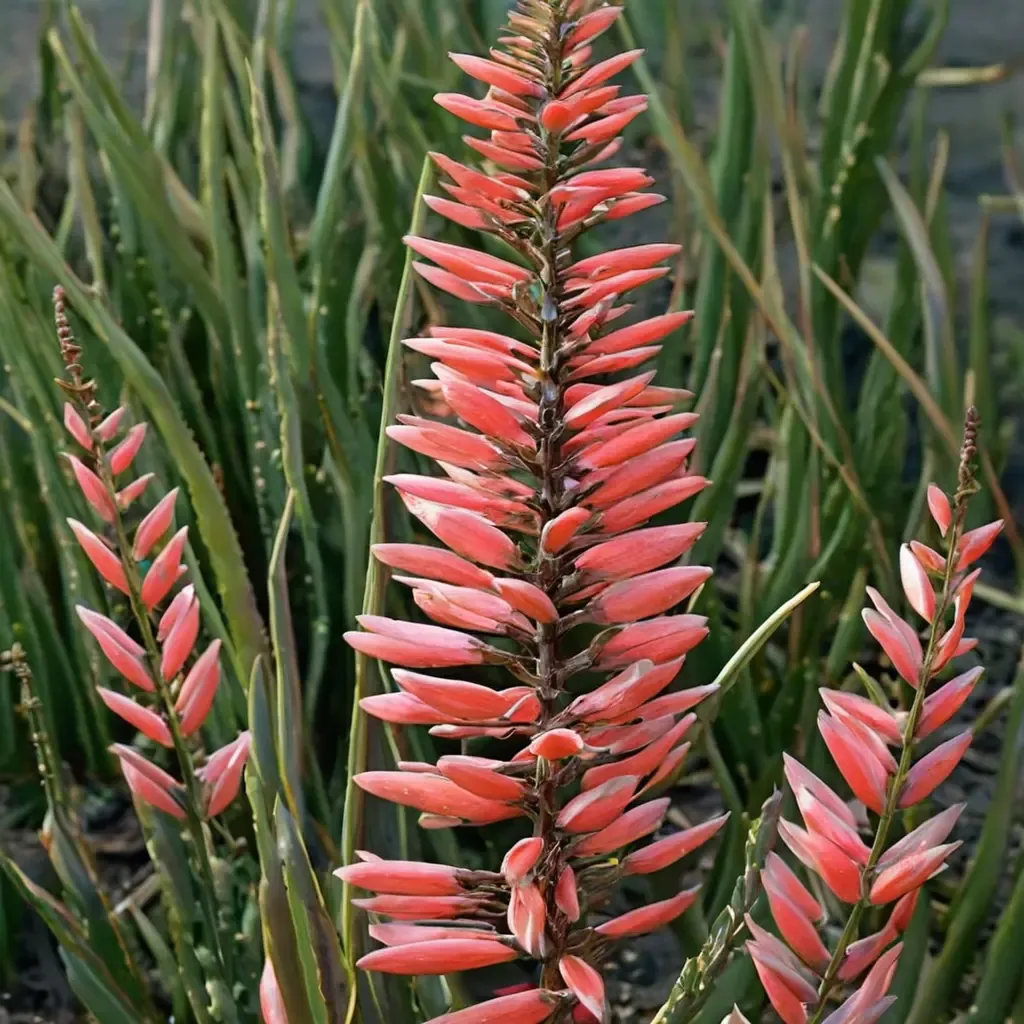
Safari Rose Aloe
Aloe vera 'Safari Rose'
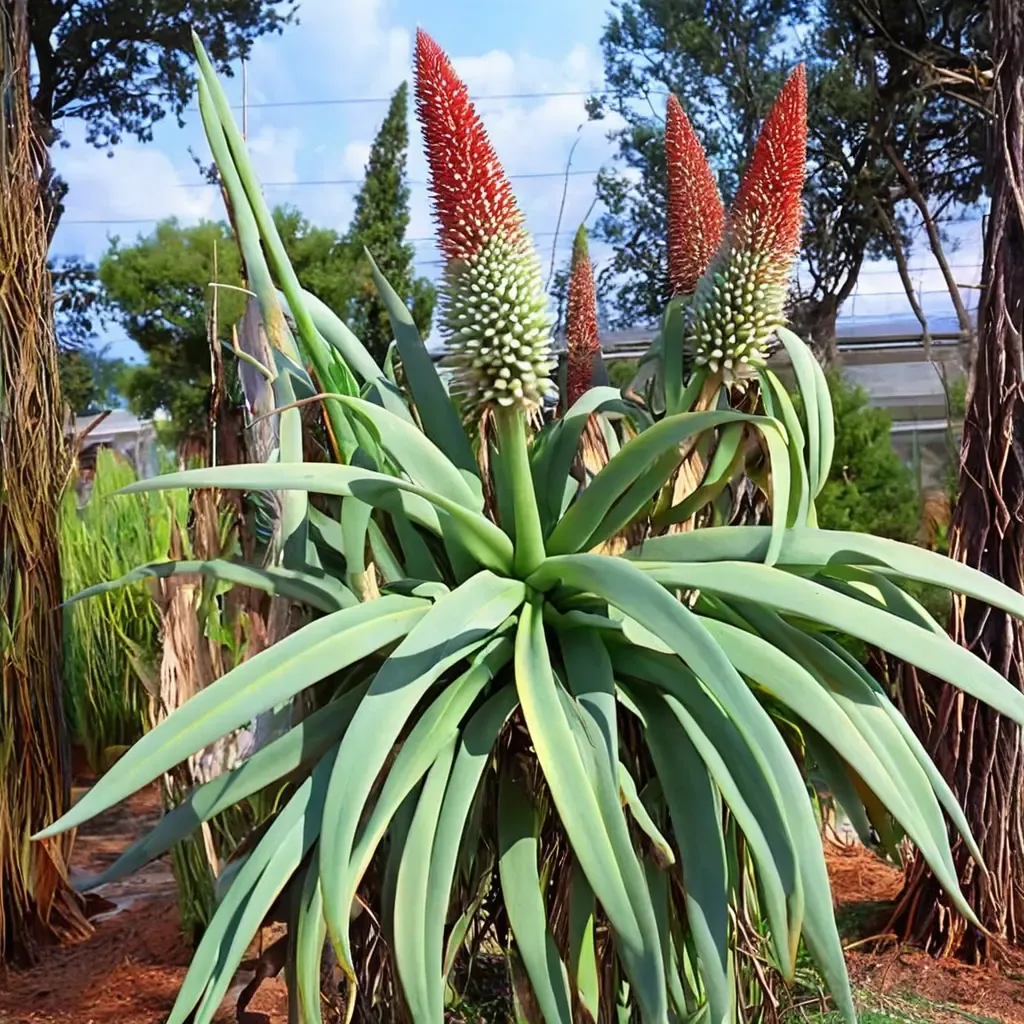
Tilt-Head Aloe
Aloe speciosa 'Tilt-Head Aloe'
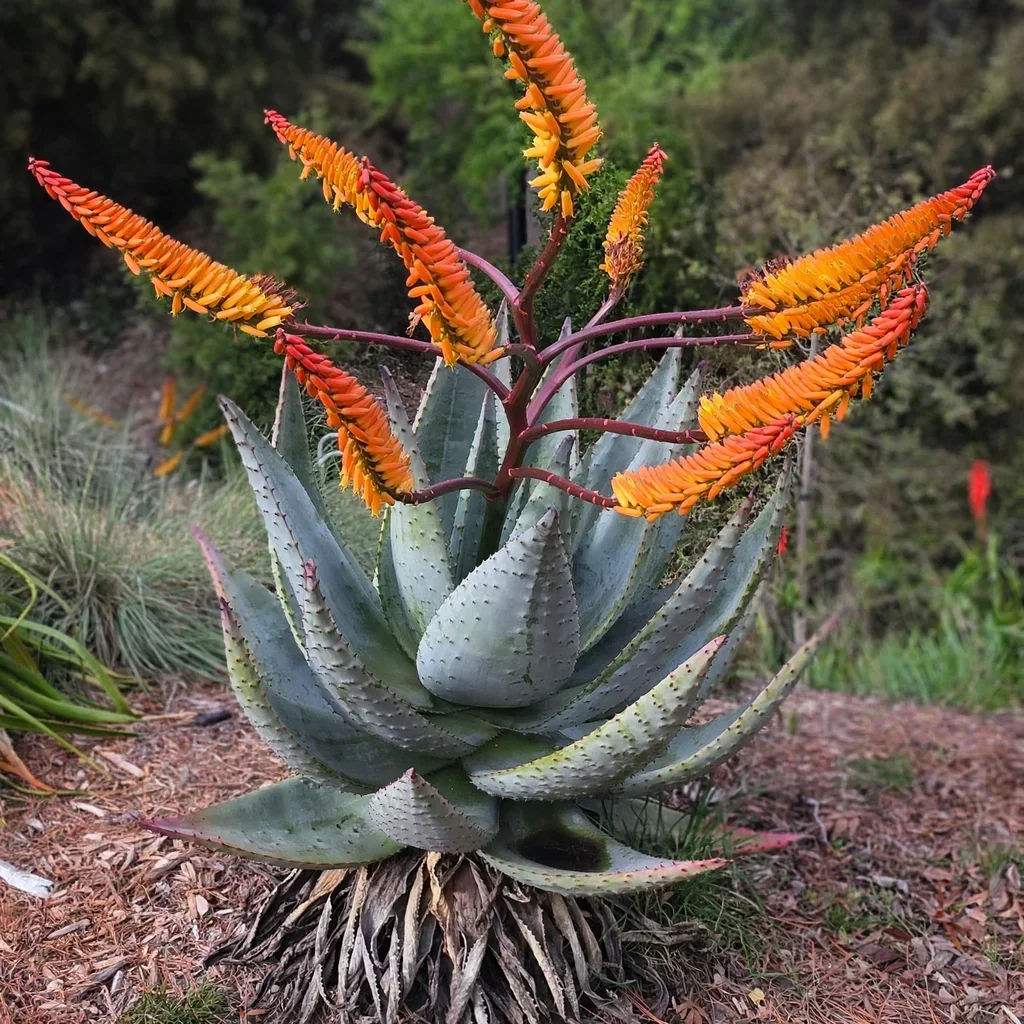
Mountain Aloe
Aloe marlothii 'Flat Flowered Aloe'
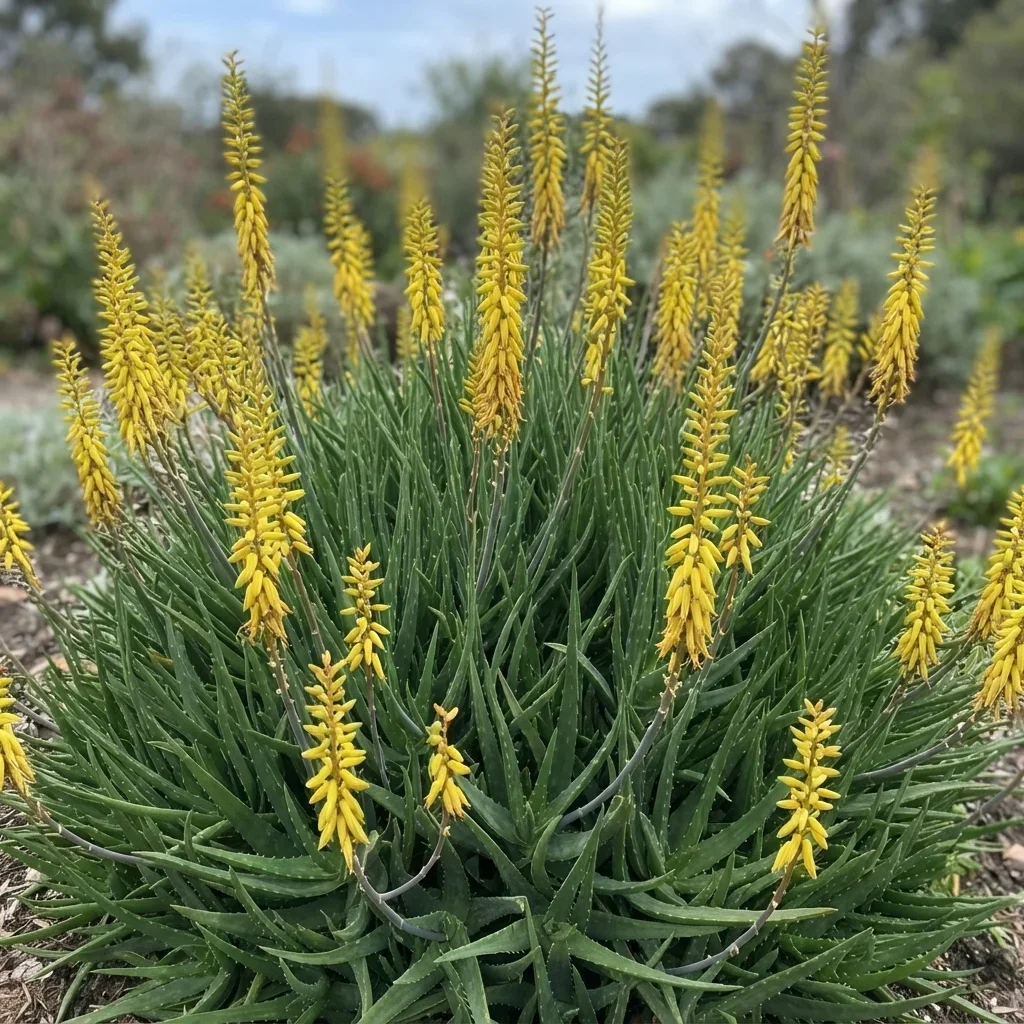
Fence Aloe
Aloe tenuior 'Fence Aloe'
Keep exploring
Explore the genus
Hardy in your zone?
Grow Fan Aloe with confidence
See it in a design of your actual yard, get zone-matched care reminders, and track it season by season in your garden journal.