The Story
Plant Bio
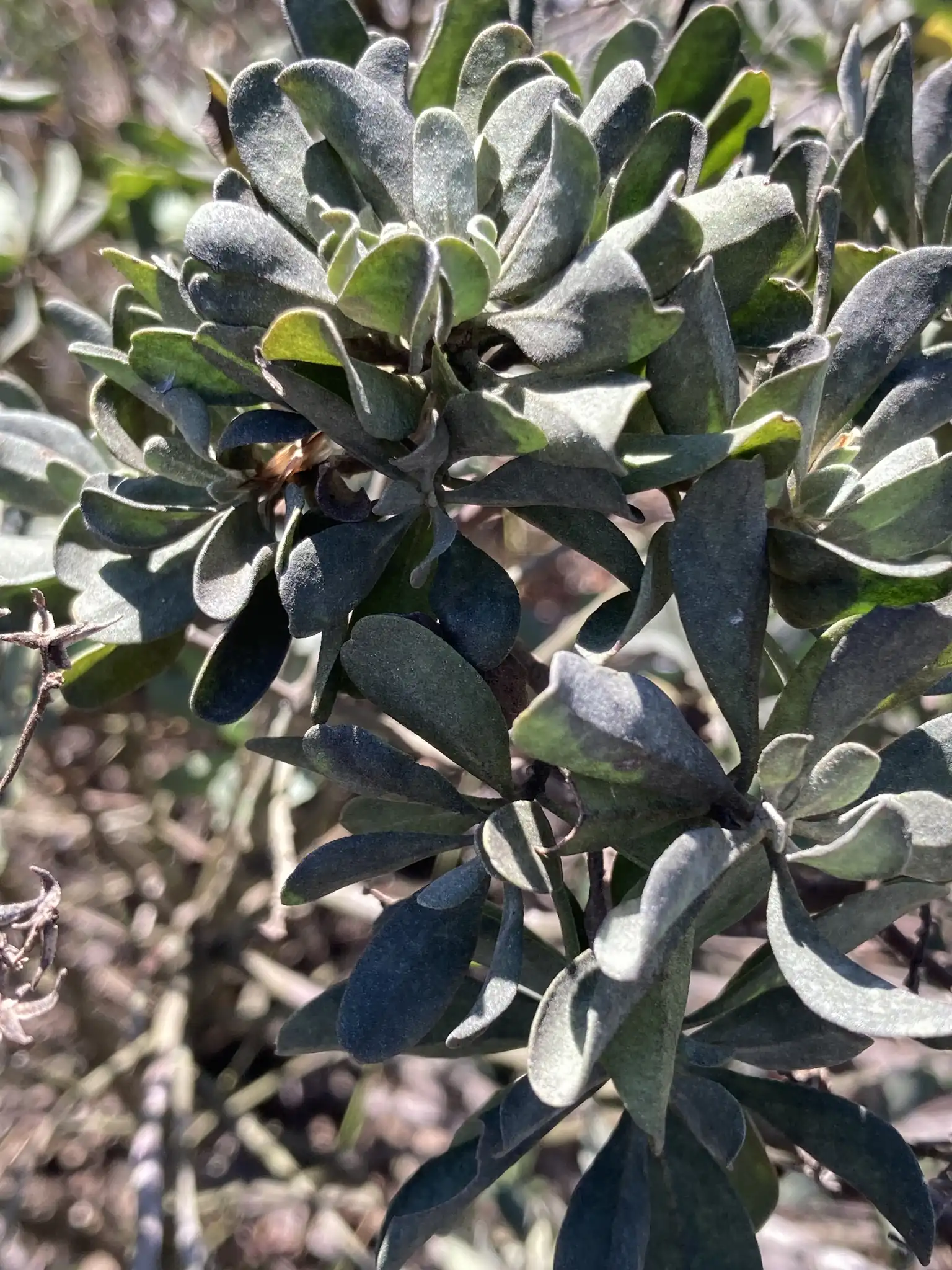
Garberia heterophylla is a low evergreen shrub from Florida scrub, forming a rounded multi-stemmed clump four to eight feet tall and six to eight feet wide. The small obovate gray-green leaves are held vertically and feel sticky to the touch, persisting year-round on fine-textured stems.
What sets it apart is the fall display, when flat-topped clusters of lavender-pink disk heads cover the crown from September into December. The bloom feeds butterflies, native bees and beetles in quantity, with seed afterward taken by songbirds.
Uses & Benefits:
Essentials
At a Glance
Plant Type
Shrub
Height
72"
Width
84"
Light
Full Sun, Partial Sun
Zones
9, 10
Water
Low
Humidity
Unknown
Lifespan
25-50 years
Native To
Florida, USA
Toxicity
Unknown
Bloom period
Fall – Winter
In flower about 6 months of the year
Planting
How to Grow
- Choose the hottest full-sun spot with deep acid sand and no overhead irrigation.
- Dig a hole no deeper than the rootball and set the plant at the same level.
- Backfill with the native sand only and firm gently.
- Water in once, then water sparingly until rooted and withhold extra water.
- Space 36 to 60 inches apart to allow a 6-foot-plus spread.
Pro Tip
Give it deep acid sand in full sun and then leave it alone; rich soil, fertilizer and extra water kill it faster than drought.
Keep It Thriving
Care Guide
Do
- Do plant in extremely well-drained nutrient-poor sand.
- Do give full sun with room for a wide rounded crown.
- Do leave established plants unirrigated and unfertilized.
Don't
- Don't plant in clay, muck, enriched beds or shade.
- Don't overwater or feed; excess fertility causes failure.
- Don't shear hard into old leafless wood.
Seasonal Care Calendar
| Task | Jan | Feb | Mar | Apr | May | Jun | Jul | Aug | Sep | Oct | Nov | Dec |
|---|---|---|---|---|---|---|---|---|---|---|---|---|
| Mulch | ||||||||||||
| Pest Check | ||||||||||||
| Plant | ||||||||||||
| Prune |
Watch Out For
Pests & Diseases
Common Pests
Common Diseases
In the Garden
Landscape Uses & Companions
Landscape Uses
Companion Plants
Multiply
Propagation Methods
Good to Know
Common Questions
Garberia questions
What zones can Garberia grow in?
Garberia is hardy in USDA Zones 9–10: in that range it survives winter in the ground. Colder than Zone 9, grow it in a container you can move to shelter for the winter.
When does Garberia bloom?
Garberia typically blooms from fall to winter. Exact timing shifts a week or two with your zone — Sow's bloom calendar maps it to your garden.
Does Garberia need full sun?
Garberia does best in full sun to part shade. In hot climates, afternoon shade keeps blooms fresher longer.
Is Garberia drought tolerant?
Yes — once established (usually after the first full season), Garberia handles dry spells with minimal watering. Water deeply its first year to build the root system that makes that possible.
Keep exploring
Explore the genus
Hardy in your zone?
Grow Garberia with confidence
See it in a design of your actual yard, get zone-matched care reminders, and track it season by season in your garden journal.