The Story
Plant Bio
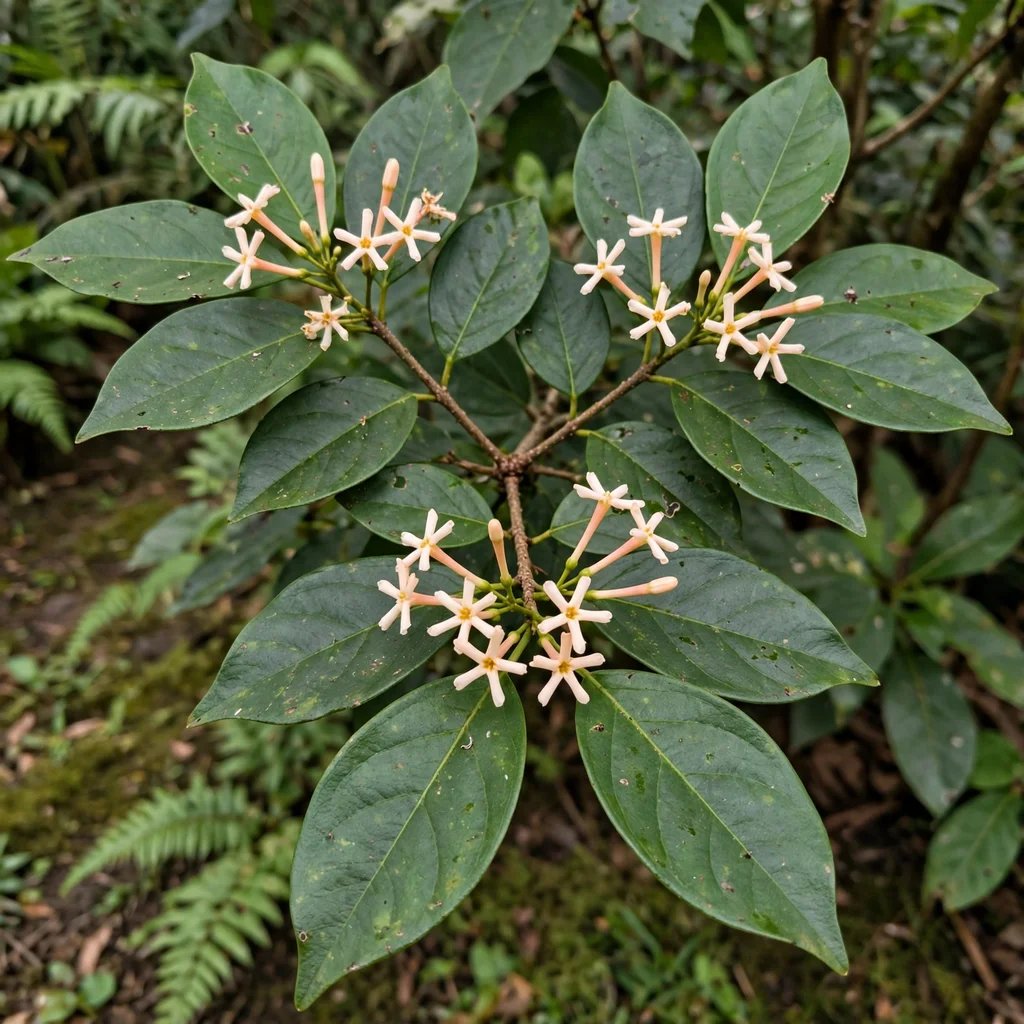
Wrightia dubia is a large shrub to small tree from the forest margins of Southeast Asia, reaching 5 to 10 feet as a shrub and to 20 feet as a small tree, with lenticellate branchlets and opposite green leaves. The leaves are elliptic-oblong to obovate, 1.5 to 10 inches long, papery to subcoriaceous in texture.
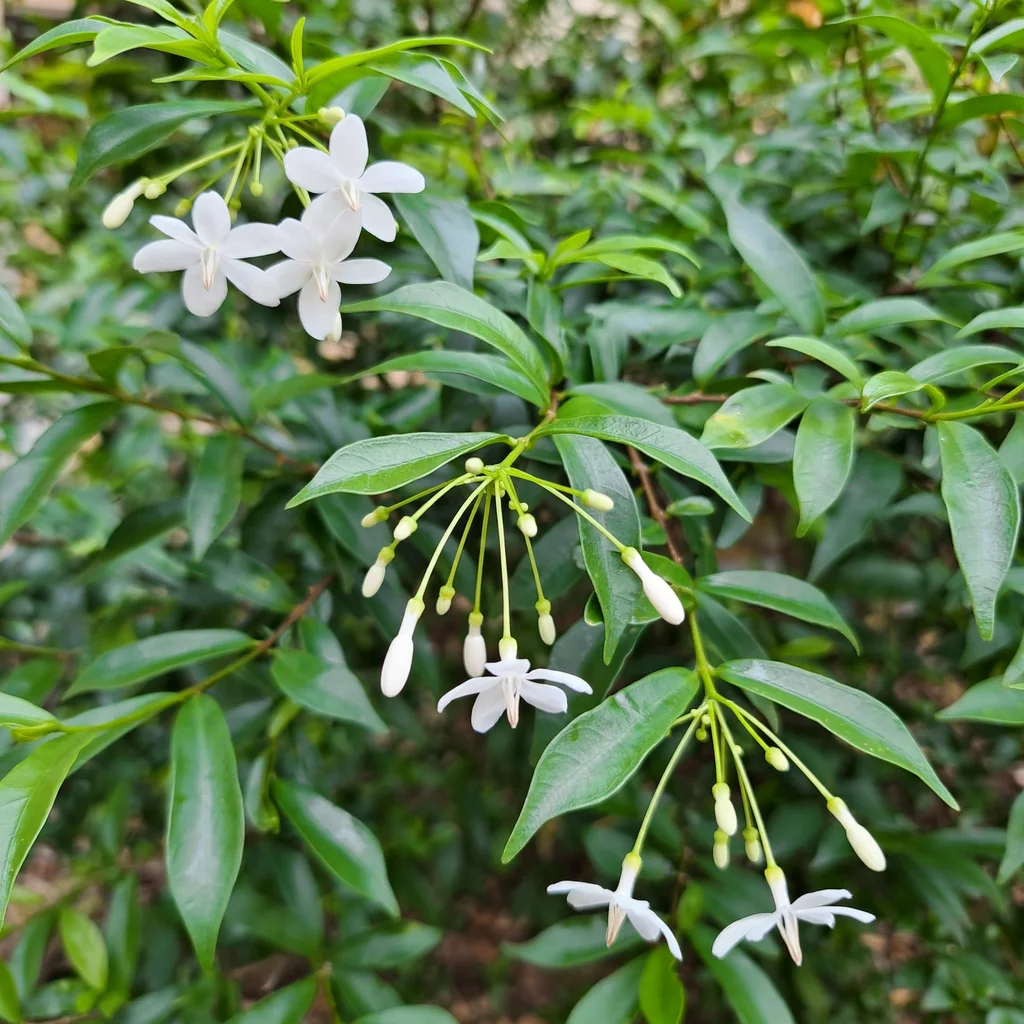
It blooms in spring into summer with 5-petalled star flowers 0.8 to 1.6 inches wide in red to crimson and reddish-pink tones, each with a 6-13 mm tube and five stamens, the petals recurving with age. The flowers are not fragrant, the plant is cold-sensitive below about 35F, and it is distinct from the white-flowered Wrightia religiosa and from Monstera dubia.
Uses & Benefits:
Essentials
At a Glance
Plant Type
Shrub
Height
180"
Width
72"
Light
Full Sun, Partial Sun
Zones
10
Water
Medium
Humidity
High
Lifespan
Long-lived shrub to small tree
Native To
Cambodia, Laos, Peninsular Malaysia, Thailand, Vietnam
Toxicity
Unknown for garden dose - do not ingest; cytotoxic compounds reported
Bloom period
Spring – Summer
In flower about 6 months of the year
Planting
How to Grow
- Plant in full sun to partial shade in a well-drained potting mix or soil after nights stay above 40F.
- Water to keep the mix evenly moist, allowing the surface to dry between waterings.
- Grow outdoors in Zones 10-11; in colder zones keep it in a container that can be moved.
- Move containers to a bright, frost-free spot indoors before temperatures approach 35F.
Pro Tip
Grow it in full sun to partial shade in well-drained soil, and move pots indoors before nights drop toward 35F.
Keep It Thriving
Care Guide
Do
- Do grow it in a container in cold climates so it can be moved indoors.
- Do provide full sun to partial shade and sharp drainage.
- Do verify the identity as the red-flowered, non-fragrant Wrightia dubia at purchase.
Don't
- Do not leave it outdoors below about 35F.
- Do not plant in waterlogged clay or let containers sit in saucers of water.
- Do not ingest any part; it contains cytotoxic compounds reported from traditional medicinal use.
Seasonal Care Calendar
| Task | Jan | Feb | Mar | Apr | May | Jun | Jul | Aug | Sep | Oct | Nov | Dec |
|---|---|---|---|---|---|---|---|---|---|---|---|---|
| Lift Store | ||||||||||||
| Mulch | ||||||||||||
| Pest Check | ||||||||||||
| Plant | ||||||||||||
| Prune |
Watch Out For
Pests & Diseases
Common Pests
Common Diseases
In the Garden
Landscape Uses & Companions
Landscape Uses
Multiply
Propagation Methods
Good to Know
Common Questions
Starfish Flower questions
What zones can Starfish Flower grow in?
Starfish Flower is hardy in USDA Zone 10: in that range it survives winter in the ground. Colder than Zone 10, grow it in a container you can move to shelter for the winter.
When does Starfish Flower bloom?
Starfish Flower typically blooms from spring to summer. Exact timing shifts a week or two with your zone — Sow's bloom calendar maps it to your garden.
Does Starfish Flower need full sun?
Starfish Flower does best in full sun to part shade. In hot climates, afternoon shade keeps blooms fresher longer.
More Wrightia to compare
Keep exploring
Explore the genus
Hardy in your zone?
Grow Starfish Flower with confidence
See it in a design of your actual yard, get zone-matched care reminders, and track it season by season in your garden journal.