The Story
Plant Bio
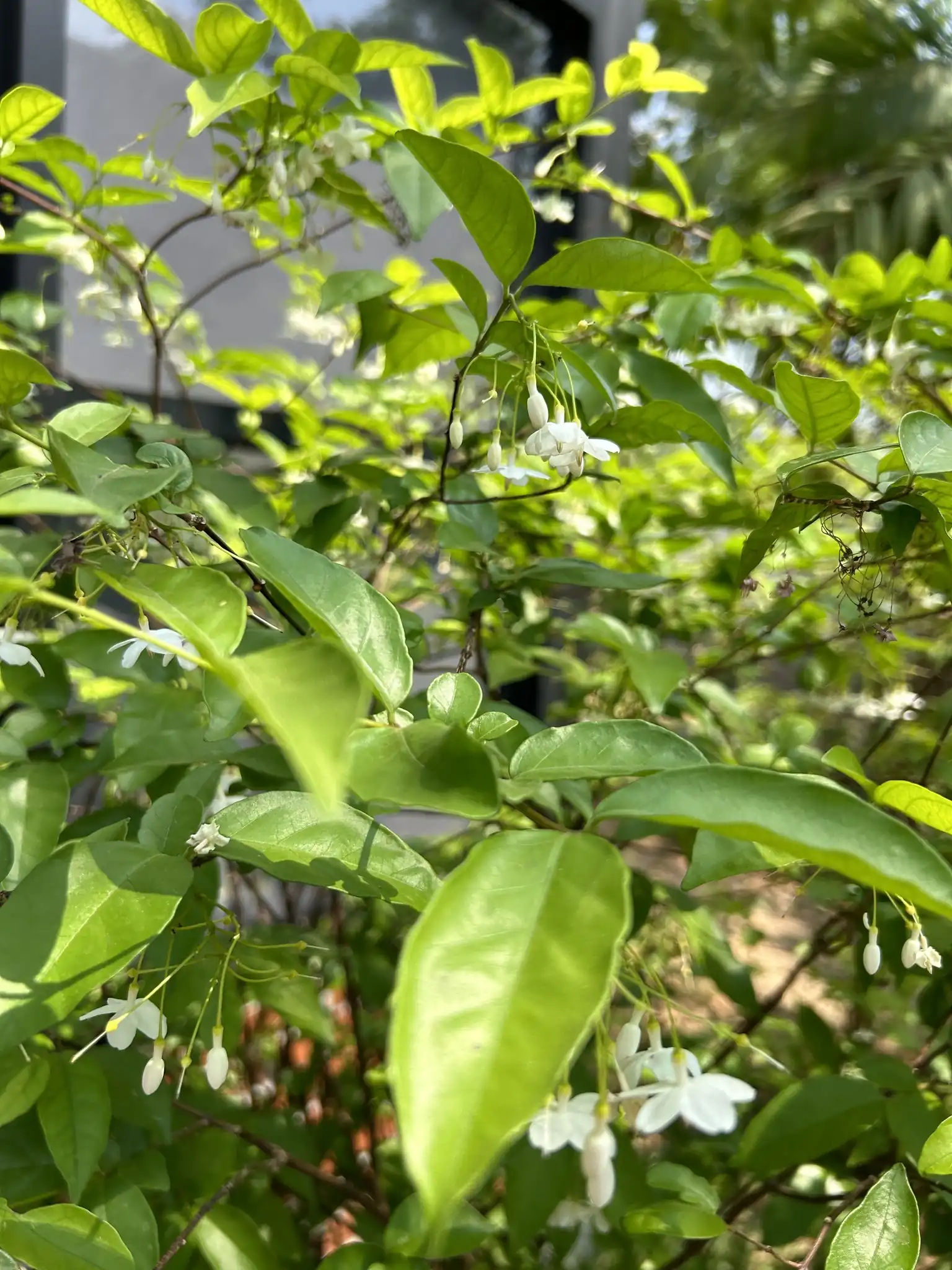
Wrightia religiosa, the water jasmine, is a large twiggy shrub reaching 5 to 10 feet in cultivation and to 20 feet as a small tree, with slender pendulous branches and opposite ovate-lanceolate leaves 1 to 1.5 inches long in glossy dark green with a wavy margin. It carries pendulous clusters of waxy white five-petaled bells about one-half inch across with a fruity jasmine scent that strengthens in the evening.
It flowers in flushes from spring to fall every six to eight weeks in warm weather, and clipped frequently it stays dense and compact for premier bonsai work because it back-buds readily from old wood. Unpruned plants leaf heavily with little bloom, and cool, underfed or overwatered plants yellow and drop leaves without dying.
Uses & Benefits:
Essentials
At a Glance
Plant Type
Shrub
Height
120"
Width
72"
Light
Full Sun, Partial Sun
Zones
9, 10
Water
Evenly moist
Humidity
High
Lifespan
Long-lived woody shrub
Native To
Southeast Asia
Toxicity
Mildly toxic if chewed; skin irritant
Bloom period
Spring – Autumn
In flower about 9 months of the year
Planting
How to Grow
- Grow in full sun to part shade, with bright light indoors; give hot, humid air and mist in dry houses.
- Plant in loose, humusy mix that stays evenly moist but drains freely; never let it sit soggy.
- Water regularly and do not let it dry completely; water at the base to keep foliage dry.
- Feed heavily through the growing season with high-nitrogen fertilizer; pale leaves often mean underfeeding.
- Prune hard in spring and trim new shoots to two leaves after each flush to force branching and bloom.
- Bring indoors before nights drop below 45F; it drops leaves below about 65F and tolerates only a brief light freeze to 30F on mature wood.
Pro Tip
Pinch new shoots back to two leaves after each flower flush; plants left unpruned make leaves with almost no bloom.
Keep It Thriving
Care Guide
Do
- Do keep the mix evenly moist but well-drained and water at the base.
- Do feed heavily in the growing season with high-nitrogen fertilizer.
- Do prune hard and pinch new shoots to two leaves to trigger rebloom.
- Do wear gloves and wash hands; milky sap irritates skin.
Don't
- Don't let the pot dry completely or sit soggy.
- Don't leave it out below 45F or in a light freeze except brief mature-wood exposure.
- Don't cut large branches only once a year; it needs frequent clipping to bloom.
- Don't let pets or children chew leaves or stems.
Seasonal Care Calendar
| Task | Jan | Feb | Mar | Apr | May | Jun | Jul | Aug | Sep | Oct | Nov | Dec |
|---|---|---|---|---|---|---|---|---|---|---|---|---|
| Fertilize | ||||||||||||
| Pest Check | ||||||||||||
| Propagate | ||||||||||||
| Prune | ||||||||||||
| Winter Prep |
Watch Out For
Pests & Diseases
Common Pests
Common Diseases
In the Garden
Landscape Uses & Companions
Landscape Uses
Multiply
Propagation Methods
Good to Know
Common Questions
Water Jasmine questions
What zones can Water Jasmine grow in?
Water Jasmine is hardy in USDA Zones 9–10: in that range it survives winter in the ground. Colder than Zone 9, grow it in a container you can move to shelter for the winter.
When does Water Jasmine bloom?
Water Jasmine typically blooms from spring to fall. Exact timing shifts a week or two with your zone — Sow's bloom calendar maps it to your garden.
Does Water Jasmine need full sun?
Water Jasmine does best in full sun to part shade. In hot climates, afternoon shade keeps blooms fresher longer.
More Wrightia to compare
Keep exploring
Explore the genus
Hardy in your zone?
Grow Water Jasmine with confidence
See it in a design of your actual yard, get zone-matched care reminders, and track it season by season in your garden journal.