The Story
Plant Bio
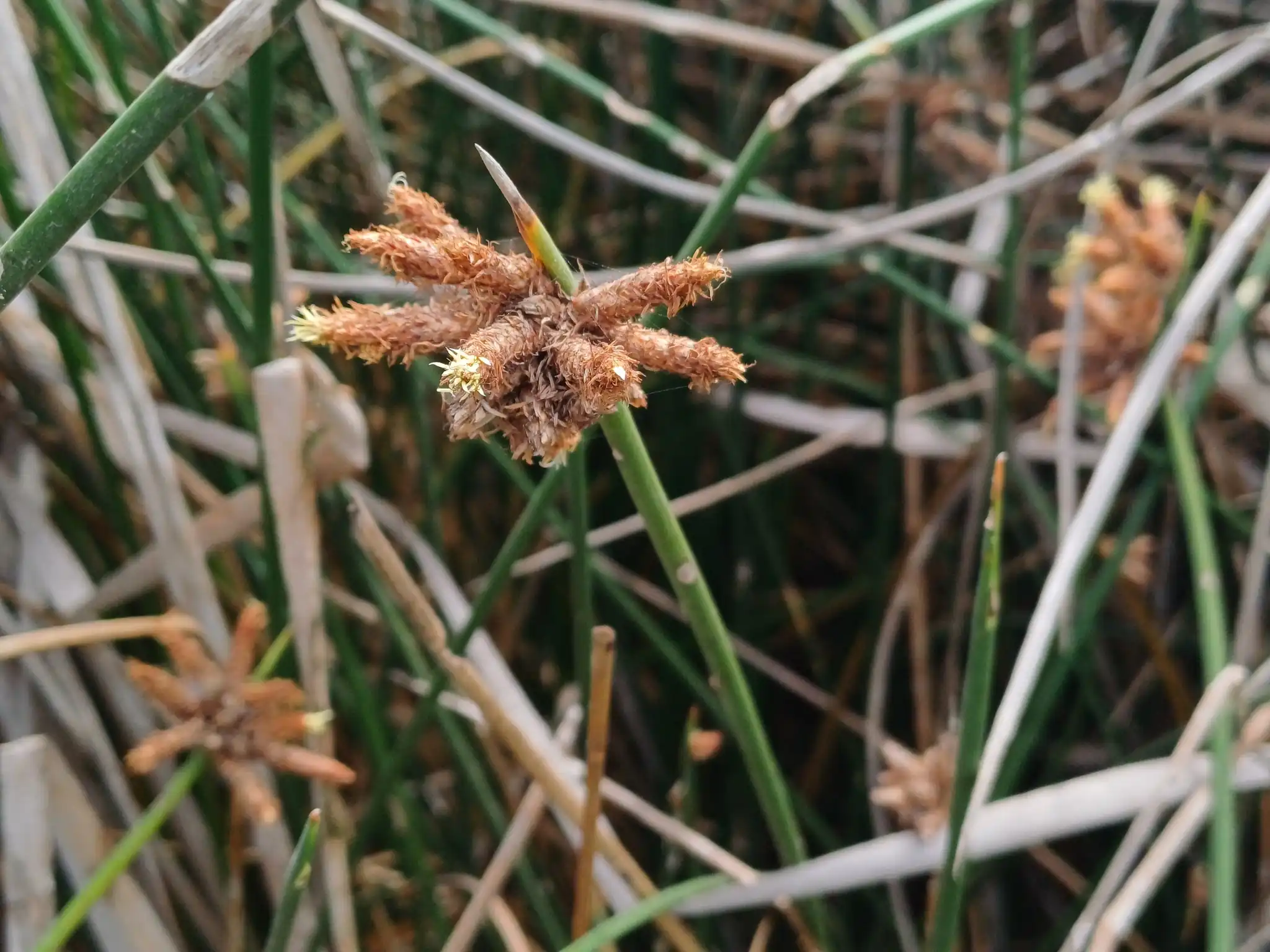
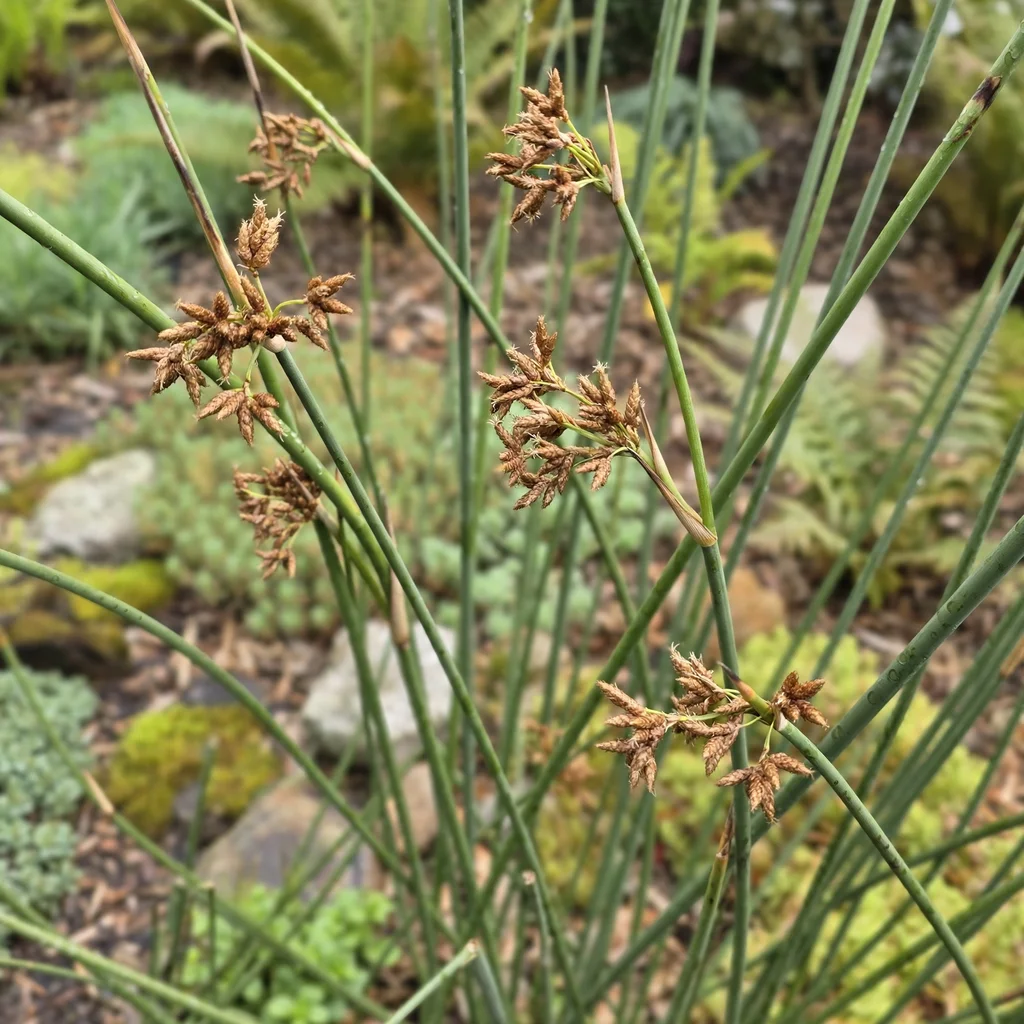
Schoenoplectus californicus is a tall, rhizomatous perennial sedge native to wetlands throughout North, Central, and South America. It forms dense colonial stands of stiff, upright stems topped with open, tan to brown flowering panicles from summer through fall.
Smooth green stems function as the main photosynthetic organs, as true leaves are reduced to basal sheaths up to a foot long. Culms transition from rounded at the base to sharply three-sided near the inflorescence, enabling the plant to withstand strong water currents.
Uses & Benefits:
Essentials
At a Glance
Plant Type
Aquatic
Height
118"
Width
120"
Light
Full Sun
Zones
4, 5, 6, 7, 8, 9, 10
Water
High / Saturated
Humidity
High
Lifespan
Perennial
Native To
North, Central, and South America
Toxicity
Non-toxic
Bloom period
Summer – Fall
In flower about 6 months of the year
Planting
How to Grow
- Select a site in full sun with saturated soil or standing water up to two feet deep.
- Plant dormant rhizomes or containerized plugs directly into aquatic substrate or heavy clay soil.
- Submerge the planting container or pond margin so that water continuously covers the root crown.
- Cut back spent, brown stems near the water line at the end of winter before spring growth begins.
Pro Tip
Plant rhizomes in heavy soil within solid-bottom aquatic containers or lined retention basins to restrict aggressive spreading, and keep the roots continuously submerged.
Keep It Thriving
Care Guide
Do
- Keep soil permanently saturated or submerged in shallow water.
- Contain rhizomes in submerged pots if planting in small garden ponds.
- Prune dead brown stems back to the water line in late winter.
Don't
- Do not allow the root zone to dry out completely at any time.
- Do not cut into live, submerged green tissue when clearing old stems.
- Do not use chemical insecticides or herbicides in open water features.
Seasonal Care Calendar
| Task | Jan | Feb | Mar | Apr | May | Jun | Jul | Aug | Sep | Oct | Nov | Dec |
|---|---|---|---|---|---|---|---|---|---|---|---|---|
| Divide | ||||||||||||
| Pest Check | ||||||||||||
| Plant | ||||||||||||
| Prune | ||||||||||||
| Winter Prep |
Watch Out For
Pests & Diseases
Common Pests
Common Diseases
In the Garden
Landscape Uses & Companions
Landscape Uses
Multiply
Propagation Methods
Good to Know
Common Questions
California Bulrush questions
What zones can California Bulrush grow in?
California Bulrush is hardy in USDA Zones 4–10: in that range it survives winter in the ground.
When does California Bulrush bloom?
California Bulrush typically blooms from summer to fall. Exact timing shifts a week or two with your zone — Sow's bloom calendar maps it to your garden.
Does California Bulrush need full sun?
California Bulrush does best in full sun (6+ hours).
More Schoenoplectus to compare
Keep exploring
Explore the genus
Grow California Bulrush with confidence
See it in a design of your actual yard, get zone-matched care reminders, and track it season by season in your garden journal.