The Story
Plant Bio
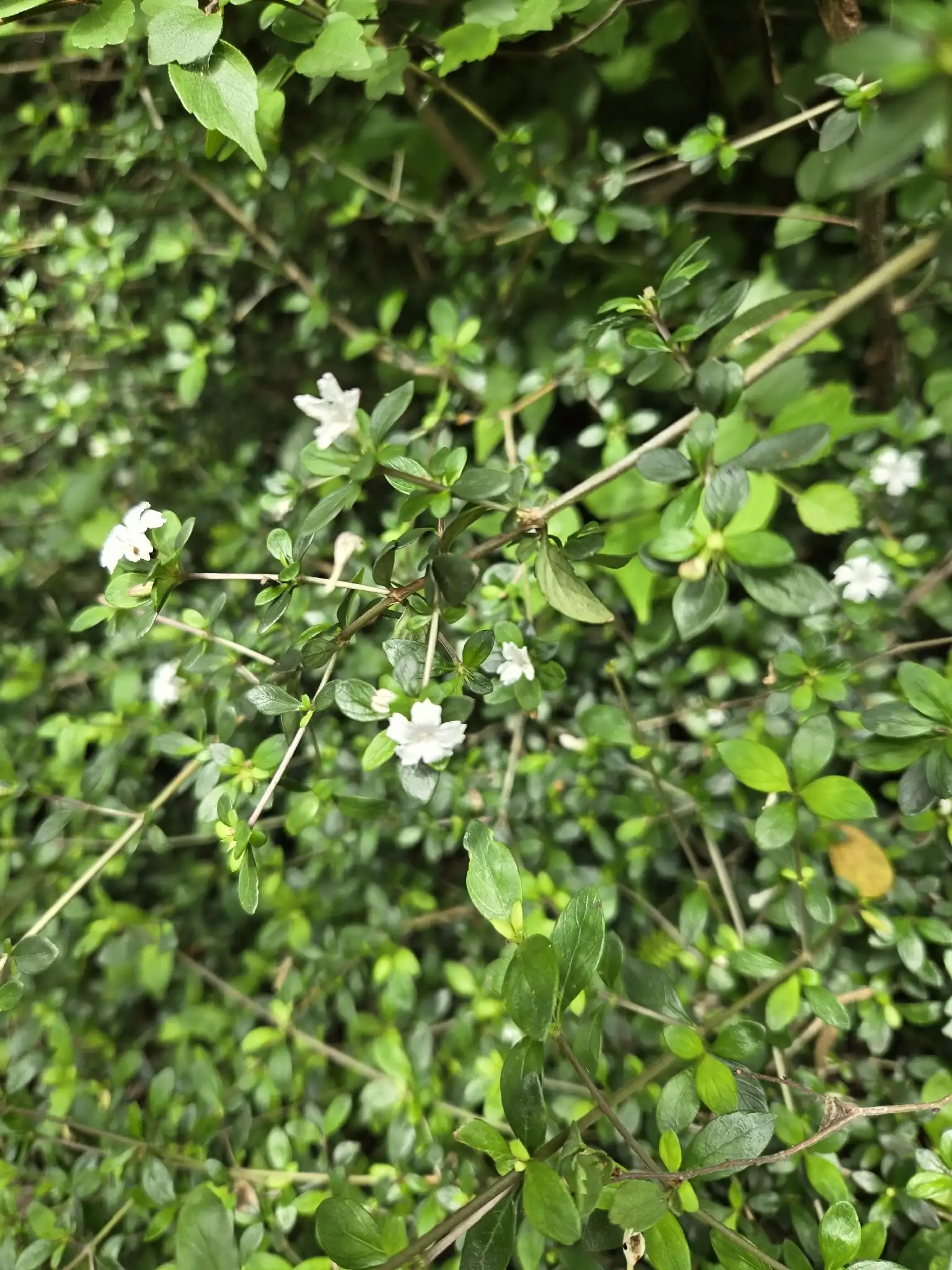
Serissa japonica, in the Rubiaceae family, is a small stiffly branched shrub that forms a wiry dome 2 to 4 feet tall and slightly wider than tall, with rough gray bark. It carries tiny opposite crowded leathery deep green leaves 1/4 to 1/2 inch long and star-shaped white trumpets with a tubular base and four to six lobes that can cover the plant from spring to fall.
Bruised leaves release a fetid odor that distinguishes it from boxwood look-alikes, and pink buds open white to extend the display. It is evergreen only where winters stay frost-free; foliage drops near 40F and stems die back in the low 20sF, and cream-margined variegated forms are slower and more demanding than the green type.
Uses & Benefits:
Essentials
At a Glance
Plant Type
Shrub
Height
36"
Width
48"
Light
Partial Sun
Zones
7, 8, 9, 10
Water
Medium
Humidity
Moderate
Lifespan
Long-lived shrub
Native To
SE Asia
Toxicity
Unknown
Bloom period
Spring – Fall
In flower about 9 months of the year
Planting
How to Grow
- Plant in part shade with morning sun and afternoon shade in moist, moderately fertile, well-drained soil near pH 7.
- Water to keep soil evenly moist but never soggy or fully dry; do not let containers stand in water.
- Grow outdoors year-round in zones 7-9; in colder zones grow as an indoor bonsai in bright light with stable temperatures.
- Feed lightly with half-strength liquid fertilizer in active growth and deadhead spent blooms to extend flowering.
Pro Tip
If it sheds leaves after drying out or being moved, hold it still in bright indirect light and cut back watering until new growth starts; keeping a leafless rootball soggy rots the roots.
Keep It Thriving
Care Guide
Do
- Keep soil evenly moist and stable; avoid swings between dry and waterlogged.
- Give morning sun with afternoon shade and shelter from hard frost.
- Prune after flowering and pinch new shoots to keep the dome dense.
Don't
- Do not let a defoliated plant stay wet; reduce watering until it releafs.
- Do not move it repeatedly or expose it to sudden heat, cold, or drafts.
- Do not leaf-prune as a bonsai or cut hard into old bare wood out of season.
Seasonal Care Calendar
| Task | Jan | Feb | Mar | Apr | May | Jun | Jul | Aug | Sep | Oct | Nov | Dec |
|---|---|---|---|---|---|---|---|---|---|---|---|---|
| Deadhead | ||||||||||||
| Fertilize | ||||||||||||
| Pest Check | ||||||||||||
| Prune | ||||||||||||
| Winter Prep |
Watch Out For
Pests & Diseases
Common Pests
Common Diseases
In the Garden
Landscape Uses & Companions
Landscape Uses
Companion Plants
Multiply
Propagation Methods
Good to Know
Common Questions
Snowrose questions
What zones can Snowrose grow in?
Snowrose is hardy in USDA Zones 7–10: in that range it survives winter in the ground. Colder than Zone 7, grow it in a container you can move to shelter for the winter.
When does Snowrose bloom?
Snowrose typically blooms from spring to fall. Exact timing shifts a week or two with your zone — Sow's bloom calendar maps it to your garden.
Does Snowrose need full sun?
Snowrose does best in part shade.
Keep exploring
Explore the genus
Hardy in your zone?
Grow Snowrose with confidence
See it in a design of your actual yard, get zone-matched care reminders, and track it season by season in your garden journal.