The Story
Plant Bio
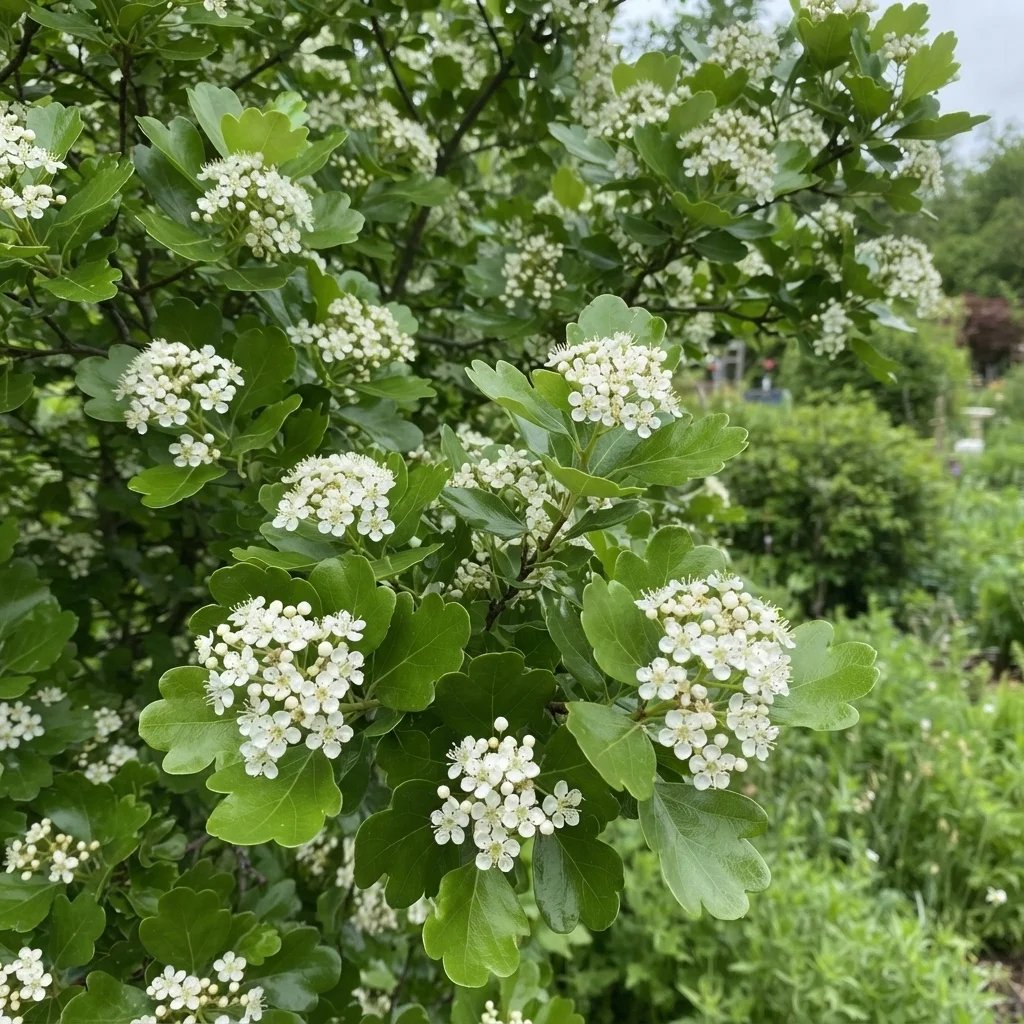
Torminalis glaberrima is a deciduous tree native to Europe, northwest Africa, and southwest Asia that forms an upright, domed crown. In late spring, flat-topped clusters of five-petaled white flowers bloom across the canopy, followed by small brown pome fruits in fall.
The smooth, hairless leaves strongly resemble maple foliage and turn vivid yellow, copper, orange, and red in fall. Over time, the root system forms natural suckers around the trunk base as part of its native woodland regeneration mechanism.
Uses & Benefits:
Essentials
At a Glance
Plant Type
Tree
Height
787"
Width
472"
Light
Full Sun, Partial Sun
Zones
6, 7
Water
Moderate
Humidity
Low to Moderate
Lifespan
Long-lived
Native To
Europe, Northwest Africa, Southwest Asia
Toxicity
Non-toxic
Bloom period
Late spring
In flower about 1 month of the year
Planting
How to Grow
- Select a planting site in full sun or light shade with well-drained loam, clay, or chalky soil.
- Dig a hole as deep as the root ball and twice as wide, setting the root collar level with the grade.
- Water thoroughly to settle the soil and eliminate air pockets around the root system.
- Apply a 3-inch layer of organic mulch around the root zone, keeping it clear of the trunk bark.
- Install rigid wire guards around young trunks to prevent damage from browsing deer and rabbits.
Pro Tip
Manage root suckers by cutting them surgically at ground level rather than pruning the crown, maintaining the natural shape of the main tree.
Keep It Thriving
Care Guide
Do
- Plant in well-drained sites to prevent root rot issues.
- Remove basal root suckers at ground level to retain a single trunk.
- Prune dead or broken branches between late fall and early spring.
Don't
- Do not plant in poorly drained, waterlogged, or boggy soils.
- Do not shear or top old leafless wood to force shape.
- Do not over-fertilize, which promotes weak vegetative growth.
Seasonal Care Calendar
| Task | Jan | Feb | Mar | Apr | May | Jun | Jul | Aug | Sep | Oct | Nov | Dec |
|---|---|---|---|---|---|---|---|---|---|---|---|---|
| Fertilize | ||||||||||||
| Mulch | ||||||||||||
| Pest Check | ||||||||||||
| Prune |
Watch Out For
Pests & Diseases
Common Pests
Common Diseases
In the Garden
Landscape Uses & Companions
Landscape Uses
Companion Plants
Multiply
Propagation Methods
Good to Know
Common Questions
Wild Service Tree questions
What zones can Wild Service Tree grow in?
Wild Service Tree is hardy in USDA Zones 6–7: in that range it survives winter in the ground. Colder than Zone 6, winters are too cold for it to survive outdoors. Warmer than Zone 7, winter isn't the problem: it prefers colder winters, and summer heat can shorten its life.
Is Wild Service Tree deer resistant?
Not reliably. Deer may browse Wild Service Tree, especially tender spring growth — plan on repellents or fencing where pressure is high.
When does Wild Service Tree bloom?
Wild Service Tree typically blooms in late spring. Exact timing shifts a week or two with your zone — Sow's bloom calendar maps it to your garden.
Does Wild Service Tree need full sun?
Wild Service Tree does best in full sun to part shade. In hot climates, afternoon shade keeps blooms fresher longer.
Is Wild Service Tree drought tolerant?
Yes — once established (usually after the first full season), Wild Service Tree handles dry spells with minimal watering. Water deeply its first year to build the root system that makes that possible.
Keep exploring
Explore the genus
Hardy in your zone?
Grow Wild Service Tree with confidence
See it in a design of your actual yard, get zone-matched care reminders, and track it season by season in your garden journal.