The Story
Plant Bio
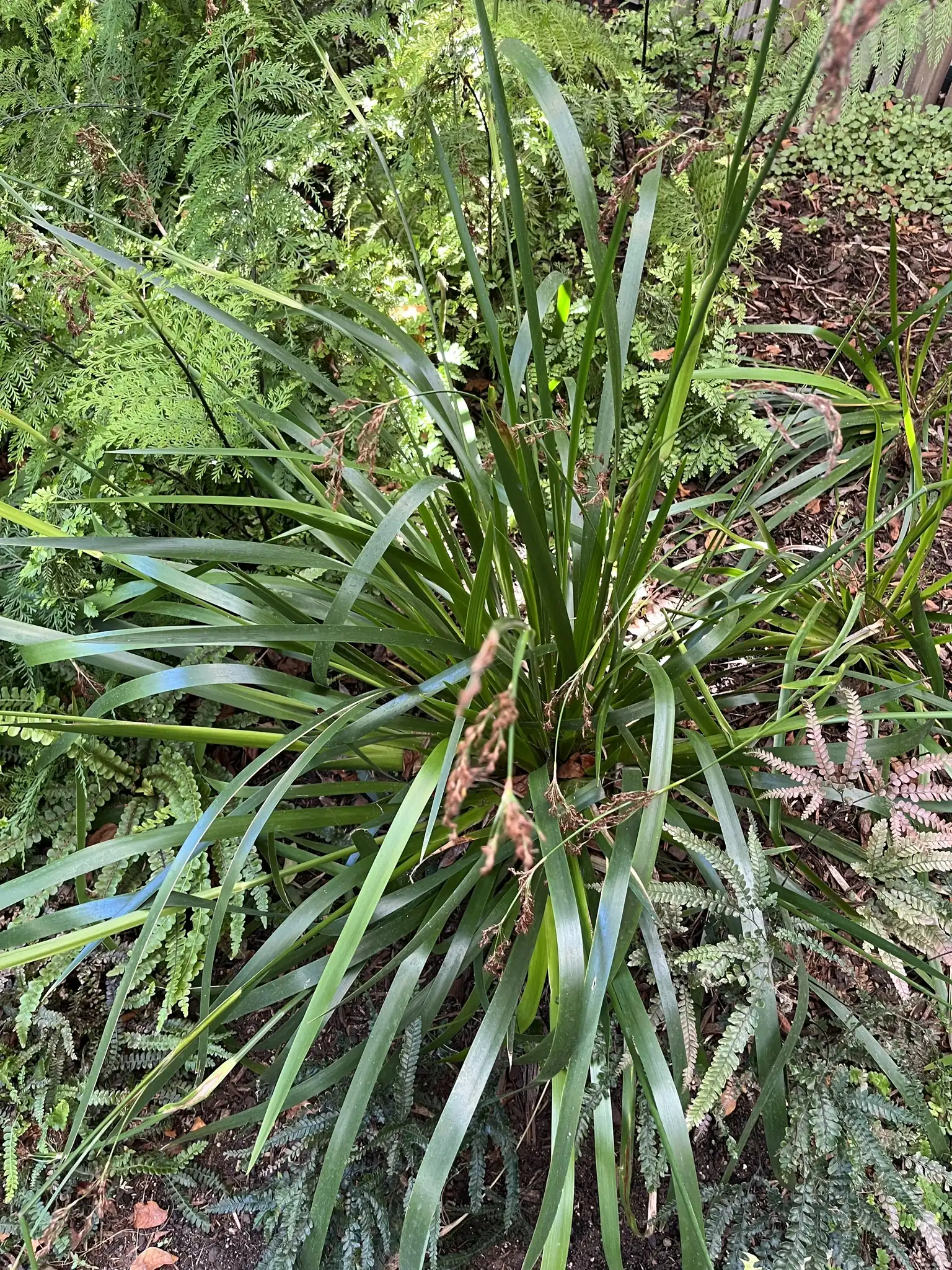
Machaerina sinclairii is a stout, evergreen sedge native to the wet cliffs and seepage slopes of New Zealand's North Island. It forms robust arching clumps of flat, lustrous green leaves that closely resemble broad iris foliage.
The foliage features distinctly drooping tips on the upper third of each leaf, creating a cascading habit in moist positions. Summer inflorescences emerge as long, pendulous panicles loaded with fluffy, rusty-bronze spikelets.
Uses & Benefits:
Essentials
At a Glance
Plant Type
Grass
Height
59"
Width
59"
Light
Full Sun, Partial Sun
Zones
8, 9, 10
Water
Medium to High
Humidity
High
Lifespan
Perennial
Native To
New Zealand
Toxicity
Non-toxic
Bloom period
Summer
In flower about 3 months of the year
Planting
How to Grow
- Select a planting location in full sun to partial shade with moist, organically rich soil.
- Dig a planting hole twice as wide as the root ball and set the crown level with the surrounding soil line.
- Water thoroughly to settle soil around the root system and remove air pockets.
- Apply a two-inch layer of organic mulch around the plant base, keeping it clear of the leaf crown.
Pro Tip
Trim away individual dead outer leaves near the base in spring; shearing the entire plant back into old leafless tissue prevents crown recovery and will kill the stem.
Keep It Thriving
Care Guide
Do
- Maintain steady soil moisture, especially when growing in full sun locations.
- Prune individual brown or damaged leaves near the base in early spring.
- Plant in rain gardens, cliff margins, or along pond edges where moisture persists.
Don't
- Do not cut the plant back hard to ground level like turf or standard ornamental grasses.
- Do not allow the root zone to dry out completely during summer heat.
- Do not apply heavy doses of synthetic high-nitrogen fertilizers.
Seasonal Care Calendar
| Task | Jan | Feb | Mar | Apr | May | Jun | Jul | Aug | Sep | Oct | Nov | Dec |
|---|---|---|---|---|---|---|---|---|---|---|---|---|
| Fertilize | ||||||||||||
| Mulch | ||||||||||||
| Pest Check | ||||||||||||
| Prune |
Watch Out For
Pests & Diseases
Common Pests
Common Diseases
In the Garden
Landscape Uses & Companions
Landscape Uses
Companion Plants
Multiply
Propagation Methods
Good to Know
Common Questions
Pepepe questions
What zones can Pepepe grow in?
Pepepe is hardy in USDA Zones 8–10: in that range it survives winter in the ground. Colder than Zone 8, grow it in a container you can move to shelter for the winter, or as an annual.
Is Pepepe deer resistant?
Yes — Pepepe is rated deer-resistant. Deer typically pass it over, though extreme hunger can override any plant's defenses.
When does Pepepe bloom?
Pepepe typically blooms in summer. Exact timing shifts a week or two with your zone — Sow's bloom calendar maps it to your garden.
Does Pepepe need full sun?
Pepepe does best in full sun to part shade. In hot climates, afternoon shade keeps blooms fresher longer.
Is Pepepe drought tolerant?
Yes — once established (usually after the first full season), Pepepe handles dry spells with minimal watering. Water deeply its first year to build the root system that makes that possible.
More Machaerina to compare
Keep exploring
Explore the genus
Hardy in your zone?
Grow Pepepe with confidence
See it in a design of your actual yard, get zone-matched care reminders, and track it season by season in your garden journal.