The Story
Plant Bio
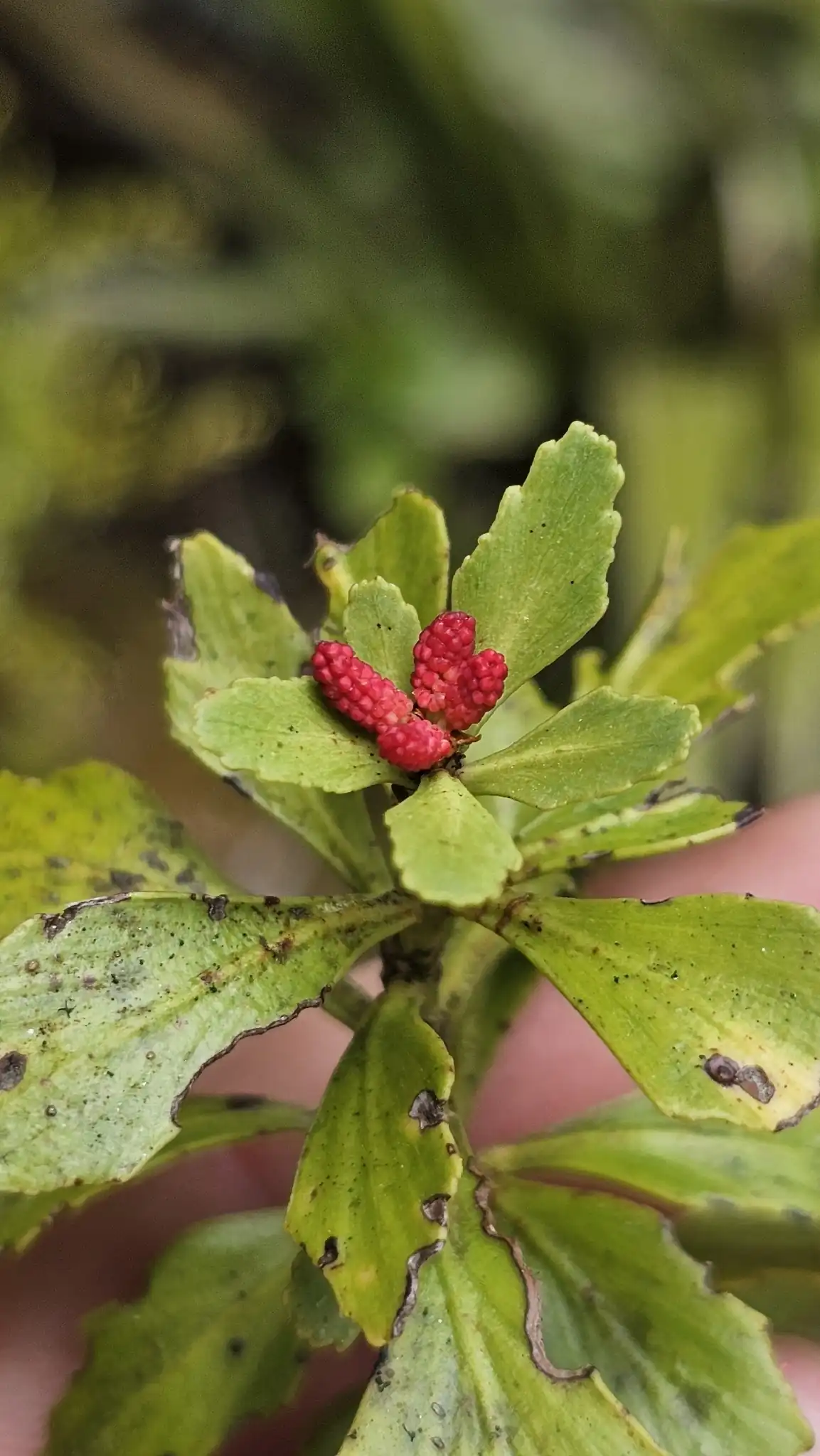
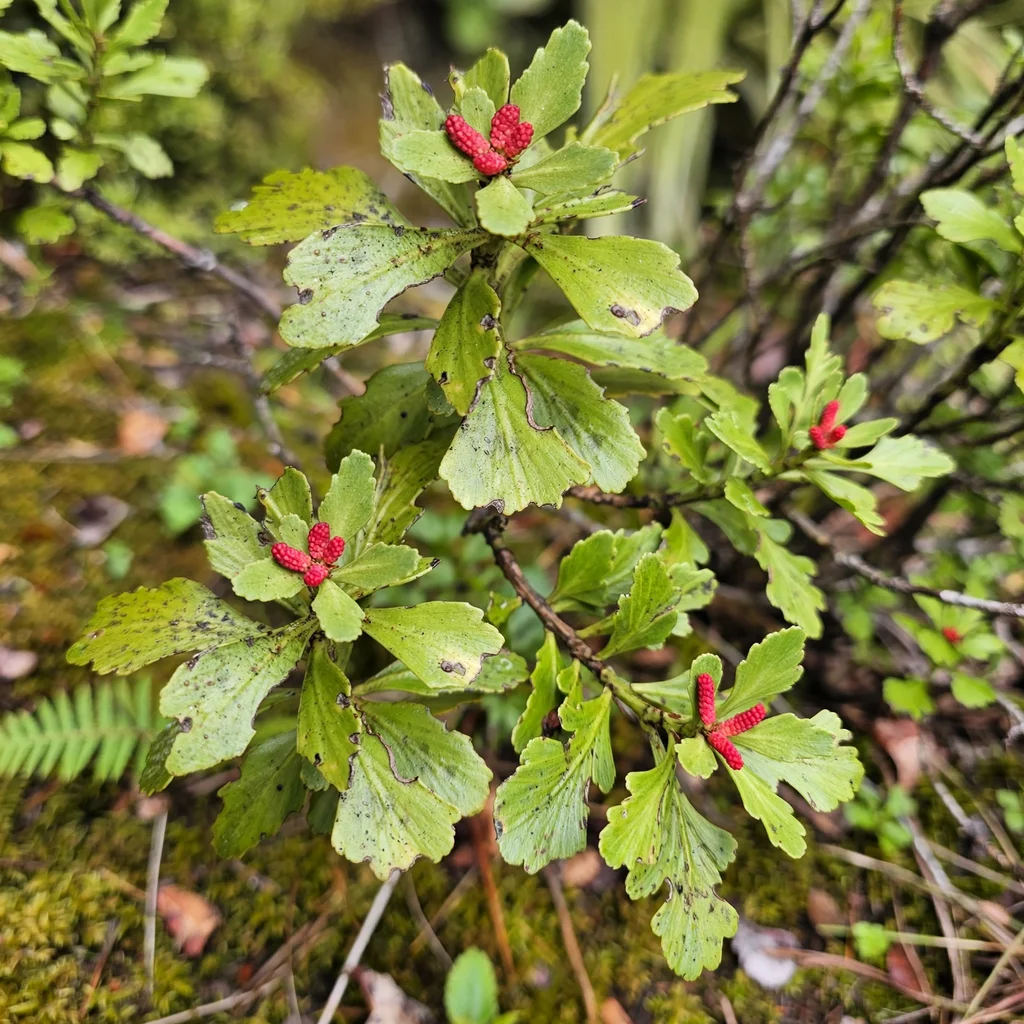
Phyllocladus trichomanoides is a pyramidal evergreen conifer native to New Zealand, growing 25 to 65 feet tall with distinct whorled branching. Rather than conventional leaves, photosynthesis occurs via flattened, leaf-like branchlets called phylloclades that emerge bright green or reddish before maturing to deep green.
The species produces cylindrical male pollen cones that ripen from deep purple to crimson alongside small, red-bracted female seed cones featuring fleshy white arils. Seedling true leaves are narrow and linear, while mature true leaves are reduced to minute scale-like denticles along the edges of the lobed phylloclades.
Uses & Benefits:
Essentials
At a Glance
Plant Type
Tree
Height
787"
Width
236"
Light
Full Sun, Partial Sun
Zones
9, 10
Water
Moderate
Humidity
High
Lifespan
Perennial
Native To
New Zealand
Toxicity
Non-toxic
Bloom period
Spring
In flower about 3 months of the year
Planting
How to Grow
- Select a planting site in full sun or light shade with protection from severe cold winds.
- Dig a hole twice as wide as the root ball and amend heavy soils to improve drainage.
- Position the tree so the root crown sits level with the surrounding soil surface.
- Backfill with native soil, firm gently around the base, and water thoroughly to settle roots.
- Apply a two-inch layer of organic mulch around the root zone, keeping it away from the trunk.
Pro Tip
Never cut back into old bare brown wood, as gymnosperms lack dormant buds on mature stems and will not produce new growth.
Keep It Thriving
Care Guide
Do
- Plant in well-drained, acidic to neutral soil in full sun or partial shade.
- Water regularly during initial establishment and extended summer droughts.
- Protect young saplings with physical netting or cages where deer or rabbits browse.
Don't
- Do not prune hard into leafless brown wood.
- Avoid heavy applications of high-nitrogen fertilizer, which destabilize the pyramidal growth habit.
Seasonal Care Calendar
| Task | Jan | Feb | Mar | Apr | May | Jun | Jul | Aug | Sep | Oct | Nov | Dec |
|---|---|---|---|---|---|---|---|---|---|---|---|---|
| Fertilize | ||||||||||||
| Mulch | ||||||||||||
| Pest Check | ||||||||||||
| Prune |
Watch Out For
Pests & Diseases
Common Pests
Common Diseases
In the Garden
Landscape Uses & Companions
Landscape Uses
Companion Plants
Multiply
Propagation Methods
Good to Know
Common Questions
Tanekaha questions
What zones can Tanekaha grow in?
Tanekaha is hardy in USDA Zones 9–10: in that range it survives winter in the ground. Colder than Zone 9, winters are too cold for it to survive outdoors.
Is Tanekaha deer resistant?
Not reliably. Deer may browse Tanekaha, especially tender spring growth — plan on repellents or fencing where pressure is high.
When does Tanekaha bloom?
Tanekaha typically blooms in spring. Exact timing shifts a week or two with your zone — Sow's bloom calendar maps it to your garden.
Does Tanekaha need full sun?
Tanekaha does best in full sun to part shade. In hot climates, afternoon shade keeps blooms fresher longer.
Is Tanekaha drought tolerant?
Yes — once established (usually after the first full season), Tanekaha handles dry spells with minimal watering. Water deeply its first year to build the root system that makes that possible.
More Phyllocladus to compare
Keep exploring
Explore the genus
Hardy in your zone?
Grow Tanekaha with confidence
See it in a design of your actual yard, get zone-matched care reminders, and track it season by season in your garden journal.