The Story
Plant Bio
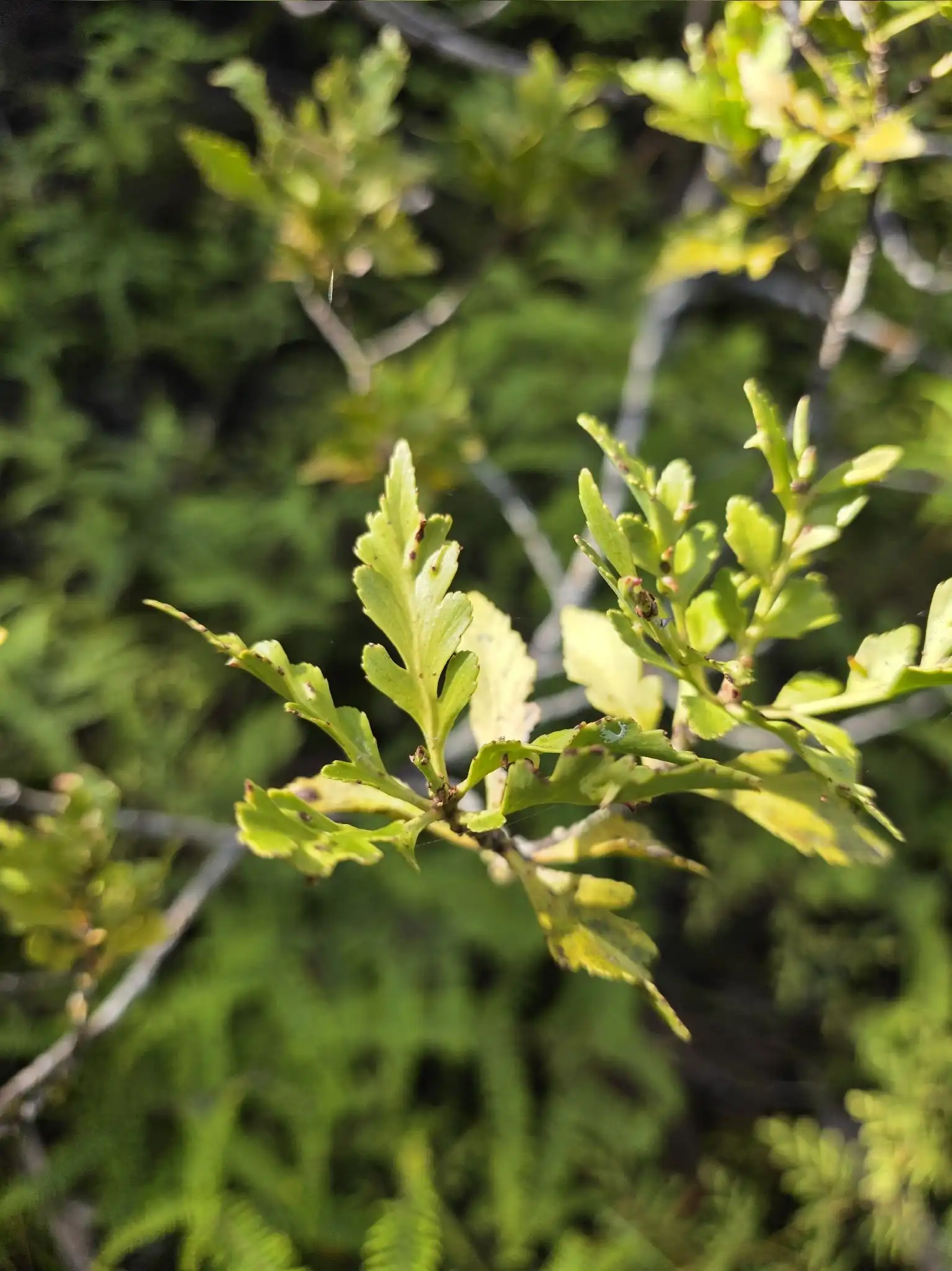
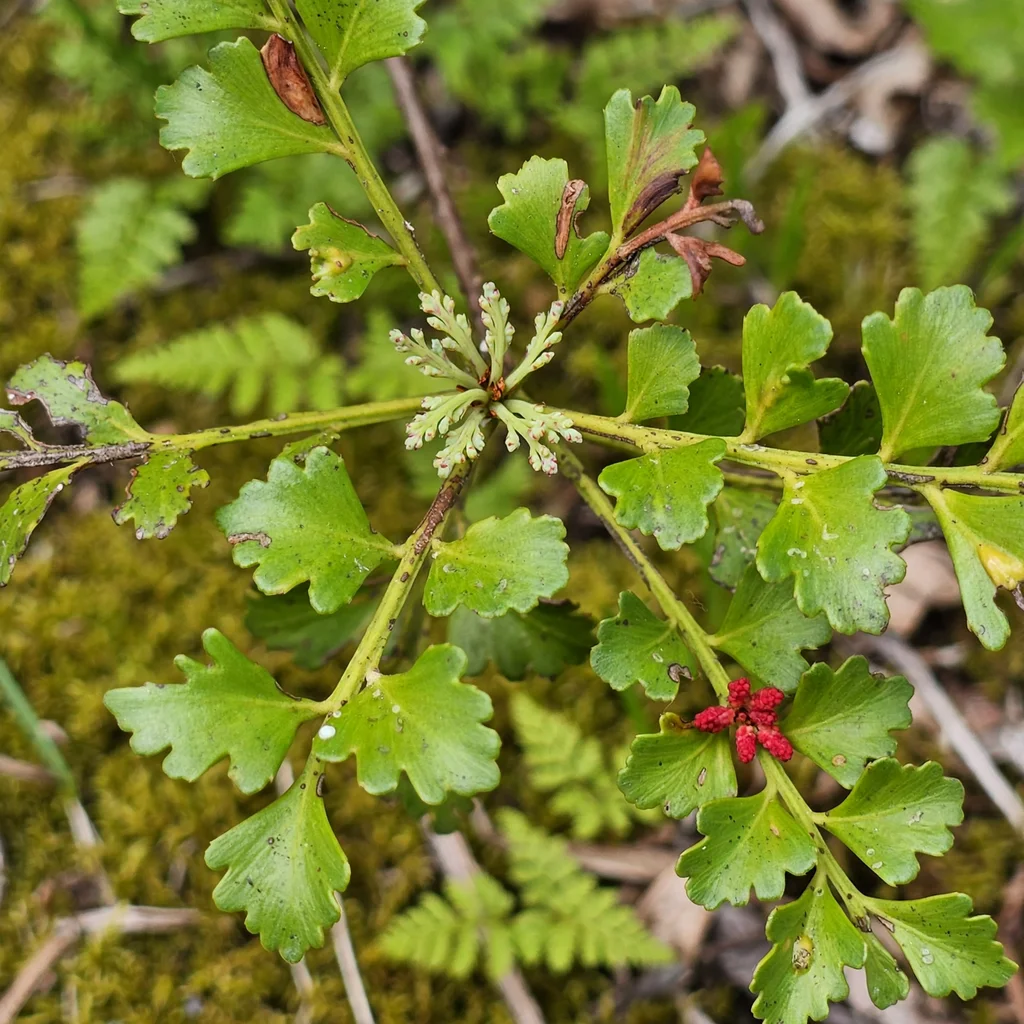
Phyllocladus alpinus, commonly known as mountain celery pine, is a slow-growing evergreen conifer native to subalpine zones of New Zealand. Instead of standard needles, it photosynthesizes through flattened, leathery stem modifications called phylloclades that resemble celery leaves.
In spring, small dark red male strobili and fleshy female structures form at the branch tips, eventually bearing tiny black seeds in white cupules. Its dense multi-stemmed habit, glaucous young growth, and high frost tolerance provide strong structural interest in cool climates.
Uses & Benefits:
Essentials
At a Glance
Plant Type
Shrub
Height
118"
Width
118"
Light
Full Sun, Partial Sun
Zones
7, 8, 9
Water
Moderate
Humidity
Moderate
Lifespan
Perennial
Native To
New Zealand
Toxicity
Non-toxic
Bloom period
Spring
In flower about 3 months of the year
Planting
How to Grow
- Choose a site in full sun to partial shade with shelter from intense late-afternoon heat.
- Prepare a soil mix with high mineral content, fine gravel, or grit to ensure fast drainage.
- Set the root ball level with the surrounding soil line, avoiding buried bark or compacted soil around the crown.
- Water thoroughly at planting and keep consistently moist during the first two growing seasons.
- Apply a light layer of organic or gravel mulch to keep root zones cool while maintaining high aeration.
Pro Tip
Plant in sharply drained, low-fertility soil and never prune into old, leafless brown wood, as bare stems lack dormant buds and will fail to reshoot.
Keep It Thriving
Care Guide
Do
- Ensure soil drains rapidly after heavy rainfall.
- Protect young plants from extreme summer drought during establishment.
- Prune lightly in spring only to clear dead or crossing stems.
Don't
- Do not plant in heavy clay or waterlogged soils.
- Do not cut back into bare, leafless woody branches.
- Do not apply heavy doses of high-phosphorus synthetic fertilizers.
Seasonal Care Calendar
| Task | Jan | Feb | Mar | Apr | May | Jun | Jul | Aug | Sep | Oct | Nov | Dec |
|---|---|---|---|---|---|---|---|---|---|---|---|---|
| Fertilize | ||||||||||||
| Pest Check | ||||||||||||
| Propagate | ||||||||||||
| Prune |
Watch Out For
Pests & Diseases
Common Pests
Common Diseases
In the Garden
Landscape Uses & Companions
Landscape Uses
Companion Plants
Multiply
Propagation Methods
Good to Know
Common Questions
Mountain Celery Pine questions
What zones can Mountain Celery Pine grow in?
Mountain Celery Pine is hardy in USDA Zones 7–9: in that range it survives winter in the ground. Colder than Zone 7, grow it in a container you can move to shelter for the winter. Warmer than Zone 9, winter isn't the problem: it prefers colder winters, and summer heat can shorten its life.
Is Mountain Celery Pine deer resistant?
Not reliably. Deer may browse Mountain Celery Pine, especially tender spring growth — plan on repellents or fencing where pressure is high.
When does Mountain Celery Pine bloom?
Mountain Celery Pine typically blooms in spring. Exact timing shifts a week or two with your zone — Sow's bloom calendar maps it to your garden.
Does Mountain Celery Pine need full sun?
Mountain Celery Pine does best in full sun to part shade. In hot climates, afternoon shade keeps blooms fresher longer.
Is Mountain Celery Pine drought tolerant?
Yes — once established (usually after the first full season), Mountain Celery Pine handles dry spells with minimal watering. Water deeply its first year to build the root system that makes that possible.
More Phyllocladus to compare
Keep exploring
Explore the genus
Hardy in your zone?
Grow Mountain Celery Pine with confidence
See it in a design of your actual yard, get zone-matched care reminders, and track it season by season in your garden journal.