
The Story
Plant Bio
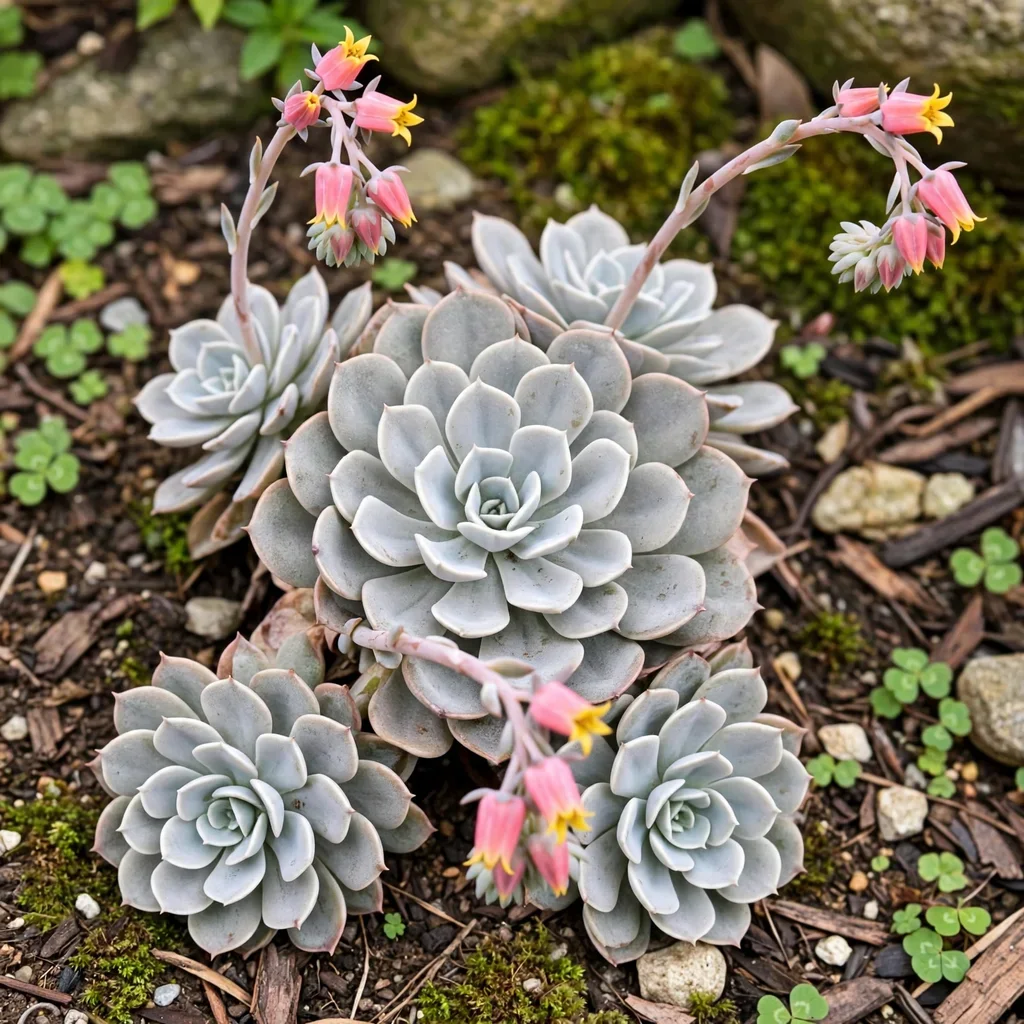
Echeveria craigiana is a small stemless succulent that forms a dense solitary rosette to about six inches across, slowly clustering with age. The fleshy linear-oblong leaves carry a powdery glaucous farina that shades brownish-green to violet-grey and shields the leaf from sun and water loss.
It is distinguished by narrow pointed leaves that are flat above and rounded below to about four inches long, unlike the broader spoon-shaped leaves of most echeverias. In fall it sends up a branched panicle to twenty inches tall lined with small red to coral bells about half an inch long.
Uses & Benefits:
Essentials
At a Glance
Plant Type
Cactus Succulent
Height
6"
Width
6"
Light
Full Sun, Partial Sun
Zones
9, 10
Water
Low
Humidity
Low; tolerates fog
Lifespan
Perennial
Native To
Mexico - Chihuahua, Sonora
Toxicity
Non-toxic to people, cats and dogs
Bloom period
Fall
In flower about 3 months of the year
Planting
How to Grow
- Plant in a shallow pot with drainage holes using fast-draining cactus or succulent mix.
- Place in full sun to partial shade, acclimating slowly away from harsh afternoon sun and giving indoor plants the brightest window.
- Soak the mix deeply, then let it dry completely before watering again; water sparingly in winter just to prevent shrivel.
- Keep above freezing; move pots indoors before frost and provide good airflow in high heat.
Pro Tip
Leave the farina untouched; wiping it off exposes the leaf to sunburn and rot, and it does not grow back on that leaf.
Keep It Thriving
Care Guide
Do
- Do soak deeply then let dry completely and empty the saucer
- Do give maximum light indoors and acclimate to outdoor sun
- Do remove spent flower stalks and dead lower leaves
Don't
- Do not overwater or leave the pot sitting in water
- Do not wipe, rinse, or mist the powdery leaf coating
- Do not cut back into old leafless stem tissue
Seasonal Care Calendar
| Task | Jan | Feb | Mar | Apr | May | Jun | Jul | Aug | Sep | Oct | Nov | Dec |
|---|---|---|---|---|---|---|---|---|---|---|---|---|
| Fertilize | ||||||||||||
| Pest Check | ||||||||||||
| Plant | ||||||||||||
| Propagate | ||||||||||||
| Winter Prep |
Watch Out For
Pests & Diseases
Common Pests
Common Diseases
In the Garden
Landscape Uses & Companions
Landscape Uses
Multiply
Propagation Methods
Good to Know
Common Questions
Craigiana Echeveria questions
What zones can Craigiana Echeveria grow in?
Craigiana Echeveria is hardy in USDA Zones 9–10: in that range it survives winter in the ground. Colder than Zone 9, grow it in a container you can move to shelter for the winter, or as an annual.
When does Craigiana Echeveria bloom?
Craigiana Echeveria typically blooms in fall. Exact timing shifts a week or two with your zone — Sow's bloom calendar maps it to your garden.
Does Craigiana Echeveria need full sun?
Craigiana Echeveria does best in full sun to part shade. In hot climates, afternoon shade keeps blooms fresher longer.
Is Craigiana Echeveria drought tolerant?
Yes — once established (usually after the first full season), Craigiana Echeveria handles dry spells with minimal watering. Water deeply its first year to build the root system that makes that possible.
More Echeveria to compare
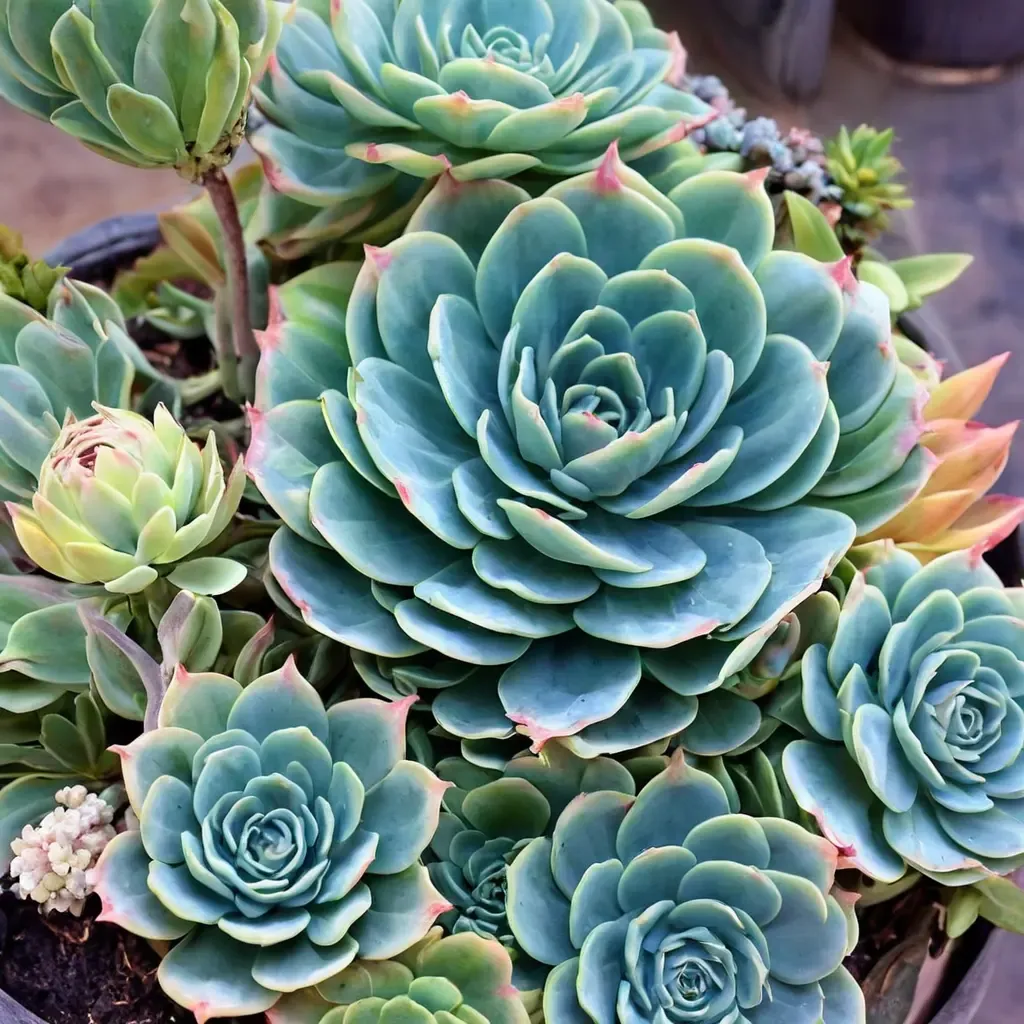
Blue Rose Echeveria
Echeveria imbricata
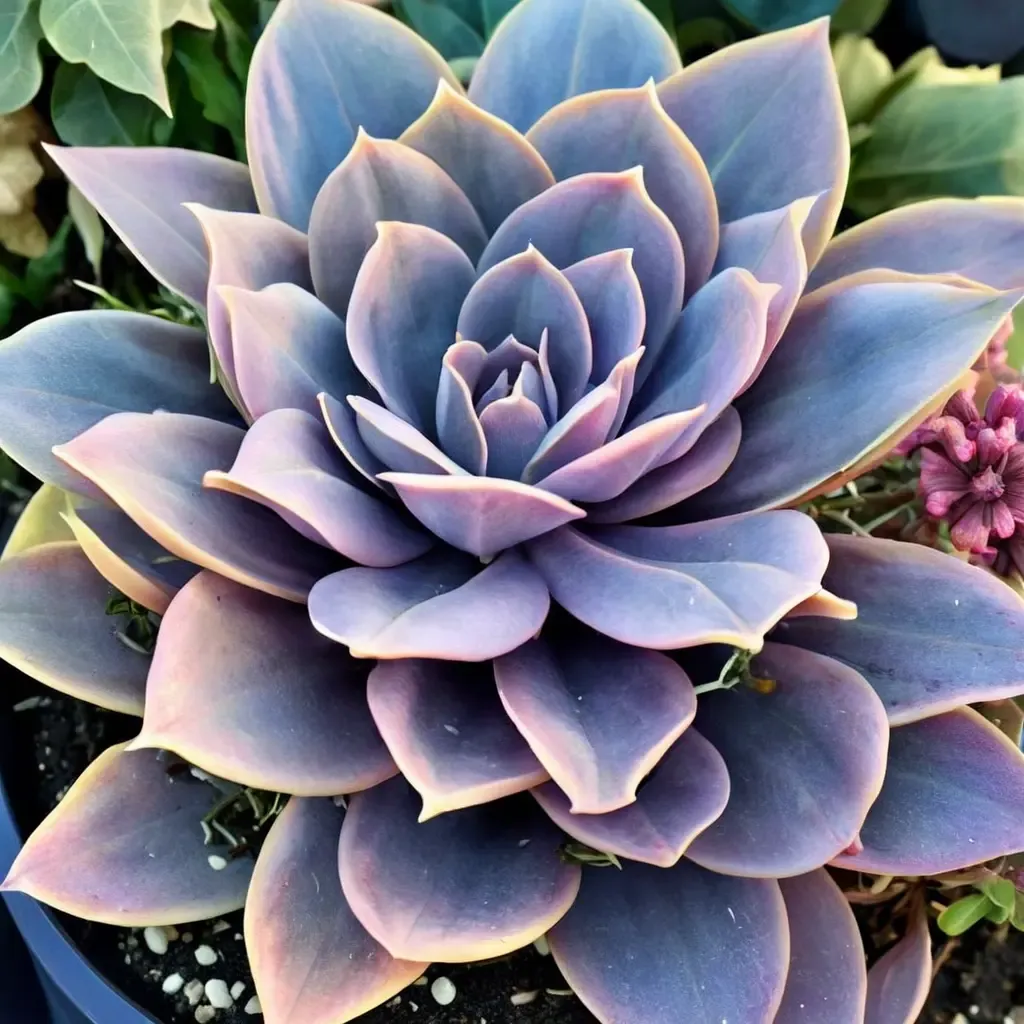
Perle Von Nurnberg
Echeveria secunda 'Perle Von Nurnberg'
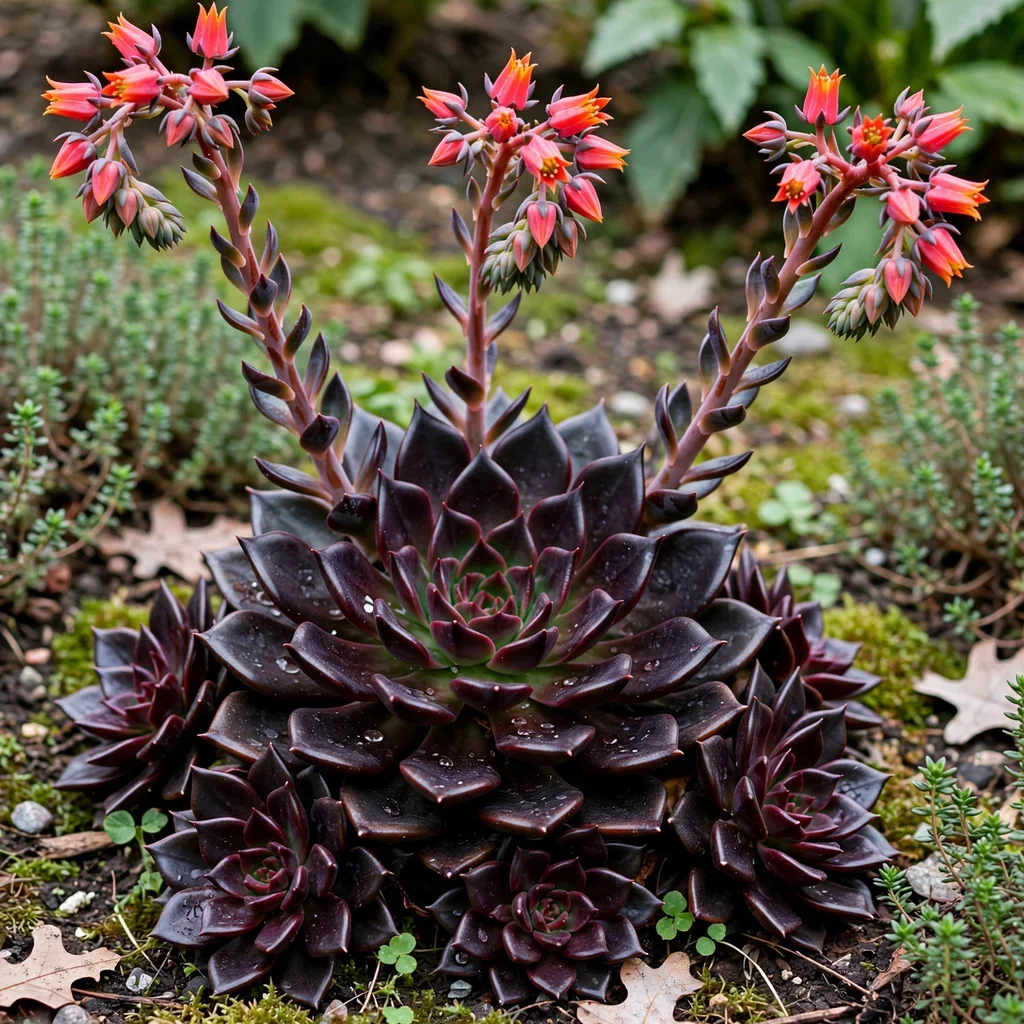
Echeveria Black Prince
Echeveria secunda 'Black Prince'
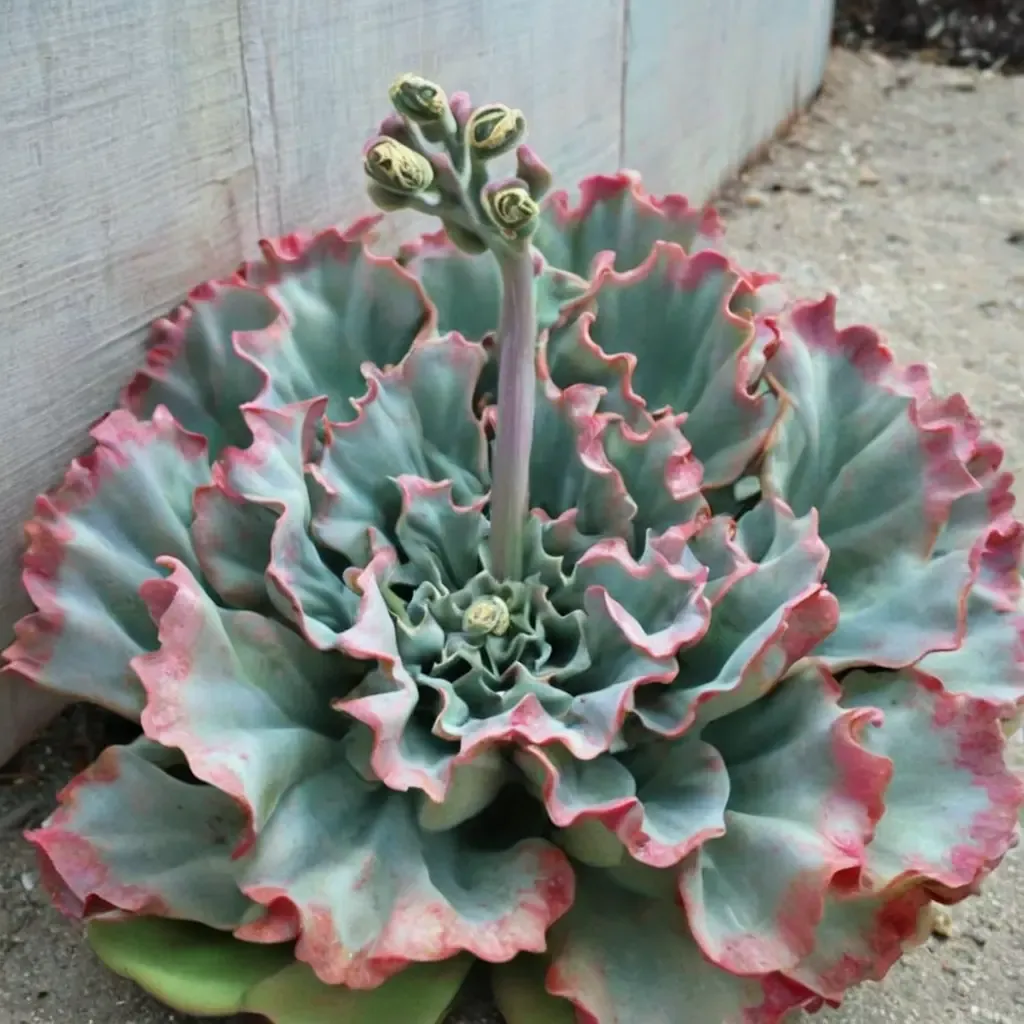
Lady Aquarius Echeveria
Echeveria gibbiflora 'Lady Aquarius'
Mexican Snowball
Echeveria elegans
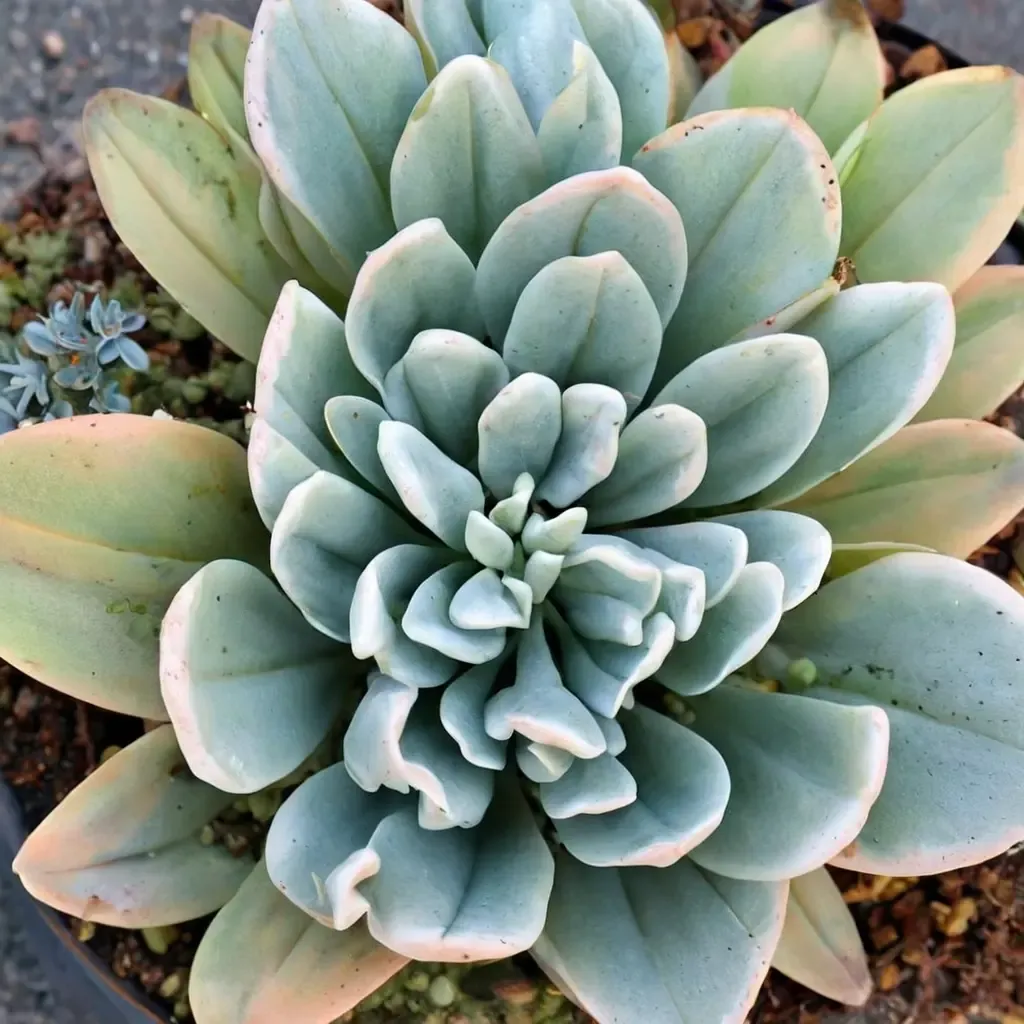
Caribbean Echeveria Echeveria Caribbean
Echeveria runyonii 'Caribbean'
Keep exploring
Explore the genus
Hardy in your zone?
Grow Craigiana Echeveria with confidence
See it in a design of your actual yard, get zone-matched care reminders, and track it season by season in your garden journal.