The Story
Plant Bio
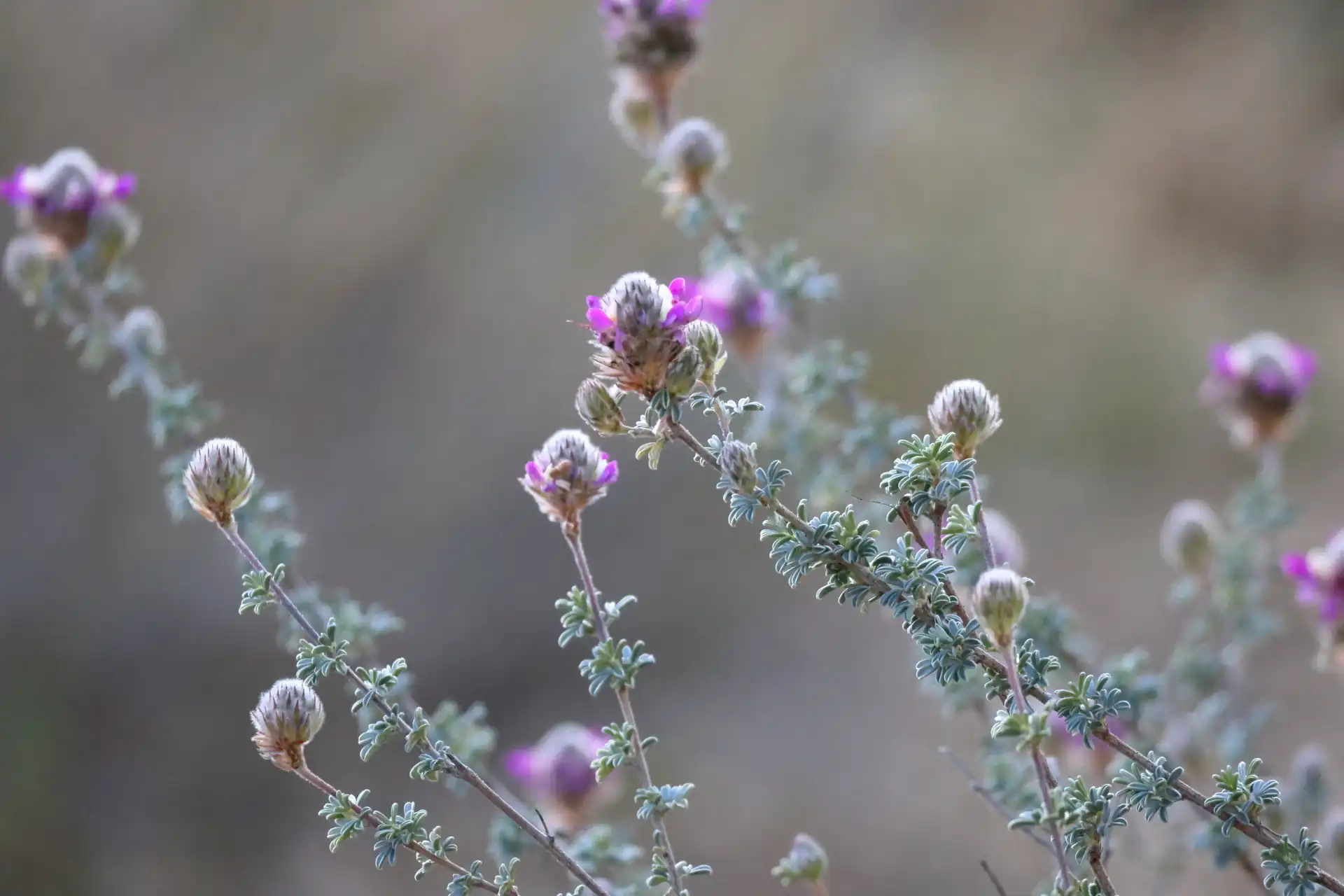
Dalea pulchra is a semi-evergreen woody shrub from the Arizona-Sonora borderlands, forming a stiffly branched mound four to six feet high and wide. The odd-pinnate leaves are gray-green and pubescent, with three to nine tiny leaflets that give new growth a silvery cast.
It grows as a true bush to six feet and more, where most prairie-clovers stay low and herbaceous. In late winter to spring the branch tips carry dense fuzzy spikes of deep magenta-purple pea flowers marked with white, each head wrapped in silky bracts.
Uses & Benefits:
Essentials
At a Glance
Plant Type
Shrub
Height
60"
Width
60"
Light
Full Sun, Partial Sun
Zones
8, 9, 10
Water
Low
Humidity
Low, dry air preferred
Lifespan
Woody perennial shrub
Native To
Arizona, New Mexico, northern Mexico
Toxicity
Non-toxic
Bloom period
Late winter – Spring
In flower about 4 months of the year
Planting
How to Grow
- Plant in full sun in very well-drained lean sandy or gravelly soil with pH 6.1 to 8.5.
- Set the crown level with the soil and mulch lightly with gravel, keeping mulch off the stem.
- Water weekly the first summer, then taper to a deep soak once or twice a month once established.
- Leave unfertilized or feed very lightly; excess nitrogen pushes weak growth.
- Shear lightly to shape just after spring bloom and protect young plants from deer and rabbits.
Pro Tip
Plant high in lean, gritty soil and water sparingly; wet feet and hard shearing shorten its life.
Keep It Thriving
Care Guide
Do
- Plant in full sun with sharp drainage and reflected heat tolerated
- Water deeply but infrequently once established
- Prune lightly after spring bloom to keep the mound dense
Don't
- Do not overwater or plant in heavy clay that stays wet
- Do not cut back hard into old bare wood
- Do not plant in shade where bloom fails
Seasonal Care Calendar
| Task | Jan | Feb | Mar | Apr | May | Jun | Jul | Aug | Sep | Oct | Nov | Dec |
|---|---|---|---|---|---|---|---|---|---|---|---|---|
| Fertilize | ||||||||||||
| Pest Check | ||||||||||||
| Plant | ||||||||||||
| Propagate | ||||||||||||
| Prune |
Watch Out For
Pests & Diseases
Common Pests
Common Diseases
In the Garden
Landscape Uses & Companions
Landscape Uses
Companion Plants
Multiply
Propagation Methods
Good to Know
Common Questions
Santa Catalina Prairie Clover questions
What zones can Santa Catalina Prairie Clover grow in?
Santa Catalina Prairie Clover is hardy in USDA Zones 8–10: in that range it survives winter in the ground. Colder than Zone 8, grow it in a container you can move to shelter for the winter.
Is Santa Catalina Prairie Clover deer resistant?
Not reliably. Deer may browse Santa Catalina Prairie Clover, especially tender spring growth — plan on repellents or fencing where pressure is high.
When does Santa Catalina Prairie Clover bloom?
Santa Catalina Prairie Clover typically blooms from late winter to late spring. Exact timing shifts a week or two with your zone — Sow's bloom calendar maps it to your garden.
Does Santa Catalina Prairie Clover need full sun?
Santa Catalina Prairie Clover does best in full sun to part shade. In hot climates, afternoon shade keeps blooms fresher longer.
Is Santa Catalina Prairie Clover drought tolerant?
Yes — once established (usually after the first full season), Santa Catalina Prairie Clover handles dry spells with minimal watering. Water deeply its first year to build the root system that makes that possible.
More Dalea to compare
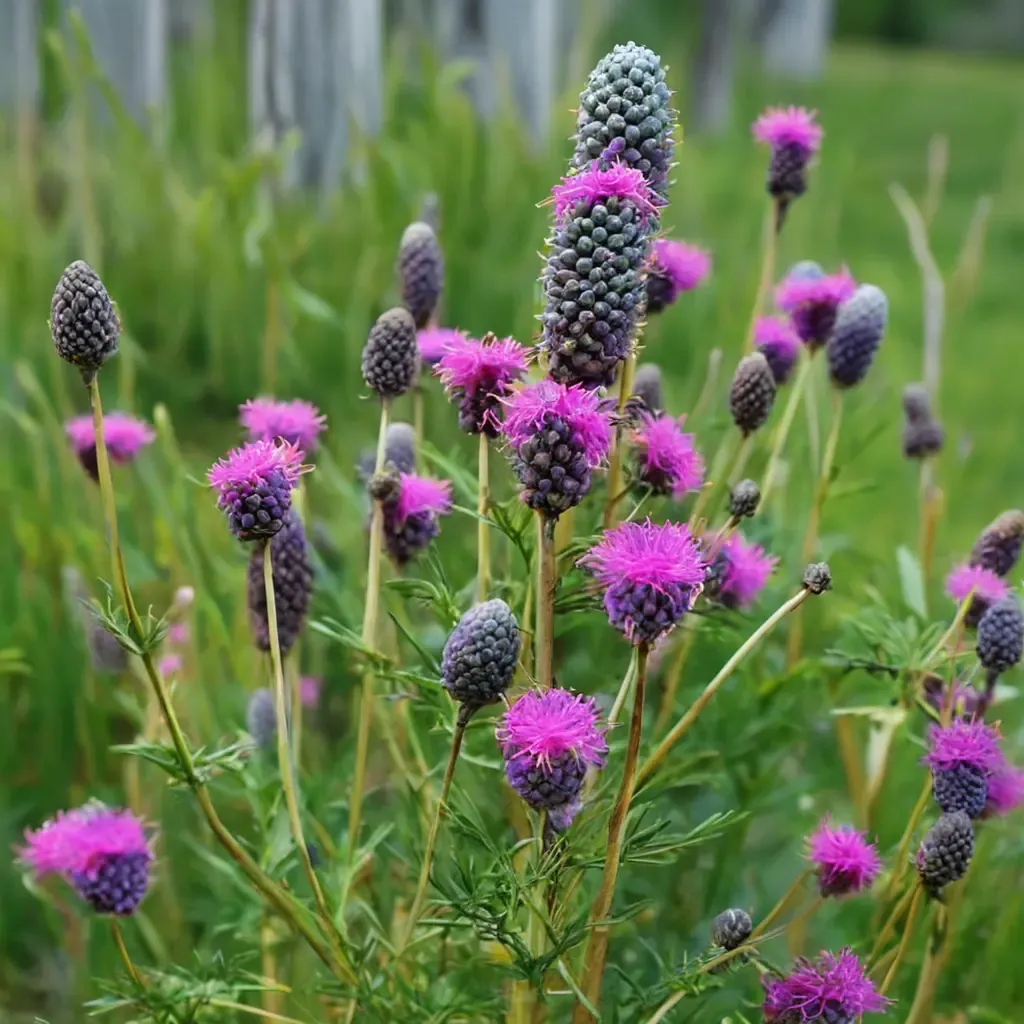
Purple Prairie Clover
Dalea purpurea
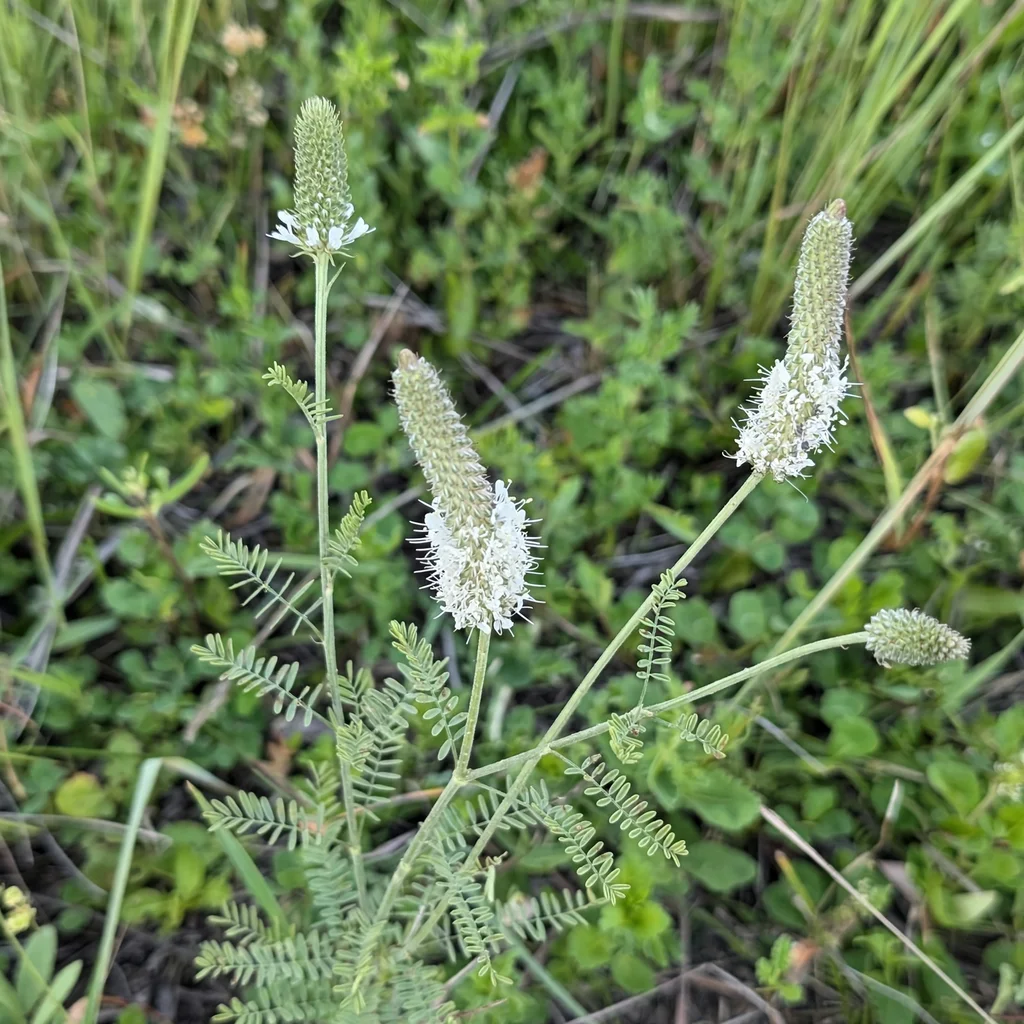
White Prairie Clover
Dalea candida
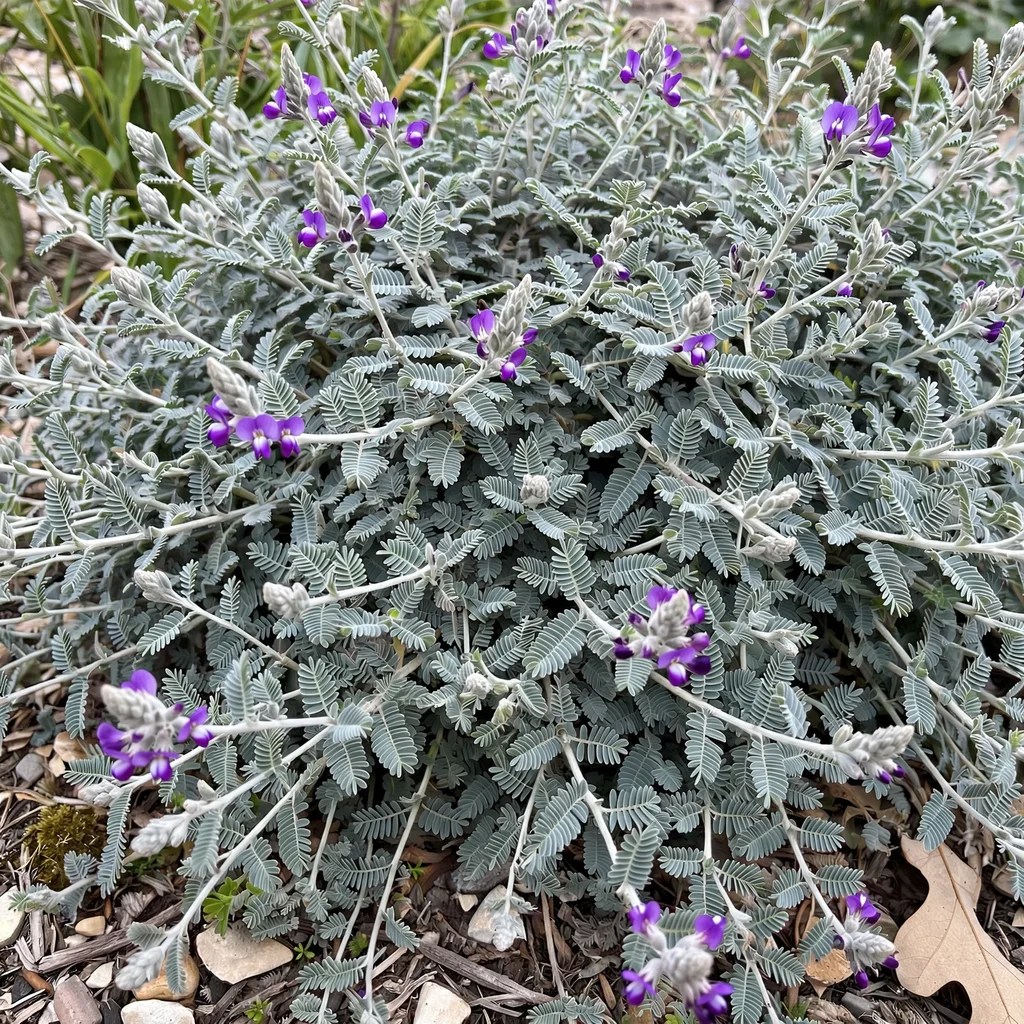
Trailing Indigo Bush
Dalea greggii
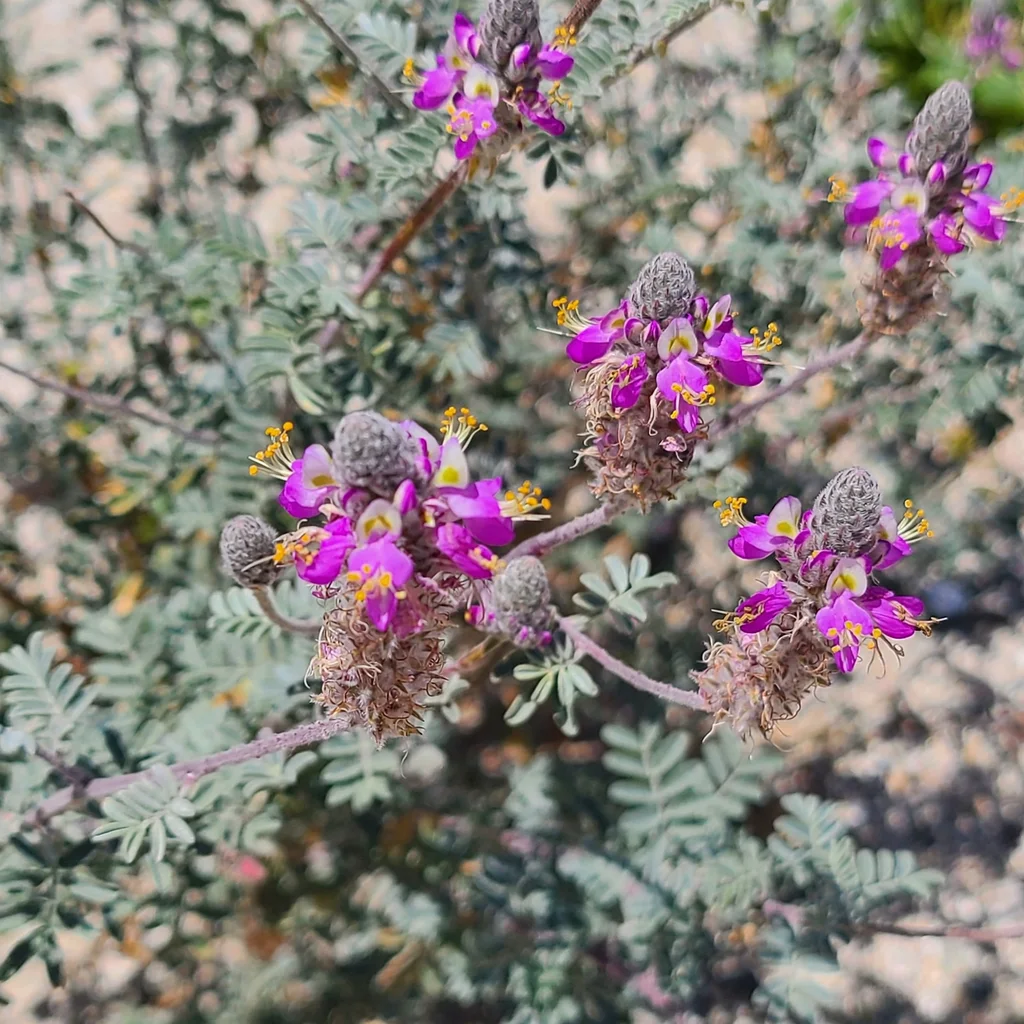
Silver Bush Dalea
Dalea bicolor
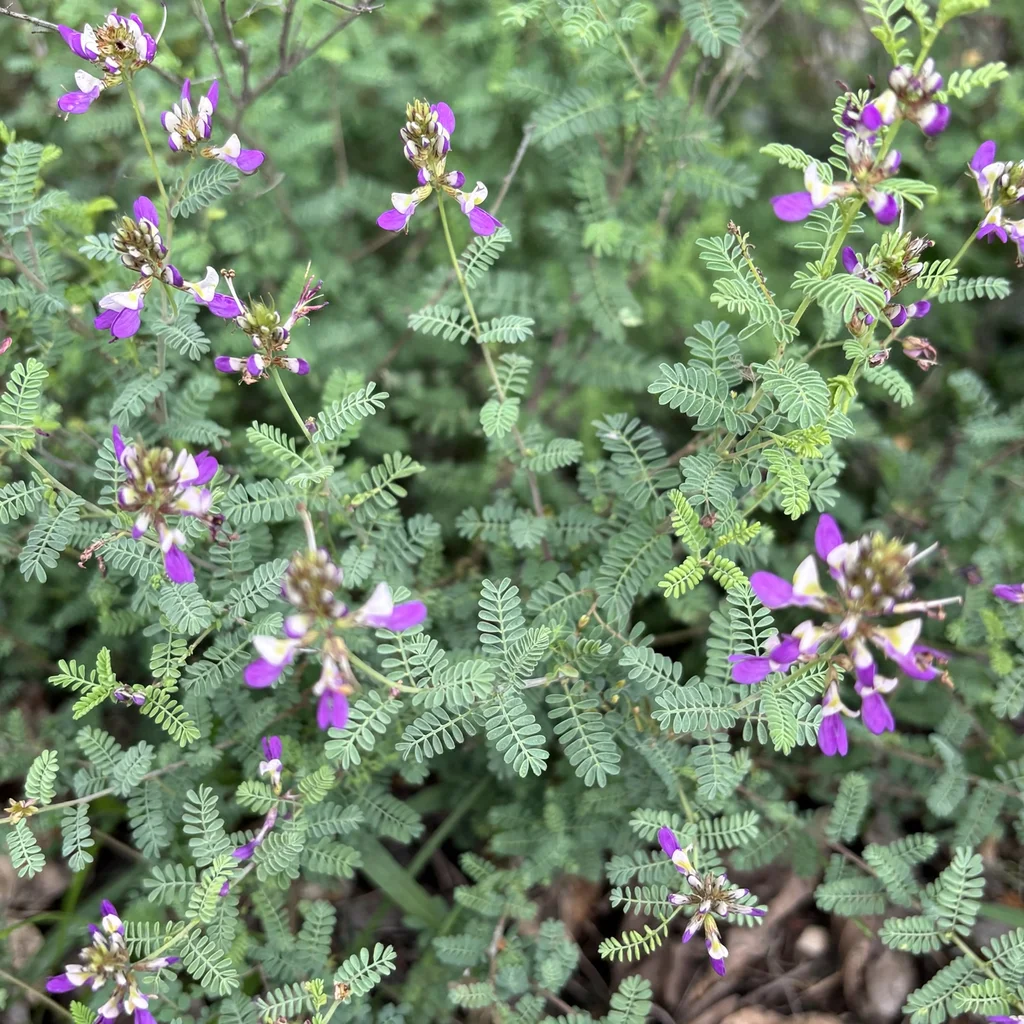
Black Dalea
Dalea frutescens
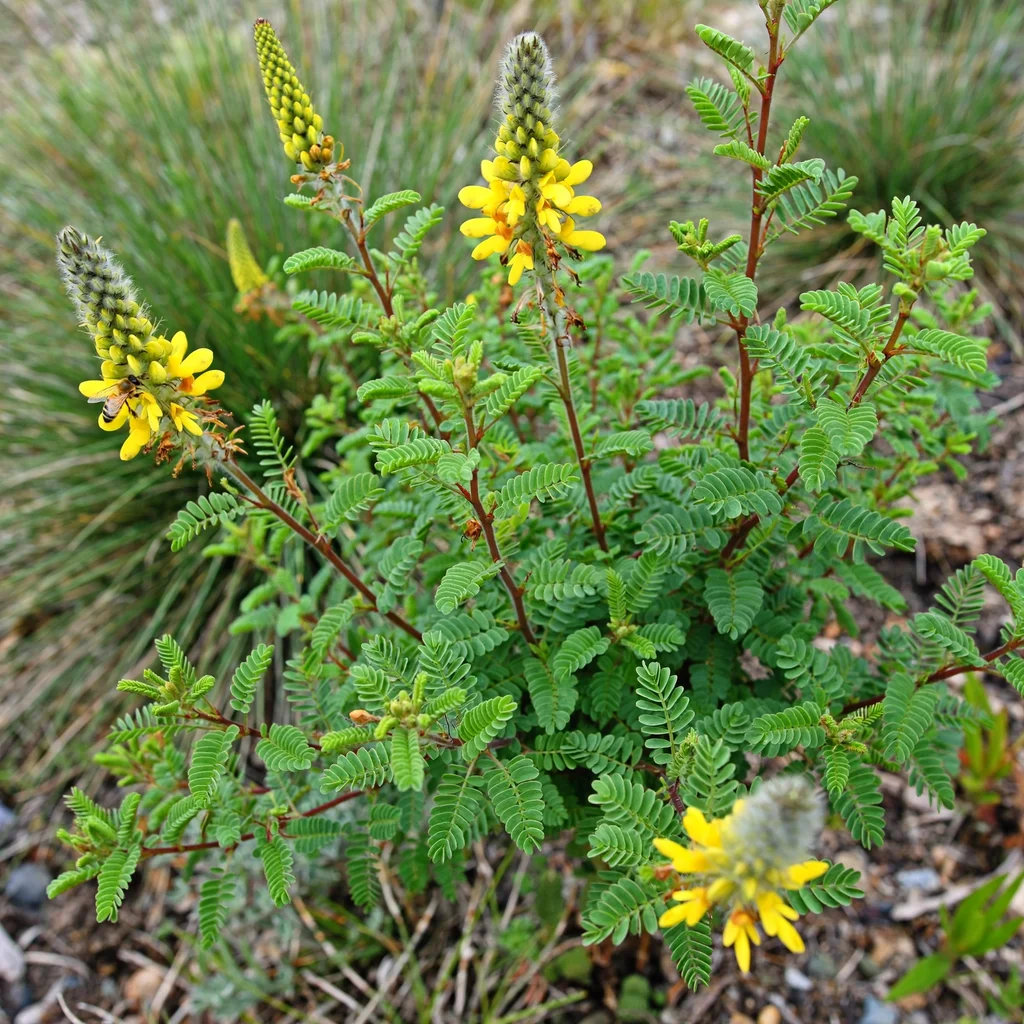
Golden Dalea
Dalea lutea
Keep exploring
Explore the genus
Hardy in your zone?
Grow Santa Catalina Prairie Clover with confidence
See it in a design of your actual yard, get zone-matched care reminders, and track it season by season in your garden journal.