The Story
Plant Bio
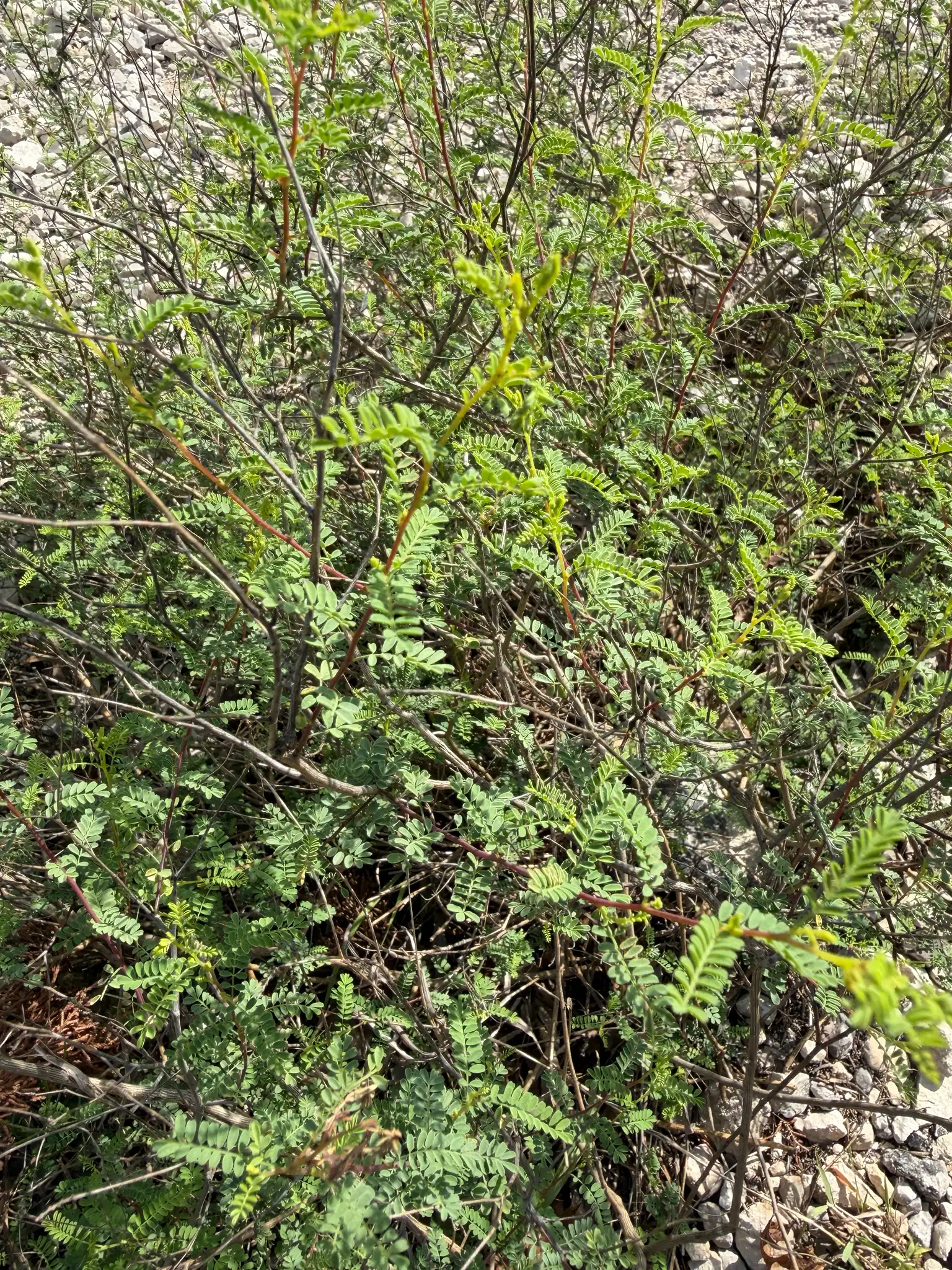
Dalea frutescens, black prairie clover, is a small mounding shrub reaching three to four feet high and four to five feet wide, with intricately branched gray to light-brown stems clothed in fine ferny foliage. The leaves are pinnate to one inch long with up to eight pairs of tiny gland-dotted leaflets, and the branch ends carry dense short spikes of small purple pea flowers with a white to yellowish banner.
Unlike many prairie clovers that die back to the crown, this species holds a woody twiggy structure with thin reddish-brown twigs and stays semi-evergreen through mild winters. It blooms from summer into fall on dry limestone soils where little else flowers, feeding native bees and serving as a larval host for dogface butterflies.
Uses & Benefits:
Essentials
At a Glance
Plant Type
Shrub
Height
42"
Width
54"
Light
Full Sun, Partial Sun
Zones
6, 7, 8, 9
Water
Low
Humidity
Low
Lifespan
Woody perennial
Native To
Southeast Oklahoma, Texas, New Mexico, NE Mexico
Toxicity
Unknown - no authoritative listing
Bloom period
Summer – Fall
In flower about 6 months of the year
Planting
How to Grow
- Plant in full sun in very well-drained, poor limestone sand, loam or rocky clay with neutral to alkaline pH.
- Set the crown slightly high and backfill with native soil only, without compost or fertilizer.
- Water deeply at planting, then water sparingly the first summer to root in and taper off once established.
- Top-dress with gravel or crushed limestone, not bark, and keep irrigation and lawn runoff away from the crown.
Pro Tip
Plant it high in poor limestone soil and then leave it dry; extra water and fertilizer produce leggy weak growth with fewer flowers and rotted roots.
Keep It Thriving
Care Guide
Do
- Give full sun and sharp drainage with reflected heat.
- Leave established plants dry between rains.
- Protect young transplants from deer, rabbits and livestock until woody.
Don't
- Do not overwater, fertilize or amend with rich compost.
- Do not shear into formal shapes or cut hard into old bare wood.
- Do not plant in low wet spots or heavy irrigated beds.
Seasonal Care Calendar
| Task | Jan | Feb | Mar | Apr | May | Jun | Jul | Aug | Sep | Oct | Nov | Dec |
|---|---|---|---|---|---|---|---|---|---|---|---|---|
| Pest Check | ||||||||||||
| Plant | ||||||||||||
| Propagate | ||||||||||||
| Prune |
Watch Out For
Pests & Diseases
Common Pests
Common Diseases
In the Garden
Landscape Uses & Companions
Landscape Uses
Multiply
Propagation Methods
Good to Know
Common Questions
Black Dalea questions
What zones can Black Dalea grow in?
Black Dalea is hardy in USDA Zones 6–9: in that range it survives winter in the ground. Colder than Zone 6, grow it in a container you can move to shelter for the winter. Warmer than Zone 9, winter isn't the problem: it prefers colder winters, and summer heat can shorten its life.
Is Black Dalea deer resistant?
Not reliably. Deer may browse Black Dalea, especially tender spring growth — plan on repellents or fencing where pressure is high.
When does Black Dalea bloom?
Black Dalea typically blooms from summer to fall. Exact timing shifts a week or two with your zone — Sow's bloom calendar maps it to your garden.
Does Black Dalea need full sun?
Black Dalea does best in full sun to part shade. In hot climates, afternoon shade keeps blooms fresher longer.
Is Black Dalea drought tolerant?
Yes — once established (usually after the first full season), Black Dalea handles dry spells with minimal watering. Water deeply its first year to build the root system that makes that possible.
More Dalea to compare
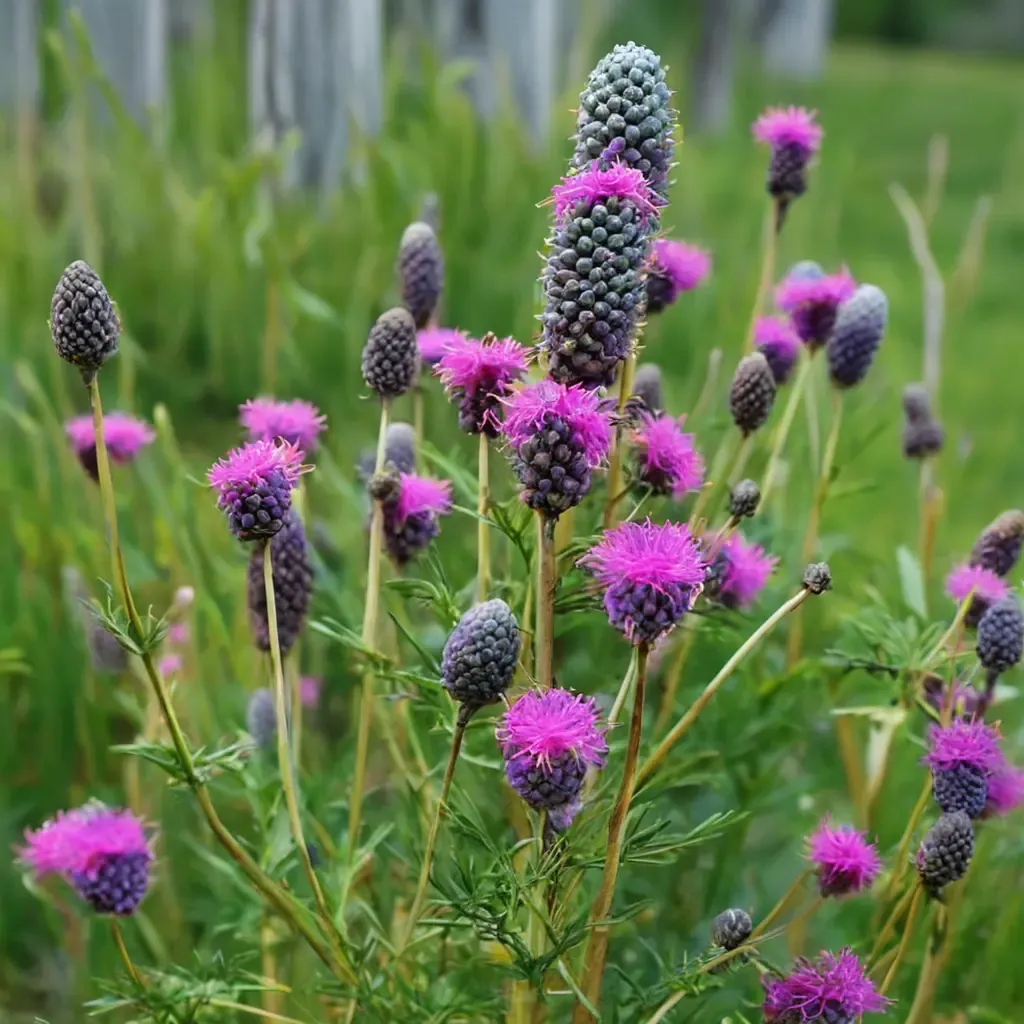
Purple Prairie Clover
Dalea purpurea
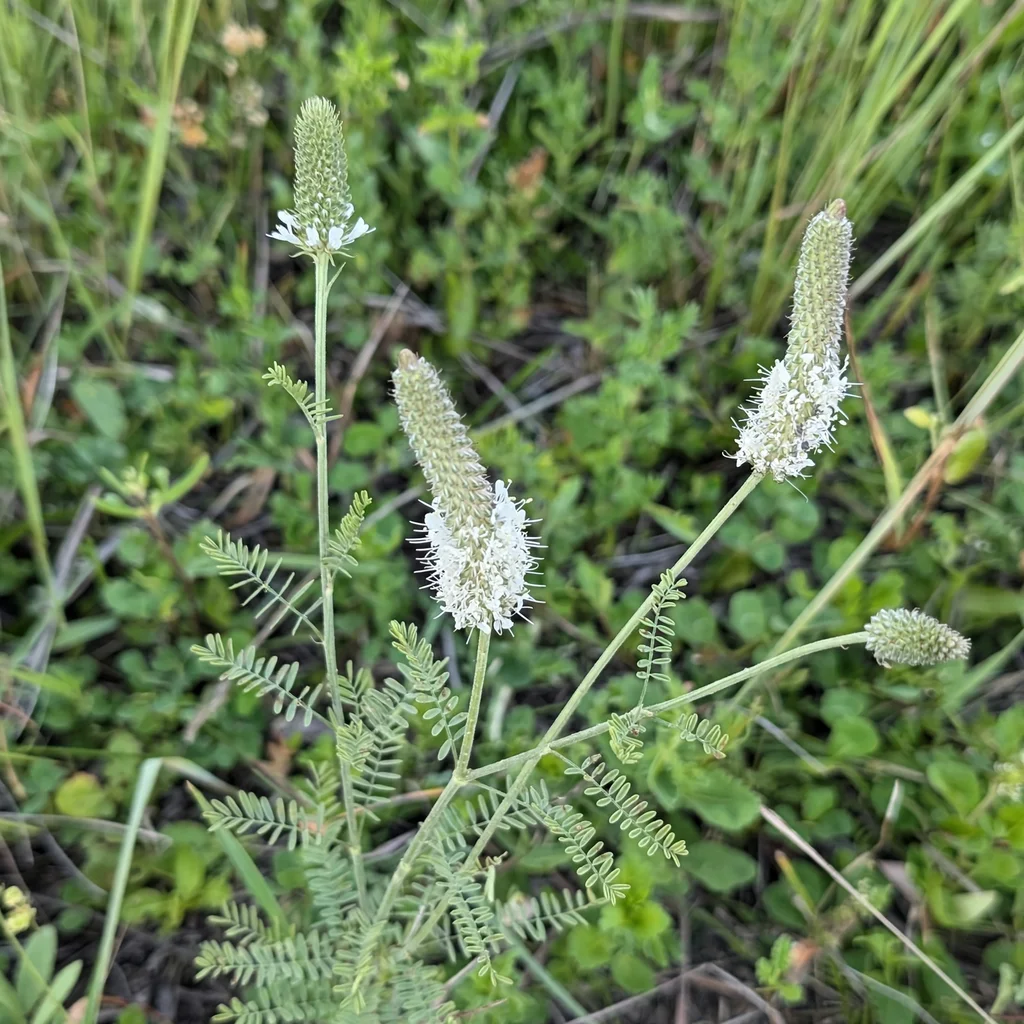
White Prairie Clover
Dalea candida
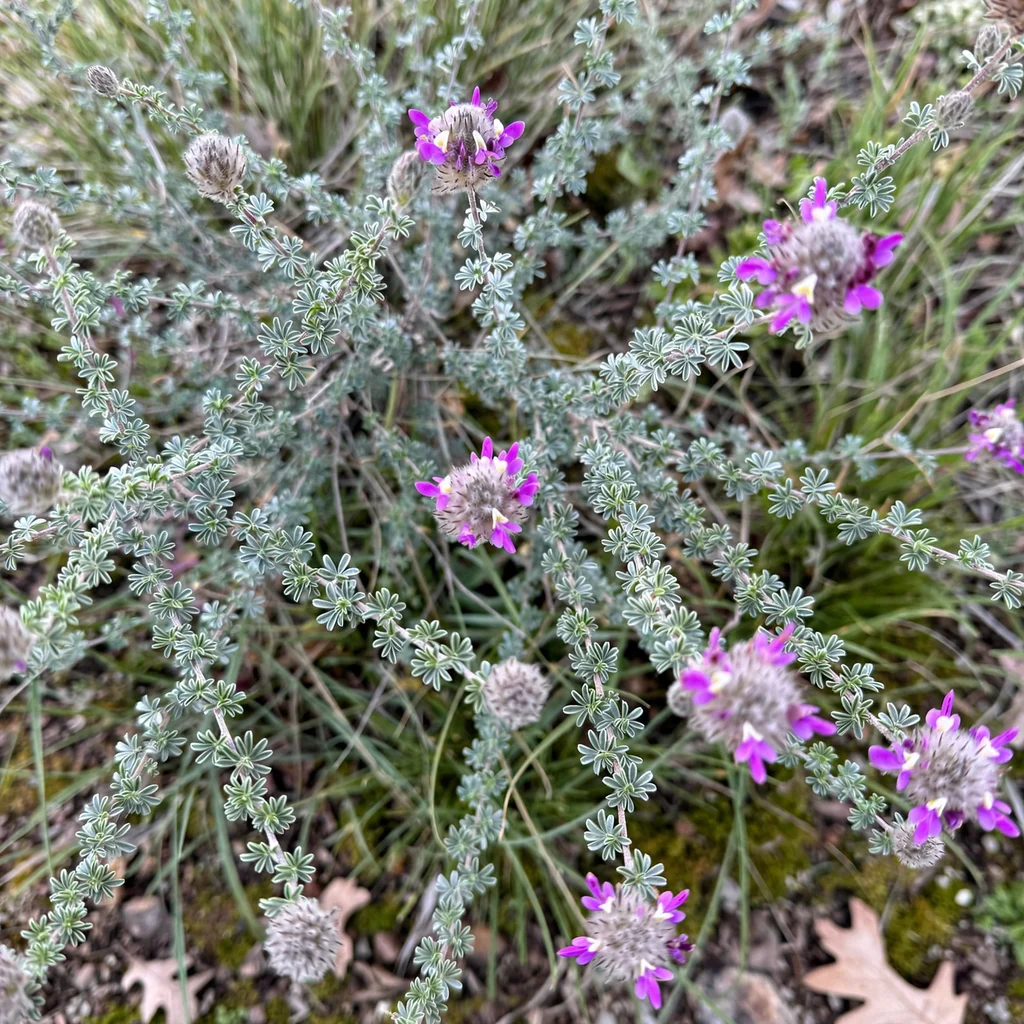
Santa Catalina Prairie Clover
Dalea pulchra
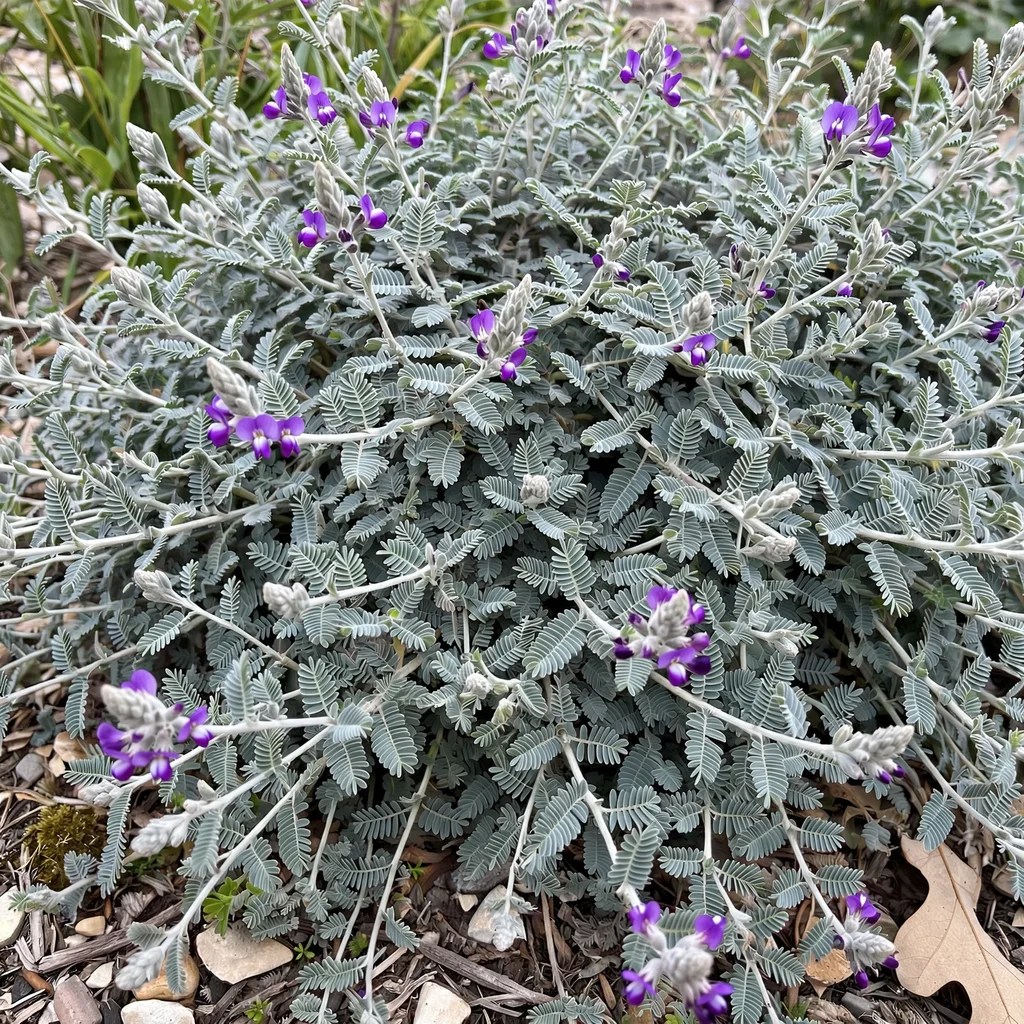
Trailing Indigo Bush
Dalea greggii
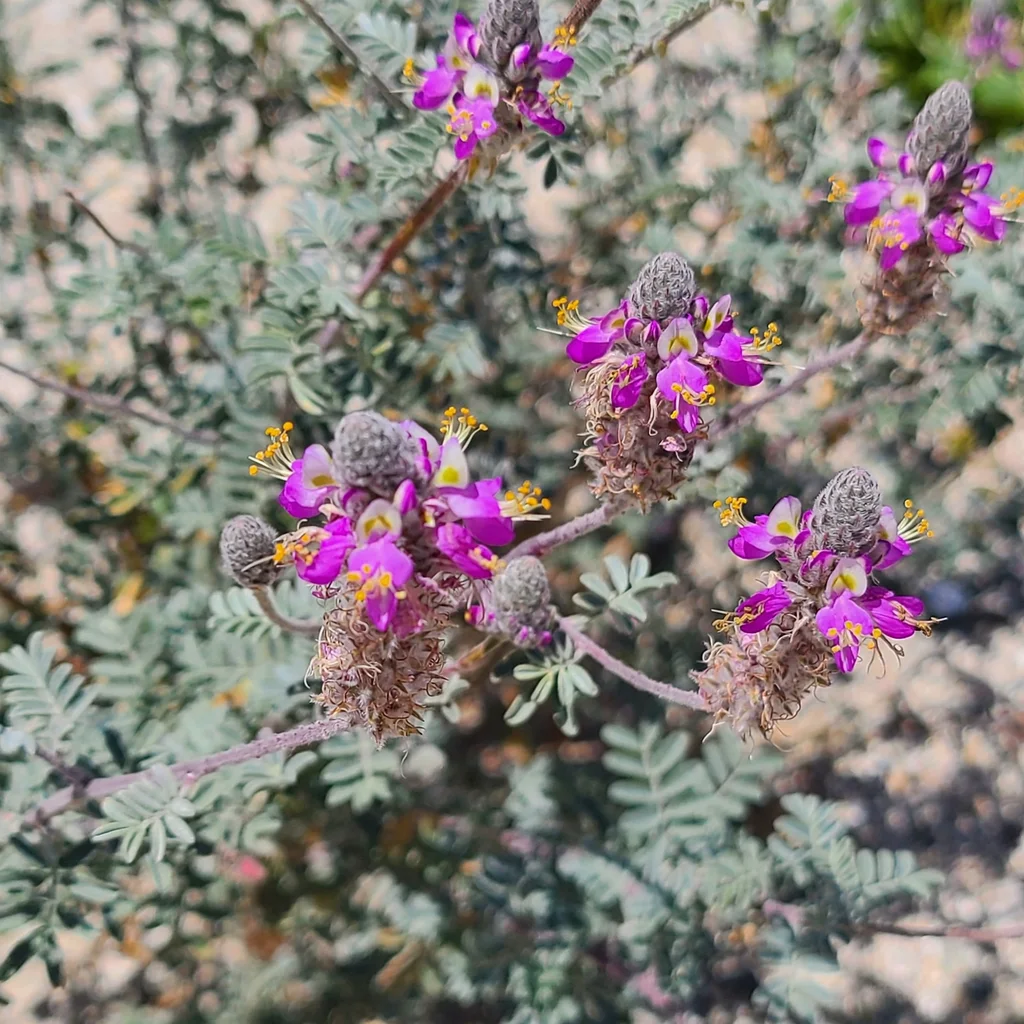
Silver Bush Dalea
Dalea bicolor
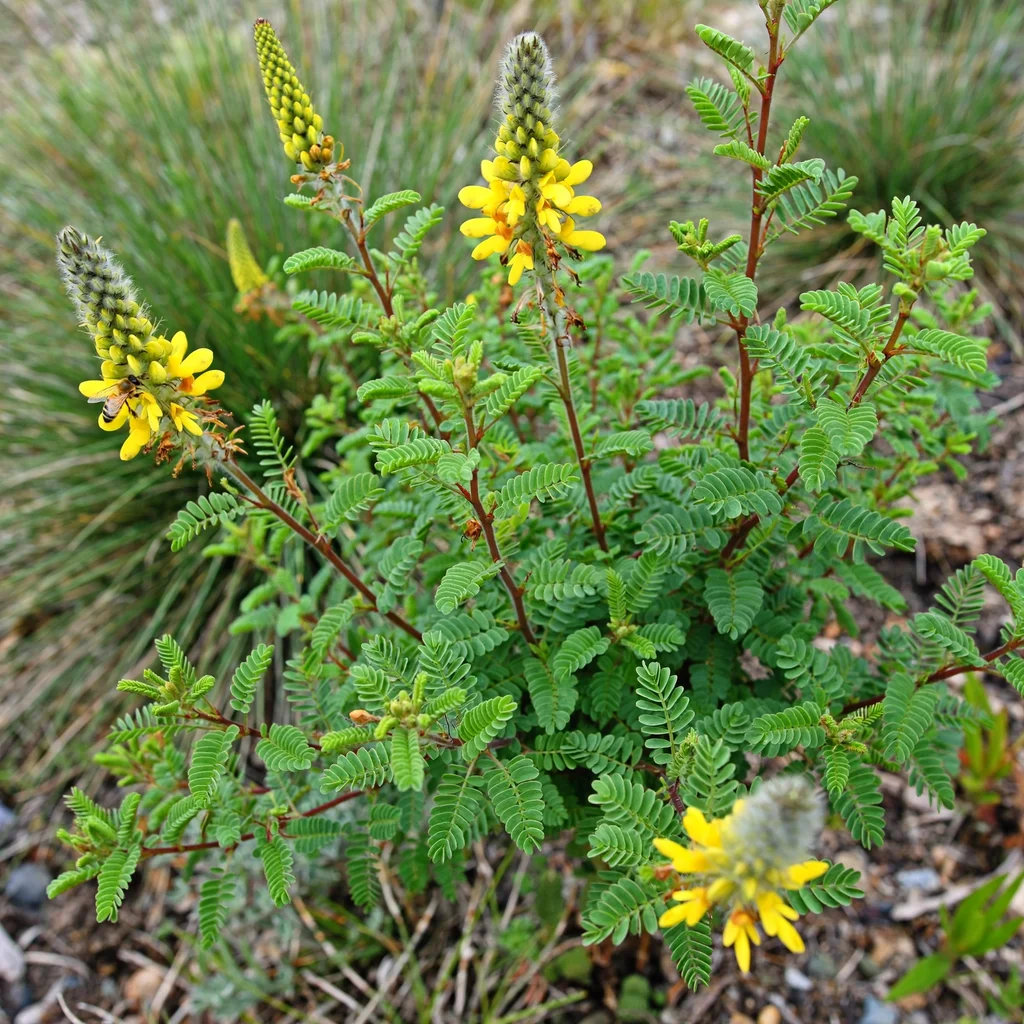
Golden Dalea
Dalea lutea
Keep exploring
Explore the genus
Hardy in your zone?
Grow Black Dalea with confidence
See it in a design of your actual yard, get zone-matched care reminders, and track it season by season in your garden journal.