The Story
Plant Bio
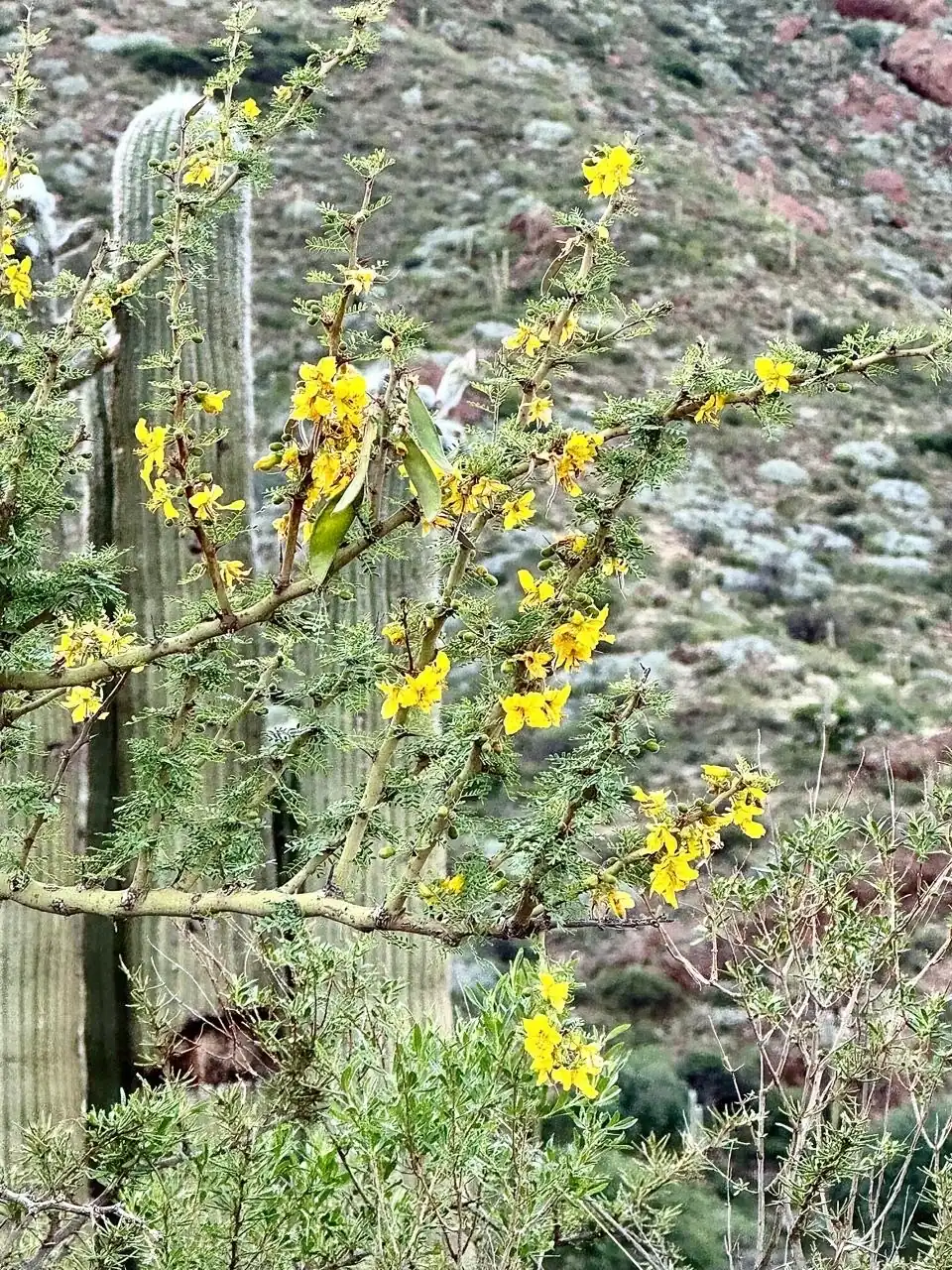
Parkinsonia praecox is a small to medium soft-wooded drought-deciduous tree from seasonally dry forest in Mexico to Argentina, forming a multi-trunked wide-spreading umbrella with irregular angled branches. Leaves are small and pinnately compound with tiny leaflets, while young stems and trunk carry transient spines and smooth lime-green photosynthetic bark with a waxy bloom.
In spring to summer it carries masses of brilliant golden-yellow flowers in tight axillary clusters held close to the branches, forming dense yellow rods that draw native bees, butterflies and hummingbirds. The crown grows wider than tall with loose pendulous branching and spur shoots, and it drops flowers and pods heavily in season.
Uses & Benefits:
Essentials
At a Glance
Plant Type
Tree
Height
288"
Width
300"
Light
Full Sun, Partial Sun
Zones
9, 10
Water
Very low
Humidity
Low
Lifespan
Long-lived tree
Native To
Mexico to Argentina
Toxicity
Benign, allergenic pollen
Bloom period
Spring – Summer
In flower about 6 months of the year
Planting
How to Grow
- Plant in full sun in sharply drained, slightly alkaline soil with room for a 25-foot spreading crown.
- Set the root ball level with grade and water deeply to settle, then mulch lightly away from the trunk.
- Water deeply and infrequently the first summer, then taper to very low monthly summer water once established.
- Stake only if needed for one season and remove ties early to avoid scarring the soft green bark.
Pro Tip
Give it a large open spot for a crown wider than tall and keep summer water to a deep monthly soak once established; extra water pushes rank growth that splits.
Keep It Thriving
Care Guide
Do
- Do provide full sun and excellent drainage.
- Do prune in June to build strong spaced structure.
- Do rake flower and pod litter to keep the area clean.
Don't
- Do not over-irrigate or fertilize heavily; it causes weak sappy growth prone to failure.
- Do not top or butcher the crown and do not plant it as a street or parking-lot tree.
- Do not plant where smooth trunks will be hit by mowers or vandalized.
Seasonal Care Calendar
| Task | Jan | Feb | Mar | Apr | May | Jun | Jul | Aug | Sep | Oct | Nov | Dec |
|---|---|---|---|---|---|---|---|---|---|---|---|---|
| Pest Check | ||||||||||||
| Plant | ||||||||||||
| Prune | ||||||||||||
| Spring Cleanup |
Watch Out For
Pests & Diseases
Common Pests
Common Diseases
In the Garden
Landscape Uses & Companions
Landscape Uses
Multiply
Propagation Methods
Good to Know
Common Questions
Palo Brea questions
What zones can Palo Brea grow in?
Palo Brea is hardy in USDA Zones 9–10: in that range it survives winter in the ground. Colder than Zone 9, winters are too cold for it to survive outdoors.
When does Palo Brea bloom?
Palo Brea typically blooms from spring to summer. Exact timing shifts a week or two with your zone — Sow's bloom calendar maps it to your garden.
Does Palo Brea need full sun?
Palo Brea does best in full sun to part shade. In hot climates, afternoon shade keeps blooms fresher longer.
Is Palo Brea drought tolerant?
Yes — once established (usually after the first full season), Palo Brea handles dry spells with minimal watering. Water deeply its first year to build the root system that makes that possible.
More Parkinsonia to compare
Keep exploring
Explore the genus
Hardy in your zone?
Grow Palo Brea with confidence
See it in a design of your actual yard, get zone-matched care reminders, and track it season by season in your garden journal.